Silver Ladybug Necklace Anatomy: Alloys, Enamels, and Chain Pairings
Explore the technical anatomy of a silver ladybug necklace, from 925 vs Argentium alloys to cloisonné enameling and optimal chain pairings.

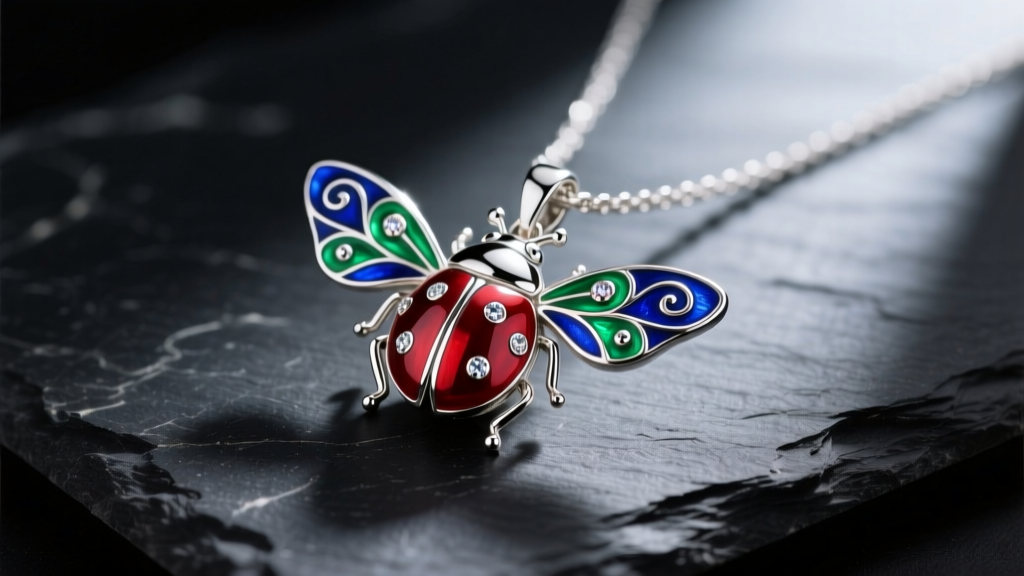
The ladybug motif has transcended fleeting jewelry trends to become a permanent fixture in gemological and metallurgical design, symbolizing luck, protection, and agricultural prosperity. However, beneath the whimsical exterior of a high-quality silver ladybug necklace lies a complex intersection of metallurgy, lapidary arts, and structural engineering. For collectors, jewelers, and discerning buyers, understanding the technical specifications that separate a mass-produced trinket from a master-crafted heirloom is essential. This deep dive explores the precise alloys, enameling techniques, and chain dynamics that define the anatomy of an expertly crafted ladybug pendant.
Metallurgical Foundations: Choosing the Right Silver Alloy
The foundation of any premium silver pendant is its alloy composition. While the term 'silver' is often used loosely, the specific mixture of metals dictates the piece's durability, tarnish resistance, and suitability for intricate casting. According to metallurgical standards outlined by Rio Grande, a leading supplier of precious metals, jewelers typically choose between three primary alloys for motif pendants.
Sterling Silver (925): Comprising 92.5% pure silver and 7.5% copper, sterling is the industry standard. The copper adds necessary tensile strength, allowing for the casting of delicate ladybug antennae and thin wing casings. However, the copper content makes 925 silver highly susceptible to oxidation and sulfur-induced tarnish, requiring frequent polishing or rhodium plating.
Argentium Silver (960): A modern metallurgical marvel, Argentium replaces a portion of the copper with germanium. This addition creates a transparent, self-healing germanium oxide layer on the surface, making the alloy up to seven times more tarnish-resistant than traditional sterling. For a silver ladybug necklace featuring complex textures where polishing is difficult, Argentium is the superior, albeit more expensive, choice.
Fine Silver (999): While pure silver boasts the highest luster and zero tarnish, it is far too soft for structural components. Fine silver is rarely used for the main body of a ladybug pendant unless it is a solid, bezel-set component, as it cannot securely hold gemstone prongs or withstand the thermal shock of vitreous enameling.
The Art of the Shell: Enameling and Stone Inlay Techniques
The vibrant red carapace and distinct black spots of a ladybug pendant are achieved through specialized coloring techniques. The method chosen drastically affects the pendant's longevity, UV resistance, and overall value.
Vitreous Enamel and Cloisonné
In high-end manufacturing, vitreous enamel (fused glass powder) is the gold standard. Using the cloisonné technique, jewelers solder microscopic silver wires onto the pendant's base to create cellular compartments. These cells are filled with enamel powder and fired in a kiln at approximately 1,400°F (760°C). The result is a glass-like, scratch-resistant finish that will never fade. The GIA Gem Encyclopedia notes that historical and contemporary fine jewelry heavily relies on vitreous techniques for their permanence.
Guilloché Enameling
For a more dynamic visual effect, master jewelers employ guilloché. This involves engine-turning a precise geometric pattern into the silver base before applying translucent red enamel. The light catches the underlying silver ridges, giving the ladybug's wings a shimmering, three-dimensional depth that flat enamel cannot replicate.
Cold Enamel (Epoxy Resin)
Mass-market silver ladybug necklaces often utilize cold enamel, a two-part epoxy resin. While it allows for a wider color palette and lower production costs, resin is fundamentally inferior. It is prone to micro-scratching, loses its adhesion upon impact, and will inevitably yellow when exposed to UV radiation over a 5-to-10-year period.
Gemstone Inlay: The 'Marcasite' Misnomer
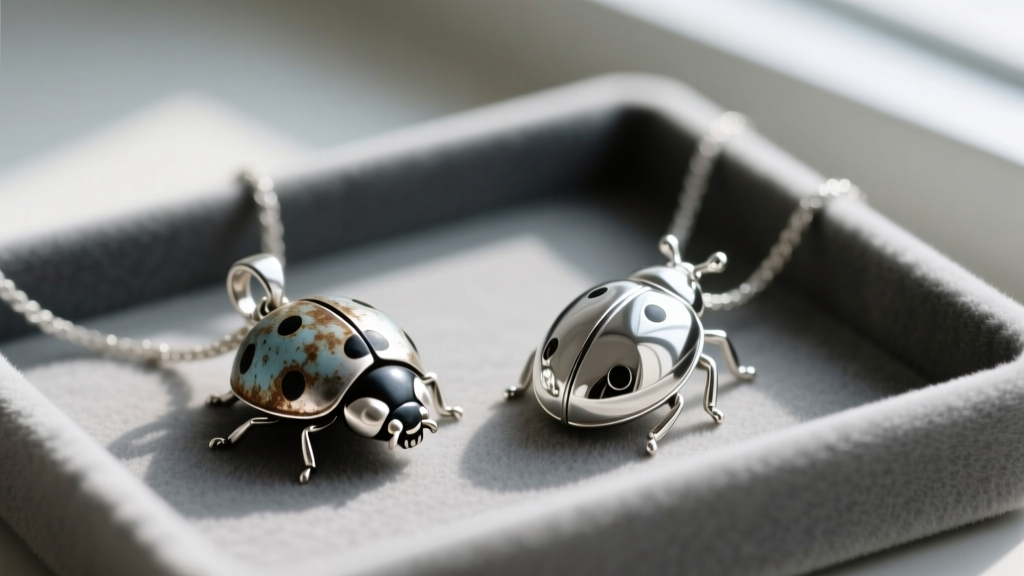
The black spots on vintage and antique-style ladybug pendants are frequently marketed as marcasite. Gemologically speaking, true marcasite is too unstable and crumbly for jewelry. The stones used are actually faceted pyrite (iron sulfide). These pyrite chips are either glued into micro-recesses or secured via tiny silver beads (micro-pavé). Properly set pyrite offers a brilliant, metallic gunmetal flash that perfectly mimics the natural spots of a ladybug.
| Technique | Material Base | Durability & Scratch Resistance | UV & Fading Resistance | Relative Cost |
|---|---|---|---|---|
| Vitreous Cloisonné | Fused Glass | Exceptional (Mohs 5-6) | 100% UV Stable | High |
| Guilloché | Translucent Glass | High (Prone to chipping on impact) | 100% UV Stable | Very High |
| Cold Enamel | Epoxy Resin | Poor (Mohs 2-3) | Low (Yellows over time) | Low |
| Cabochon Inlay | Carnelian / Onyx | High (Mohs 6.5-7) | 100% UV Stable | Medium |
Structural Engineering: Bails, Chains, and Weight Distribution
A common failure point in novelty jewelry is poor weight distribution. A ladybug pendant typically ranges from 3 to 8 grams, with the majority of the mass concentrated in the lower abdomen. If the bail (the loop connecting the pendant to the chain) is soldered too high or lacks a counterweight, the pendant will fail the 'flip test,' constantly turning upside down to rest against the wearer's skin.
Expert silversmiths solve this by utilizing a hidden bail cast directly into the upper thorax of the ladybug, or by employing a low-profile soldered loop that keeps the center of gravity aligned with the chain's drop. Furthermore, the internal diameter of the bail must be precision-calculated to accommodate the chosen chain without causing friction wear.
Optimal Chain Pairings
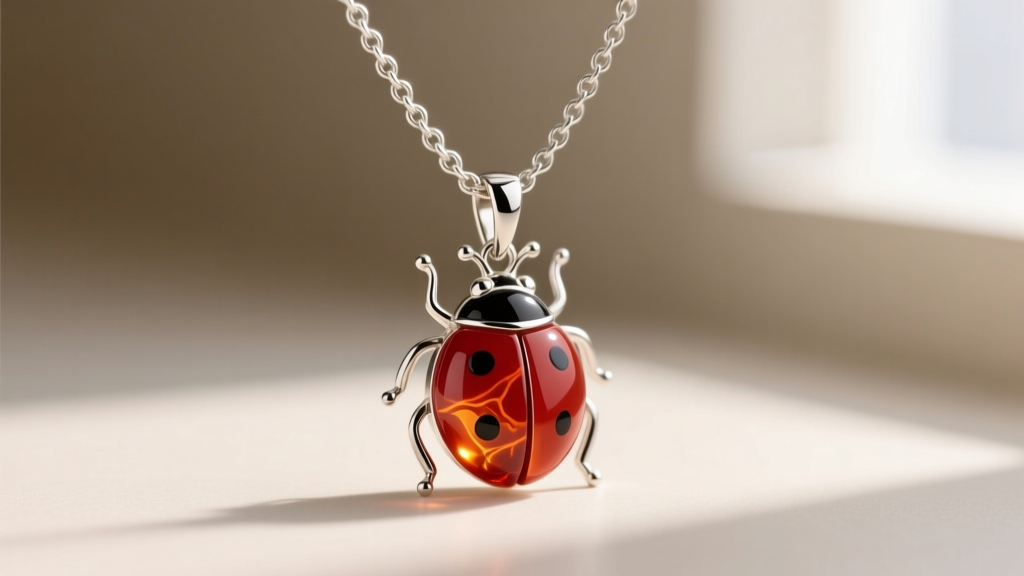
The chain must support the pendant's weight without overpowering its delicate aesthetic. For a 4-7 gram silver ladybug necklace, the following chain specifications are recommended:
- Box Chain (0.9mm - 1.2mm): Offers superior tensile strength and a modern, geometric contrast to the organic curves of the ladybug. The flat links prevent the pendant bail from catching.
- Cable Chain (1.0mm - 1.5mm): The traditional choice. Ensure the links are soldered shut; unsoldered cable chains will easily pull apart under the pendulum-like swinging motion of a solid silver pendant.
- Chains to Avoid: Snake chains and omega chains. These are highly susceptible to kinking and trap moisture and skin oils against the silver, accelerating localized tarnishing directly beneath the pendant.
Hallmarks, Quality Control, and Maintenance Protocols
Authenticity and quality control are verified through hallmarks and surface inspection. A genuine sterling silver ladybug necklace will bear a '925' stamp, typically located on the flat underside of the carapace or on a small soldered tag near the bail. When inspecting the piece under a 10x jeweler's loupe, look for gas porosity—tiny, pinprick holes on the silver surface. Porosity occurs during the lost-wax casting process if the investment material was not properly burned out or if the molten silver trapped gases. While minor porosity on the back is acceptable, it should never be present on the visible wings or gemstone settings, as it compromises structural integrity.
Maintenance requires specific protocols. Never place an enameled or marcasite-set ladybug pendant in an ultrasonic cleaner. The high-frequency vibrations will shatter vitreous enamel and shake pyrite stones loose from their adhesive beds. Instead, clean the silver components using a few drops of pH-neutral dish soap, warm distilled water, and an extra-soft baby toothbrush. Dry immediately with a microfiber cloth to prevent water spots, and store the necklace in an anti-tarnish cloth pouch with a silica gel desiccant packet to control ambient humidity.
"The true measure of a motif pendant's quality isn't just in its visual accuracy, but in its structural foresight. A perfectly cast ladybug that flips upside down on the chest is a failure of engineering, regardless of the silver's purity." — Master Bench Jeweler's Adage
By understanding the precise metallurgical choices, enameling methods, and structural dynamics involved, buyers can confidently select a silver ladybug necklace that is not only a beautiful symbol of fortune but a triumph of horological and lapidary craftsmanship built to last generations.


