Marie Antoinette Necklace Affair: Care & Cleaning Guide
Discover expert care and cleaning tips for Marie Antoinette necklace affair replicas. Learn how to maintain multi-tiered diamond and simulant festoons.

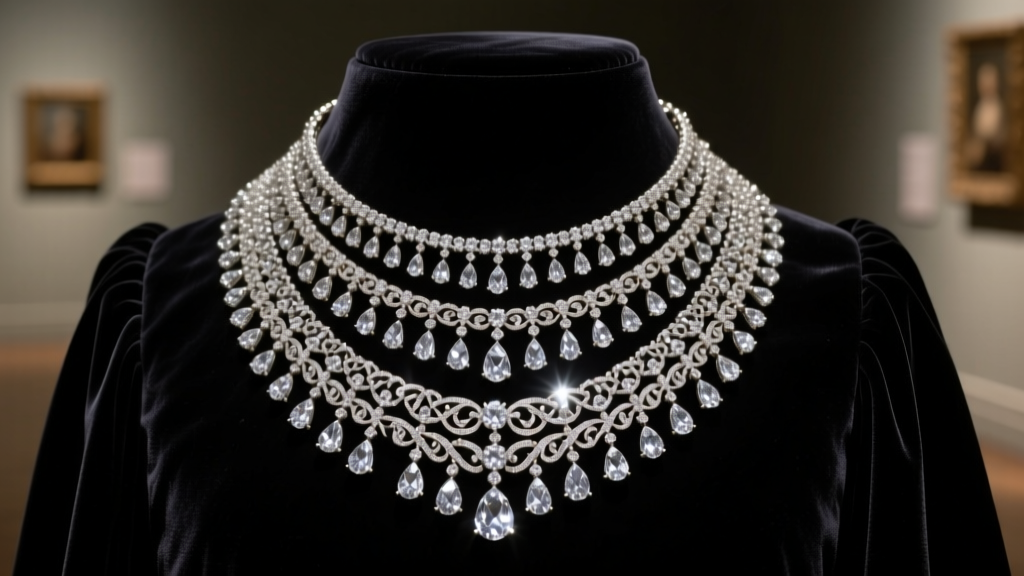
The Legacy of the Diamond Necklace Affair in Modern Jewelry
The infamous marie antoinette necklace affair of 1785 remains one of history’s most scandalous jewelry heists, centering on a staggering 2,800-carat diamond festoon designed by court jewelers Boehmer and Bassange. While the original masterpiece was dismantled and lost to history, modern jewelers and historians frequently recreate this breathtaking multi-tiered silhouette. Today, these elaborate replicas range from $500 cubic zirconia pieces set in sterling silver to $50,000+ lab-grown diamond masterpieces mounted in 950 platinum.
Caring for a necklace of this magnitude requires more than a simple wipe-down. The sheer weight of a multi-tiered festoon—often exceeding 150 grams—places immense stress on clasps and jump rings, while the intricate rosettes, tassels, and drop pendants trap oils, cosmetics, and environmental dust. According to the Smithsonian Magazine, the original piece featured thousands of individually set stones; maintaining the brilliance of a modern reproduction demands a meticulous, multi-phase cleaning protocol tailored to the specific materials used in its construction.
Material Identification: What Is Your Replica Made Of?
Before applying any cleaning solution, you must identify the exact materials of your replica. The cleaning chemistry that safely restores a lab-grown diamond will permanently destroy a historically accurate foil-backed crystal. Below is a breakdown of common materials used in modern Marie Antoinette-inspired necklaces and their specific vulnerabilities.
| Material | Typical Setting Metal | Cleaning Vulnerability | Ultrasonic Safe? |
|---|---|---|---|
| Lab-Grown Diamond | 950 Platinum / 18k White Gold | Hydrophilic (attracts grease); requires degreasing surfactants. | Yes (40kHz+) |
| Moissanite | 14k/18k White Gold | Can develop a temporary oily film; sensitive to extreme thermal shock. | Yes (40kHz+) |
| Cubic Zirconia (CZ) | Rhodium-Plated Sterling Silver | Prone to surface scratching; can fracture if internally flawed during ultrasonic vibration. | No |
| Foil-Backed Glass/Crystal | Brass / Silver (Closed-back) | Water destroys the silver nitrate foil backing, causing irreversible blackening. | Absolutely Not |
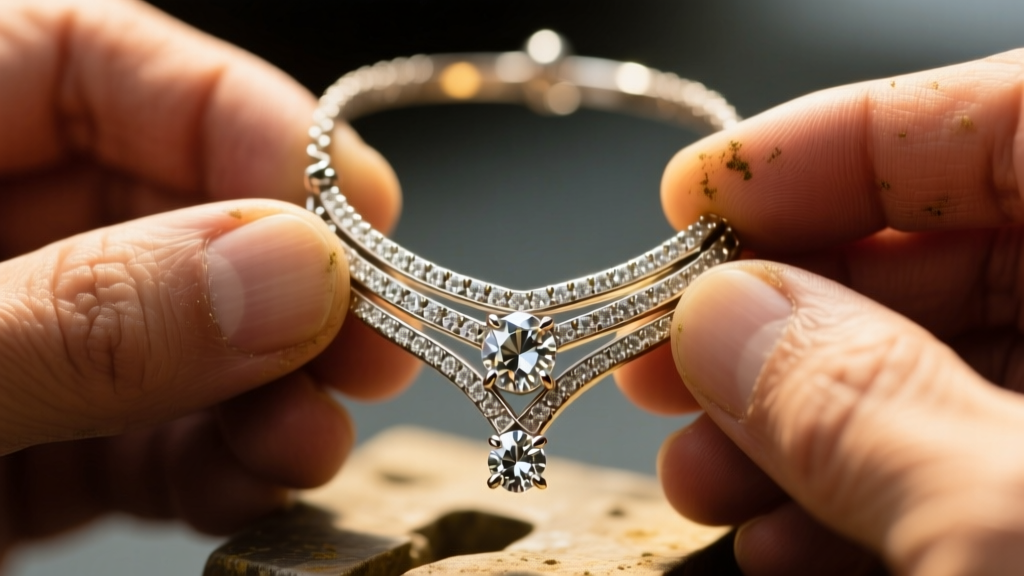
Step-by-Step Cleaning Protocol for Multi-Tiered Festoons
For modern replicas featuring open-back settings with lab-grown diamonds, moissanite, or high-grade CZ, a systematic aqueous wash is the safest method to restore optical clarity. The Gemological Institute of America (GIA) emphasizes that gentle, non-abrasive techniques are paramount for preserving both the stones and the precious metal mounts.
Phase 1: Dry Dusting and Structural Inspection
Never introduce moisture to a heavily soiled necklace without first removing dry particulate matter. Dust mixed with water creates an abrasive mud that can scratch rhodium plating and softer simulants.
- Inspect the Prongs: Use a 10x jeweler’s loupe to check the gallery rails and prongs on the primary rosettes. The weight of the drops can cause prongs to pull away from the girdle of the stone.
- Air Dusting: Use a manual, oil-free camera lens blower to dislodge dry skin cells and powder cosmetics from the pavilion (underside) of the stones.
- Brush Sweep: Gently sweep the setting with a clean, ultra-soft goat-hair makeup brush. Avoid stiff bristles, which can snag on the delicate milgrain detailing common in 18th-century reproduction metalwork.
Phase 2: The Aqueous Degreasing Wash
Diamonds and moissanite are highly hydrophilic, meaning they naturally attract and hold onto skin oils and lotions, which dull their refractive index. To combat this, prepare a specialized cleaning bath.
- The Solution: Mix one cup of distilled water (tap water contains chlorine and minerals that can spot silver) with three drops of ammonia-free dish detergent and a single drop of household ammonia (ammonium hydroxide). Note: Do not use ammonia if your setting contains porous accent stones like pearls or turquoise.
- The Soak: Submerge the necklace for exactly 15 minutes. This allows the surfactants to break the surface tension of the grease trapped beneath the stones.
- Agitation: Using an extra-soft baby toothbrush, gently flick the bristles against the back of the settings. Do not scrub in circles; use a flicking motion to push debris out from under the prongs.
Phase 3: Drying and Polishing Intricate Settings
Air-drying a multi-tiered necklace will result in water spots, especially in the hard-to-reach crevices of the festoon drops. Instead, use a high-pressure, oil-free compressed air duster to blow moisture out of the settings. Follow this by gently patting the metal chains with a lint-free microfiber cloth. For lab-grown diamonds, a final polish with a specialized optical lens cloth will restore maximum light return.
Critical Warning: Foil-Backed and Closed-Back Settings
If your Marie Antoinette necklace affair replica is a strict historical reproduction, it likely features closed-back settings with foil-backed stones. In the 1700s, jewelers placed thin sheets of silver or colored foil behind glass and early diamond cuts to enhance their brilliance and fire.
Expert Warning: Never submerge a foil-backed necklace in water, and never place it in an ultrasonic cleaner. Even a single drop of moisture seeping past the bezel will oxidize the foil, turning it black and completely destroying the optical illusion of the stone. Clean these pieces exclusively with dry, soft brushes and store them with silica gel packets to control ambient humidity.
Storage and Maintenance of Heavy Statement Pieces
The structural maintenance of a massive festoon necklace is just as critical as its cosmetic cleaning. The original Boehmer and Bassange piece was so heavy it required specialized support. Modern replicas, particularly those cast in solid silver or gold, suffer from gravity-induced metal fatigue.
Managing Weight and Tension
When a 200-gram necklace is worn, the clasp and the first two jump rings bear the brunt of the kinetic energy and downward pull. Over time, this can cause jump rings to oval out and open. To prevent catastrophic loss:
- Install a Safety Chain: Have a bench jeweler solder a secondary 925 sterling silver or platinum safety chain between the two halves of the clasp. If the primary lobster claw or box clasp fails, the necklace will drape safely rather than falling to the floor.
- Soldered Jump Rings: Ensure that all jump rings connecting the heavy drop pendants to the main collar are soldered shut. Open jump rings will inevitably twist and separate under the pendulum effect of walking.
Proper Archival Storage
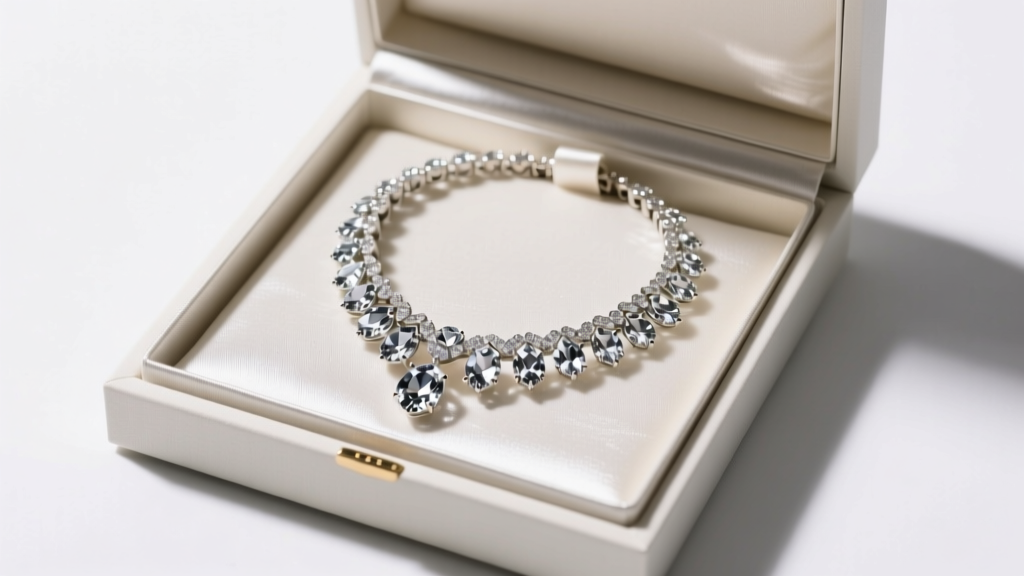
Hanging a heavy, multi-tiered necklace on a standard jewelry bust will cause the chains to stretch and the metal links to deform. Instead, store the piece flat in an acid-free, archival-quality jewelry box. Lay the necklace out in a figure-eight pattern to prevent the chains from tangling, and place acid-free tissue paper between the tiers to prevent the stones from scratching one another. Include anti-tarnish strips (such as 3M Silver Shield) in the box, but ensure they do not directly touch the stones, as the chemical vapors can sometimes leave a temporary haze on certain simulants.
Conclusion
Owning a replica inspired by the marie antoinette necklace affair is an investment in wearable art and historical romance. By understanding the specific material science of your piece—whether it features modern lab-grown diamonds or delicate historical foil-backing—you can preserve its breathtaking brilliance for generations. Regular structural inspections, meticulous degreasing protocols, and proper flat storage will ensure your grand festoon remains as captivating as the legend that inspired it.


