How to Authenticate a Designer Brand Necklace: Expert Guide
Learn how to authenticate a luxury brand necklace with our expert technical guide covering hallmarks, clasp engineering, and gemstone calibration.

The Metallurgy of Prestige: Decoding Stamps and Alloys
When evaluating a high-end brand necklace, the untrained eye often focuses solely on the logo or the overall aesthetic. However, for jewelry appraisers, gemologists, and serious collectors, the true value and authenticity of a designer piece lie in its micro-construction. In 2026, the proliferation of "super-fakes" manufactured with CNC milling and 3D CAD rendering means that visual inspection from a distance is no longer sufficient. To truly verify a brand necklace, one must examine the metallurgical integrity, clasp engineering, welding techniques, and gemstone calibration.
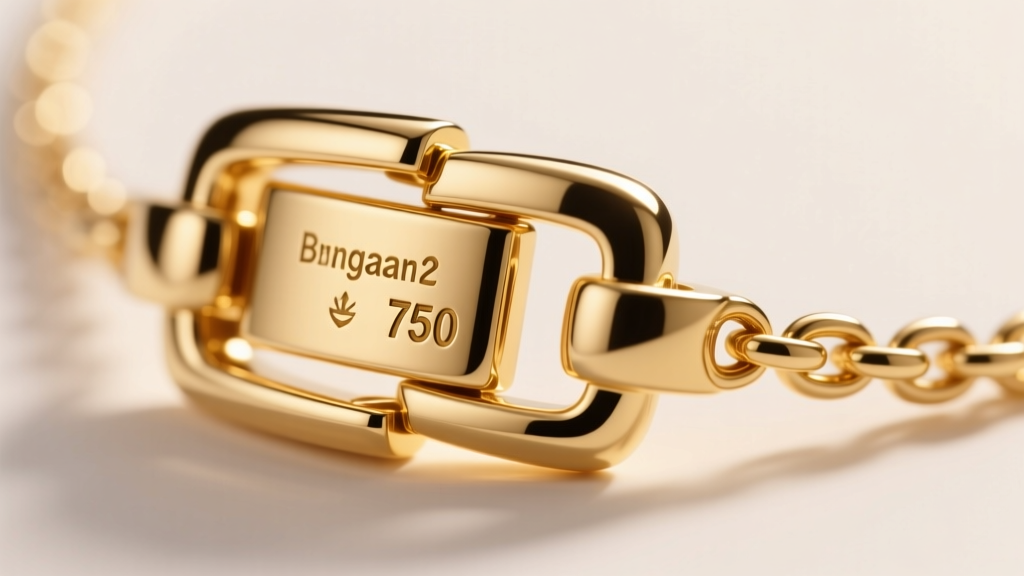
The foundation of any luxury brand necklace is its metal alloy. According to the Federal Trade Commission (FTC) Jewelry Guides, precious metal stamps must adhere to strict fineness tolerances. For 18k gold, the standard is 750 parts per thousand pure gold. In authentic pieces from houses like Cartier or Bvlgari, the "750" stamp is not merely scratched onto the surface; it is deeply milled or laser-struck with crisp, uniform kerning. Counterfeiters often use shallow stamping dies that result in blurred edges or inconsistent font weights. Furthermore, while handheld XRF (X-ray Fluorescence) spectrometers are standard for verifying surface alloy composition, advanced fakes now utilize thick gold plating over tungsten or brass cores. Authenticating these requires specific gravity testing or ultrasound thickness gauging to ensure the core matches the exterior karat stamp.
Clasp Engineering: Tolerance, Springs, and Milling
The clasp is arguably the most critical mechanical component of a brand necklace, yet it is frequently overlooked by amateur buyers. Luxury jewelry houses invest heavily in the micro-engineering of their closures to ensure longevity and security.
The Internal Mechanics of the Lobster Clasp
A genuine designer lobster clasp operates with a specific spring tension, usually calibrated to require between 1.5 and 2.5 pounds of force to depress the lever. The internal spring wire in an authentic brand necklace is typically forged from a specialized, corrosion-resistant stainless steel or titanium alloy. In contrast, counterfeit manufacturers frequently use cheap carbon steel springs. Over time, exposure to skin oils, lotions, and humidity causes these inferior springs to oxidize, leading to a stiff lever or complete mechanical failure. When examining a pre-owned piece, a rusty or overly stiff lobster clasp lever is an immediate red flag.
Additionally, high-end box clasps feature integrated double-safety catches. The milling tolerance on the tongue-and-groove mechanism of a genuine piece is measured in fractions of a millimeter (often +/- 0.02mm). This ensures a satisfying, audible "click" upon closure without any lateral wobble. If the clasp tongue wiggles when locked, the piece has likely suffered structural compromise or is a poorly calibrated reproduction.
Chain Link Construction and Welding Integrity
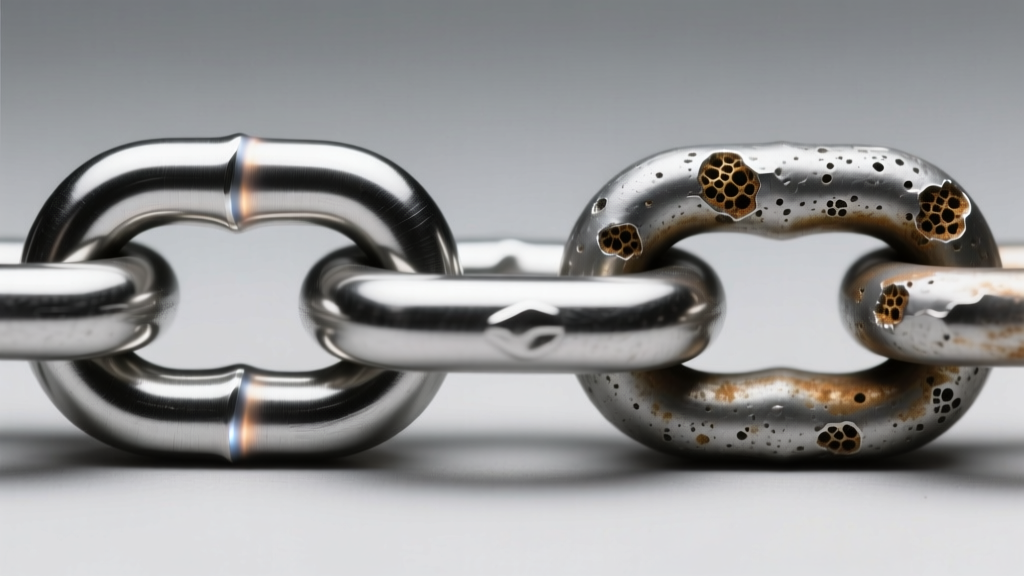
The method used to join the links of a chain necklace reveals a wealth of information about its provenance. Mass-market and counterfeit chains are typically constructed using machine-stamped links that are closed via traditional torch soldering. Under a 10x triplet loupe, torch-soldered links reveal visible seams, slight discoloration from the heat-affected zone, and occasionally, porous solder joints where the flux failed to protect the molten metal.
Conversely, a genuine luxury brand necklace utilizes advanced laser welding techniques. Laser welding allows for highly localized heat application, fusing the metal seamlessly without the need for lower-karat solder alloys. When inspecting the link joints of an authentic piece, the seam should be virtually invisible, blending perfectly with the surrounding wire gauge. The structural integrity of a laser-welded link is significantly higher, distributing tensile stress evenly across the joint and drastically reducing the likelihood of the chain snapping under sudden tension.
Gemstone Calibration and Bezel Setting Precision
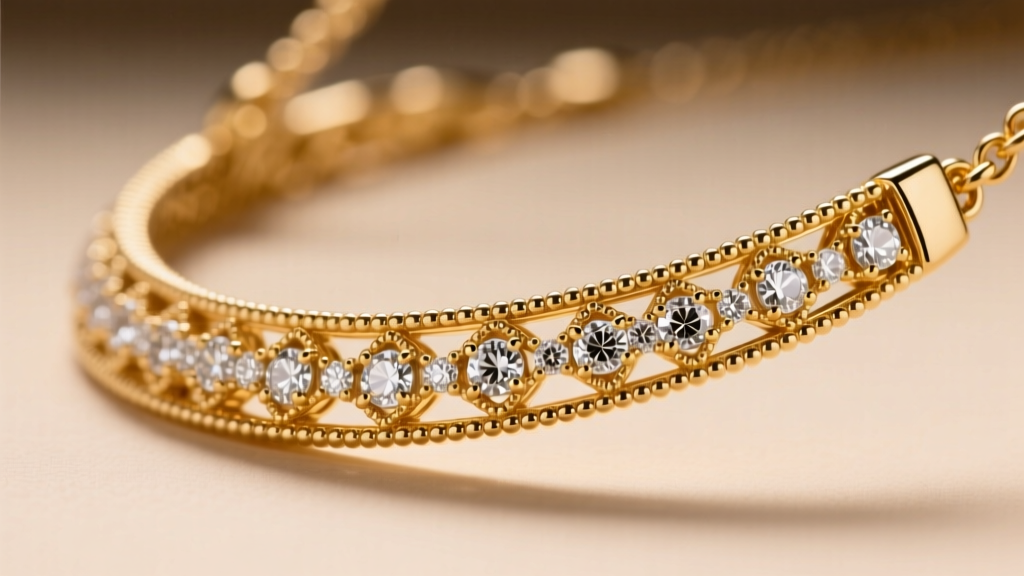
For brand necklaces that feature gemstones—such as the iconic onyx, malachite, or mother-of-pearl motifs found in vintage and modern collections—the setting technique is a primary authentication marker. Luxury houses do not use off-the-shelf calibrated stones; they custom-cut and calibrate their materials to exact millimeter dimensions, often with a tolerance of just 0.01mm.
In a genuine bezel setting, the metal is pushed or hammered evenly over the girdle of the stone. The Gemological Institute of America (GIA) notes that precision in gemstone setting is a hallmark of master craftsmanship. In authentic pieces, the bezel wall will be of uniform thickness and height all the way around the stone, sitting perfectly flush with no gaps, light leaks, or visible adhesive. Counterfeiters often struggle with this calibration, resulting in uneven bezel walls, over-polished edges that thin the metal dangerously, or the use of epoxy resins to secure poorly fitted stones. Always inspect the perimeter of the stone with a loupe; any sign of glue residue or uneven metal burnishing is indicative of a fake or a heavily damaged, poorly repaired authentic piece.
Serial Numbers, Laser Inscriptions, and Provenance
Since the late 1990s, nearly every major jewelry house has implemented strict serial numbering systems to track provenance and deter theft. On a modern brand necklace, the serial number is typically micro-laser inscribed onto the clasp plate, a dedicated hallmark tag, or the inner band of a rigid collar.
"In 2026, counterfeiters have acquired desktop fiber lasers capable of replicating serial numbers. However, they lack the proprietary font libraries and the specific focal depth algorithms used by luxury houses. A genuine micro-laser inscription will appear crisp and dark under magnification, whereas a fake often looks 'frosted,' rough, or exhibits micro-fissures in the surrounding metal due to improper heat dissipation."
— Senior Appraiser, Jewelers of America
When authenticating, cross-reference the serial number format with the brand's historical database. For example, Cartier utilizes a specific two-letter, four-digit format for many of its modern necklace lines, while Tiffany & Co. often relies on group numbers and SKU tags mounted on the jump rings. Always verify that the font kerning, depth, and placement match the brand's exact specifications for the year the piece was purportedly manufactured.
Authentication Markers by Top Houses
The following table outlines the primary technical markers used by gemologists to authenticate necklaces from four of the world's most counterfeited luxury brands.
| Brand House | Primary Hallmark | Serial Number Format | Clasp Signature |
|---|---|---|---|
| Cartier | 750, Eagle Head (France) | 2 Letters + 4 Digits (e.g., AB1234) | Engraved logo on lobster lever |
| Van Cleef & Arpels | 750, VCA Maker's Mark | Alphanumeric (e.g., JE1234) | Hidden safety catch on box clasps |
| Tiffany & Co. | 750, PT950, Tiffany & Co. | Group number / SKU on tag | Spring ring with T-wire jump ring |
| Bvlgari | 750, BVLGARI, Made in Italy | Engraved serial on inner plate | Custom branded box clasp |
Summary: The Value of Technical Verification
Investing in a luxury brand necklace is a significant financial commitment that demands rigorous due diligence. By moving beyond superficial logo checks and applying a technical, metallurgical, and mechanical evaluation framework, collectors and buyers can protect themselves from increasingly sophisticated counterfeits. Always utilize proper magnification tools, understand the specific engineering tolerances of the house in question, and when in doubt, consult a certified gemologist equipped with advanced spectrometric testing technology.


