The Ultimate Necklace Heart Choker Buying Guide & Fit Tips
Discover how to choose the perfect necklace heart choker. Learn about ideal lengths, metal grades, clasp types, and styling tips for every neckline.

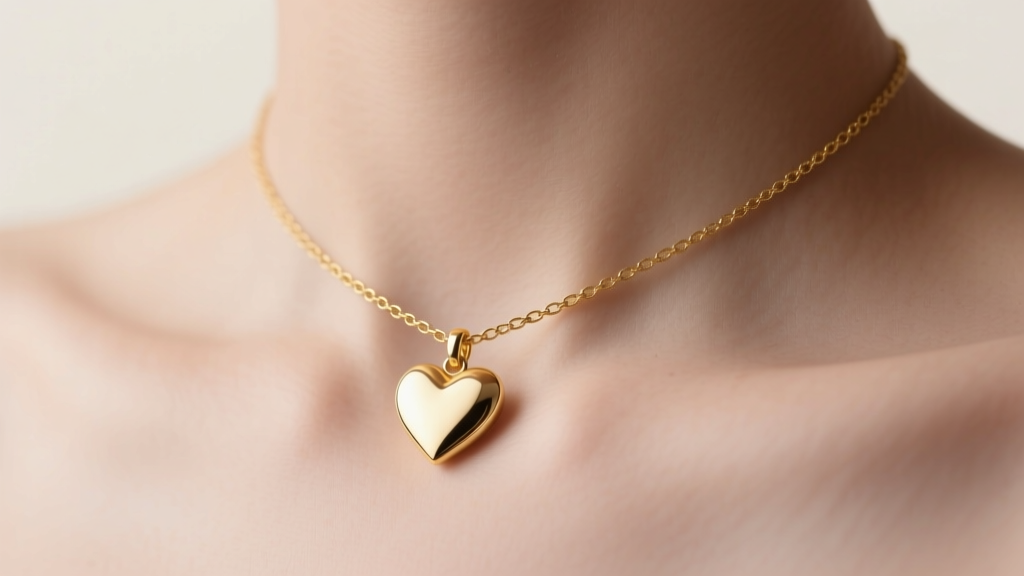
Why the Necklace Heart Choker Remains a Wardrobe Staple
The choker has cycled through centuries of fashion history, from the velvet ribbons of the Victorian era to the plastic tattoos of the 1990s. Today, the modern necklace heart choker represents a sophisticated synthesis of nostalgic intimacy and contemporary minimalism. Unlike long pendants that get lost in layered outfits, a heart choker sits prominently at the base of the throat, drawing immediate attention to the neckline and face. However, buying the right piece requires navigating a minefield of cheap alloys, poorly proportioned pendants, and flimsy chains. This comprehensive buying guide will equip you with the exact specifications, material grades, and fit metrics needed to invest in a piece that lasts a lifetime.
Decoding Lengths: Finding Your Perfect Choker Fit
The defining characteristic of any choker is its length, which dictates how it interacts with your anatomy. While standard necklaces fall between 18 and 24 inches, a true necklace heart choker operates in a much tighter tolerance. To find your ideal fit, use a soft measuring tape to wrap around your neck exactly where you want the chain to rest.
- The Collar (12 to 13 inches): Sits tightly against the upper neck, just below the Adam's apple. This is a bold, high-fashion choice but can feel restrictive during long wear.
- The Standard Choker (14 to 15 inches): The most universally flattering length. It rests comfortably at the base of the neck, allowing the heart pendant to sit perfectly in the suprasternal notch (the hollow at the base of your throat).
- The Princess-Length Choker (16 inches): Sits just below the collarbone. While technically a 'princess' length, many brands market 16-inch chains with heart pendants as relaxed chokers, ideal for those who dislike jewelry touching the nape of their neck.
Expert Tip: Always look for a necklace heart choker that includes a 2-inch extender chain. Neck circumference fluctuates slightly with temperature and hydration, and an extender guarantees a custom fit while allowing the choker to be worn over thin turtlenecks in winter.
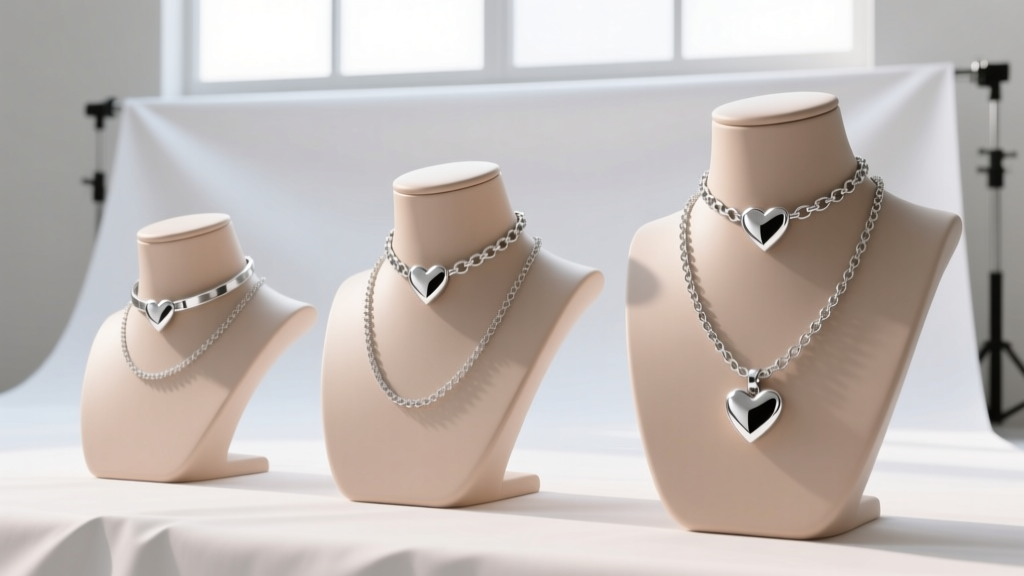
Material Grades & Hypoallergenic Requirements
The skin on your neck is significantly thinner and more sensitive than the skin on your wrists or earlobes, making material selection critical to avoid contact dermatitis. When shopping for a high-quality necklace heart choker, scrutinize the metallurgical breakdown.
Gold Vermeil vs. Gold Plated
Many consumers mistakenly equate 'gold plated' with 'gold vermeil.' According to the Federal Trade Commission (FTC) guidelines, gold vermeil must consist of a sterling silver (925) base heavily coated with a minimum of 2.5 microns of 10k, 14k, or 18k gold. Standard gold plating, conversely, often uses a brass or nickel base with a microscopic gold wash (under 0.5 microns) that will quickly rub off against the friction of your neck, exposing allergenic base metals. Always verify the micron thickness and base metal before purchasing.
Surgical Steel and Titanium
For those with severe nickel allergies, a 316L surgical stainless steel or Grade 23 titanium necklace heart choker is the safest route. Titanium is entirely biocompatible and impervious to tarnish, though it lacks the warm luster of precious metals. 316L steel offers a brilliant, white-metal shine similar to platinum but requires occasional polishing to maintain its mirror finish.
Chain Profiles & Pendant Bail Mechanics
The chain you choose dictates the durability and drape of your necklace heart choker. Delicate chains may look elegant in the display case, but they are prone to kinking and snapping under the weight of a solid metal heart.
| Chain Type | Width | Durability | Best For |
|---|---|---|---|
| Box Chain | 1.2mm - 1.5mm | High | Everyday wear; resists kinking and hair snagging. |
| Rolo Chain | 1.5mm - 2.0mm | Very High | Heavier heart pendants; offers a vintage, robust look. |
| Cable Chain | 0.9mm - 1.2mm | Low to Medium | Minimalist, dainty aesthetics; requires careful storage. |
| Snake Chain | 1.5mm - 2.0mm | Medium | Fluid drape; avoid if you have long hair (prone to pulling). |
Equally important is the bail—the loop that connects the heart pendant to the chain. Avoid soldered bails that restrict the pendant's movement, as this causes uneven wear on the chain link. Look for a 'free-floating' tapered bail or a hidden bail that allows the heart to lie flat against your chest without flipping upside down.
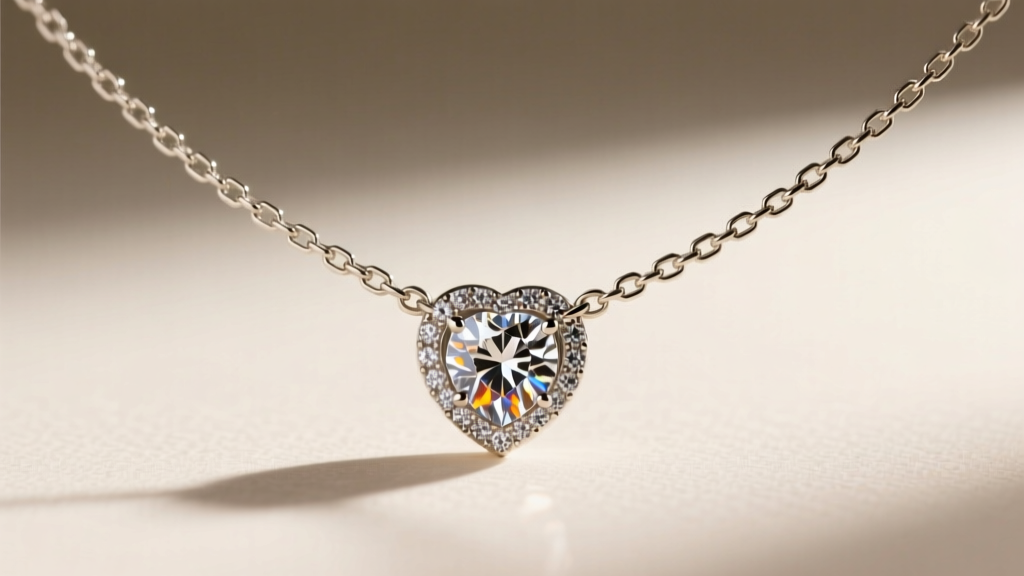
Clasp Hardware & Extender Chains
The clasp is the most common point of failure on any necklace. For a secure necklace heart choker, avoid spring-ring clasps, which are notoriously difficult to operate on yourself and prone to internal spring failure. Instead, seek out lobster claw clasps. A high-quality lobster clasp features a solid-cast lever and a robust internal spring mechanism. For premium pieces, some jewelers utilize a magnetic slide-lock clasp, which is incredibly user-friendly, though it must be equipped with a secondary safety catch to prevent accidental drops.
Pricing Tiers: What to Expect in 2026
Understanding the market value of a necklace heart choker prevents you from overpaying for costume jewelry disguised as fine jewelry. Below is a breakdown of current market pricing based on material integrity and gemstone inclusion.
- Fashion / Costume ($20 - $60): Brass or alloy bases with flash plating. Cubic zirconia accents. Expect a lifespan of 6 to 12 months before tarnishing.
- Demi-Fine ($85 - $250): 925 Sterling silver or heavy Gold Vermeil (2.5+ microns). May feature lab-grown diamonds or high-grade moissanite. The sweet spot for everyday luxury.
- Fine Jewelry ($400 - $1,500+): Solid 14k or 18k gold, platinum, or recycled precious metals. Features ethically sourced natural diamonds or premium sapphires. Backed by lifetime warranties from established jewelers.
Final Styling & Neckline Pairings
A necklace heart choker is highly versatile, but its impact changes dramatically depending on your wardrobe. According to styling experts at the Jewelers of America, the proximity of the choker to the skin requires deliberate neckline pairing:
"The golden rule of choker styling is negative space. A choker requires a framing mechanism—whether that is the skin of an off-the-shoulder top or the sharp angles of a structured blazer—to truly stand out."
V-Neck and Scoop Necks: The ideal canvas. The downward angle of the neckline visually elongates the neck, while the heart choker provides a focal point that bridges the gap between the jawline and the collarbone.
Crew Necks and Turtlenecks: Pair a slightly looser 16-inch gold vermeil heart choker over a fine-gauge ribbed turtleneck. The contrast between the matte fabric and the reflective metal creates a sophisticated, layered aesthetic.
Off-the-Shoulder and Sweetheart Necklines: Opt for a tighter 14-inch collar style. The bare shoulders draw the eye horizontally, and the snug choker anchors the look vertically, preventing the jewelry from competing with the garment's hemline.
By prioritizing precise measurements, verifying vermeil micron thickness, and selecting robust chain profiles like the 1.2mm box chain, you ensure your necklace heart choker transitions from a fleeting trend into a permanent, cherished fixture in your jewelry collection.


