Cowbell Necklace Buying Guide: Metals, Sizing & Styling
Discover what to look for in a cowbell necklace. Our buying guide covers metal alloys, chain gauges, acoustic dampening, and sizing for 2026.

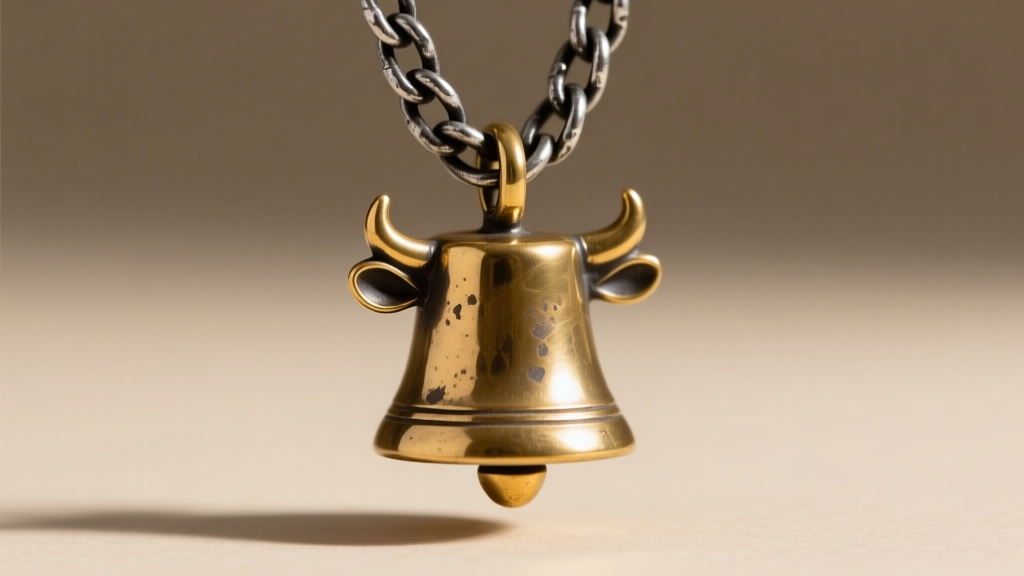
The Resurgence of the Cowbell Necklace in Contemporary Jewelry
Once relegated strictly to rustic western wear and bohemian festival fashion, the cowbell necklace has undergone a significant design evolution. In 2026, contemporary jewelers are reimagining this acoustic pendant, blending heritage silhouettes with avant-garde streetwear and high-fashion aesthetics. Whether you are drawn to the literal miniature livestock bells of traditional southwestern design or the abstract, geometric bell pendants seen on modern runways, purchasing a cowbell necklace requires a distinct set of considerations. Unlike standard flat pendants, a bell pendant introduces three-dimensional volume, significant weight, and acoustic properties that must be carefully managed. This comprehensive buying guide will walk you through the metallurgy, chain mechanics, acoustic engineering, and proportion guidelines necessary to select a high-quality cowbell necklace that balances visual impact with everyday wearability.
The Anatomy of a Quality Cowbell Pendant
The manufacturing method of a cowbell pendant dictates its durability, surface finish, and structural integrity. Mass-produced novelty bells are often stamped from thin sheet metal and spot-welded at the seams. These are prone to splitting under the stress of a heavy chain and produce a harsh, tinny sound. For fine and semi-fine jewelry, you should look for pendants created via lost-wax casting or sand casting. Lost-wax casting allows for intricate surface textures—such as hammered, brushed, or engraved motifs—and results in a solid, seamless piece of metal. When inspecting a cast cowbell, check the bail (the loop that connects the bell to the chain). A high-quality bail will be cast as a single continuous piece with the bell or securely soldered using hard solder, rather than simply glued or crimped, which will inevitably fail under the pendant's swinging momentum.
Metallurgy and Material Grades
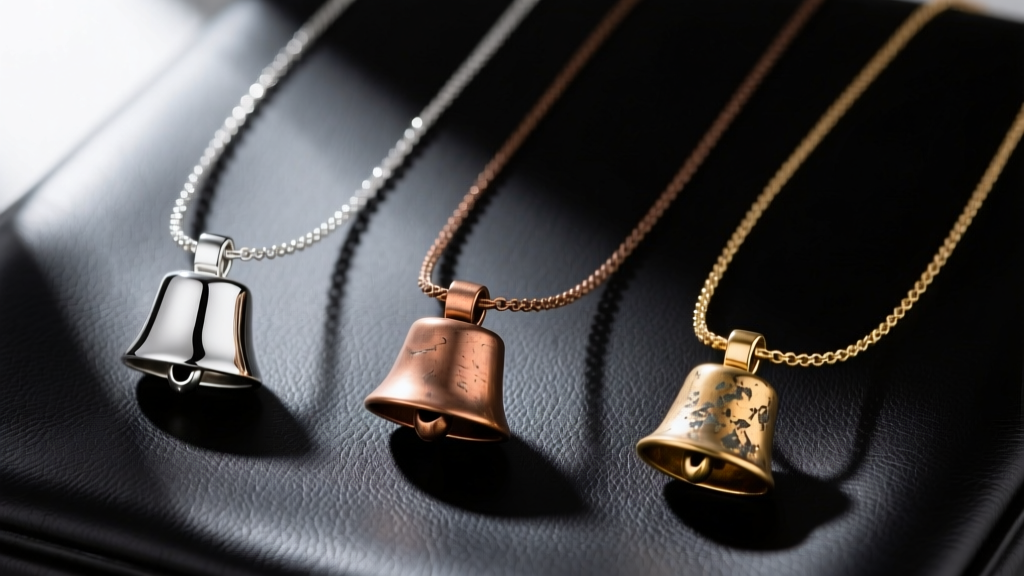
The choice of metal affects not only the price and color of your cowbell necklace but also how it ages over time. Because cowbells are traditionally associated with an organic, lived-in aesthetic, many buyers actively seek out metals that develop a rich patina. Below is a breakdown of the most common alloys used in premium cowbell pendants.
| Metal Alloy | Composition | Patina Profile | Price Range |
|---|---|---|---|
| Jeweler's Brass | CuZn30 (70% Copper, 30% Zinc) | Develops a warm, dark brown oxidation. Can cause green skin discoloration if not sealed. | $45 - $120 |
| Architectural Bronze | CuSn8 (92% Copper, 8% Tin) | Ages to a deep, earthy olive-brown. Highly durable with a Vickers hardness of ~100. | $80 - $180 |
| Sterling Silver | 92.5% Silver, 7.5% Copper | Tarnishes to a soft grey-black. Requires polishing to maintain a high-shine finish. | $150 - $450 |
| Gold Vermeil | Sterling Silver base, 2.5µm 14k/18k Gold | Resists tarnish but the gold layer will eventually wear off on high-friction edges. | $120 - $300 |
According to the Gemological Institute of America (GIA), sterling silver requires specific care to prevent deep sulfide tarnishing, especially in humid environments. If you prefer a low-maintenance piece with a rustic look, raw bronze or antiqued brass are superior choices, as their natural oxidation enhances the vintage appeal of the cowbell silhouette.
Chain Selection: Gauge, Link Type, and Clasp Mechanics
A standard 1.5-inch solid brass or bronze cowbell pendant weighs between 18 and 35 grams. This is substantially heavier than a typical gemstone or coin pendant. Consequently, pairing it with a delicate 1.0mm chain is a structural mistake that will lead to chain elongation, link failure, or clasp breakage.
Optimal Chain Gauges and Styles
- Curb Chains (2.0mm - 3.5mm): The interlocking, flat-lying links of a curb chain distribute weight evenly and resist twisting. A 2.5mm solid curb chain offers excellent tensile strength while complementing the rugged nature of a cowbell.
- Rope Chains (1.8mm - 2.5mm): Rope chains provide a textured, helical aesthetic that pairs beautifully with hammered bell surfaces. Ensure the links are soldered; unsoldered rope chains can easily kink and snap under a 30-gram pendulum load.
- Figaro Chains (2.0mm - 3.0mm): The alternating long and short links add visual interest, though the longer links are slightly more susceptible to pulling if caught on clothing.
Clasp Engineering
Never use a spring-ring clasp for a heavy cowbell pendant. The internal spring mechanism is not rated for high static loads and will fatigue quickly. Instead, opt for a 12mm to 15mm lobster clasp or a heavy-duty toggle clasp. Lobster clasps feature a solid internal spring and a thicker cast body, providing the security needed to support the continuous downward pull of a heavy, three-dimensional pendant. For toggle clasps, ensure the bar is at least 20% wider than the inner diameter of the receiving ring to prevent accidental unfastening during movement.
Acoustic Engineering: Managing the Chime
The defining feature of a cowbell necklace is its potential to produce sound. While a subtle chime can be a charming sensory addition to your jewelry, a loud, continuous clanking is highly impractical for office environments, quiet venues, or daily commuting. When buying a cowbell necklace, you must evaluate the clapper mechanism and consider acoustic dampening techniques.
Fixed vs. Free-Swinging Clappers
Some modern interpretations of the cowbell necklace feature a fixed, decorative clapper that is soldered to the interior roof of the bell. These are entirely silent and serve purely as visual homage to the traditional design. If you desire an authentic chime, look for a free-swinging clapper suspended by a sturdy metal loop or a heavy-duty leather thong.
Dampening Techniques
If you own a sounding cowbell necklace and need to silence it for specific occasions, jewelers and acoustic engineers recommend a few non-destructive modifications:
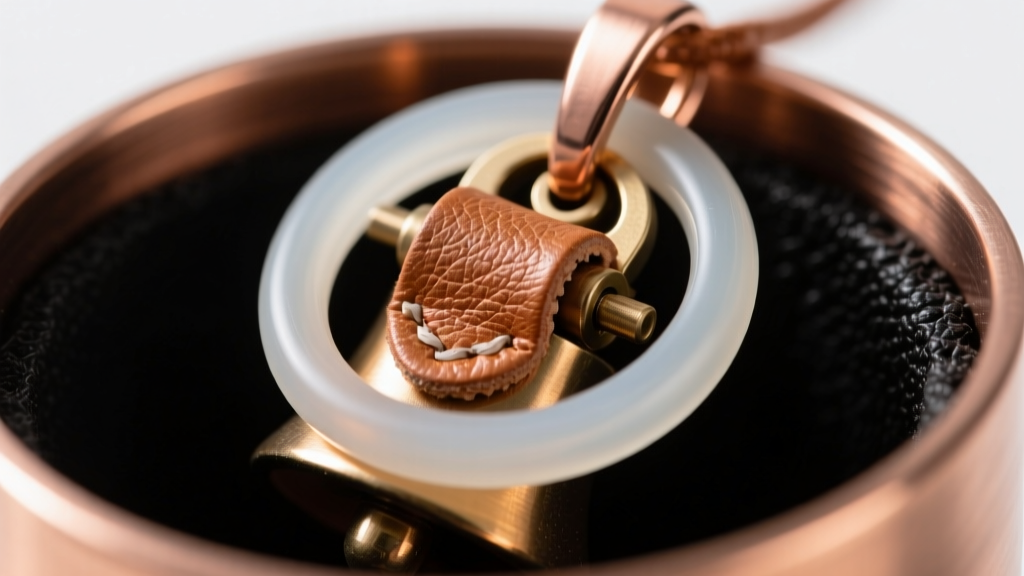
- Silicone O-Rings: Slipping a small, 2mm-thick silicone o-ring over the top of the clapper ball prevents direct metal-on-metal contact, reducing the volume by up to 80% while maintaining a soft, muted thud.
- Leather Wrapping: Wrapping the clapper in a thin layer of suede or deer hide completely deadens the high-frequency strike, resulting in a barely perceptible tap.
- Neoprene Inserts: Adhering a micro-dot of Sorbothane or neoprene to the interior strike zone of the bell will absorb the kinetic energy of the clapper.
Proportions and Neckline Pairing
Because a cowbell pendant possesses significant depth (often protruding 1 to 2 inches outward from the chest), it interacts with clothing differently than flat pendants. Getting the proportions right is critical for both comfort and style.
The Width-to-Length Ratio
A general rule of thumb in pendant sizing is that the chain length should be at least eight times the width of the pendant to ensure it drapes correctly and doesn't sit awkwardly high on the collarbone.
- Small Bells (0.75" - 1" width): Best suited for 16" to 18" chains. These sit at the base of the throat or upper chest and work well with crew necks and button-down shirts.
- Medium Bells (1.25" - 1.75" width): Require 20" to 24" chains. This length allows the bell to rest on the sternum, making it the ideal companion for V-necks, scoop necks, and open collars.
- Large Statement Bells (2"+ width): Demand 26" to 30" chains. These function as outerwear or festival pieces and should be layered over heavy fabrics like denim jackets, flannel, or knit sweaters to prevent the heavy metal from pulling on delicate garments.
Maintenance and Oxidation Control
Maintaining a cowbell necklace depends entirely on your aesthetic preference. If you favor the bright, polished look of raw brass or bronze, you will need to clean the piece regularly. The Assay Office notes that copper-heavy alloys react rapidly to the sulfur and moisture present in human sweat and atmospheric humidity. To maintain a high polish, use a specialized brass cleaner or a gentle paste of baking soda and lemon juice, applied with a microfiber cloth.
Conversely, if you prefer the antique, heritage look, you can accelerate the patina process using a liver of sulfur solution, followed by a gentle buffing of the high-relief areas with fine steel wool. Once your desired patina is achieved, seal the exterior of the bell with a micro-crystalline jewelry wax to lock in the color and prevent the metal from transferring green oxidation onto your skin or clothing. By understanding the metallurgy, structural requirements, and acoustic properties of these unique pendants, you can confidently select a cowbell necklace that serves as a striking, durable, and deeply personal staple in your jewelry collection.


