The Engineering of a Name Drop Necklace: Metals, Gauges & Drops
Master the technical specs of a name drop necklace. Explore metal gauges, drop chain mechanics, typography scaling, and structural failure points.

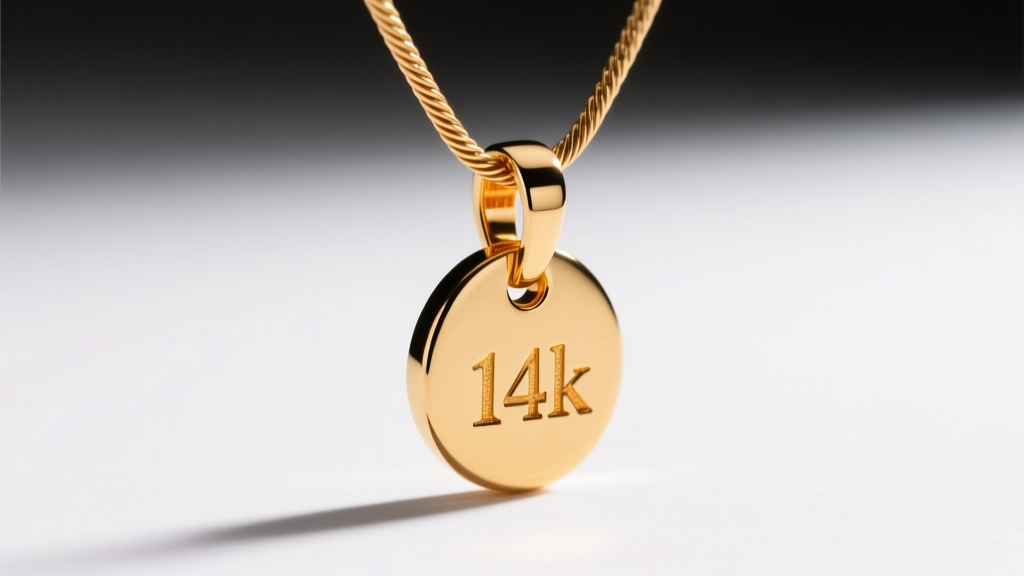
The Anatomy of a Name Drop Necklace
Unlike traditional horizontal nameplates that sit flat against the clavicle, a name drop necklace introduces a complex vertical or Y-axis suspension system. This design requires the typography to act as a suspended pendulum, fundamentally altering the tensile stress distribution across the metal. From an engineering standpoint, the name drop configuration consists of four critical components: the primary collar chain, the drop bail (or T-bar connector), the vertical drop chain, and the laser-cut typographic pendant.
Because the pendant hangs vertically, gravity exerts continuous downward force on the structural bridges connecting the cursive letters. In 2026, advanced fiber laser cutting has allowed for hyper-intricate script fonts, but this precision introduces severe vulnerabilities if the metallurgical foundations are ignored. Designing a name drop piece is not merely an exercise in graphic design; it is a rigorous test of material science and structural load management.
Suspension Mechanics and Bail Integration
The transition from the horizontal collar chain to the vertical drop requires a specialized bail. Standard unsoldered jump rings will eventually warp under the pendulum motion of the drop pendant. Expert bench jewelers utilize laser-welded T-bars or custom-cast integrated bails to ensure the drop chain (typically a 1.0mm to 1.4mm box or cable chain) pivots smoothly without grinding against the connector ring. This pivot point must be polished to a mirror finish to reduce friction-induced metal fatigue over years of wear.
Material Science: Vickers Hardness and Alloy Selection
The longevity of a name drop necklace is entirely dependent on the Vickers Hardness (HV) and tensile strength of the chosen alloy. Soft metals will warp, bend, or snap at the delicate serif connections when subjected to the dynamic loads of a vertical drop.
According to metallurgical standards documented by the Gemological Institute of America (GIA), the alloy composition drastically alters the workability and durability of precious metals. Below is a technical breakdown of common materials used for custom name drops.
| Metal Alloy | Vickers Hardness (HV) | Tensile Strength | Suitability for Script Drops |
|---|---|---|---|
| Sterling Silver (925) | 65 - 75 HV | Low | Poor (Requires 16-gauge minimum) |
| 14k Yellow Gold | 135 - 145 HV | Medium-High | Excellent (Ideal for 18-gauge) |
| 14k White Gold | 150 - 165 HV | High | Superior (Supports 20-gauge micro-scripts) |
| Platinum 950 (Ru) | 125 - 135 HV | Very High | Excellent (High density, resists bending) |
| Gold Vermeil (2.5μm) | 65 HV (Base) | Low | Not Recommended for Drops |
As noted by fabrication experts at Rio Grande, sterling silver's low hardness makes it highly susceptible to bending if the drop pendant catches on clothing. For a name drop necklace, 14k or 18k gold alloys provide the necessary rigidity to maintain the typographic shape without requiring excessive metal thickness.
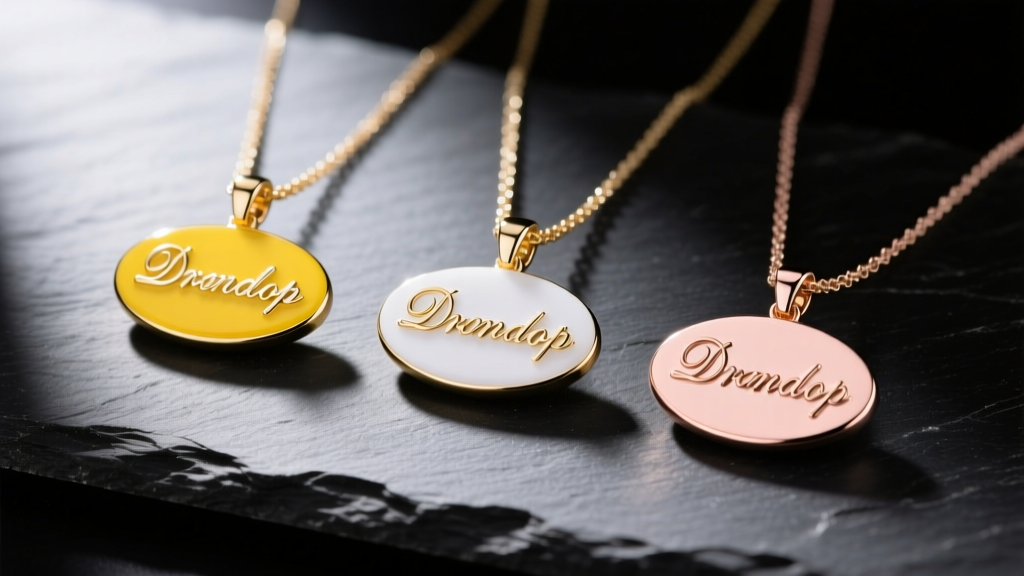
Gauge Thickness and Typography Scaling
The intersection of typography and metal gauge is where most commercial name drop necklaces fail. The "gauge" refers to the thickness of the metal sheet used for laser cutting. In the modern jewelry manufacturing sector, thickness is measured in millimeters or gauge numbers.
- 22-Gauge (0.64mm): Too thin for any drop configuration. The vertical gravity pull will warp the letters within weeks.
- 20-Gauge (0.81mm): The absolute minimum for white gold or platinum. Allows for delicate, modern sans-serif fonts but struggles with complex cursive loops.
- 18-Gauge (1.02mm): The industry sweet spot for 14k gold. Provides enough structural integrity to support cursive bridges and serif details without feeling overly heavy on the drop chain.
- 16-Gauge (1.29mm): Required for sterling silver or brass drops. Yields a bold, chunky aesthetic but limits fine typographic detailing due to the laser kerf width.
The Laser Kerf and Structural Bridges
When a 50W fiber laser cuts a nameplate, it vaporizes a microscopic amount of metal, leaving a gap known as the "kerf" (typically 0.03mm to 0.08mm). In letters with enclosed negative space—such as 'e', 'a', 'o', or 'p'—the laser must leave a structural bridge to keep the inner loop attached to the outer body. If a client requests a highly condensed font, these bridges can shrink below 0.4mm. In an 18-gauge gold drop necklace, a 0.4mm bridge is a critical failure point waiting to snap under pendulum stress. Expert CAD designers artificially thicken these inner bridges during the vector preparation phase, prioritizing structural survival over typographic purity.
"A successful name drop necklace requires the CAD designer to think like a structural engineer. Every cursive crossbar and lowercase 'i' stem is a cantilevered beam that must support its own weight plus the dynamic shock of daily movement."
Troubleshooting Common Structural Failures
Even with premium materials, name drop necklaces are prone to specific mechanical failures. Understanding these failure modes allows jewelers to reinforce weak points during the CAD or post-production finishing stages.
The 'I' Dot and Crossbar Fracture
The most frequent repair request for vertical drop necklaces involves a detached lowercase 'i' dot or a snapped 't' crossbar. Because these elements protrude horizontally from the vertical drop axis, they act as levers. If the pendant is bumped, the kinetic energy transfers directly to the microscopic weld or bridge connecting the dot to the stem. To mitigate this, manufacturers use a technique called "halo bridging," where a nearly invisible micro-strut connects the dot to the adjacent letter's loop, distributing the impact force across the entire word.
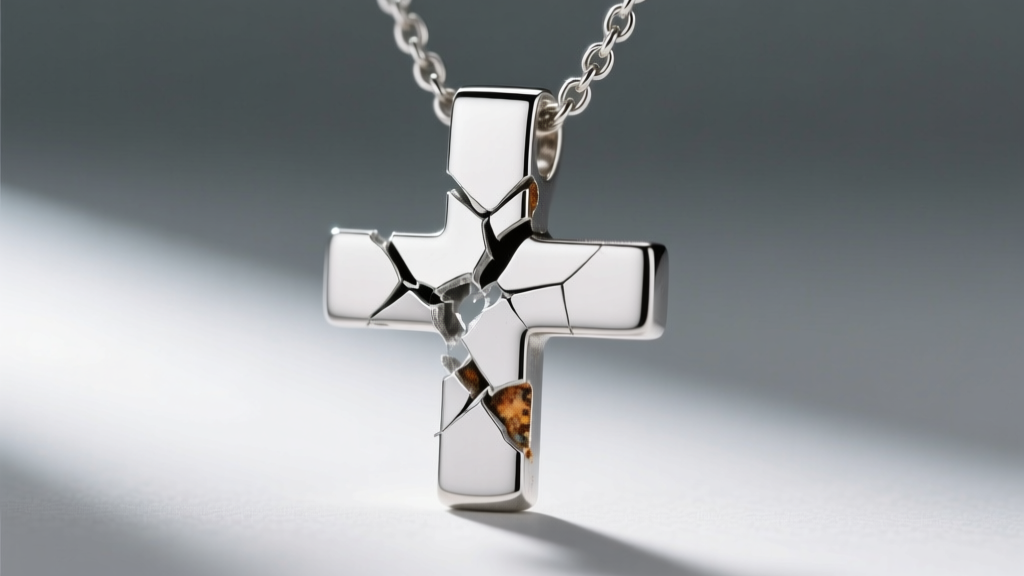
Heat-Affected Zone (HAZ) Embrittlement
Laser cutting generates intense localized heat. The edges of the cut letters experience a Heat-Affected Zone (HAZ), where the crystalline structure of the gold or silver alloy can become brittle. If a name drop necklace is not properly annealed and tumbled in a vibratory finishing machine post-cut, the brittle edges will develop micro-fissures. Over time, the swinging motion of the drop chain will cause these fissures to propagate, resulting in a clean snap along the edge of a capital letter. Proper post-cut thermal treatment is non-negotiable for high-end drops.
Sourcing and Manufacturing Standards in 2026
When commissioning or sourcing a custom name drop necklace, buyers must look beyond the aesthetic rendering. Demand vector proofs that show the exact millimeter width of the structural bridges. Verify that the drop chain is secured with soldered or laser-welded jump rings rather than friction-closed links. Finally, insist on solid 14k or 18k gold alloys over plated alternatives, as the base metals used in vermeil lack the tensile memory required to withstand the unique physics of a vertical drop pendant. By respecting the engineering constraints of the design, you ensure the piece remains a lasting heirloom rather than a fragile novelty.


