The Star of David Necklace: A Complete Material Guide
Compare metals for your Star of David necklace. Explore durability, pricing, and skin safety for silver, gold, platinum, and titanium pendants.

The Symbolism and Wearability of the Magen David
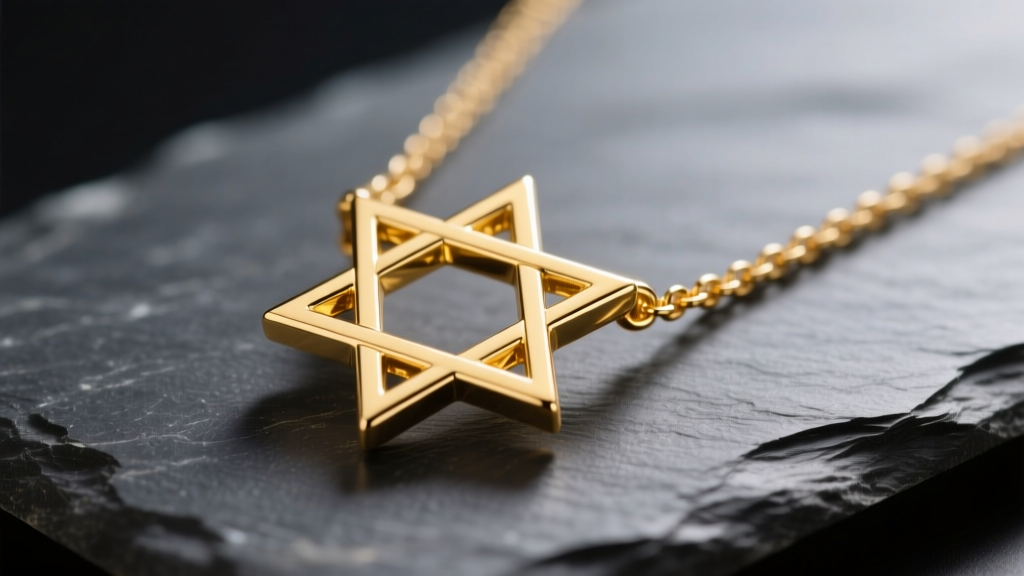
The Star of David, or Magen David, is a powerful symbol of Jewish identity, faith, and heritage. When selecting the Star of David necklace, buyers are often focused on the design and symbolism, but the underlying material composition dictates how the piece will age, wear, and interact with your skin over decades. A pendant featuring sharp geometric vertices and intricate cutouts presents unique structural challenges. Thin points on a hexagram can bend or snap if cast in overly soft metals, while heavy solid pieces require robust chain pairings to prevent clasp failure. Understanding the metallurgical properties of your jewelry ensures that this meaningful piece remains an enduring heirloom rather than a fragile accessory.
Precious Metals: Gold, Silver, and Platinum Compared
Precious metals remain the most popular choice for religious and cultural jewelry due to their intrinsic value and historical significance. However, not all precious metal alloys behave the same way when shaped into the intersecting triangles of the Star of David.
14k vs. 18k Yellow Gold
Gold purity is measured in karats, and the choice between 14k and 18k gold significantly impacts the durability of your pendant. According to the Gemological Institute of America (GIA), 18k gold is 75% pure gold, offering a rich, warm, and highly saturated yellow hue. However, its Vickers hardness is relatively low (around 125 HV), making it susceptible to scratching and bending at the delicate outer points of the star. Conversely, 14k gold (58.5% pure gold) is alloyed with higher amounts of copper, silver, and zinc. This increases its hardness to approximately 140-150 HV, providing superior structural integrity for intricate, laser-cut Star of David designs. For daily wearers who want a pendant that resists deformation, 14k gold is the superior functional choice, while 18k is better reserved for occasional, ceremonial wear.
Sterling Silver (925) and Rhodium Plating
Sterling silver is an alloy of 92.5% pure silver and 7.5% copper. The copper adds necessary tensile strength but introduces a major vulnerability: oxidation. When exposed to sulfur in the air, sweat, and cosmetics, the copper reacts to form silver sulfide, resulting in a dark tarnish. To combat this, many jewelers apply a micro-thin layer of rhodium plating. While rhodium provides a brilliant, tarnish-resistant white finish, it is a surface treatment that will eventually wear away at the high-friction points of the pendant, typically requiring re-plating every 1 to 3 years. If you choose a sterling silver Star of David necklace, opt for a solid, slightly thicker casting (at least 1.2mm depth) to allow for future polishing without compromising the structural vertices.
Platinum: The Heirloom Standard
Platinum jewelry is typically 95% pure platinum, alloyed with 5% ruthenium or iridium. It is exceptionally dense, meaning a solid platinum Star of David pendant will feel noticeably heavier than its gold or silver counterparts. Platinum does not tarnish and is naturally hypoallergenic. A unique property of platinum is that when it scratches, the metal is displaced rather than lost, developing a soft, matte finish known as a patina. Many wearers appreciate this vintage look, but it can be restored to a high polish by a professional jeweler. Due to its high melting point and density, platinum is more expensive to cast and finish, making it a premium investment piece.
Alternative & Hypoallergenic Metals
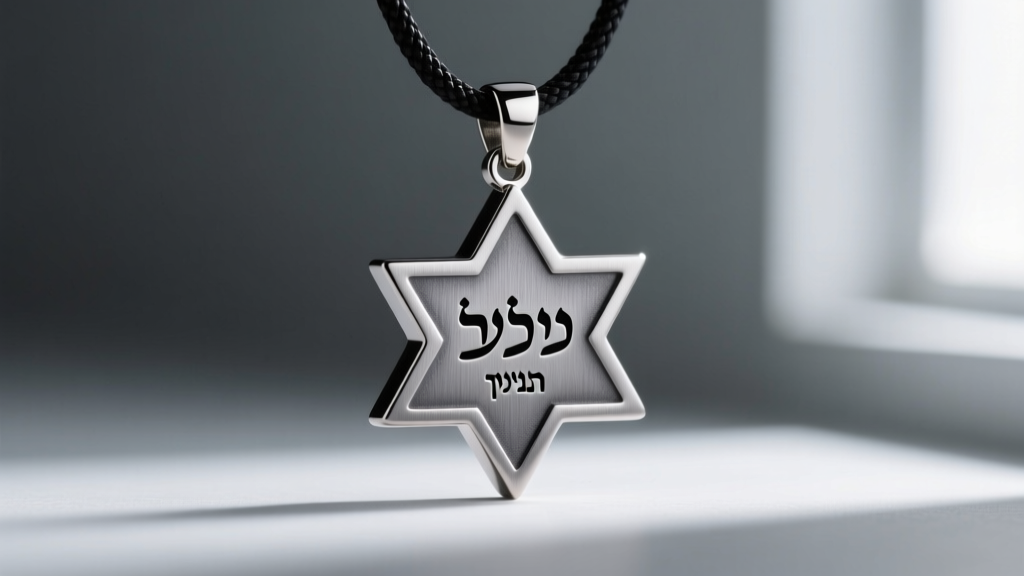
For those with metal sensitivities or active lifestyles, alternative metals offer exceptional durability and skin safety. The American Academy of Dermatology notes that nickel is the most common culprit for contact dermatitis in jewelry, making nickel-free alternatives highly sought after.
Titanium and Surgical Steel
Grade 23 Titanium (Ti-6Al-4V ELI) is a medical-grade alloy that is entirely biocompatible, lightweight, and virtually indestructible. A titanium Star of David necklace is ideal for athletes, medical professionals, or anyone who refuses to take their jewelry off in the shower or gym. Because titanium cannot be soldered with traditional jeweler's torches, the bail (the loop connecting the pendant to the chain) must be cast as a single piece or laser-welded. Stainless steel (specifically 316L surgical steel) is another budget-friendly, highly durable option. While 316L contains trace amounts of nickel, it is tightly bound within the alloy and generally safe for most people, though those with severe nickel allergies should stick to pure titanium or platinum.
Material Comparison Chart: Durability, Price, and Care
Use the following data table to compare the physical properties and market positioning of common metals used for the Star of David necklace.
| Metal / Alloy | Purity / Grade | Hardness (Vickers) | Tarnish Resistance | Est. Price Range (Pendant) | Best Use Case |
|---|---|---|---|---|---|
| 14k Yellow Gold | 58.5% Gold | 140 - 150 HV | Excellent | $250 - $600 | Everyday wear, durable points |
| 18k Yellow Gold | 75.0% Gold | 120 - 130 HV | Excellent | $400 - $1,200 | Ceremonial, rich color |
| Sterling Silver | 92.5% Silver | 60 - 70 HV | Poor (unless plated) | $40 - $150 | Budget-friendly, fashion |
| Platinum | 95.0% Platinum | 110 - 130 HV | Excellent | $800 - $2,500+ | Heirlooms, heavy solid casts |
| Titanium | Grade 23 ELI | 300+ HV | Excellent | $60 - $200 | Active lifestyles, allergies |
| 316L Steel | Surgical Grade | 150 - 200 HV | Very Good | $20 - $80 | Affordable daily wear |
Chain Pairing: Matching the Pendant to the Right Link
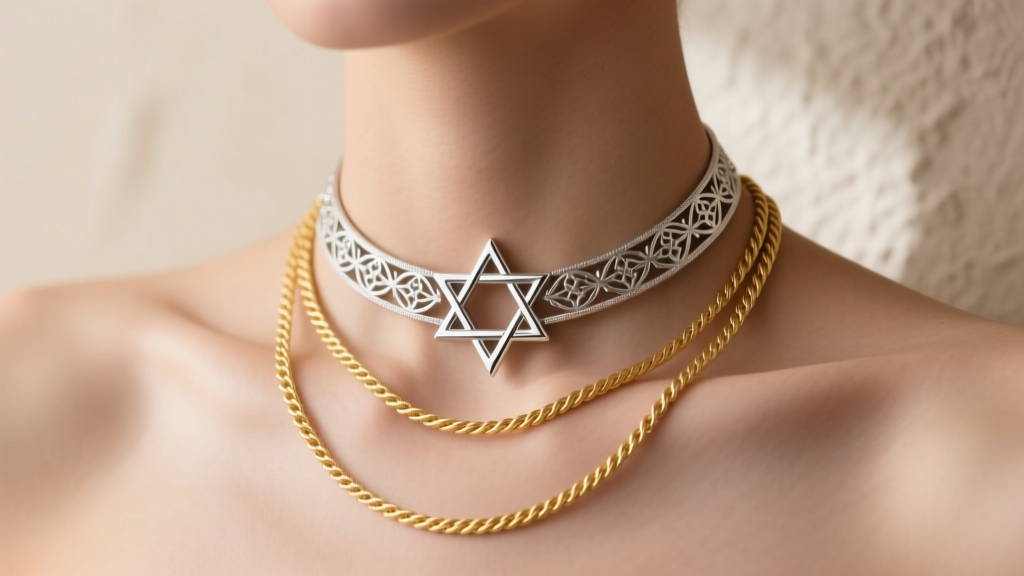
The structural integrity of the Star of David necklace relies heavily on the chain and the bail. The bail is the finding that connects the pendant to the chain. A standard Magen David pendant requires a bail with an inner diameter of 3mm to 5mm. If you are purchasing a heavy solid gold or platinum piece (over 5 grams), ensure the bail is soldered securely and features a reinforced jump ring.
When selecting the chain, consider both aesthetics and tensile strength:
- Box Chain: Composed of square links, this chain offers a geometric aesthetic that perfectly mirrors the angles of the Star of David. It is highly durable and lies flat, but can kink and snap if bent sharply backward.
- Rope Chain: A classic choice that reflects light beautifully due to its twisted links. However, rope chains can pull chest hair and are difficult to repair if a link snaps.
- Wheat (Spiga) Chain: Featuring oval links woven in the same direction, wheat chains are incredibly strong and resist kinking, making them the safest choice for heavy, valuable pendants.
For pendants weighing under 3 grams, a 1.0mm to 1.2mm chain is sufficient. For heavier pieces, upgrade to a 1.5mm to 2.0mm thickness to prevent the chain from stretching or breaking under the pendant's dynamic load.
Care, Maintenance, and Failure Modes
Proper maintenance extends the life of your necklace. For plain metal Star of David pendants without gemstone inlays, an ultrasonic cleaner is highly effective at removing trapped sebum and dirt from the sharp inner corners of the hexagram. However, if your pendant features inlays of turquoise, opal, or lapis lazuli, avoid ultrasonic cleaners and harsh chemical dips, as the high-frequency vibrations and acids can fracture porous stones or dissolve the epoxy adhesives used to set them.
For sterling silver, use a treated silver polishing cloth to gently remove sulfide tarnish. Avoid abrasive pastes, which can wear down the crisp edges of the star's points over time. For gold and platinum, a simple soak in warm water with a few drops of mild dish soap, followed by a soft-bristle brush, will restore the metal's natural luster without risking structural damage.
Final Verdict: Which Metal Suits Your Lifestyle?
Choosing the right material for the Star of David necklace is a balance between budget, aesthetics, and daily habits. If you seek a vibrant, traditional look that can withstand daily friction, 14k yellow gold is the undisputed champion. For those prioritizing skin safety and an active lifestyle, Grade 23 titanium offers unmatched resilience. Ultimately, by matching the metallurgical properties to your personal wear patterns, you ensure that this profound symbol of heritage remains a steadfast companion for generations.


