Star Sterling Silver Necklace: 2026 Trend & Style Guide
Discover 2026 trends for the star sterling silver necklace. Learn how to layer, choose silver grades, and style celestial pendants for any neckline.

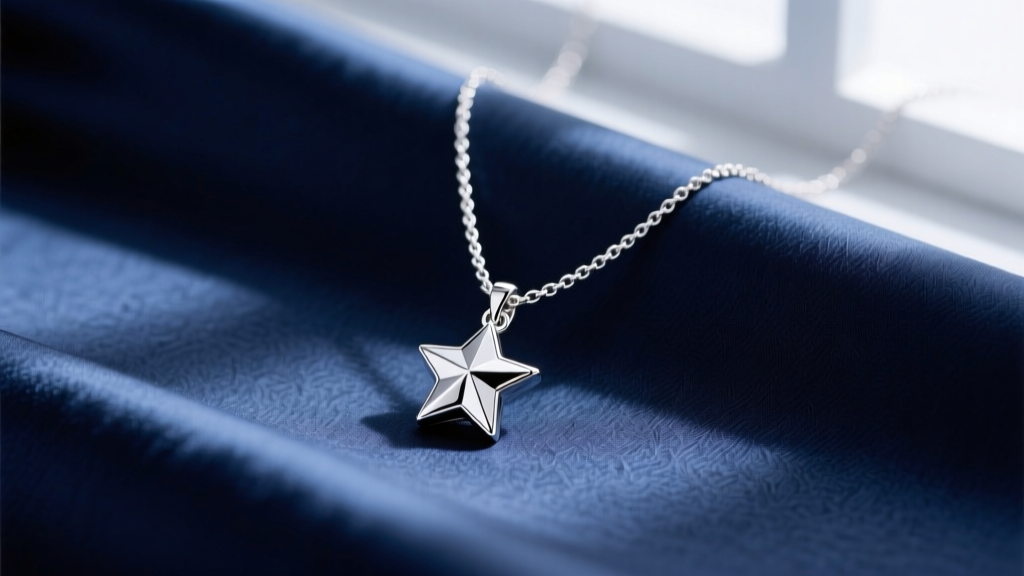
The Celestial Shift: Why the Star Sterling Silver Necklace Dominates 2026
The jewelry landscape of 2026 has seen a definitive pivot away from the heavy, logo-driven maximalism of the early 2020s. In its place, a refined, astrological minimalism has taken root. At the center of this movement is the star sterling silver necklace. No longer relegated to teenage bedroom accessories or fleeting Y2K nostalgia, the celestial motif has been elevated through precision metallurgy and sophisticated styling. According to trend forecasts by JCK Online, celestial themes remain a top-three driver in the demi-fine jewelry sector, with silver outpacing gold in the under-$300 category due to its cool-toned versatility and accessible price point.
Market analysis shows that demi-fine brands are pricing these intricate silver pieces between $85 and $250, bridging the gap between disposable fast fashion and high-end fine jewelry. This accessible luxury price point is a major catalyst for the star motif's widespread adoption among millennials and Gen Z professionals. But what exactly defines the 2026 iteration of this classic piece? The modern star sterling silver necklace relies on asymmetry, mixed-metal accents, and micro-textures. Designers are moving away from perfectly symmetrical, flat-cast stars. Instead, we are seeing shooting star asymmetrical bars, brushed finishes that mimic meteorites, and bezel-set lab-grown diamond accents that provide subtle scintillation without overwhelming the silver's natural luster.
Metallurgy & Material Grades: Decoding the Silver Standard
When investing in a star sterling silver necklace, understanding the alloy composition is critical for longevity and skin compatibility. The term sterling is legally protected in most markets, mandating a minimum of 92.5% pure silver and 7.5% alloying metals, usually copper. However, the copper content is precisely what causes traditional sterling to tarnish when exposed to sulfur and moisture in the air.
Furthermore, consumers with contact dermatitis must be vigilant. While pure silver is hypoallergenic, the 7.5% copper or nickel alloys used in cheaper .925 blends can trigger reactions. Always verify that the alloy is copper-based or, ideally, nickel-free.
To combat tarnish, 2026 has seen a massive surge in Argentium silver. By replacing a portion of the copper with germanium, Argentium (.935 or .960 grades) forms a self-healing germanium dioxide layer on the surface, making it up to seven times more tarnish-resistant than traditional .925 sterling. When shopping, look for hallmarks stamped 925, 935, or the distinct Argentium unicorn stamp.
Additionally, many premium star pendants feature rhodium plating. Rhodium, a platinum-group metal, provides a brilliant, mirror-like finish and acts as a physical barrier against oxidation. However, be aware that rhodium plating on high-friction areas (like the back of a pendant resting against the skin) will eventually wear off, requiring professional re-dipping every 18 to 24 months.
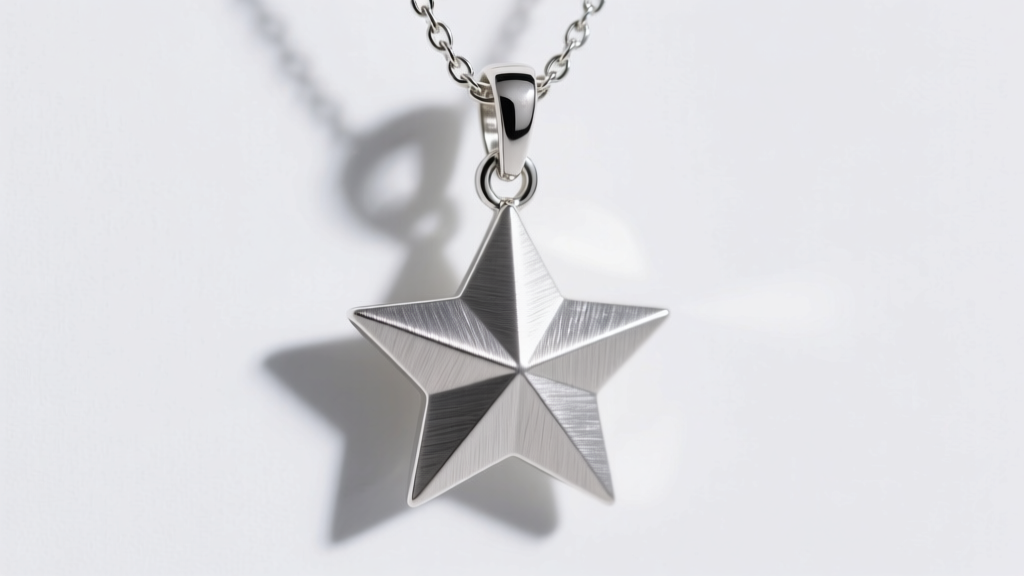
Chain Anatomy: Matching the Link to the Motif
The pendant is only half the equation. The chain you select dictates the drape, durability, and overall aesthetic of your star sterling silver necklace. A delicate 10mm star pendant will look lost on a heavy 3mm rope chain, while a bold 30mm celestial piece will snap a fragile 0.5mm thread chain. Here is a structural breakdown of the best chain pairings for star motifs:
| Chain Type | Recommended Gauge | Best For | Durability & Drape |
|---|---|---|---|
| Cable | 0.8mm - 1.2mm | Micro-stars (5mm-12mm) | Classic, lightweight, prone to kinking if snagged. |
| Box | 1.0mm - 1.5mm | Geometric & modern stars | Excellent strength, smooth drape, modern aesthetic. |
| Rolo | 1.5mm - 2.0mm | Chunky, brushed, or vintage stars | Highly durable, catches light beautifully, heavier. |
| Snake | 1.0mm - 1.5mm | Sleek, rhodium-plated shooting stars | Fluid, liquid-like drape, but permanently bends if kinked. |
For everyday wear, a 1.0mm box chain offers the optimal balance of tensile strength and delicate visual weight, ensuring your star pendant remains secure without the chain dominating the neckline.
Layering Frameworks: The 2026 Celestial Stack
Layering is no longer about throwing on every chain you own; it requires mathematical precision in length and proportion. The most sought-after look this year is the Celestial Cascade. To achieve this, you must adhere to a strict 2-inch length increment and a progressive pendant sizing model.
- The Anchor (14 inches): Start with a choker-length chain featuring a micro-pave or solid 8mm star. This sits right at the base of the throat and anchors the stack.
- The Core (16 inches): Your primary star sterling silver necklace sits here. Opt for a 15mm to 20mm pendant on a slightly heavier chain (e.g., a 1.2mm rolo). This should rest perfectly on the collarbone.
- The Elongator (18 to 20 inches): Finish with a longer, pendant-less chain or a subtle horizontal bar/starburst motif. This draws the eye downward, creating a slimming, elongating effect on the torso.
Pro Tip: To prevent the chains from tangling, a common frustration when layering fine silver, use a multi-strand clasp or attach small silicone O-rings to the jump rings of your pendants to reduce metal-on-metal friction.

Neckline Pairing Matrix
A star sterling silver necklace must be styled in harmony with the garment's architecture. The interplay between the metal and the fabric can either elevate an outfit or create visual clutter. Fashion stylists recommend the following pairings based on 2026 runway silhouettes:
The Deep V-Neck
Pair with an 18-inch or 20-inch Y-necklace or a lariat-style shooting star. The vertical drop of the pendant mimics and elongates the V-shape of the garment, creating a seamless, continuous line.
The Crew Neck / High Collar
Opt for a 14-inch or 16-inch choker-style star necklace that sits entirely above the fabric line. Alternatively, wear a bold, oversized 35mm star pendant on a 24-inch chain over the collar for a streetwear-inspired, editorial contrast.
The Scoop Neck
This is the most forgiving canvas. A 16-inch classic cable chain with a medium 12mm star pendant will rest perfectly in the negative space of the scoop, framing the collarbone without competing with the hemline.
The Off-the-Shoulder / Boat Neck
With horizontal necklines, you want to introduce verticality. Layer a 14-inch choker with a 22-inch lariat star chain. The horizontal expanse of exposed skin provides a dramatic, uncluttered backdrop for the silver to pop.
Tarnish & Care: Preserving the Cosmic Shine
Sterling silver is inherently reactive. The primary culprit for tarnish is hydrogen sulfide in the atmosphere, which reacts with the copper alloy to form black silver sulfide. To preserve your star sterling silver necklace, adopt a proactive care regimen.
Store your pieces in airtight polyethylene zip-lock bags alongside 3M Anti-Tarnish strips, which absorb airborne sulfur compounds. Avoid storing silver in humid environments like bathroom vanities. When traveling, wrap your necklaces in anti-tarnish flannel pouches. Never wear sterling silver in chlorinated pools or hot tubs; the chlorine causes irreversible structural embrittlement and severe discoloration that polishing cannot fix.
For cleaning, abandon liquid chemical dips, which strip rhodium plating and damage oxidized detailing. Instead, use a high-quality micro-abrasive polishing cloth (such as a Sunshine Cloth) to gently buff the high-polish areas of the star, leaving any intentionally oxidized crevices dark to maintain the pendant's three-dimensional depth. For an authoritative guide on precious metal care and the chemical properties of silver alloys, refer to the educational resources provided by the Gemological Institute of America (GIA).
Final Verdict: Investing in the Cosmos
The star sterling silver necklace has successfully transcended its trend-cycle origins to become a permanent fixture in the modern jewelry wardrobe. By prioritizing advanced alloys like Argentium, selecting structurally sound chains, and applying deliberate layering mathematics, you can curate a celestial collection that is both deeply personal and built to last. Whether you are drawn to the quiet luxury of a brushed micro-star or the bold statement of an asymmetric shooting star, the cosmos remains the ultimate style muse for 2026 and beyond.


