Sterling Silver Toggle Necklace: The Expert Buying Guide
Discover what to look for in a sterling silver toggle necklace. Learn about clasp ratios, chain gauges, silver hallmarks, and pricing in our expert guide.

The Mechanics of the Toggle: More Than Just Aesthetics
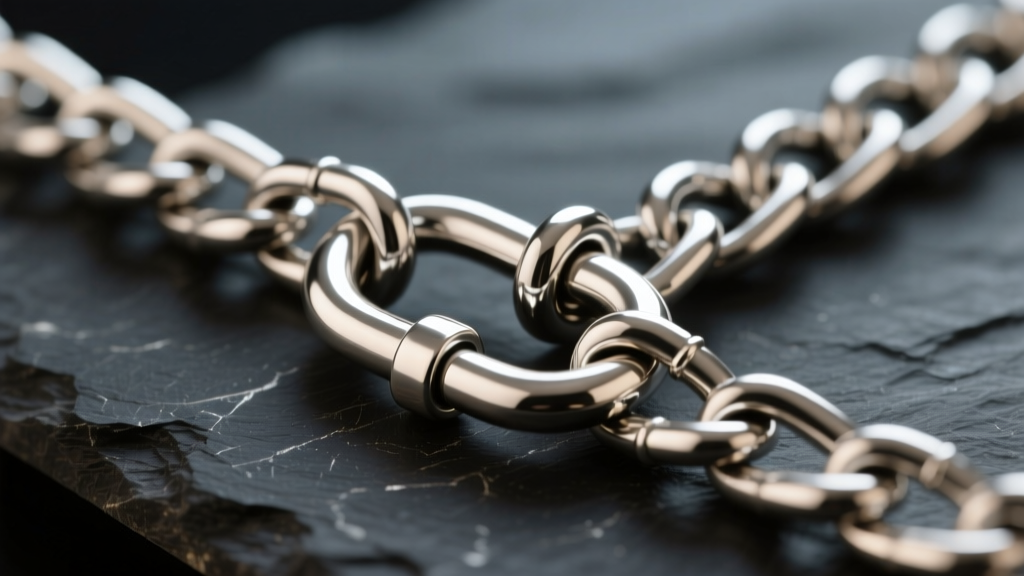
When shopping for a sterling silver toggle necklace, most buyers focus entirely on the visual appeal of the T-bar and ring clasp. However, as a functional piece of engineering, the toggle clasp relies entirely on gravity, tension, and precise geometric ratios to stay secured. A poorly engineered toggle is essentially a lost necklace waiting to happen. Unlike lobster clasps that rely on a mechanical spring, a toggle is a gravity-assisted friction lock. Understanding the physics and metallurgy behind this classic design is the first step to making a purchase that lasts a lifetime.
Silver Purity and Hallmarks: Decoding the Alloys
Not all silver is created equal, and the purity of the metal directly impacts the structural integrity of the clasp. According to the Gemological Institute of America (GIA), sterling silver is an alloy consisting of 92.5% pure silver and 7.5% secondary metals, usually copper. This specific .925 ratio is non-negotiable for toggle clasps.
- .925 Sterling Silver: The ideal standard. The copper alloy provides the necessary tensile strength to prevent the T-bar from bending and the ring from warping under the weight of the chain.
- .999 Fine Silver: While technically purer, fine silver is far too soft for toggle mechanics. A fine silver T-bar will easily bend out of shape when pulling through the ring, leading to clasp failure.
- .958 Britannia Silver: Occasionally found in high-end artisan pieces. It is slightly softer than sterling but offers a brighter luster. If buying Britannia silver, ensure the toggle wire gauge is exceptionally thick to compensate for the softness.
Always look for the '925', 'STER', or 'Sterling' stamp directly on the T-bar and the ring. If the clasp is unmarked but the chain is stamped, the clasp may be a cheap base-metal replacement.
The Golden Ratio: T-Bar to Ring Sizing
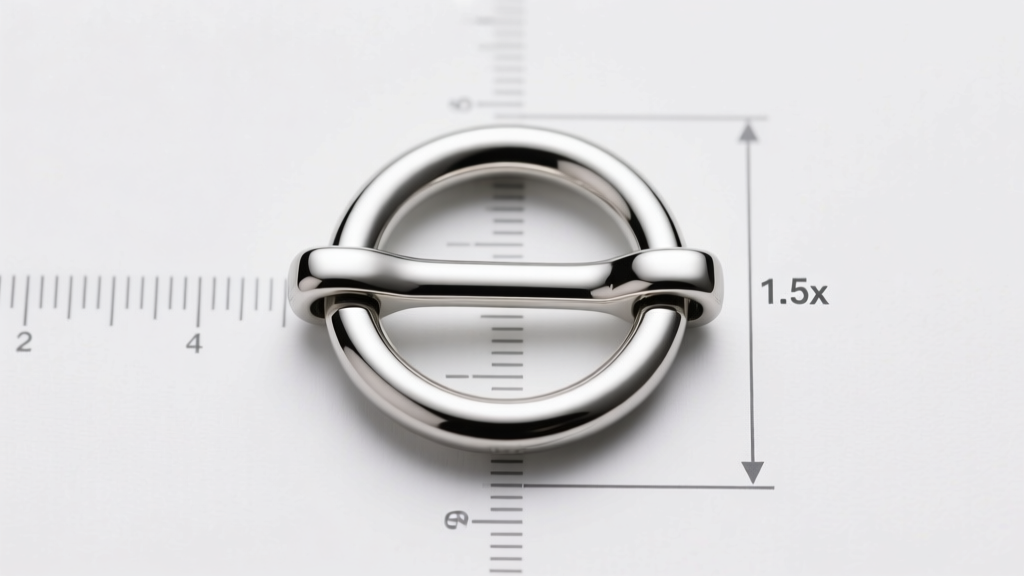
The most common reason a sterling silver toggle necklace slips open is an incorrect length-to-diameter ratio. For a toggle to remain securely fastened, the T-bar must be significantly longer than the inner diameter of the ring.
Calculating the Safe Ratio
The industry standard for a secure toggle requires the T-bar to be at least 1.5 times the inner diameter of the ring. If the inner diameter of the silver ring is 12mm, the T-bar must be a minimum of 18mm long. Many mass-market jewelers cut costs by using a 1.2x ratio, which allows the T-bar to pivot and slip through the ring if the necklace is tugged or caught on clothing.
Wire Gauge and Thickness
Length is only half the battle; thickness dictates whether the clasp will warp. The ring should be cast or forged from 10 to 12-gauge wire (approx. 2.3mm to 2.0mm). The T-bar should be 12 to 14-gauge (approx. 2.0mm to 1.6mm). Anything thinner than 16-gauge (1.2mm) is highly susceptible to bending, which alters the golden ratio and compromises the lock.
Chain Selection: Weight, Gauge, and Drape
A toggle clasp requires a specific amount of downward gravitational pull to keep the T-bar seated flush against the sides of the ring. If the chain is too lightweight, the clasp will remain loose, increasing the risk of the T-bar slipping through. As noted in educational guides by Jewelers of America, matching the chain weight to the clasp hardware is vital for longevity.
| Chain Style | Recommended Width | Toggle Compatibility | Why It Works (or Fails) |
|---|---|---|---|
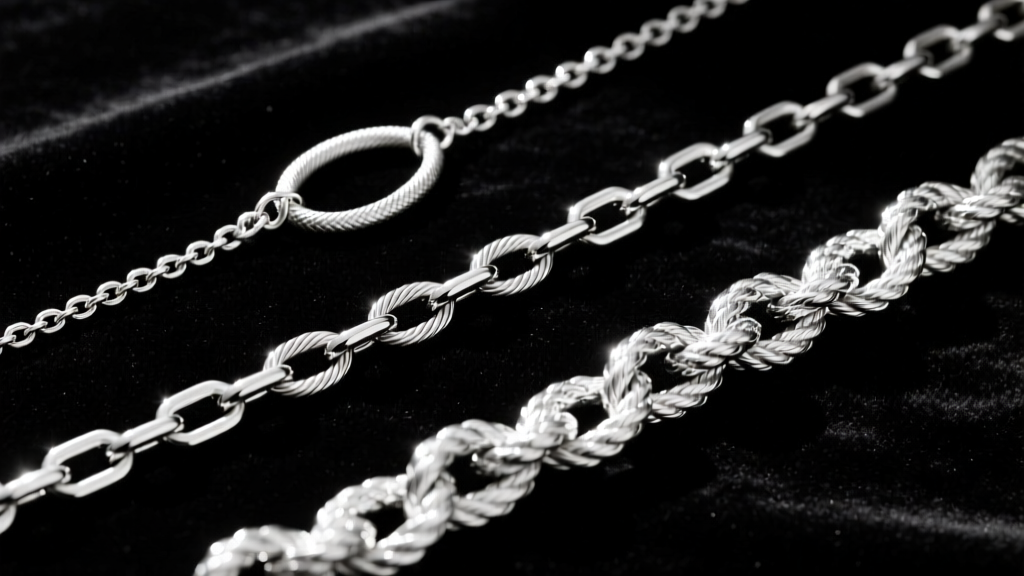
| Curb / Figaro | 2.5mm - 5.0mm | Excellent | Lays flat, provides excellent weight and downward pull to seat the T-bar securely. |
| Rope | 2.0mm - 4.0mm | Excellent | Heavy and durable; the twisted links add the necessary gravity to keep the toggle locked. |
| Cable | 2.0mm - 3.5mm | Good | Classic look, but ensure the wire gauge of the links is thick enough to support the clasp weight. |
| Box | 1.5mm - 3.0mm | Fair | Can be stiff; lacks the fluid drape needed to pull the toggle tight against the collarbone. |
| Snake | Any | Poor | Too fluid and lightweight; prone to kinking and fails to provide the rigid pull a toggle requires. |
Pricing Tiers: What Should You Actually Pay?
When evaluating a sterling silver toggle necklace, price is often a direct reflection of the clasp's engineering and the chain's solid versus hollow construction.
- Mass Market ($35 - $75): Usually features hollow-link chains and cast toggles with a 1.2x ratio. The silver is often mixed with higher amounts of zinc or nickel to save costs, leading to faster tarnishing and brittle clasps.
- Artisan & Indie Jewelers ($90 - $180): The sweet spot for quality. You will find solid-link chains, hand-forged or heavily cast toggles with proper 1.5x ratios, and high-quality .925 alloys. Many indie makers also add decorative elements to the T-bar without compromising the structural geometry.
- Fine & Luxury ($250+): Features heavy, solid sterling silver (often weighing over 50 grams total), sometimes accented with gemstones or gold vermeil. The toggles are precision-machined or heavily forged, ensuring decades of wear without warping.
Maintenance: Preventing Clasp Tarnish and Warping
The toggle mechanism is a high-friction area. Every time you fasten the necklace, the T-bar rubs against the inner rim of the ring. While this friction can actually help polish the contact points, the crevices where the T-bar meets the ring are prime traps for skin oils, lotions, and environmental sulfur, leading to localized black tarnish.
Do not rely solely on a standard silver polishing cloth, as it cannot reach the micro-gaps in the clasp. Instead, use a soft-bristled baby toothbrush with a few drops of mild dish soap and warm water to gently agitate the clasp joints. Rinse thoroughly and dry completely with a microfiber cloth before storing. Never pull the T-bar through the ring by yanking the chain; always hold the T-bar and ring directly between your fingers to prevent unnecessary stress on the chain's jump rings.
Final Verdict: The Pre-Purchase Checklist
Before adding a sterling silver toggle necklace to your cart or completing a purchase at the jeweler, run through this quick structural checklist:
- Verify the '925' stamp is present on both the chain and the toggle hardware.
- Measure or visually estimate the T-bar to ring inner diameter ratio (aim for 1.5x).
- Check the wire gauge of the toggle; it should feel substantial and resist light finger pressure.
- Ensure the chain is at least 2.0mm wide and possesses enough weight to pull the clasp taut.
- Inspect the jump rings connecting the clasp to the chain; they must be soldered shut or heavily compressed to prevent the heavy toggle from pulling them apart.
By prioritizing mechanical geometry and metallurgical quality over fleeting trends, you will secure a piece of jewelry that is as reliable as it is beautiful.


