What Is the Strongest Necklace Chain for Heavy Pendants?
Discover the strongest necklace chain weaves and metals for heavy pendants. Learn about gauge sizes, clasp mechanics, and how to prevent breakage.

The Anatomy of Chain Breakage: Why Necklaces Snap
When beginners set out to find the strongest necklace chain, they often focus entirely on the metal. While the alloy matters, the geometric structure of the chain weave and the mechanics of the clasp are equally critical. A necklace rarely snaps because the metal itself tears; instead, it fails due to localized stress, kinking, unsoldered link separation, or clasp spring fatigue.
To understand how to prevent breakage, we must look at the three primary forces that destroy jewelry:
- Tensile Stress: The pulling force exerted when a heavy pendant drags the chain downward. This tests the ultimate tensile strength of the metal.
- Shear and Torsion: Twisting forces that occur when a necklace is slept in, caught on clothing, or improperly stored. This tests the chain's yield strength and resistance to kinking.
- Abrasion: The microscopic friction between the pendant's bail (the loop that holds the pendant) and the chain links. Over years of wear, a hard pendant bail can act like a saw, cutting right through a softer gold chain.
According to technical guidelines from jewelry manufacturing suppliers like Rio Grande, selecting a chain requires balancing hardness (resistance to scratching and abrasion) with malleability (the ability to absorb shock without snapping). Let us break down exactly which metals and weaves survive daily abuse.
Metal Tensile Strength: Which Alloys Actually Hold Up?
The Gemological Institute of America (GIA) notes that pure 24k gold is far too soft for functional chains, which is why it is alloyed with metals like copper, silver, and zinc. However, not all alloys are created equal when supporting heavy pendants.
| Metal / Alloy | Vickers Hardness (HV) | Structural Pros | Structural Cons | Ideal Pendant Weight |
|---|---|---|---|---|
| Tungsten Carbide | ~1500 HV | Extreme scratch resistance; highest tensile strength. | Highly brittle; will shatter if struck against a hard surface. | Heavy (20g+) |
| Grade 5 Titanium | ~350 HV | Aerospace-grade yield strength; lightweight; hypoallergenic. | Cannot be easily resized or soldered if a link breaks. | Medium to Heavy (10-25g) |
| 14k Solid Gold | ~135 HV | Excellent balance of hardness and malleability; easily soldered. | Softer than steel; will eventually abrade if the bail is unlined. | Light to Medium (5-15g) |
| 18k Solid Gold | ~120 HV | Rich color; high precious metal value. | Too soft for heavy pendants; prone to stretching and link deformation. | Light (Under 7g) |
| Platinum (950) | ~110 HV | Extremely dense; displaces rather than loses metal when scratched. | Highly malleable; will stretch and deform under heavy, continuous tension. | Medium (10-15g) |
Expert Takeaway: For a heavy pendant, 14k gold is vastly superior to 18k gold due to its higher copper/zinc alloy content, which increases its Vickers hardness. If you want absolute indestructibility and do not care about precious metal value, Grade 5 Titanium (Ti-6Al-4V) offers the best strength-to-weight ratio on the market.
The 3 Strongest Necklace Chain Weaves for Pendants
The weave dictates how tension is distributed across the necklace. A strong weave ensures that if one link is stressed, the surrounding links absorb the kinetic energy.
1. Wheat (Spiga) Chain
The wheat chain is widely considered the undisputed champion for heavy pendants. It is constructed from four strands of twisted oval links woven together in a continuous, braided pattern. Because the links are interwoven rather than simply hooked end-to-end, there is no single point of failure. If a pendant pulls downward, the tension is distributed radially across the entire braid. Furthermore, wheat chains are highly resistant to kinking, making them ideal for daily wearers who frequently toss their jewelry into a bag or wear it to sleep.
2. Mariner (Anchor) Chain
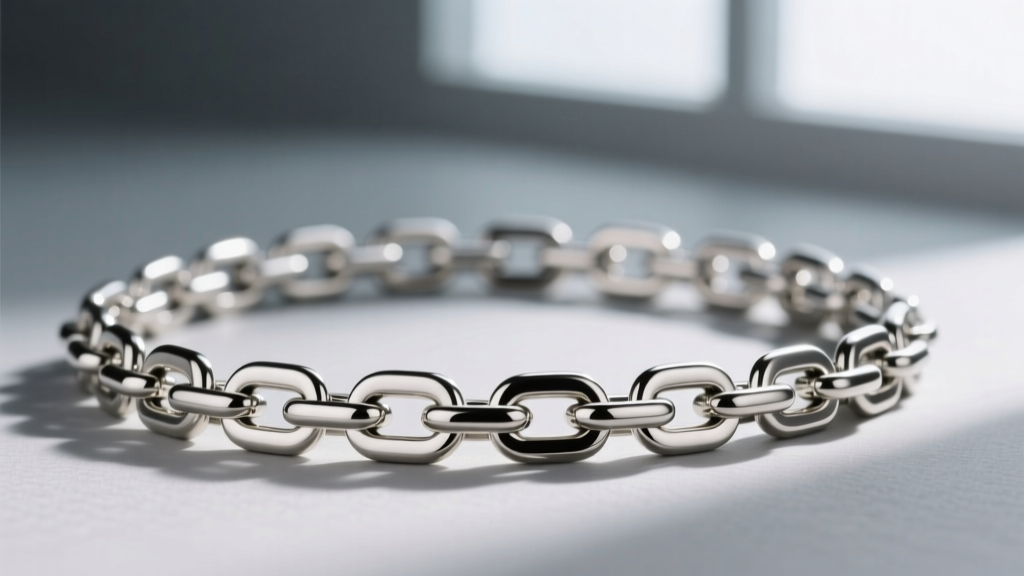
Inspired by the heavy chains used on boat anchors, the mariner chain features oval links with a solid horizontal bar across the center. This center bar serves a vital structural purpose: it prevents the oval links from collapsing inward or folding under torsion stress. A solid, soldered mariner chain in 14k gold or 316L stainless steel can support substantial weight without stretching. Look for 'soldered' mariner chains, meaning every single link has been laser-welded shut, eliminating the weak point of an open seam.
3. Soldered Cable Chain
The classic cable chain consists of uniform oval or round links. While it looks basic, a heavy-gauge, fully soldered cable chain is incredibly robust. The simplicity of the design means there are no complex folds or crevices to trap dirt, and if a link ever does fail, it is the easiest chain style for a jeweler to repair. The critical requirement here is the solder: unsoldered cable chains will easily pull apart at the seam when subjected to the leverage of a heavy pendant.
Weaves to Avoid: The Kink and Snap Hazards
Just as important as knowing what to buy is knowing what to avoid. Many popular chains are designed purely for fashion and lack the structural integrity for pendants.
Warning: Never hang a heavy pendant on a snake, box, or herringbone chain. These weaves rely on flush, tightly packed surfaces that act like a solid tube of metal. Once they bend past their yield point, they kink permanently and will snap shortly after.
- Snake Chains: Made of tightly joined wavy rings that form a smooth, flexible tube. They are notorious for catching on hair and kinking. A kinked snake chain is structurally compromised and will eventually break at the fold.
- Box Chains: Constructed from square, folded links. While they look sturdy, the sharp 90-degree folds in the metal create natural weak points. Under the swinging pendulum weight of a heavy pendant, box chains tend to stretch, deform into diamonds, and snap.
- Herringbone Chains: Flat, fluid, and beautiful when laid perfectly straight. However, they have almost zero torsional resistance. A single twist will permanently ruin the lay of the chain.
Sizing, Gauge, and Clasp Mechanics
Even the strongest wheat chain will fail if it is too thin or secured by a substandard clasp. Here is the exact sizing framework you need to match your chain to your pendant.
The Gauge-to-Weight Ratio
Chain thickness (gauge) must scale with the pendant's weight. A general rule of thumb used by master jewelers is that the chain should be rated to hold at least five times the weight of the pendant to account for sudden kinetic shocks (like the necklace catching on a doorknob).
- Under 1.0mm: Strictly for lightweight, delicate pendants (under 3 grams). Will snap if subjected to pulling.
- 1.2mm to 1.8mm: The sweet spot for standard everyday pendants (5 to 12 grams). Offers a balance of visibility and strength.
- 2.0mm to 3.5mm: Required for heavy, oversized, or solid gemstone pendants (15 to 30+ grams). Provides the necessary tensile backbone.
Clasp Mechanics: The Weakest Link
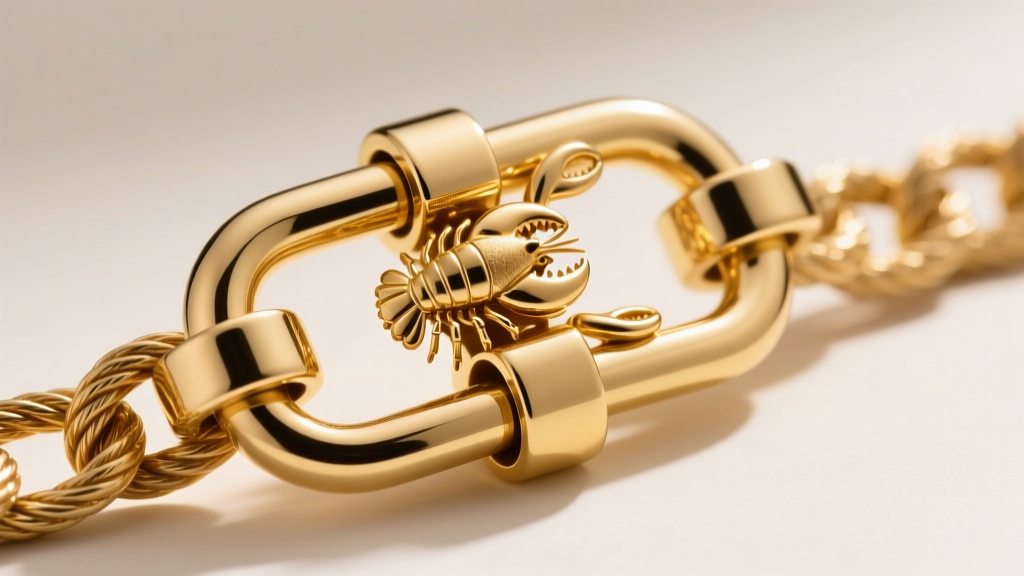
The clasp is almost always the first component to fail on a necklace. The tiny internal spring inside a standard clasp is under constant tension and will eventually fatigue, leaving the necklace open.
- Spring Ring (Avoid): The small, perfectly circular clasp. It is cheap to produce, difficult to operate with one hand, and the internal spring is notoriously weak. Never use this for a heavy pendant.
- Lobster Claw (Good): Named for its resemblance to a lobster's claw, this clasp features a larger, more robust internal spring and a wider opening. A solid cast 14k lobster claw is sufficient for pendants up to 20 grams.
- Box Clasp with Figure-8 Safety (Best): For heavy, high-value pendants, a box clasp is the gold standard. The tongue clicks securely into a boxed housing, and a 'figure-8' wire safety latch hinges over the top, providing a secondary physical lock. Even if the primary mechanism fails, the safety wire prevents the necklace from falling off.
Final Verdict: Building Your Unbreakable Setup
Finding the strongest necklace chain is not about picking a single magic product; it is about engineering a system. If you are mounting a heavy, everyday pendant, your ideal setup is a 2.0mm 14k solid gold Wheat (Spiga) chain secured with a heavy-duty Lobster Claw or Box clasp.
Finally, pay attention to the bail. If your pendant has a hard, unlined metal bail rubbing against your gold chain, consider having a jeweler solder a small, soft 18k gold jump ring inside the bail to act as a sacrificial buffer. This simple, inexpensive modification prevents abrasive friction and will easily double the lifespan of your chain. Treat your jewelry as a mechanical system, respect the physics of tensile strength, and your necklace will easily last a lifetime.


