How to Style and Care for a Mens Horseshoe Necklace
Learn how to choose, style, and maintain a mens horseshoe necklace. Expert tips on chain pairings, material grades, and cleaning silver or steel pendants.

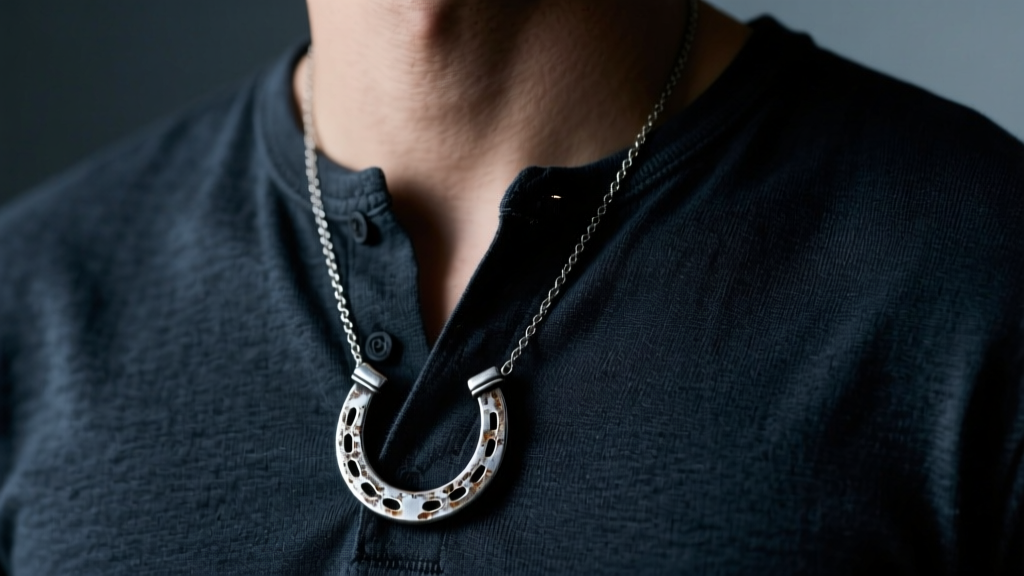
The horseshoe pendant is a cornerstone of men's jewelry, bridging the gap between rugged equestrian heritage, biker culture, and modern streetwear. Whether you are drawn to the motif for its traditional association with good luck or its bold, geometric silhouette, wearing one requires a bit more intention than throwing on a standard t-shirt chain. From selecting the correct metal alloy to matching the bail size with an appropriate chain profile, the details dictate whether your jewelry looks like a cohesive style statement or an afterthought.
In this comprehensive guide, we break down exactly how to choose, style, and maintain a mens horseshoe necklace, ensuring your piece ages beautifully and sits perfectly against your wardrobe.
Decoding Material Grades and Price Points
Not all horseshoe pendants are created equal. The metal composition dictates the pendant's weight, tarnish rate, and overall longevity. Before purchasing, you need to understand the three primary material tiers available on the market.
925 Sterling Silver (The Classic Choice)
Sterling silver is an alloy consisting of 92.5% pure silver and 7.5% copper. The copper is necessary for structural integrity, as pure silver is too soft for daily wear. However, that copper content is also why sterling silver reacts with sulfur in the air and on your skin to form silver sulfide—commonly known as tarnish. Many artisans intentionally oxidize the crevices of a silver horseshoe to highlight the texture, giving it a vintage, rugged appearance. Expect to pay between $45 and $180 for a quality solid silver piece. For a deeper understanding of silver alloys and hallmarks, the Gemological Institute of America (GIA) provides an excellent metallurgical breakdown.
316L Surgical Stainless Steel (The Low-Maintenance Workhorse)
If you want a necklace you can wear in the ocean, the gym, and the shower without a second thought, 316L stainless steel is your answer. The 'L' stands for low carbon, and the alloy includes molybdenum, which drastically increases its resistance to chloride corrosion (sweat and saltwater). It will not tarnish, though it lacks the deep, reflective luster of polished silver. Pricing is highly accessible, typically ranging from $15 to $60.
Solid 14k Gold (The Investment Piece)
For a luxury approach, 14k gold offers a warm contrast to the typically rugged horseshoe motif. 14k gold (58.5% pure gold) provides the ideal balance of rich color and scratch resistance. These pieces are heavy, luxurious, and generally start around $350, scaling up based on weight and whether diamonds or gemstones are set into the tips of the shoe.
Step-by-Step: Pairing the Pendant with the Right Chain
The most common mistake men make when buying a pendant is ignoring the bail—the loop at the top of the horseshoe that the chain feeds through. Mismatching the bail and the chain leads to friction, premature wear, and a clunky silhouette.
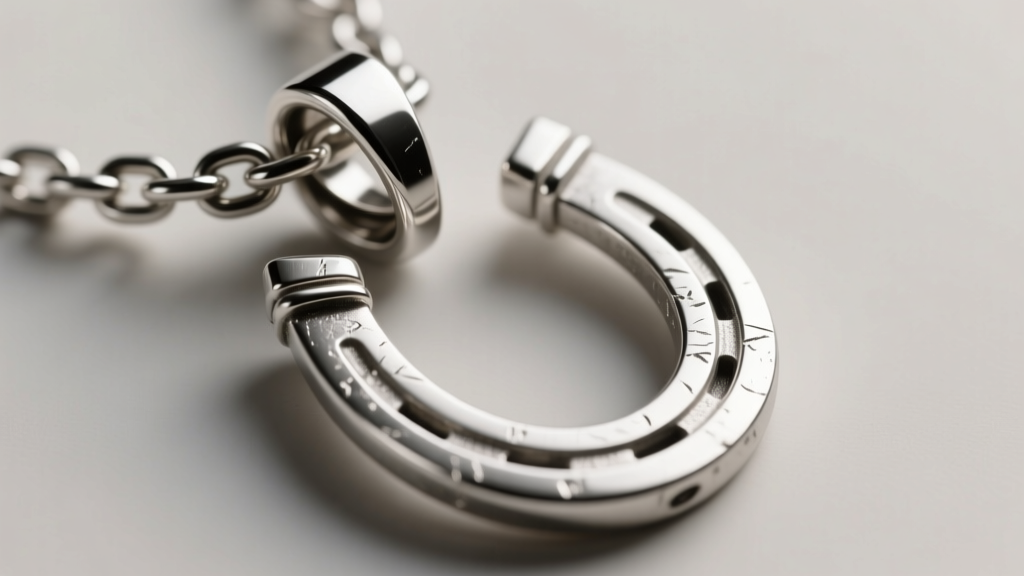
- Step 1: Measure the Bail Inner Diameter. Most standard mens horseshoe pendants feature a bail with an inner diameter between 4mm and 6mm. If you are buying a heavy, oversized pendant, the bail might be 8mm.
- Step 2: Select the Chain Profile. A 2mm to 3mm Box chain or Rope chain is the gold standard for pendant pairing. They are flexible, durable, and easily slide through a 4mm bail. Avoid thick Cuban links (5mm+) unless your pendant has an oversized, specifically designed bail.
- Step 3: Match the Metals (Crucial). Never run a stainless steel chain through a sterling silver bail. Steel is significantly harder than silver on the Mohs scale. Over time, the steel chain will act like a file, grinding away the silver bail until it snaps. Always pair silver with silver, or steel with steel. For expert insights on chain findings and metal friction, Rio Grande Jewelry Supply offers extensive technical guides on jewelry mechanics.
Styling Matrix: Necklines and Drop Lengths
The drop length of your chain completely changes how the horseshoe interacts with your clothing. A chain that is too short will choke your neckline, while one that is too long will get lost in your shirt or swing awkwardly. Use the matrix below to dial in your fit.
| Chain Length | Ideal Neckline | Pendant Drop Position | Best For |
|---|---|---|---|
| 20 Inches | Crew Neck, V-Neck | Collarbone / Upper Chest | Subtle, everyday wear; easily tucked under a shirt. |
| 22 Inches | Henley, Button-Down | Mid-Chest (Sternum) | The versatile sweet spot; perfect for framing an unbuttoned collar. |
| 24 Inches | Deep V, Streetwear | Lower Chest | Bold, statement layering; biker and hip-hop aesthetics. |
Pro-Tip for Layering
If you want to layer your horseshoe pendant with other chains, anchor the horseshoe on a 22-inch or 24-inch rope chain, and pair it with a simpler, thinner 18-inch or 20-inch curb chain worn closer to the neck. This creates a cascading effect that prevents the pendants from tangling and competing for visual space.
The Maintenance Routine: Managing Tarnish and Patina
How you clean your necklace depends entirely on the metal. Using the wrong method can strip intentional oxidation or scratch high-polish finishes.
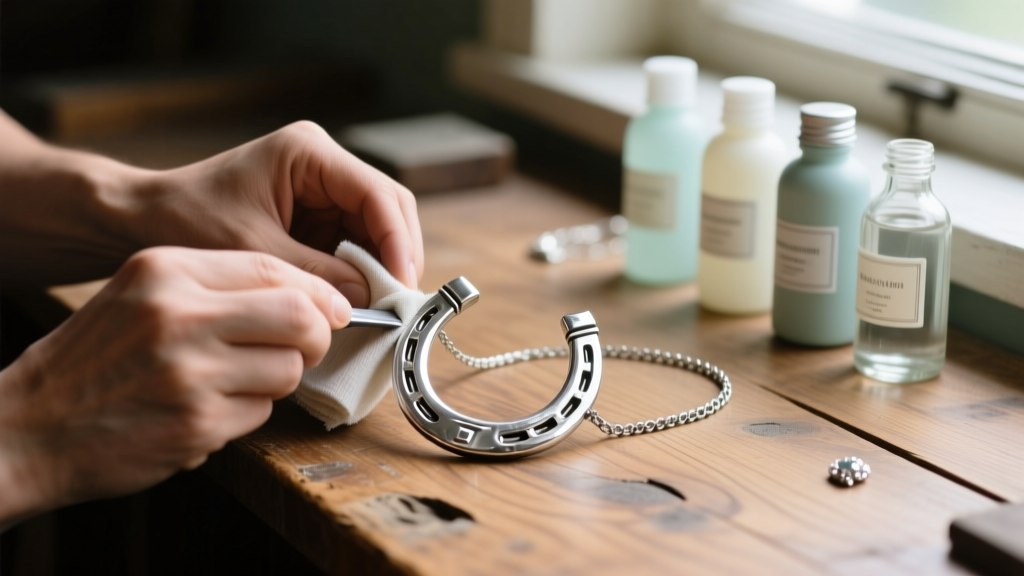
Deep Cleaning Sterling Silver (The Electrochemical Method)
Skip the harsh liquid silver dips, which can strip the antique finish from the crevices of your horseshoe. Instead, use this safe, science-backed method to reverse silver sulfide tarnish:
- Line a glass bowl with aluminum foil (shiny side up).
- Place your silver horseshoe necklace on the foil, ensuring the silver touches the aluminum.
- Sprinkle a generous tablespoon of baking soda over the jewelry.
- Pour boiling water into the bowl. You will immediately see bubbles and smell a faint sulfur (rotten egg) odor. This is the electrochemical reaction transferring the sulfur from the silver to the aluminum.
- Let it sit for 3 to 5 minutes, then remove with wooden tongs, rinse in cool water, and pat dry with a microfiber cloth.
Weekly Care for Stainless Steel
Steel doesn't tarnish, but it does accumulate sebum, dead skin cells, and soap scum, which can dull its shine and cause skin irritation. Once a week, drop your steel chain and pendant into a bowl of warm water with a few drops of mild dish soap. Agitate it gently, rinse thoroughly, and dry it completely to prevent water spots.
Troubleshooting Common Wear and Tear Issues
Even with proper care, daily wear introduces mechanical stresses. Here is how to troubleshoot the most common issues associated with heavy pendants.
The Pendant Keeps Flipping Upside Down
A horseshoe pendant is top-heavy by design. If it constantly flips, the issue is usually the chain. Highly flexible chains like snake chains or very thin rope chains lack the torsional rigidity to keep the bail centered. Switching to a stiffer chain profile, like a 3mm Box chain or a Wheat chain, provides enough structural resistance to keep the horseshoe facing forward.Bail Friction and 'Black Gunk' Buildup
If you notice a dark, greasy buildup inside the bail of your pendant, this is a mixture of oxidized metal dust, skin oils, and environmental dirt. Because the bail is a high-friction pivot point, it acts as a grinder. To prevent this, apply a microscopic drop of mineral oil to the inside of the bail once a month, and wipe away the excess. This lubricates the pivot point, silences any squeaking, and drastically reduces metal-on-metal wear.
Final Thoughts on the Horseshoe Motif
A mens horseshoe necklace is more than just a piece of metal; it is a conversation starter and a personal talisman. By respecting the material properties, carefully matching your chain to the bail, and adhering to a proper maintenance routine, you ensure that your pendant remains a staple of your wardrobe for decades. Whether you opt for the dark, brooding aesthetic of oxidized silver or the indestructible utility of surgical steel, the key to pulling off this rugged motif lies entirely in the precision of the details.


