How to Style and Care for a Tourmaline Beaded Necklace
Learn how to style, clean, and restring your tourmaline beaded necklace. Expert tips on silk knotting, Mohs hardness, and pyroelectric dust care.

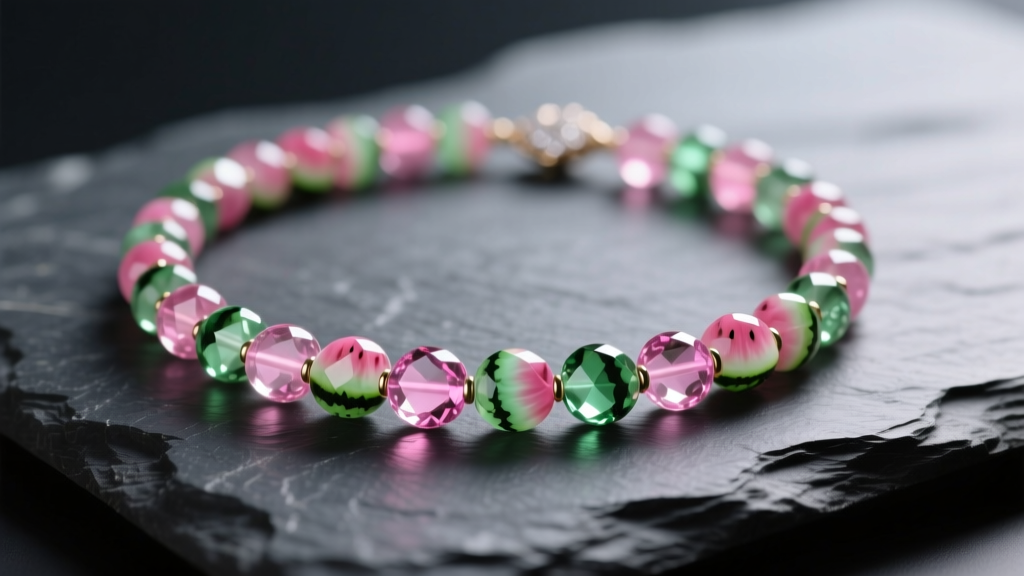
A tourmaline beaded necklace is more than just a striking piece of jewelry; it is a wearable spectrum of geological history. From the neon blues of Paraiba to the rich, watermelon-like banding of bi-color stones, tourmaline offers unparalleled versatility. However, because tourmaline is a complex borosilicate mineral with unique physical properties, it requires specialized care, specific stringing techniques, and thoughtful styling to maintain its brilliance. Whether you have inherited a vintage strand or recently invested in a bespoke piece, this comprehensive guide will walk you through the exact steps to maintain, restring, and style your necklace with professional precision.
Understanding the Mineralogy of Your Tourmaline Beaded Necklace
Before attempting to clean or restring your jewelry, you must understand the physical limitations of the gemstone. According to the Gemological Institute of America (GIA), tourmaline ranks between 7 and 7.5 on the Mohs hardness scale. While this makes it durable enough for daily wear, it is significantly softer than diamond or sapphire, meaning it can be scratched by harder materials in your jewelry box.
Furthermore, tourmaline exhibits strong pleochroism, meaning it displays different colors when viewed from different crystallographic angles. This is why a single bead might show deep forest green on one side and vibrant magenta on the other. More importantly, tourmaline is highly susceptible to thermal shock. Sudden temperature changes can cause internal fractures to expand, leading to catastrophic bead failure. This mineralogical fact dictates that ultrasonic and steam cleaners must never be used on a tourmaline beaded necklace.
| Variety | Color Range | Inclusion Risk | Stringing Recommendation |
|---|---|---|---|
| Rubellite | Pink to Deep Red | High (often heavily included) | Knotting mandatory; avoid tension |
| Indicolite | Light to Dark Blue | Moderate | Silk cord with French wire protection |
| Watermelon | Pink center, Green rind | Low to Moderate | Standard knotting; avoid harsh chemicals |
| Schorl (Black) | Opaque Black | Low (but brittle) | Heavier gauge cord; toggle clasp |
Step-by-Step Guide to Restringing a Tourmaline Beaded Necklace
Over time, the cord holding your beads together will degrade. Sweat, cosmetics, and natural skin oils break down both synthetic threads and natural silk. If your necklace feels stiff, or if you can see gaps of thread between the beads when you gently pull the strand, it is time to restring it. For high-quality tourmaline, we exclusively recommend 100% silk cord, which provides the necessary drape and traditional elegance.
Materials Required
- Silk Cord: Size F (0.6mm) for beads under 6mm; Size G (0.8mm) for beads 8mm and larger.
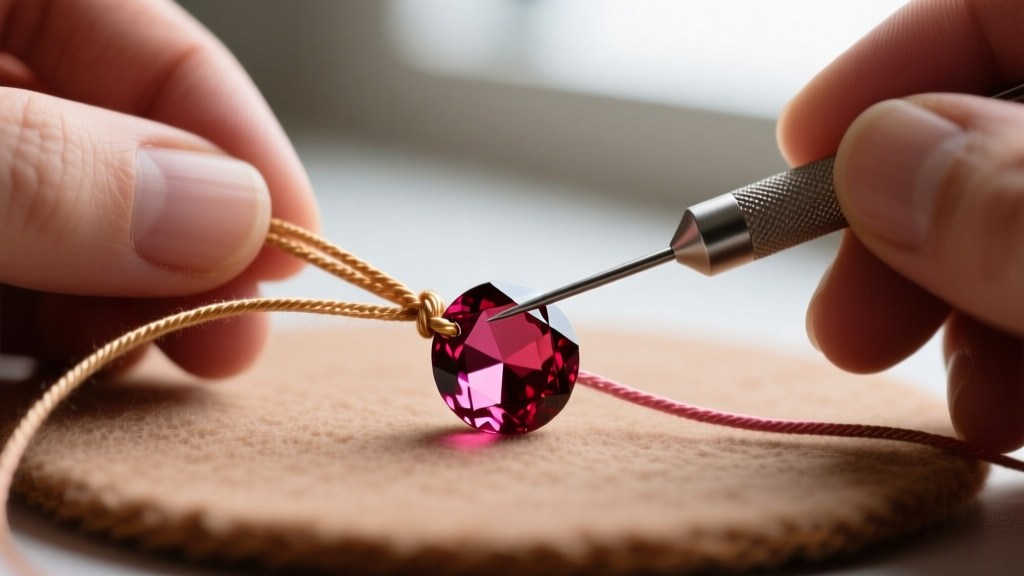
- Beading Awl: For tightening knots flush against the bead.
- French Wire (Gimp): To protect the silk from fraying against the metal clasp.
- Clasp: A solid gold or sterling silver toggle or lobster clasp.
The Restringing Process
- Prep the Cord: Cut a length of silk cord roughly three times the length of your desired finished necklace. Thread a beading needle onto one end.
- Secure the Clasp: Thread the needle through a piece of French wire, then through the jump ring of your clasp. Pass the needle back through the French wire and the first two beads to create a secure, reinforced loop.
- Knotting Technique: This is the most critical step. You must place a knot between every single tourmaline bead. Tourmaline's hardness can act like sandpaper against adjacent beads or the silk itself if they rub together. Use your beading awl to push the knot tightly against the bead hole before pulling it taut.
- Finishing: Once all beads are strung and knotted, attach the second half of the clasp using the same French wire loop method. Apply a microscopic drop of flexible jewelry glue (like E6000) to the final knot, let it cure for 24 hours, and trim the excess silk.
How to Style a Tourmaline Beaded Necklace for Any Neckline
Styling a tourmaline beaded necklace requires an understanding of both color theory and proportion. Because tourmaline beads possess a high refractive index and deep color saturation, they act as a focal point. The key is to match the necklace length to the geometry of your clothing.

- The 16-Inch Choker Length: Best suited for off-the-shoulder tops, boat necks, and V-necks. A choker-length strand of faceted rubellite tourmaline draws the eye directly to the collarbone, creating an elegant, upward visual flow.
- The 18-Inch Princess Length: The most versatile option. It rests perfectly on the clavicle and pairs flawlessly with crew necks, button-down shirts, and wrap dresses. If you are layering, use the 18-inch tourmaline strand as the anchor piece, adding a delicate 16-inch gold chain above it.
- The 24-Inch Opera Length: Ideal for high necklines, turtlenecks, and evening wear. An opera-length strand of dark indicolite or black schorl tourmaline creates a slimming vertical line. For a modern 2026 aesthetic, double-wrap the opera length to create a chunky, layered 12-inch and 24-inch combination.
The Pyroelectric Effect: A Unique Cleaning Protocol
One of the most fascinating—and frustrating—properties of tourmaline is its pyroelectric and piezoelectric nature. As documented by Mindat mineralogical databases, tourmaline develops a slight electrical charge when subjected to temperature changes or mechanical friction (like rubbing against your skin or clothing). This charge acts as a magnet for dust, lint, and microscopic debris.
"If your tourmaline beaded necklace seems to attract dust faster than your glass or quartz jewelry, it is not your imagination. The pyroelectric effect is actively pulling particulate matter from the air onto the surface of the beads."
Safe Cleaning Steps
Because of this dust attraction, frequent cleaning is necessary, but it must be done gently to preserve the silk cord and the stone's polish.
- Dry Dusting: Before introducing moisture, use a clean, ultra-soft makeup brush (like a kabuki brush) to gently sweep away surface dust. This prevents scratching the bead surface during the wet wash.
- The Wet Wash: Mix a few drops of pH-neutral dish soap in a bowl of lukewarm (never hot) water. Dip a soft microfiber cloth into the solution, wring it out until it is barely damp, and gently wipe each bead individually.
- Drying: Never hang a wet silk-strung necklace, as the weight of the water will stretch the cord. Lay the necklace flat on a dry towel, reshape the drape, and allow it to air dry completely away from direct sunlight or heat sources.
By respecting the unique mineralogical traits of tourmaline and adhering to these meticulous care and styling protocols, your beaded necklace will remain a vibrant, structurally sound heirloom for decades to come.


