How to Style, Clean, and Wear a Hematite Cross Necklace
Learn how to style, clean, and properly support a hematite cross necklace. Expert tips on chain gauges, material authentication, and daily care.

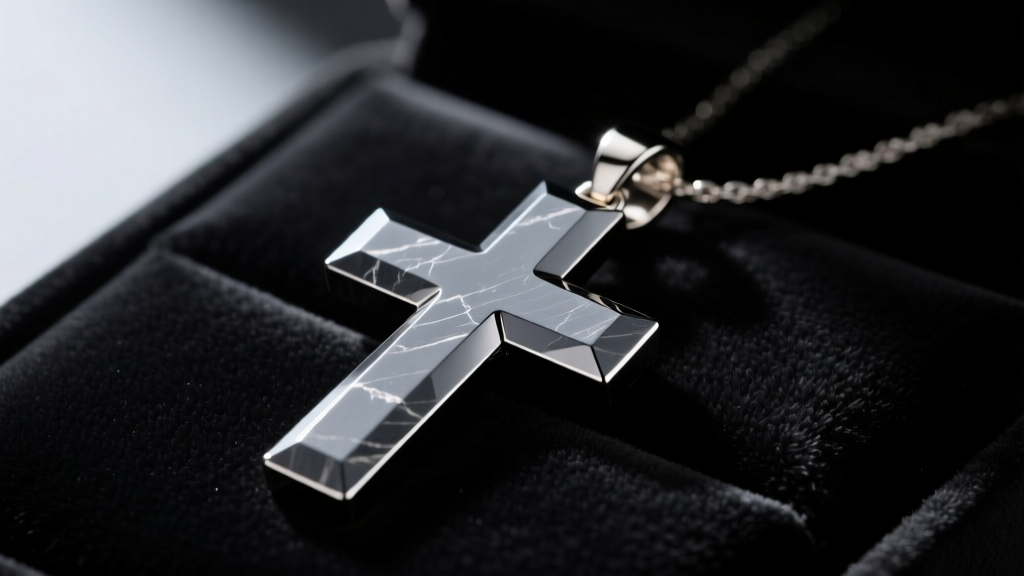
A hematite cross necklace is a striking, versatile piece of jewelry that bridges the gap between spiritual symbolism and modern, edgy aesthetics. With its opaque, gunmetal-grey luster and substantial weight, hematite offers a unique presence that lighter materials simply cannot replicate. However, its high density and specific brittle properties demand a specialized approach to styling, chain selection, and maintenance. In this comprehensive guide, we break down the exact steps to authenticate, support, and care for your hematite pendant to ensure it remains a staple in your wardrobe for years to come.
Understanding Your Hematite: Natural vs. Magnetic
Before you begin styling or cleaning your necklace, it is crucial to understand the material you are wearing. According to the Gemological Institute of America (GIA), natural hematite is an iron oxide mineral (Fe2O3) with a metallic luster and a Mohs hardness of 5.5 to 6.5. However, the jewelry market is currently flooded with "magnetic hematite," which requires a different level of care.
True natural hematite is only weakly paramagnetic and will not firmly attract a magnet. The strongly magnetic beads and pendants sold as "magnetic hematite" are actually Hematine, a synthetic composite of iron oxide and barium/strontium ferrite. While both share a similar dark aesthetic, their structural integrity and weight distribution differ. Mindat.org notes that natural hematite has a specific gravity of roughly 5.1, making it exceptionally heavy for its size.
| Feature | Natural Hematite | Hematine (Magnetic Hematite) |
|---|---|---|
| Composition | Natural Iron Oxide (Fe2O3) | Synthetic Iron Oxide & Ferrite |
| Magnetism | Weak / Non-magnetic | Strongly Magnetic |
| Weight | Extremely Heavy (SG ~5.1) | Heavy, but slightly lighter than natural |
| Brittleness | High (Prone to chipping on impact) | Moderate (More uniform structure) |
| Price Range | $30 - $150+ (for carved crosses) | $10 - $40 (Mass-produced) |
Step 1: Selecting the Right Chain for Heavy Pendants
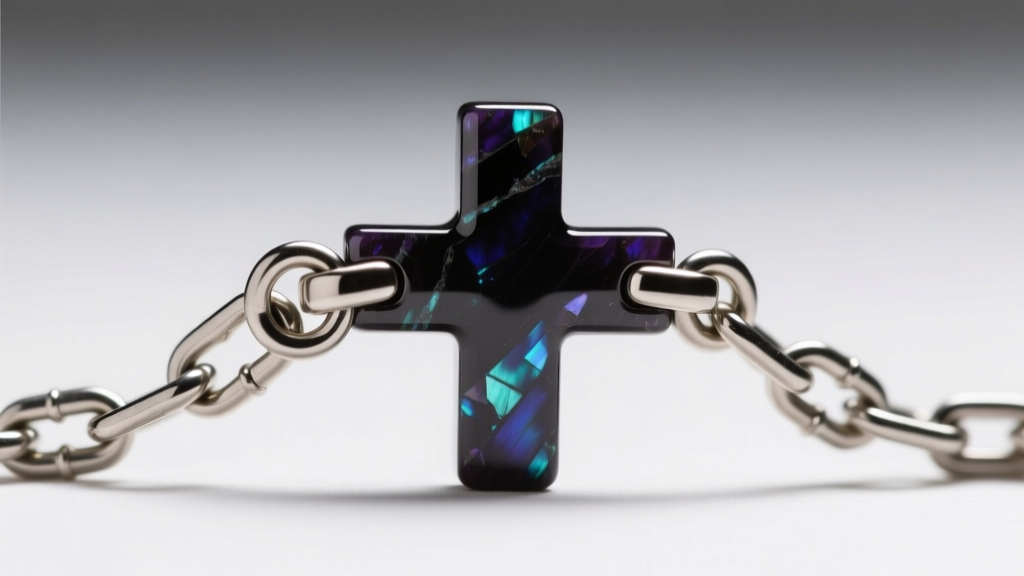
The most common point of failure for a hematite cross necklace is the chain. A standard 1.5-inch by 1-inch natural hematite cross pendant can easily weigh between 30 and 45 grams due to the mineral's high density. Standard jewelry chains (1.0mm to 1.5mm) will stretch, warp, or snap under this dynamic weight, especially when the wearer is active.
Chain Gauge and Material Selection
To safely support a heavy hematite pendant, you must upgrade your chain specifications. Follow these mechanical guidelines:
- Minimum Gauge: Use a chain that is at least 2.0mm to 3.5mm in thickness. Anything thinner risks structural failure at the jump rings.
- Chain Style: Opt for interlocking, high-tensile styles like Wheat (Spiga), Box, or Cable chains. Avoid hollow rope chains or delicate Figaro chains, which can kink and crush under a 40-gram load.
- Metallurgy: Choose 316L Surgical Stainless Steel or solid 925 Sterling Silver. Stainless steel offers a higher yield strength and naturally complements the cool, dark tones of hematite. If choosing silver, ensure it is oxidized or rhodium-plated to prevent tarnish transfer onto the porous surface of the stone.
- Clasp Mechanics: A heavy pendant generates momentum. A standard 8mm spring ring clasp will fail. You must use a Lobster Clasp measuring at least 12mm to 15mm to ensure the locking lever has enough tension and surface area to remain secure.
Step 2: Styling Your Hematite Cross Necklace
Hematite’s opaque, mirror-like finish makes it a masterclass in subtle contrast. Because it lacks the refractive sparkle of faceted gemstones, it relies on silhouette and texture to make an impact.
Neckline Pairings
The dark metallic hue of hematite can easily get lost against dark, busy patterns. To maximize the visual weight of your cross necklace:
- Crew Necks & High Collars: A shorter 18-inch chain resting just below the collarbone creates a bold, minimalist statement against a crisp white or heather grey t-shirt.
- Deep V-Necks: For a 24-inch to 28-inch chain, allow the hematite cross to rest in the negative space of a V-neck sweater or unbuttoned linen shirt. This elongates the torso and draws the eye directly to the pendant.
- Monochromatic Layering: Hematite excels in gothic or avant-garde streetwear. Pair it with matte black fabrics to let the metallic luster of the stone provide the only point of light reflection.

Layering Techniques
When layering a hematite cross, you must account for its weight and abrasive potential. Hematite (Mohs 5.5-6.5) can easily scratch softer metals like pure gold (Mohs 2.5-3) or high-polish silver if they constantly collide. Rule of thumb: Keep your hematite cross on the longest chain in your stack (e.g., 24 inches), and pair it with a lighter, shorter 20-inch oxidized silver or black steel chain. Maintain at least a 3-inch length differential to prevent the heavy cross from tangling with and scratching your secondary pendants.
Step 3: Proper Cleaning and Maintenance
Because hematite is an iron-bearing mineral, it is susceptible to oxidation (rust) if exposed to prolonged moisture, and its brittle nature makes it highly vulnerable to ultrasonic vibrations. Never put a hematite cross necklace in an ultrasonic jewelry cleaner; the high-frequency waves can cause micro-fractures and shatter the stone.
- Dry Dusting: Use a clean, dry, ultra-fine microfiber cloth to wipe away daily skin oils and dust. Quartz dust in the environment (Mohs 7) can cause micro-scratches on hematite if rubbed aggressively.
- Damp Wiping (For Stubborn Grime): Lightly dampen a corner of the microfiber cloth with distilled water. Gently polish the cross pendant. Avoid getting the bail or the chain wet, especially if the chain is sterling silver or features steel jump rings prone to rust.
- Immediate Drying: Immediately buff the pendant completely dry with the dry side of the cloth. Leaving moisture on the surface, particularly in the crevices of a carved cross, will initiate iron oxidation.
- Storage: Store the necklace in a soft flannel pouch separate from your other jewelry. The sharp beveled edges of a hematite cross can easily scratch softer gemstones, and conversely, diamonds or sapphires will gouge the hematite.
Troubleshooting Common Hematite Issues
Even with meticulous care, heavy stone pendants present unique challenges over time. Here is how to troubleshoot the most frequent issues:
The Bail is Loosening
The bail (the metal loop connecting the cross to the chain) is often glued or soldered to the hematite. Due to the pendant's heavy weight, the constant swinging motion can degrade the adhesive over time. If you notice the bail wiggling, remove the necklace immediately. Take it to a jeweler to have the bail re-set using a two-part jeweler's epoxy, as standard superglue (cyanoacrylate) becomes brittle and will fail under dynamic sheer stress.
Surface Pitting and Rust Spots
If your natural hematite cross develops tiny orange or brown spots, it is experiencing surface oxidation due to humidity or sweat. You can gently buff these spots away with a dry jeweler's polishing cloth. To prevent future rust, avoid wearing your hematite necklace during intense workouts or in high-humidity environments like saunas and hot tubs.
Final Thoughts
A hematite cross necklace is more than just an accessory; it is a substantial, grounding piece of mineral art. By respecting its density, selecting the correct heavy-duty chain hardware, and adhering to strict moisture-free cleaning protocols, you ensure that its dark, metallic luster remains pristine. Whether you are wearing a natural, hand-carved piece or a polished synthetic Hematine pendant, the right mechanical support and styling techniques will elevate your jewelry game while preserving the structural integrity of your investment.


