How to Style and Layer a Diamond Palm Tree Necklace
Learn how to style, layer, and care for your diamond palm tree necklace. Expert tips on chain lengths, metal pairings, and micro-pave maintenance.

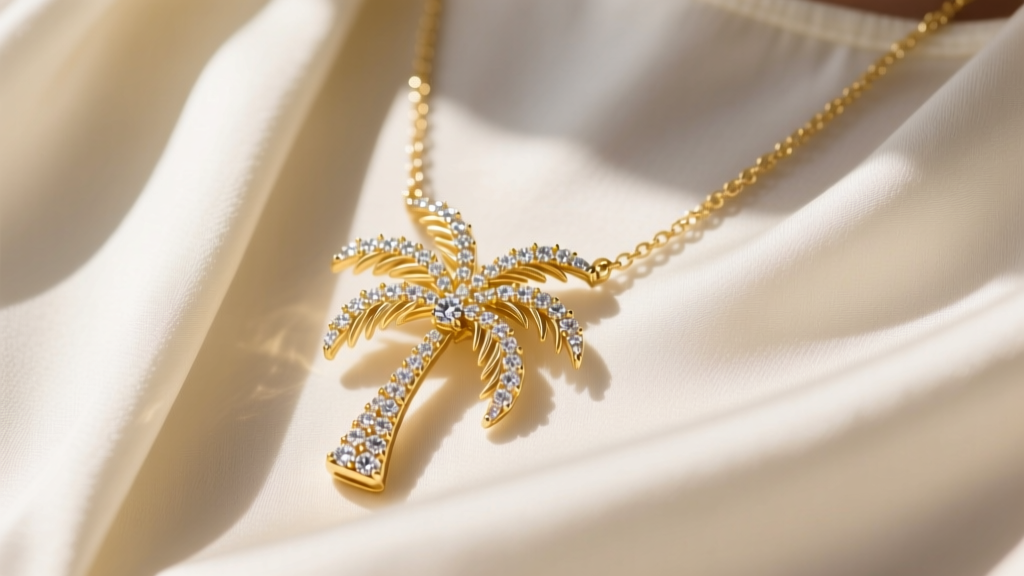
The diamond palm tree necklace is a quintessential piece of tropical-inspired fine jewelry that transcends seasonal resort wear. In 2026, the styling paradigm has shifted away from wearing these motif pendants in isolation. Today, the focus is on integrating organic, nature-inspired silhouettes into structured, everyday necklace stacks. However, styling a piece with intricate micro-pave detailing requires a strategic approach to balance, proportion, and metal pairing. This comprehensive guide will walk you through the exact steps to layer, match, and maintain your diamond palm tree pendant for maximum visual impact and longevity.
Understanding the Anatomy of Your Palm Tree Pendant
Before attempting to layer your necklace, it is crucial to understand the structural nuances of the pendant itself. Most diamond palm tree necklaces feature a micro-pave or bead-set design, utilizing melee diamonds ranging from 1.0mm to 1.3mm in diameter. The total carat weight (CTW) typically falls between 0.25 and 0.50 carats.
Metal Selection and Prong Durability
When selecting or evaluating your chain and pendant, consider the gold karat. While 18k yellow gold offers a richer, warmer hue that complements the tropical motif, it is a softer metal. For micro-pave settings where tiny prongs hold minute diamonds, 14k gold is structurally superior. The higher alloy content in 14k gold provides the necessary tensile strength to keep prongs secure against daily wear and tear. If you prefer white gold, ensure the pendant has a high-quality rhodium plating to prevent the underlying yellowish alloy from dulling the brilliance of the diamonds.
Step-by-Step Guide to the Cascade Layering Method
Layering a diamond palm tree necklace requires the 'Cascade Method' to ensure the pendant remains the focal point without tangling with adjacent chains. Follow these precise measurements for a flawless stack.
Step 1: Establish the 14-Inch Base Chain
Begin with a 14-inch or 15-inch choker-length chain. Opt for a minimal texture, such as a 1.2mm box chain or a delicate cable chain. This base layer should sit snugly above the collarbone and feature no pendants. Its purpose is to frame the neckline and provide a visual anchor. A solid gold herringbone chain (1.5mm width) is an excellent 2026 trend choice that adds a liquid-metal contrast to the diamond-encrusted palm tree above it.
Step 2: Position the Palm Tree Pendant at 16 to 18 Inches
Your diamond palm tree necklace should sit exactly 2 to 4 inches below the base chain. A 16-inch chain places the pendant right at the hollow of the throat, ideal for open-neck blouses. An 18-inch chain allows the palm tree to rest on the upper chest, perfect for t-shirts and casual wear. Crucial Detail: Check the bail (the loop connecting the pendant to the chain). Palm tree pendants often have narrow, integrated bails. Ensure your chain width does not exceed 1.5mm, or it will fail to pass through the bail without damaging the jump ring.
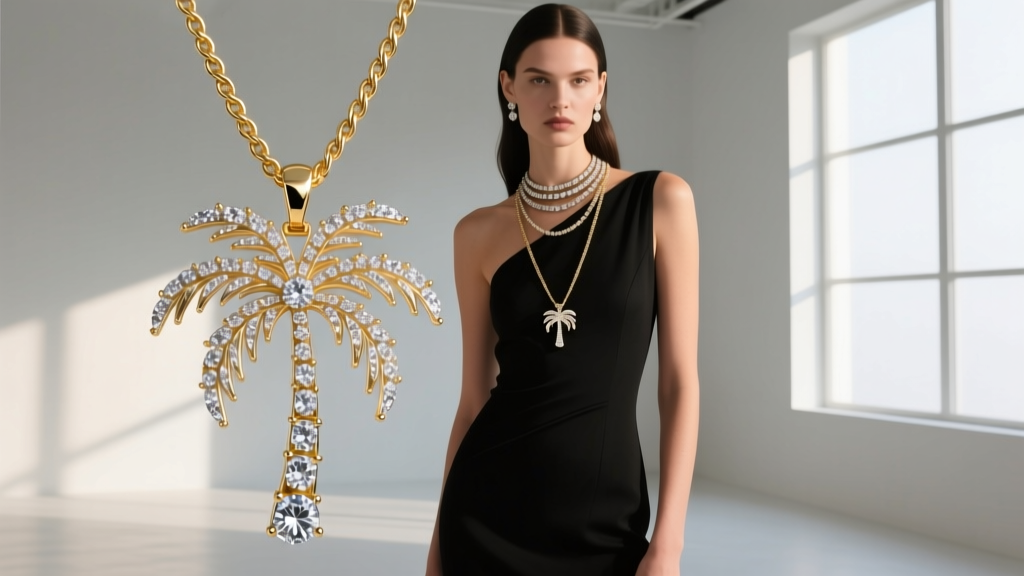
Step 3: Add a 20-Inch Textural Anchor
To complete the stack, add a 20-inch or 22-inch chain featuring a geometric or linear element. A simple gold bar necklace, a solitary bezel-set diamond solitaire, or a delicate lariat chain draws the eye downward, elongating the neck. Avoid adding another organic motif (like a starburst or leaf) to prevent the stack from looking cluttered and chaotic.
Neckline Pairing Matrix
The visual weight of a diamond palm tree necklace changes dramatically depending on the garment's neckline. Use this matrix to determine the optimal chain length and styling approach for your outfit.
| Neckline Type | Optimal Chain Length | Styling Strategy | Layering Recommendation |
|---|---|---|---|
| Deep V-Neck | 18 to 20 Inches | Let the pendant rest exactly one inch above the apex of the V-neck to elongate the torso. | Pair with a 22-inch lariat chain to follow the garment's angular lines. |
| Crew Neck / T-Shirt | 16 to 18 Inches | Wear over the fabric. The diamonds will catch ambient light against the matte cotton. | Use a 14-inch choker underneath the collar for a modern, multi-tiered look. |
| Scoop Neck | 16 Inches | Keep the pendant high so it sits within the exposed skin boundary of the scoop. | Avoid long layers; stick to a single 14-inch base chain to prevent overcrowding. |
| Boatneck / Off-Shoulder | 14 to 15 Inches | Opt for a choker-style palm tree pendant that rests on the upper clavicle. | Do not layer. The horizontal neckline competes with long vertical chains. |
How to Clean and Maintain Micro-Pave Settings
The intricate beadwork of a diamond palm tree necklace traps oils, lotions, and environmental dust, which quickly dulls the melee diamonds. Furthermore, improper cleaning is the leading cause of stone loss in pave jewelry. According to the Gemological Institute of America (GIA), gentle, non-vibrational cleaning is mandatory for pave settings.
The Safe Cleaning Protocol
- Prepare the Solution: Mix a few drops of mild, phosphate-free dish soap (like Dawn) into a bowl of lukewarm water. Avoid hot water, which can cause thermal shock to certain treated diamonds or weaken adhesives used in secondary settings.
- Soak Briefly: Submerge the necklace for exactly 3 to 5 minutes. This loosens sebum and cosmetic buildup without degrading the metal.
- Brush with Precision: Use a brand-new, ultra-soft baby toothbrush. Gently sweep the bristles across the palm fronds and trunk. Never scrub aggressively, as this can bend the microscopic wire prongs holding the 1.0mm diamonds.
- Rinse and Dry: Rinse under a gentle stream of lukewarm water, ensuring the drain is securely plugged. Pat dry with a lint-free microfiber cloth. Do not use paper towels, as the wood fibers can snag on the prongs.
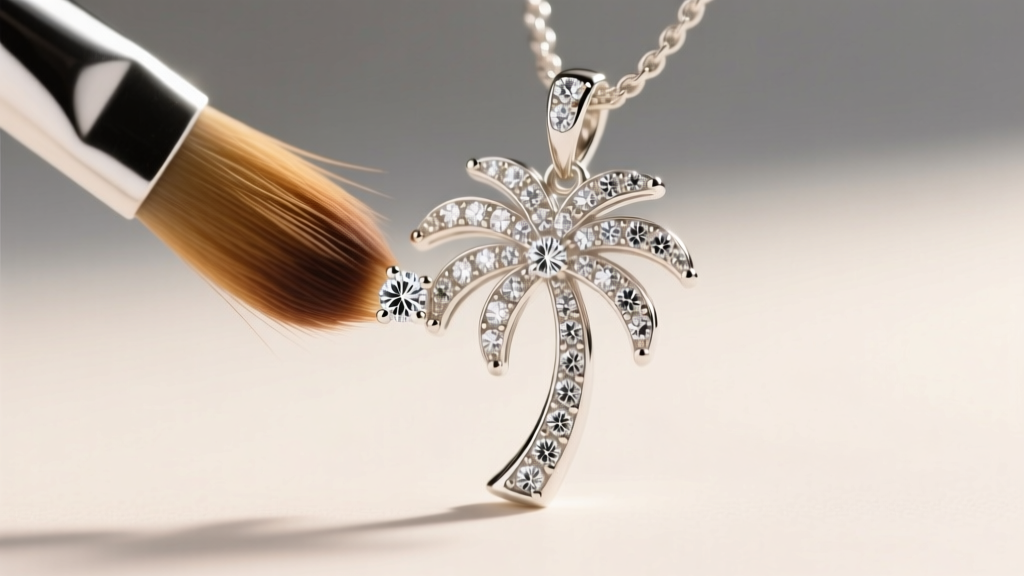
What to Avoid: The Ultrasonic Danger
Never place a diamond palm tree necklace in an ultrasonic cleaner. The high-frequency vibrations are designed to shake dirt loose, but they will equally shake loose the tiny melee diamonds secured by micro-prongs. Similarly, avoid steam cleaners, as the high pressure can bend the delicate fronds of the palm tree silhouette.
Common Styling and Wear Mistakes to Avoid
Even with perfect styling, certain habits can compromise the aesthetic and structural integrity of your necklace.
- Mixing Incompatible Metals Improperly: While mixing yellow gold and white gold is a major trend, ensure the diamond color grades match. If your palm tree pendant features G-H color diamonds set in white gold, pairing it with a warm yellow gold chain can make the diamonds appear unintentionally yellow or muddy by contrast.
- Wearing During Exercise: The Jewelers of America strongly advises removing fine jewelry before physical activity. Sweat is mildly acidic and can degrade rhodium plating over time. More importantly, the friction from gym equipment or yoga mats can easily snap the delicate chains typically used for these pendants.
- Ignoring the Clasp Mechanism: Many palm tree necklaces come with standard spring-ring clasps. For chains under 1.2mm thick, upgrade the clasp to a small lobster claw. Spring rings have a high failure rate due to their tiny internal springs, and losing a diamond pendant due to a $5 clasp failure is a preventable tragedy.
By understanding the precise measurements required for layering, respecting the structural fragility of micro-pave settings, and pairing your necklace with the correct garment necklines, your diamond palm tree necklace will remain a stunning, versatile staple in your fine jewelry collection for years to come.


