How to Style and Layer a Statement Hammerhead Shark Necklace
Learn how to style, layer, and maintain a hammerhead shark necklace. Expert tips on chain gauges, metal pairings, and enamel care for coastal fashion.


The Symbolism and Anatomy of the Hammerhead Pendant
The hammerhead shark is an apex predator renowned for its unique cephalofoil—the distinctive, wing-like head structure that provides enhanced sensory perception and maneuverability. In jewelry design, the hammerhead shark necklace has transcended its surf-culture roots to become a staple in both high-end coastal-core and gritty streetwear aesthetics. According to Oceana marine conservation, these creatures symbolize navigation, protection, and heightened awareness, making them a deeply meaningful talisman for the wearer.
From a metallurgical perspective, a high-quality hammerhead pendant is typically produced using lost-wax casting. This ancient technique allows jewelers to capture the intricate gill slits, the textured ampullae of Lorenzini (the electroreceptor organs on the shark's snout), and the sweeping hydrodynamic curves of the cephalofoil. When shopping for or styling your piece, understanding the physical dimensions is crucial. Most statement hammerhead pendants span between 35mm and 55mm in width and weigh anywhere from 12 to 28 grams. This substantial weight dictates the type of chain you must use to prevent bail deformation and chain snapping.
"The cephalofoil isn't just a biological marvel; in jewelry design, its wide, flat profile acts as a natural canvas for oxidized silver detailing and cold-applied enamel accents."
Step-by-Step Guide to Layering Your Shark Necklace
As we navigate the fashion landscape of 2026, the maximalist layering trend has evolved into a more curated, intentional approach. The hammerhead shark necklace is inherently a focal piece, meaning it requires a structured layering strategy to avoid looking cluttered. Here is a masterclass in the "Rule of Three" for necklaces.
Step 1: Establish the Base Chain (18-Inch)
Your foundational layer should sit snugly at the base of the neck. Opt for a minimalist chain that provides a subtle metallic gleam without competing with the shark pendant. A 1.2mm to 1.5mm sterling silver or 14k gold rope chain is ideal. The twisted links of a rope chain catch the light beautifully, creating a delicate border that frames the collarbone. Ensure this chain has a secure lobster clasp, as the constant friction against the skin can wear down weaker spring-ring mechanisms over time.
Step 2: Add the Hammerhead Focal Point (22-Inch)
The second layer is where your hammerhead shark necklace lives. To achieve the perfect drop, the chain should measure between 20 and 22 inches, allowing the pendant to rest squarely on the sternum. Because the pendant is wide and heavy, you need a chain that offers structural integrity. A 2.5mm to 3.0mm box chain or a flat curb chain is highly recommended. These link styles distribute weight evenly and resist kinking, which is a common failure mode for lighter chains bearing heavy, asymmetrical pendants.
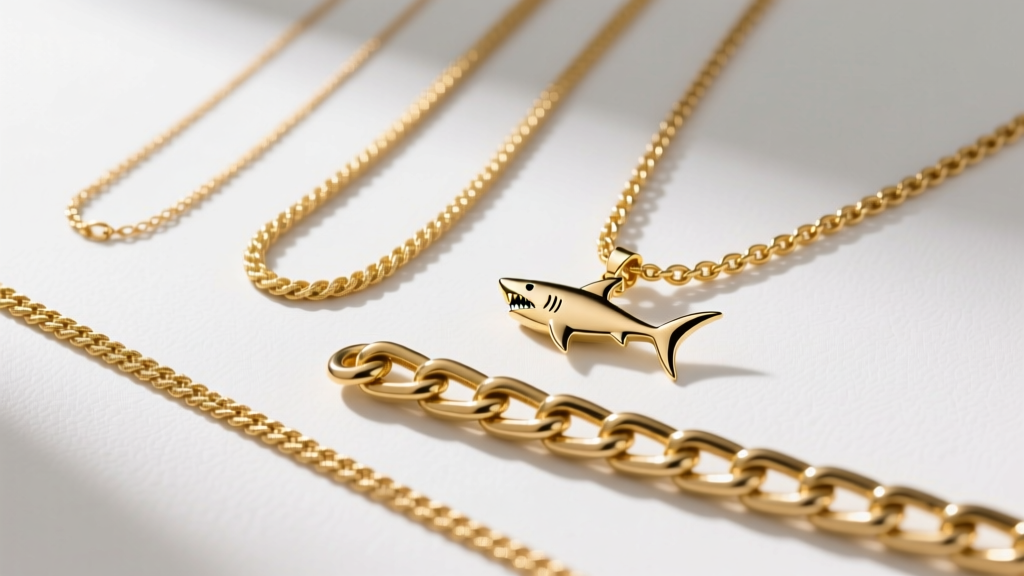
Step 3: Introduce Texture with a Third Layer (26-Inch)
The final layer anchors the composition and draws the eye downward, elongating the torso. This is your opportunity to introduce contrasting textures. If your hammerhead pendant is polished silver, consider a 4.0mm oxidized black stainless steel Cuban link or a braided leather cord with a simple geometric bead. The 26-inch length ensures that the third chain falls well below the shark pendant, creating distinct visual tiers and preventing the metal elements from tangling or scratching one another.
Chain Pairings: Matching the Right Metal and Gauge
Selecting the wrong chain for a heavy, wide pendant like the hammerhead is the most common styling and structural mistake. Below is a technical breakdown of chain types, gauges, and their compatibility with shark pendants.
| Chain Type | Recommended Gauge | Max Pendant Weight | Best For / Aesthetic |
|---|---|---|---|
| Box Chain | 2.5mm - 3.5mm | 25 grams | Modern streetwear, sleek lines, high durability |
| Rope Chain | 3.0mm - 4.0mm | 30 grams | Classic coastal, vintage surf, light reflection |
| Cuban Link | 4.0mm - 6.0mm | 45+ grams | Heavy statement pieces, hip-hop, bold layering |
| Leather Cord | 3.0mm - 5.0mm | 20 grams | Bohemian, casual beachwear, organic textures |
Pro-Tip on Bail Sizing: The bail (the loop connecting the pendant to the chain) on a hammerhead shark necklace must be wide enough to accommodate your chosen chain. A standard 3mm box chain requires a bail with an inner diameter of at least 4.5mm to allow the links to articulate freely. If the bail is too tight, the chain will experience severe friction wear and eventually snap at the connection point.
Maintenance: Cleaning and Restoring Silver and Enamel
Hammerhead shark necklaces frequently feature two-tone detailing, utilizing oxidized silver to highlight the gills and eyes, or incorporating marine-blue enamel into the cephalofoil. Proper maintenance is critical to preserving these intricate finishes. The Gemological Institute of America (GIA) emphasizes that improper cleaning methods can permanently strip intentional oxidation and damage enamel work.
Cleaning Sterling Silver and Stainless Steel
Silver naturally reacts with sulfur in the air to form silver sulfide, resulting in tarnish. For a solid 925 sterling silver shark pendant, avoid commercial silver dips, as these harsh chemicals will strip the dark, oxidized detailing from the shark's gill slits and teeth. Instead, use a mild, phosphate-free dish soap mixed with lukewarm water. Gently agitate the pendant with a soft-bristled baby toothbrush, focusing on the crevices of the cephalofoil. Dry immediately with a microfiber cloth to prevent water spots.
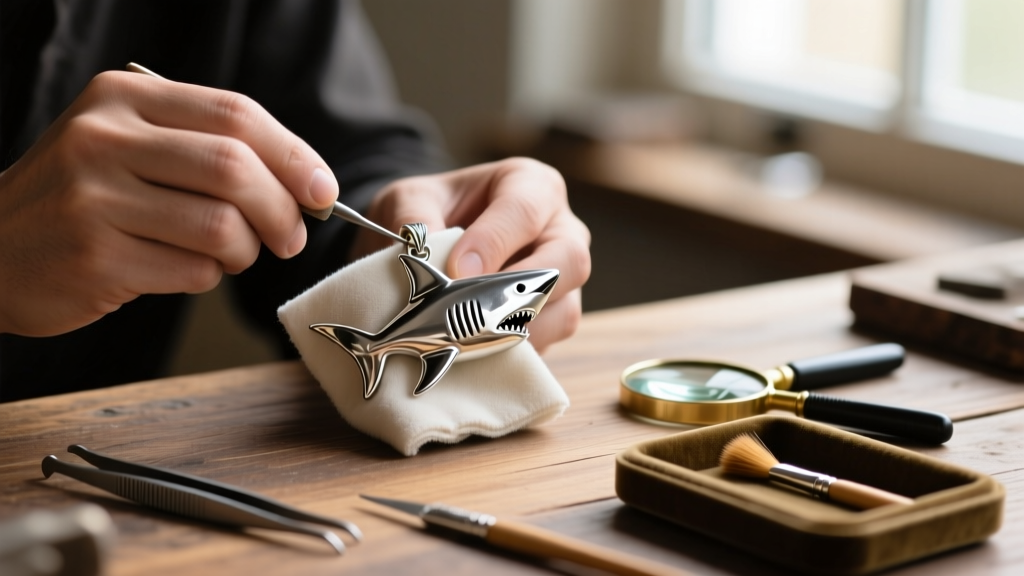
Caring for Enamel Accents
Many contemporary hammerhead designs feature enamel to mimic the ocean's hues. It is vital to know whether your piece uses vitreous enamel (fused glass, highly durable) or cold-applied epoxy enamel (a resin, prone to scratching and heat damage).
- Vitreous Enamel: Can withstand gentle ultrasonic cleaning, but should be kept away from sudden temperature shocks which can cause the glass to craze or crack.
- Epoxy Enamel: Never use ultrasonic cleaners, steamers, or polishing compounds. Clean only with a damp, lint-free cloth. Avoid prolonged exposure to direct UV sunlight, which can cause blue and green epoxy resins to yellow or fade over time.
Final Thoughts on Coastal and Streetwear Styling
The hammerhead shark necklace is a versatile, commanding piece of jewelry that bridges the gap between relaxed coastal fashion and aggressive urban streetwear. By respecting the physical weight of the pendant, selecting the appropriate chain gauge, and employing a structured, three-tier layering technique, you can elevate this marine-inspired motif into a sophisticated everyday staple. Whether you are pairing a heavy oxidized silver shark with a vintage band tee or layering a delicate gold-filled hammerhead over a crisp linen button-down, the key lies in intentional contrast and meticulous structural care.


