Troubleshooting Your Jade Elephant Necklace: Fakes, Chips & Cords
Is your jade elephant necklace chipping, breaking, or losing value? Learn expert troubleshooting for jade authenticity, cord failure, and carving repairs.

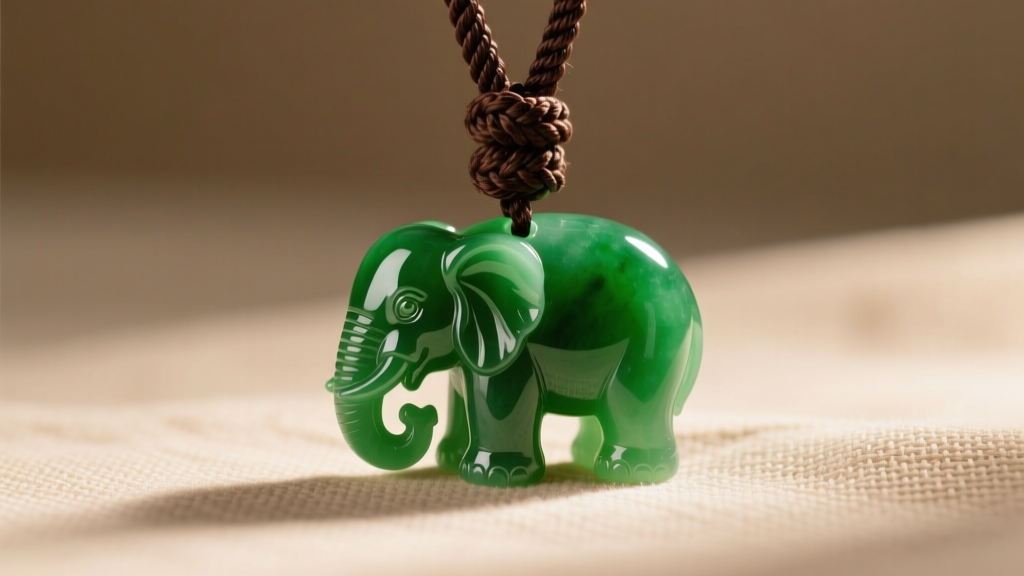
The jade elephant necklace is a revered staple in both Eastern and Western jewelry traditions, symbolizing luck, strength, and protective wisdom. However, owning and maintaining a carved jadeite or nephrite elephant pendant presents unique gemological and structural challenges. Unlike faceted gemstones set in metal prongs, jade pendants are typically suspended on cords and feature intricate, protruding carvings that are highly susceptible to specific types of damage. Whether you are dealing with a suspicious loss of luster, a snapped stringing cord, or a chipped trunk, troubleshooting a jade elephant necklace requires a deep understanding of mineralogy and lapidary mechanics.
The Authenticity Crisis: Spotting Treated and Fake Jade
The most common issue collectors and casual wearers face is discovering their prized jade elephant is not what it seems. The market is flooded with treated stones and simulants like dyed serpentine, chalcedony, and aventurine. To troubleshoot authenticity, you must understand the ABC grading system of jadeite and the physical properties of nephrite.
Type A vs. Type B vs. Type C Jadeite
Type A jadeite is entirely natural, untreated, and structurally sound. Type B jadeite has been acid-bleached to remove brown or yellow impurities and then impregnated with a polymer resin to restore structural integrity. Type C jadeite is artificially dyed. Over time, the polymer in Type B jade will degrade under UV exposure and body heat, causing the elephant carving to turn brittle and lose its glassy luster. Type C dyes will fade, leaving a mottled, unnatural appearance.
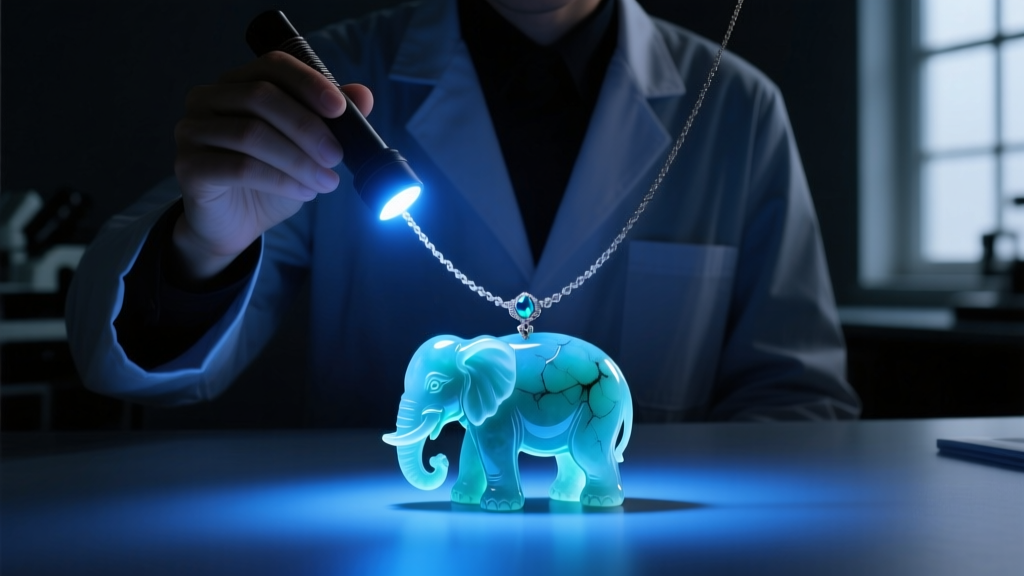
To troubleshoot a suspected Type B jade elephant, use a 10x triplet loupe to inspect the surface. Acid bleaching destroys the natural interlocking crystalline structure of the jade, leaving microscopic pitting. When filled with resin, this creates a distinct 'spiderweb' or 'orange peel' effect on the surface of the carving, particularly in the deep crevices of the elephant's ears and wrinkled skin. Furthermore, according to the Gemological Institute of America (GIA), shining a longwave UV light (365nm) on Type B jade will often reveal a chalky blueish-white fluorescence from the polymer resin, whereas Type A jadeite is typically inert.
Specific Gravity Testing for Simulants
If you suspect your elephant pendant is a simulant like serpentine or dyed quartz, specific gravity (SG) testing is your most reliable non-destructive troubleshooting tool. Jadeite has a specific gravity of 3.30 to 3.38, while nephrite ranges from 2.90 to 3.03. Serpentine, a common fake, is much lighter (2.57 to 2.60). If your elephant pendant feels unusually light for its size, or if it lacks the dense, cold thermal conductivity of real jade when first placed against the skin, it is likely a simulant.
Structural Vulnerabilities: Why Elephant Carvings Chip
A frequent complaint among jade necklace owners is chipping. There is a widespread misconception that because jade is incredibly tough, it is indestructible. It is vital to distinguish between toughness (resistance to breaking and tearing) and hardness (resistance to scratching).
| Material | Mohs Hardness | Toughness (Ergs/cm²) | Common Failure Mode |
|---|---|---|---|
| Jadeite | 6.5 - 7.0 | ~71,000 | Surface scratching, cleavage chipping |
| Nephrite | 6.0 - 6.5 | ~225,000 | Blunt force fracturing (rare) |
| Serpentine (Fake) | 3.5 - 5.5 | Low | Deep scratching, shattering |
The Trunk and Tusk Weak Points
While the interlocking fibrous structure of nephrite makes it one of the toughest natural minerals on earth, jadeite is slightly more granular. The specific anatomy of an elephant carving introduces severe structural vulnerabilities. The trunk, tusks, and outer edges of the ears act as cantilevered protrusions. If a jade elephant necklace is dropped onto a hard surface like ceramic tile or granite, the kinetic energy transfers directly to these thin extremities, causing them to snap or chip cleanly along microscopic cleavage planes.
If your elephant's trunk has chipped, do not attempt to glue it back on with cyanoacrylate (Super Glue). The refractive index of the glue will not match the jade, and the bond will fail under the pendant's weight. Instead, take the piece to a master lapidary who can use a diamond-coated carving bur to gently reshape the trunk into a shorter, natural-looking curl, polishing the new surface with cerium oxide to restore the factory luster.
Stringing Failures: Solving Cord and Bail Breakages
The heaviest point of failure for any jade elephant necklace is the stringing material. Elephants are dense, three-dimensional carvings. A high-quality, 35mm jadeite elephant pendant can easily weigh between 20 and 35 grams. This concentrated, swinging weight places immense sheer stress on the cord passing through the bail hole.
The Problem with Traditional Silk
Historically, jade was strung on knotted silk cord. However, silk is a protein fiber that rapidly degrades when exposed to the acidic pH of human sweat, cosmetics, and perfumes. A silk cord supporting a heavy elephant pendant will stretch, rot, and eventually snap without warning, usually resulting in a lost or shattered stone.
Upgrading to Modern Macramé Nylon
To troubleshoot and prevent catastrophic cord failure, you must restring your jade elephant using modern synthetic materials. We recommend using 1.0mm to 1.5mm Chinese macramé cord made of high-tenacity nylon or polyester. These materials are impervious to sweat, water, and UV degradation.
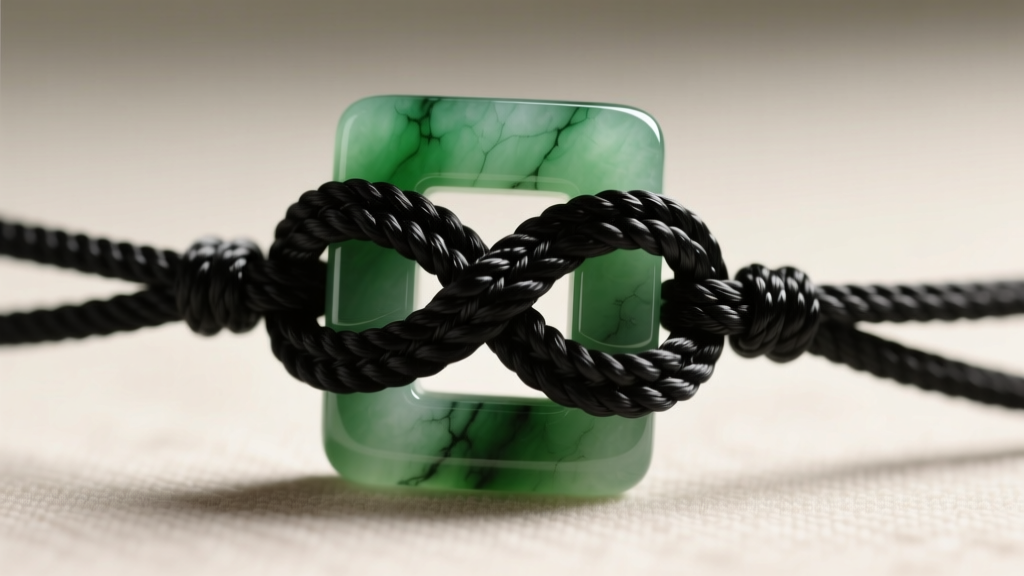
Furthermore, the knotting technique is critical. Avoid simple overhand knots that can slip through the drilled bail hole when the cord stretches over time. Instead, utilize a sliding square knot (also known as a macramé adjustable knot) at the nape of the neck. This not only secures the heavy pendant safely but allows the wearer to adjust the length of the necklace to suit different necklines, from high collars to deep V-necks, without requiring a metal clasp that could scratch the jade.
Restoring Luster: Cleaning Without Damaging the Stone
Over years of daily wear, a jade elephant necklace will accumulate a film of sebum, dead skin cells, and lotion in the deep crevices of the carving. This buildup scatters light, making even the finest imperial green jadeite look dull, opaque, and lifeless. Many owners mistakenly try to troubleshoot this by using harsh chemicals or ultrasonic cleaners.
Never place a jade necklace in an ultrasonic cleaner. The high-frequency acoustic cavitation can easily fracture internal stress lines within the stone and will completely strip the wax coating that lapidaries apply to enhance the surface luster of Type A jade.
To safely restore the luster of your jade elephant, prepare a lukewarm bath of distilled water and a few drops of pH-neutral dish soap. Use a specialized jewelry brush with extra-soft natural bristles (such as baby goat hair) to gently agitate the soap into the carved wrinkles of the elephant's skin and the underside of the belly. Rinse thoroughly with distilled water to prevent hard water mineral deposits, and dry immediately with a lint-free microfiber cloth. According to the GIA Care and Cleaning Guidelines, you can occasionally apply a microscopic drop of pure mineral oil to a soft cloth and buff the jade to temporarily enhance its optical translucency and protect it from drying out in low-humidity environments.
Summary Checklist for Jade Pendant Maintenance
- Inspect the Bail Hole: Check the drilled hole at the top of the elephant every six months. If the cord is fraying against a sharp, unpolished edge inside the hole, a jeweler must bevel the edge with a diamond file.
- Monitor Cord Integrity: Tug firmly on the nylon cord near the knot. If you see any fuzzing or whitening of the synthetic fibers, replace the cord immediately.
- Storage Protocols: Never store your jade elephant necklace loosely in a jewelry box alongside diamonds or sapphires. While jade is tough, diamonds (Mohs 10) and corundum (Mohs 9) will easily scratch the polished surface of the jade, ruining the carving's crisp details.
By understanding the specific mineralogical traits of jade and the mechanical stresses placed on animal carvings, you can ensure your jade elephant necklace remains a pristine, lucky heirloom for generations to come.


