The Ultimate Guide to Buying a Thick Herringbone Necklace
Master the mechanics of the thick herringbone necklace. Explore karat strength, kink prevention, weight specs, and expert repair protocols.

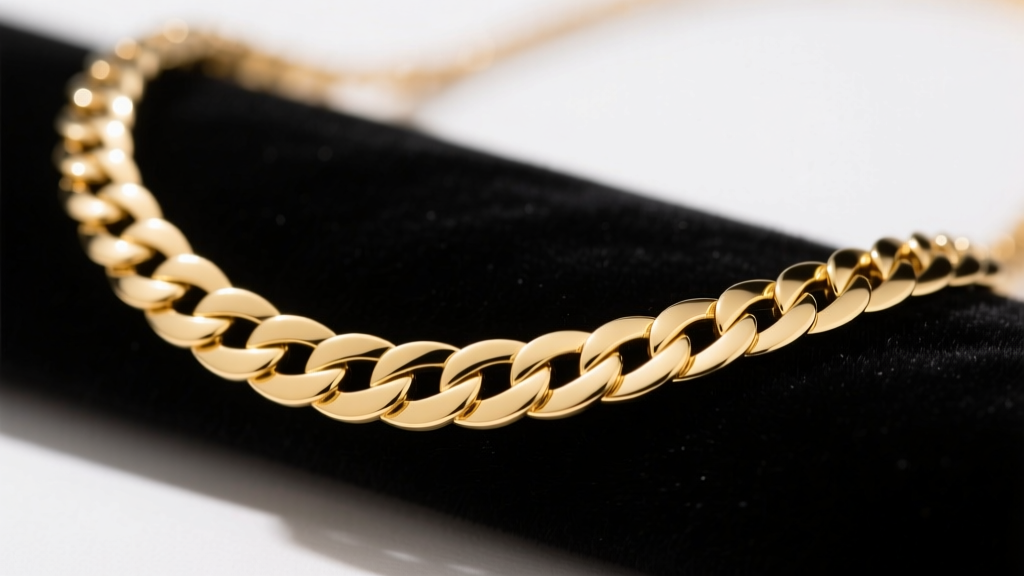
The Anatomy of a Flat-Link Masterpiece
The herringbone chain is a marvel of jewelry engineering, characterized by its fluid, ribbon-like drape and mirror-like reflectivity. Unlike cable or curb chains that rely on interlocking oval loops, a herringbone is constructed from multiple parallel rows of slanted, V-shaped links. These links are punched from flat sheet metal, bent at precise angles, and woven together to create a completely flush, continuous surface. When discussing a thick herringbone necklace, we are generally referring to chains that exceed 5mm in width and possess a substantial gram weight, transforming a delicate accessory into a bold, structural statement piece.
However, this unique flush-link architecture is precisely what makes the herringbone both breathtaking and notoriously fragile. Because the links lay flat against one another without the structural gaps found in open-link chains, they possess virtually no lateral flexibility. Understanding the mechanical limitations of this design is the first step in making an informed, high-value purchase.
Metallurgy: Choosing the Right Karat for Structural Integrity
When investing in a heavy, wide herringbone chain, the karat of the gold dictates not just the color and price, but the tensile strength of the piece. Pure gold (24k) is far too malleable for this specific chain style; the sheer weight of a thick chain will cause 24k links to stretch and warp under their own mass. According to metallurgical standards outlined by the Gemological Institute of America (GIA), alloying gold with metals like copper, silver, and zinc is critical for introducing the necessary rigidity.
| Gold Karat | Purity | Tensile Strength | Best Use Case for Herringbone |
|---|---|---|---|
| 10k Gold | 41.7% | Very High | Maximum durability, budget-friendly, slightly paler color. |
| 14k Gold | 58.3% | High | The ideal balance of rich color, structural memory, and daily wear resilience. |
| 18k Gold | 75.0% | Moderate | Luxurious deep yellow hue, but requires meticulous care to avoid bending. |
| 22k Gold | 91.6% | Low | Investment pieces only. Too soft for wide, heavy herringbones prone to torque. |
For a thick herringbone necklace intended for regular wear, 14k gold remains the undisputed industry standard. It provides the necessary structural memory to resist minor torsional stress while maintaining the warm, reflective qualities that make the herringbone weave so desirable.
The Physics of Kinking: Torque vs. Tension
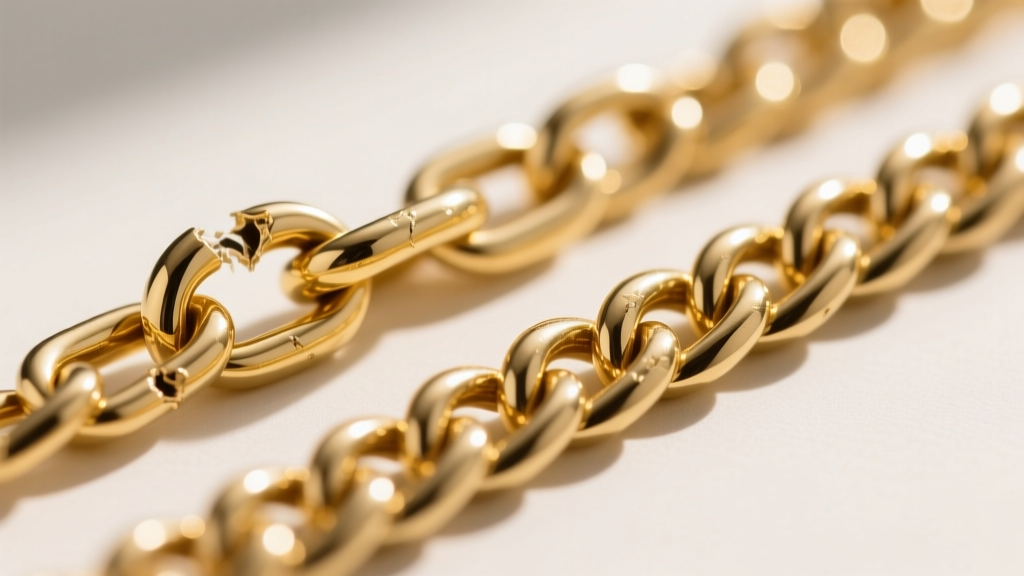
The most common failure mode of any herringbone chain is the dreaded "kink." To the untrained eye, a kink looks like a simple bend, but metallurgically, it is a catastrophic failure of the chain's planar alignment. When a herringbone chain is subjected to torque (twisting), the flat V-links are forced out of their horizontal plane. Once the metal folds past its yield point, the structural memory of the alloy is broken, resulting in a permanent, visible crease that catches the light differently and weakens the entire section.
Why Thickness Does Not Equal Width
A common misconception among buyers is that a wider chain is inherently more durable. This is false. A 12mm wide herringbone chain that is only 1.2mm thick will kink much faster than an 8mm wide chain that is 3.0mm thick. When evaluating a thick herringbone necklace, you must look at the depth of the links (the gauge of the sheet metal used) rather than just the horizontal width. Manufacturers like Stuller emphasize that heavier gram weights per inch are the true indicator of a chain's resistance to torsional stress.
Sizing, Weight, and Clasp Engineering
A thick herringbone necklace is a substantial investment, often priced by the gram plus a manufacturing premium. Because the weave is so dense, the weight scales exponentially with width. Below are the standard benchmarks for solid 14k gold herringbone chains at an 18-inch length:
- 5mm Width: Approximately 18–22 grams. Excellent for layering or wearing with a medium-weight pendant.
- 8mm Width: Approximately 35–45 grams. A true statement piece that lays heavily against the collarbone.
- 10mm+ Width: 55–80+ grams. Requires reinforced clasps and is best worn solo as a focal point.
Clasp Engineering: Never purchase a thick herringbone chain with a standard spring-ring clasp. The sheer weight and flat profile of the chain will exert uneven leverage on the clasp mechanism, leading to failure. A heavy-duty lobster clasp or a custom-machined box clasp with a figure-eight safety latch is mandatory for chains exceeding 30 grams.
Storage Protocols and Kink-Repair Realities
Preventing damage to a herringbone chain requires strict adherence to proper storage protocols. Because the chain lacks lateral flexibility, it must never be hung from a jewelry stand. Hanging a thick herringbone necklace allows gravity to pull the heavy links downward, creating localized torque near the clasp and the apex of the drape. Always store the chain completely flat in a lined jewelry box, or coiled loosely in a soft microfiber pouch.
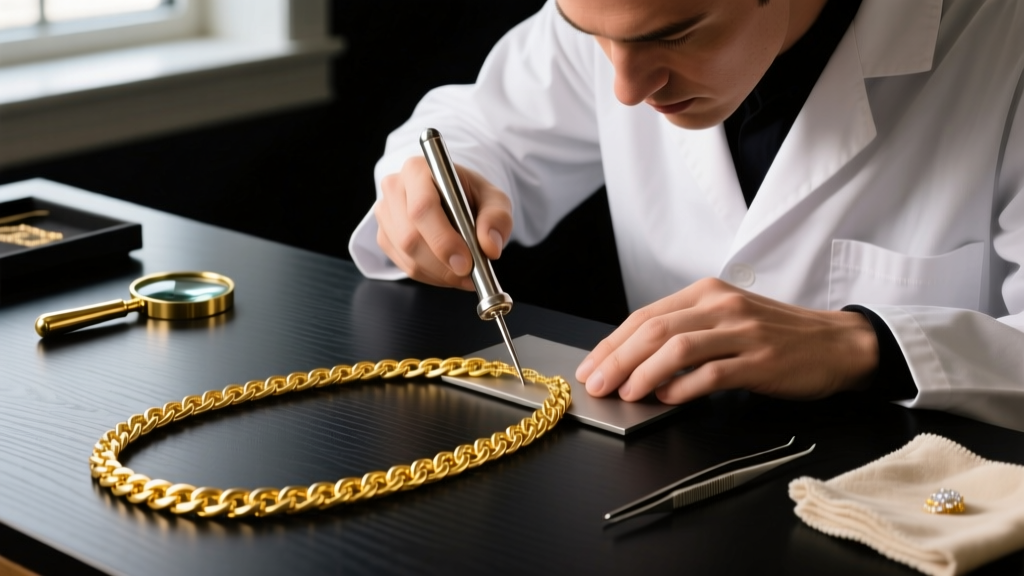
Expert Repair Note: If your herringbone chain does kink, do not attempt to bend it back with your fingers. Master jewelers use specialized steel roller tools and soft-jawed pliers to gently massage the links back into their planar alignment. However, be aware that a repaired kink will always remain a structural weak point, as the metal has been work-hardened and stressed at that exact coordinate.
Ultimately, a thick herringbone necklace is an exercise in mindful luxury. It offers an unparalleled, liquid-gold aesthetic that no other chain weave can replicate. By prioritizing 14k structural integrity, verifying the link depth, and adhering to strict flat-storage protocols, you can ensure your statement piece remains pristine and reflective for decades.


