How to Style, Layer, and Care for a Key Heart Lock Necklace
Master the art of wearing a key heart lock necklace. Learn step-by-step layering techniques, metal grade comparisons, and mechanism maintenance.

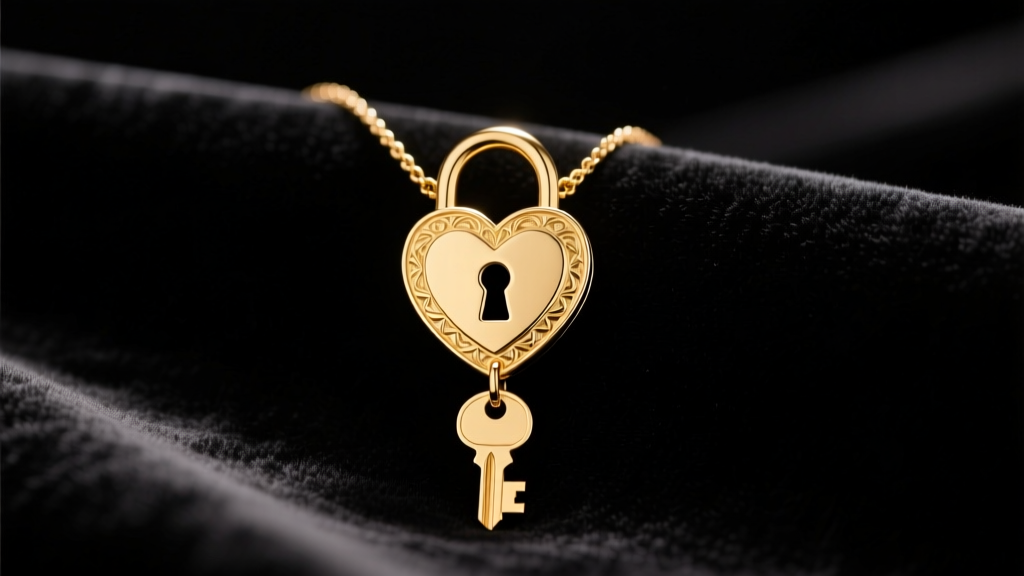
The key heart lock necklace is more than just a sentimental keepsake; it is a versatile sartorial anchor that bridges the gap between vintage romance and modern minimalism. Whether you are wearing a delicate 14k gold piece or a bold, oxidized sterling silver statement, mastering how to style, layer, and maintain this specific pendant requires an understanding of jewelry anatomy and proportion. This comprehensive guide will walk you through the exact steps to elevate your neckline while preserving the intricate mechanics of your lock and key.
Understanding the Anatomy: Decorative vs. Functional Locks
Before styling, it is crucial to identify the construction of your specific key heart lock necklace. These pendants generally fall into two categories:
- Decorative Pendants: The heart features a stamped or cast keyhole, and the key is either soldered directly to the chain alongside the heart, or hangs from a separate jump ring. There are no moving parts.
- Functional Lockets: The heart opens on a micro-hinge, secured by a miniature pin-tumbler or spring-loaded latch that requires the accompanying key to open. These are significantly more delicate and require careful handling to prevent the internal mechanism from seizing due to debris or tarnish.
According to the Gemological Institute of America (GIA), jewelry with moving micro-hinges and internal latches requires specialized care, as standard polishing compounds can easily become trapped inside the locking mechanism, rendering the key useless.
Step-by-Step Guide to Layering Your Lock and Key
Layering a key heart lock necklace requires strategic spacing to ensure the pendants do not tangle or visually compete. The golden rule of necklace layering is maintaining a minimum 2-inch to 4-inch drop between each chain.
Step 1: Establish the Base Layer (14 to 16 Inches)
Start with a lightweight, minimalist chain that sits close to the collarbone. A 1.0mm sterling silver cable chain or a delicate 14k gold figaro chain works perfectly here. This layer frames the face and provides a visual anchor without distracting from the main pendant. Avoid adding a pendant to this base layer; let it remain a bare chain.
Step 2: Position the Heart Lock (18 Inches)
The princess length (18 inches) is the ideal placement for the heart lock itself. At this length, the heart rests perfectly at the center of the chest, drawing the eye downward. Opt for a slightly heavier chain for this layer—such as a 1.5mm box chain—to support the weight of the metal heart without stretching the links over time.
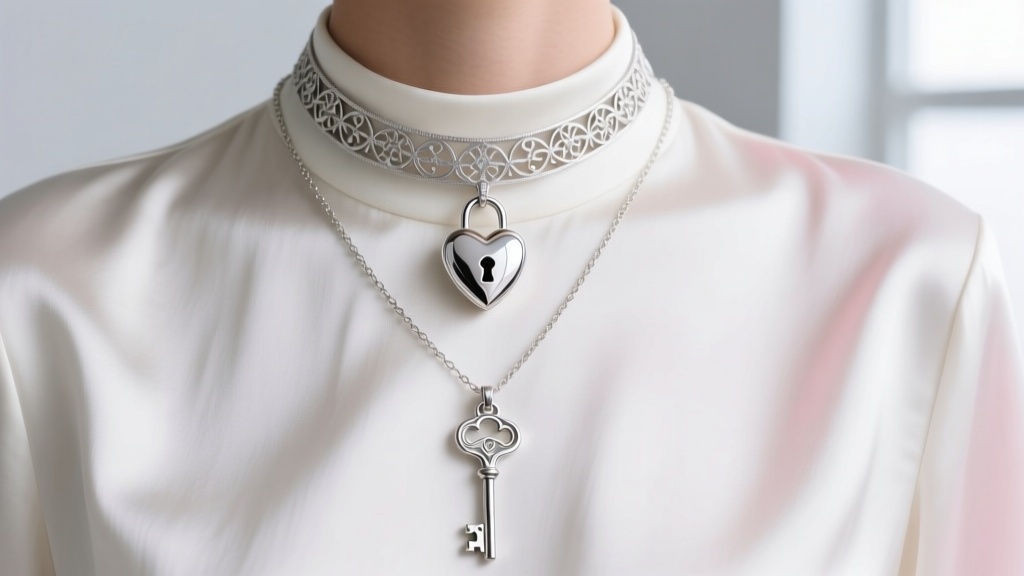
Step 3: Suspend the Key Pendant (20 to 22 Inches)
To create a staggered, intentional look, separate the key from the heart. Place the key pendant on a 20-inch or 22-inch matinee chain. This creates a cascading effect where the key appears to be "reaching" toward the lock. If your necklace set comes with both pieces on a single chain, you can easily modify it by purchasing a secondary chain and using a jeweler's pliers to open the jump ring holding the key, transferring it to the longer chain.
Matching Chain Gauges and Metal Grades
The longevity of your necklace depends heavily on the metal grade and the gauge (thickness) of the chain. A heavy solid brass heart will easily snap a hollow 0.8mm chain. Use the table below to match your pendant's weight to the correct chain specifications.
| Material Grade | Recommended Chain Gauge | Average Price Range | Durability & Notes |
|---|---|---|---|
| 925 Sterling Silver | 1.2mm - 1.8mm Cable | $45 - $150 | High durability, but prone to sulfide tarnishing. Requires regular polishing. |
| 14k Gold Vermeil | 1.5mm - 2.0mm Box | $85 - $250 | Medium durability. The 2.5-micron gold plating will eventually wear off at the clasp and jump rings. |
| Solid 14k Yellow Gold | 0.9mm - 1.5mm Rope | $450 - $1,200+ | Exceptional durability. Will not tarnish or lose color. Best for heirloom functional lockets. |
| Stainless Steel (PVD) | 2.0mm - 3.0mm Curb | $30 - $90 | Extremely high durability and scratch resistance, but heavier and cannot be easily resized by a jeweler. |
Neckline Pairings: Framing the Pendant
The visual impact of a key heart lock necklace changes drastically depending on the neckline of your garment.
- Deep V-Necks: The V-shape naturally mimics the downward point of the heart pendant. An 18-inch chain will sit parallel to the fabric's hem, creating a highly cohesive, elongating silhouette.
- Crew Necks and Turtlenecks: Opt for a longer, 22-inch to 24-inch chain worn over the fabric. Choose a high-contrast metal (like bright yellow gold over a black or navy sweater) to ensure the intricate keyhole detailing is not lost against the textile.
- Off-the-Shoulder and Sweetheart: These necklines expose the collarbone and upper chest. Utilize the 3-step layering technique mentioned above, keeping the chains snug (14", 16", 18") so they rest directly on the skin rather than dangling over the fabric edge.
How to Clean and Maintain the Locking Mechanism
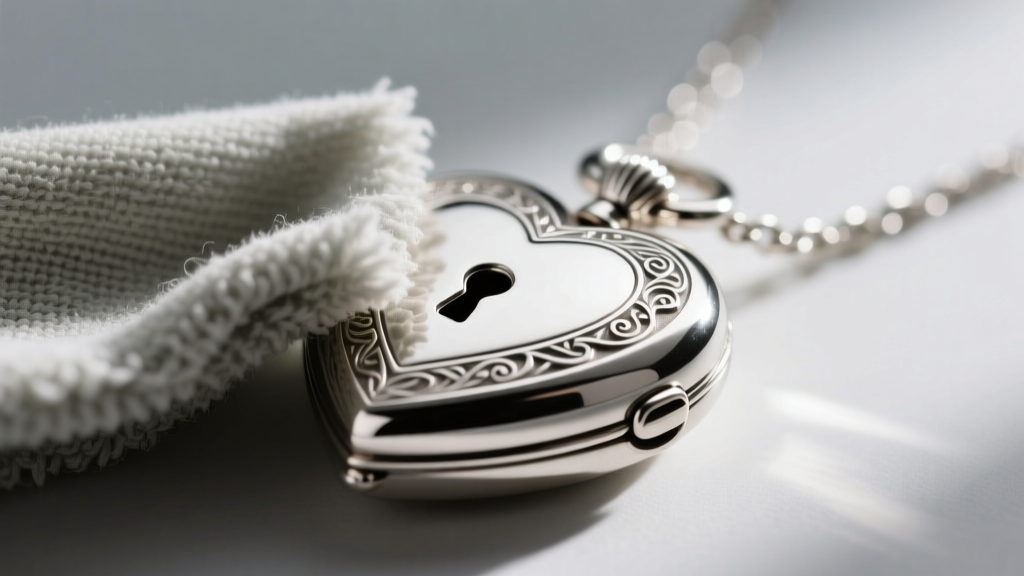
If you own a functional heart locket, the keyhole and hinge are magnets for skin oils, lotion residue, and dust. Over time, this buildup will cause the key to stick or the hinge to stiffen. The Jewelers of America recommends gentle, non-abrasive cleaning methods for mechanical jewelry components.
Step-by-Step Cleaning Process
- Prepare a Mild Solution: Mix three drops of phosphate-free dish soap (like Dawn) into a bowl of lukewarm distilled water. Avoid hot water, which can warp micro-hinges or loosen gemstone adhesives.
- Soak Briefly: Submerge the heart pendant (but not necessarily the entire chain) for exactly 3 to 5 minutes to loosen debris.
- Agitate the Keyhole: Use an extra-soft, baby-hair toothbrush to gently sweep the inside of the keyhole and the hinge crevices. Never use metal pins or needles to dig out debris, as this will scratch the internal tumblers.
- Rinse and Dry: Rinse under a gentle stream of distilled water. Immediately pat dry with a lint-free microfiber cloth, then use a hairdryer on the "cool" setting to blow out any remaining moisture trapped inside the lock mechanism.
"Never use ultrasonic cleaners on functional lockets or heart pendants with enamel detailing. The high-frequency vibrations can easily shatter enamel inlays and dislodge the microscopic spring pins inside the locking mechanism." — Master Bench Jeweler
Troubleshooting Common Mechanical Issues
Even with meticulous care, mechanical jewelry can present challenges. Here is how to troubleshoot the most common issues associated with key heart lock necklaces:
The Key is Stuck or Won't Turn
Do not force the key, as the soft metals used in jewelry keys (especially silver and high-karat gold) will bend or snap under torque. Instead, apply a microscopic amount of dry graphite powder into the keyhole using a wooden toothpick. Graphite acts as a dry lubricant that will not attract dust or gum up the mechanism like liquid oils (such as WD-40) will. Insert the key and gently wiggle it to distribute the graphite.
The Hinge is Loose or Wobbly
If the heart locket swings open too easily, the hinge pin has likely worn down or bent. This is not a DIY fix. Take the piece to a professional bench jeweler who can use a laser welder to add a microscopic bead of metal to the hinge pin, tightening the tolerance without melting the surrounding silver or gold.
Severe Tarnish in the Keyhole Crevices
Polishing cloths cannot reach inside the keyhole. For sterling silver pieces, use a specialized silver dip solution, but limit the submersion to no more than 10 seconds. Rinse thoroughly with baking soda and water to neutralize the acidic dip, preventing long-term chemical degradation of the metal.
By understanding the specific mechanical and aesthetic nuances of your jewelry, you ensure that your necklace remains both a stunning focal point and a fully functional heirloom for years to come.


