Buying Guide: Choosing the Perfect Ornate Cross Necklace
Discover what to look for when buying an ornate cross necklace. Learn about metal grades, gemstone settings, chain pairings, and historical styles.

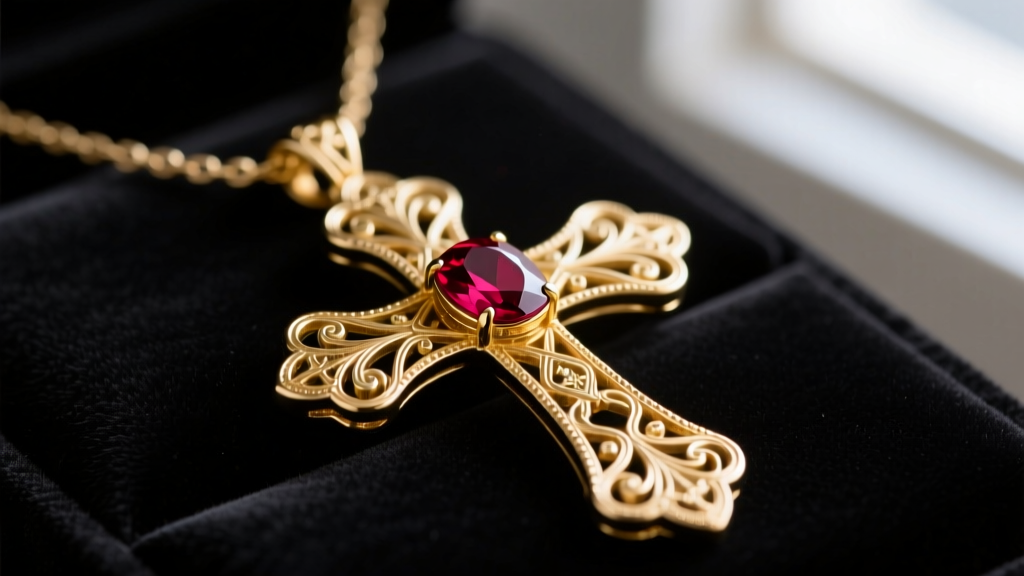
An ornate cross necklace is more than just a symbol of faith or a fashion statement; it is a wearable piece of art characterized by intricate detailing, historical motifs, and complex craftsmanship. Unlike minimalist or plain gold crosses, ornate designs feature elements like filigree scrollwork, milgrain edging, pavé gemstones, and vibrant enamel work. However, the complexity of these pendants introduces unique challenges regarding durability, chain compatibility, and metal integrity.
This comprehensive buying guide will walk you through the critical details of evaluating an ornate cross necklace, ensuring you invest in a piece that is both structurally sound and aesthetically magnificent.
Decoding Historical Styles of Ornate Crosses
Understanding the historical era that inspires a cross design will help you identify authentic hallmarks and evaluate the quality of the craftsmanship. Most ornate crosses fall into one of three distinct stylistic categories:
Victorian and Edwardian Filigree
Victorian-era crosses are renowned for their delicate, lace-like metalwork. Authentic antique pieces (or high-quality modern reproductions) utilize 24- to 28-gauge wire for handmade filigree. Look for 'millegrain' detailing—tiny beads of metal along the edges—which was historically applied using a hand-crimping tool. If the millegrain looks perfectly uniform and flat under a jeweler's loupe, it is likely a modern CAD-cast reproduction rather than a handcrafted antique.
Byzantine and Orthodox Enamel Work
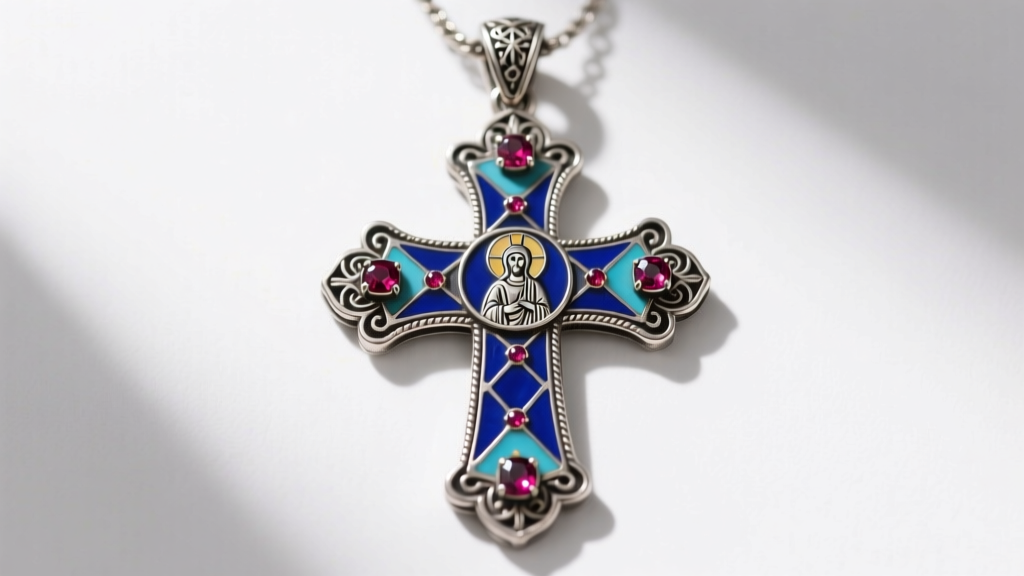
Byzantine crosses are typically heavier, featuring bold geometric lines, cabochon gemstones, and rich enamel. The most prized technique here is cloisonné, where thin wires are soldered to the metal base to create compartments filled with glass enamel. According to the Victoria and Albert Museum's jewelry archives, true Byzantine revival pieces should show slight variations in the wire thickness, indicating hand-soldering rather than machine stamping.
Celtic Knotwork and Interlacing
Celtic crosses feature endless knots and interlacing patterns symbolizing eternity. The critical flaw to watch for in mass-produced Celtic crosses is 'undercutting'—where the negative space between the knots is not fully cleaned out, leaving a muddy, flat appearance. High-quality ornate Celtic crosses will have deep, sharp relief, with the metal weave appearing to physically pass over and under itself.
Material Grades and Metal Hallmarks
The metal chosen for an ornate cross necklace dictates both its longevity and its ability to hold fine details. While 18k gold is highly valued for its rich color, it is softer and more prone to bending in delicate filigree designs.
| Metal Type | Hardness & Durability | Suitability for Ornate Detail | Price Range (Pendant Only) |
|---|---|---|---|
| 14k Yellow/White Gold | High (Excellent for daily wear) | Optimal. Holds fine filigree and prongs securely without bending. | $400 - $1,200 |
| 18k Yellow Gold | Medium (Prone to scratching) | Good for solid, cast ornate pieces; poor for delicate wirework. | $800 - $2,500+ |
| 925 Sterling Silver | Medium-Soft (Tarnishes easily) | Excellent for oxidized, high-relief Celtic or Gothic designs. | $120 - $450 |
| Platinum (950) | Very High (Dense and heavy) | Superior for gemstone-heavy ornate crosses; requires thick casting. | $1,500 - $5,000+ |
Pro Tip: Always verify the hallmark. According to The London Assay Office, a legitimate precious metal hallmark will include a sponsor's mark, a fineness number (e.g., 585 for 14k, 750 for 18k), and an assay office symbol. If an ornate cross lacks these stamps in an inconspicuous area (like the back of the bail), treat it with extreme caution.
Evaluating Gemstone Settings and Enamel Integrity
Ornate crosses frequently incorporate gemstones and enamel, both of which require strict quality control. When evaluating the stones, consider the Gemological Institute of America (GIA) guidelines for Mohs hardness. Because pendants rest on the chest and are prone to being bumped, avoid ornate crosses featuring opals, pearls, or turquoise in exposed prong settings. Instead, look for rubies, sapphires, or diamonds.
Prong vs. Bezel in Vintage Designs
While prong settings maximize light return, they can snag on clothing—a major risk for heavily textured, ornate pieces. Bezel settings or gypsy settings (where the stone is flush with the metal) are vastly superior for ornate crosses intended for daily wear. If the piece features pavé diamonds, use a loupe to ensure the tiny beads holding the stones are rounded and smooth, not flat or sharp.
Enamel Quality Checks
If the cross features enamel, run your fingernail gently across the surface. The enamel should be perfectly flush with the surrounding metal dividers (cloisons). Any pitting, cracking, or uneven pooling indicates poor temperature control during the firing process, which will eventually lead to the enamel chipping out.
Chain Selection: Supporting Heavy, Detailed Pendants
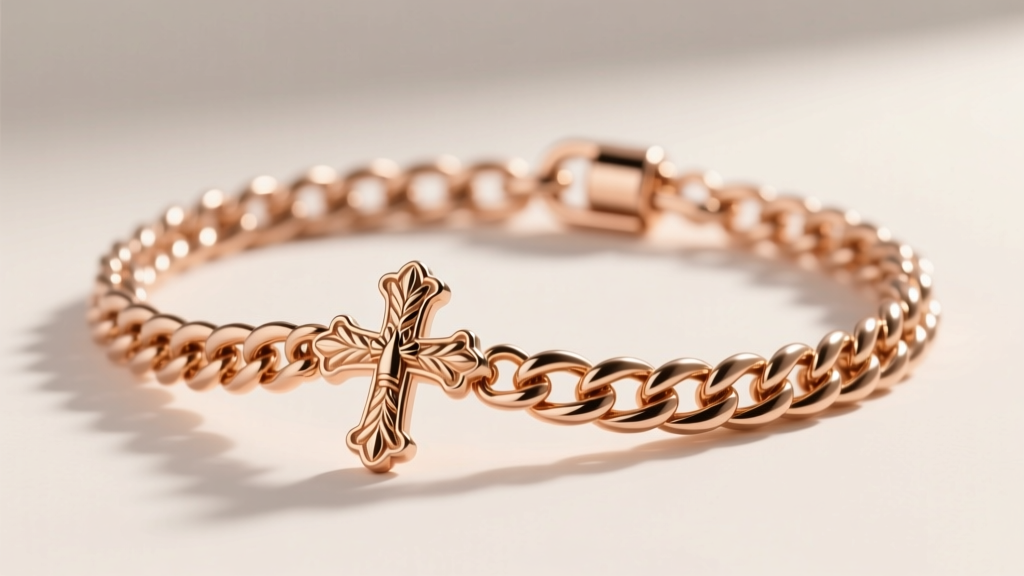
A common mistake buyers make is pairing a heavy, ornate cross pendant with a delicate chain. An ornate cross weighing more than 8 grams will quickly warp a standard cable or curb chain, leading to metal fatigue and breakage.
The Best Chain Types for Ornate Pendants
- Wheat (Spiga) Chains: The woven, multi-directional links distribute weight evenly and resist kinking, making them the top choice for heavy, gemstone-encrusted crosses.
- Rope Chains: Excellent for vintage and Byzantine styles. The twisted links reflect light beautifully and offer high tensile strength. Opt for a 2.5mm to 4mm thickness.
- Box Chains: Ideal for modern, geometric ornate crosses. They lay flat and offer a sleek contrast to busy pendant designs.
The Bail Rule: Always measure the interior dimensions of the pendant's bail (the loop that holds the chain). For a substantial ornate cross, the bail must have an interior clearance of at least 4mm x 6mm to accommodate a sturdy chain without causing abrasive friction that wears down the metal over time.
Pricing Tiers and Where to Buy
The market for ornate cross necklaces is segmented into three distinct tiers, each offering different value propositions:
- Mass-Market / CAD-Cast ($150 - $600): Produced using 3D-printed wax models and cast in 10k or 14k gold. Details may appear slightly soft or rounded. Best for fashion-forward buyers who want the aesthetic without the antique price tag.
- Artisan / Hand-Fabricated ($800 - $3,000): Made by independent jewelers using traditional lost-wax casting, hand-engraving, and precise stone setting. Expect sharp milgrain, custom enamel work, and superior finishing.
- Estate / Antique ($1,500 - $10,000+): Authentic Victorian, Edwardian, or Art Deco pieces. Value is driven by provenance, rarity, and historical significance. Always require a certificate of authenticity and a condition report detailing any restorations or lead-solder repairs.
Your Pre-Purchase Inspection Checklist
Before finalizing your purchase, run through this quick diagnostic checklist to ensure the ornate cross necklace meets professional standards:
- Loupe the Edges: Are the filigree wires cleanly soldered, or are there visible gaps and excess solder blobs?
- Check the Bail Joint: Is the bail securely laser-welded or soldered to the main body of the cross? This is the highest stress point.
- Test the Stones: Gently tap the gemstones with a wooden toothpick. Any rattling indicates loose settings that require immediate jeweler intervention.
- Inspect the Back: High-quality ornate crosses will have an 'openwork' or neatly finished back, allowing light to pass through and reducing the overall weight without sacrificing structural integrity.
By prioritizing structural integrity, historical accuracy, and appropriate chain pairing, you can secure an ornate cross necklace that serves as a stunning, enduring centerpiece in your jewelry collection for decades to come.


