How to Style and Maintain a Sterling Silver Lock Necklace
Learn how to layer, style, and clean your sterling silver lock necklace with our expert step-by-step guide on 925 silver care and pairing.

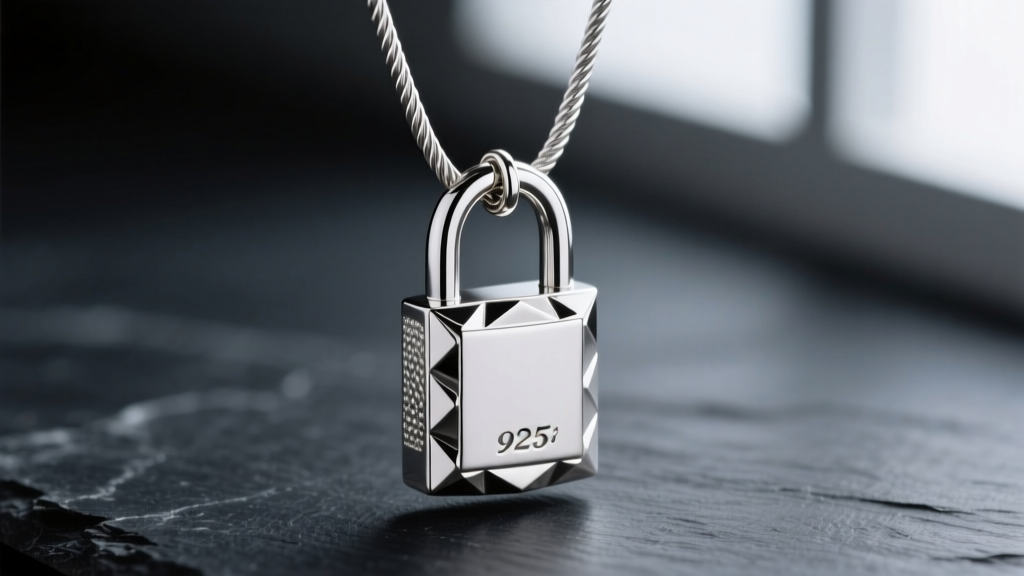
The Anatomy of a 925 Sterling Silver Lock
The sterling silver lock necklace has transcended its punk-rock origins to become a sophisticated staple in modern jewelry wardrobes. However, to properly style and maintain this piece, you must first understand the metallurgy of the 925 sterling silver from which it is forged. Pure silver (99.9%) is too malleable to hold the intricate mechanical components of a functioning lock or the structural integrity of a chain. Therefore, authentic sterling silver is an alloy composed of 92.5% pure silver and 7.5% copper.
This 7.5% copper content is a double-edged sword. It provides the necessary tensile strength for the lock's internal spring mechanisms and the chain's links, but it is also the primary catalyst for tarnishing. When copper reacts with sulfur compounds in the air and on human skin, it forms silver sulfide, the blackish film that dulls your jewelry. Furthermore, the mechanical bail (the loop connecting the lock to the chain) on a high-quality padlock pendant typically has an inner diameter of 4mm to 6mm. This specific dimension dictates exactly which chain gauges you can use without causing friction wear against the silver.
Verifying the Hallmark
Before attempting any maintenance or styling, verify your piece's authenticity. According to the Assay Office hallmarking guidelines, genuine sterling silver should bear a '925' stamp. On a lock pendant, this is usually laser-engraved on the flat backplate or the side of the lock body. If your lock features a rhodium plating (a microscopic 0.1 to 0.3-micron layer of platinum-group metal used to prevent tarnish and add a white-gold-like shine), the underlying silver will still require specific care once that plating eventually wears thin around the high-friction edges of the keyhole and clasp.
Step-by-Step Guide to Layering Your Lock Necklace
Layering a sterling silver lock necklace requires a strategic approach to weight distribution and visual hierarchy. The lock is inherently a statement piece, meaning it must act as the anchor of your layered arrangement. Follow this three-step framework to achieve a balanced, professional look.
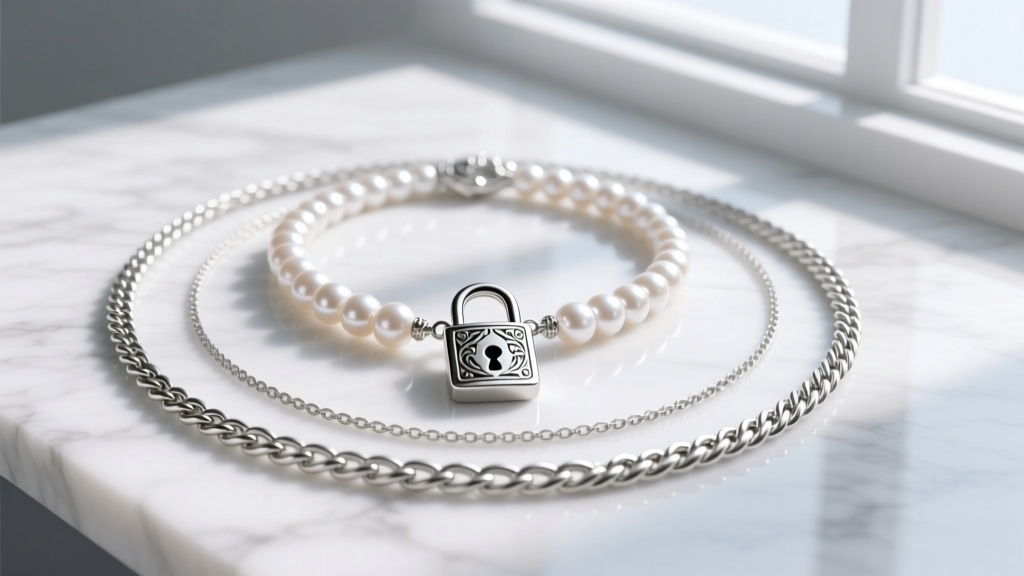
Step 1: Establish the Base Layer (14" to 16")
Begin with a lightweight, contrasting choker. A 14-inch or 16-inch chain featuring a 1.0mm box chain or a strand of 4mm freshwater pearls sits perfectly on the collarbone. This layer should not feature any pendants. Its sole purpose is to frame the neck and provide a textural contrast to the heavier silver lock that will sit below it.
Step 2: Position the Lock Anchor (18" to 20")
Your sterling silver lock necklace should sit exactly two to four inches below the base layer. An 18-inch chain is ideal for crew necklines, while a 20-inch chain works best for V-necks. The chain gauge for the lock necklace must be robust enough to support the pendant's weight without snapping. For a standard 8-gram padlock pendant, a 1.2mm to 1.5mm cable or curb chain is optimal. Avoid snake chains, as their smooth surface can cause the lock's bail to slide too freely, leading to premature metal fatigue at the connection point.
Step 3: Add the Lariat or Rope Extension (24" to 28")
To complete the layering triad, add a 24-inch or 28-inch sterling silver rope chain without a pendant. The twisted grooves of a rope chain catch the light differently than the smooth surface of a padlock, creating depth. Ensure the combined weight of all three chains does not exceed 35 grams to prevent neck strain and collar stretching on delicate fabrics.
The 3-Rule Framework for Neckline Pairing
Matching the physical dimensions of your lock pendant to your garment's neckline is critical for proportional styling. Use the table below as a quick-reference decision matrix.
| Neckline Type | Ideal Chain Length | Lock Pendant Dimensions | Styling Notes |
|---|---|---|---|
| Crew Neck | 18 inches | 15mm x 20mm (Medium) | Lock should rest exactly 1 inch below the fabric collar. |
| V-Neck | 20 inches | 12mm x 25mm (Elongated) | Elongated locks mimic the V-shape, drawing the eye downward. |
| Turtleneck | 24 to 28 inches | 25mm x 30mm (Oversized) | Requires a heavy, oversized lock to stand out against thick fabric. |
| Off-Shoulder | 14 to 16 inches | 10mm x 12mm (Miniature) | Wear as a choker to highlight the exposed collarbones. |
How to Clean and Maintain the Locking Mechanism
Because a lock necklace features moving parts—such as the shackle, the internal spring, and the keyhole—it requires a different cleaning protocol than a standard solid pendant. Commercial silver dips often contain harsh thiourea compounds that can leave a residue inside the lock's mechanical housing, eventually gumming up the spring and preventing the shackle from clicking shut.
The Aluminum Foil Electrochemical Method
The safest and most effective way to remove heavy silver sulfide tarnish from a sterling silver lock necklace without damaging the internal mechanics is through an electrochemical reduction bath. This method reverses the tarnishing process at a molecular level.
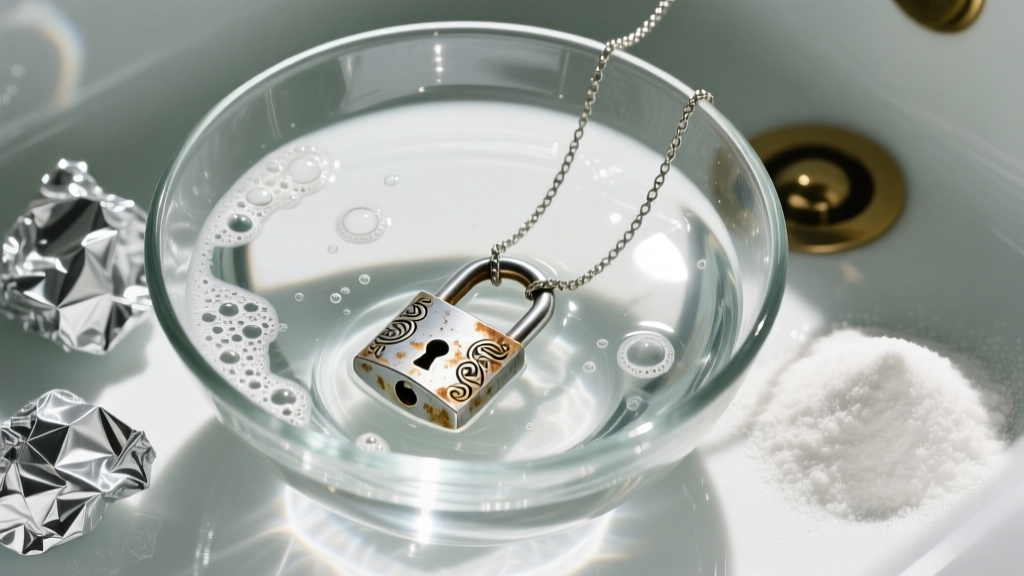
- Prepare the Vessel: Line the inside of a glass or ceramic bowl with aluminum foil, ensuring the shiny side faces up. Do not use metal bowls, as they will interfere with the ionic transfer.
- Add the Catalysts: Sprinkle 2 tablespoons of baking soda (sodium bicarbonate) and 1 tablespoon of sea salt over the foil. These act as electrolytes to facilitate the ion exchange.
- Activate the Solution: Pour boiling water into the bowl until the necklace will be fully submerged. The water must be near boiling (around 95°C or 200°F) to activate the reaction.
- Submerge the Necklace: Using wooden or plastic tongs (never metal), lower your sterling silver lock necklace into the solution. Ensure the silver is physically touching the aluminum foil. You will immediately notice a sulfuric, egg-like odor as the silver sulfide is stripped from the jewelry and transferred to the aluminum.
- Rinse and Dry: After 3 to 5 minutes, remove the necklace. Rinse it thoroughly under warm distilled water to remove any alkaline residue. Use a microfiber cloth to dry it completely, paying special attention to blowing compressed air into the keyhole and shackle joint to prevent trapped moisture.
Expert Warning: Never use this electrochemical method on sterling silver lock necklaces that have been intentionally oxidized (antiqued) to highlight engraved details, or on pieces featuring glued-in gemstones like turquoise or opals, as the boiling water will dissolve the jewelry adhesive.
Troubleshooting Common Clasp and Lock Failures
The mechanical nature of a lock necklace introduces specific points of failure that standard pendants do not face. Here is how to troubleshoot the most common issues encountered with 925 silver locks.
The Shackle Will Not Click Shut
If the U-shaped shackle of your padlock pendant refuses to snap into the locking body, the internal spring mechanism is likely obstructed by microscopic debris or dried skin oils. Do not force it, as sterling silver will bend and warp under excessive pressure. Instead, apply a single, microscopic drop of synthetic watch oil or sewing machine oil into the shackle joint. Work the shackle up and down gently to distribute the lubricant. Avoid using WD-40, as its solvent properties will strip the metal of its natural protective patina and attract more dust over time.
Cross-Threading on Screw-Locks
Many high-end sterling silver lock necklaces utilize a screw-thread mechanism rather than a spring-loaded click. If the threaded post becomes cross-threaded, forcing it will strip the delicate 925 silver threads, rendering the lock permanently open. If you encounter resistance, back the thread out completely. Use a jeweler's loupe to inspect the threading for burrs. If a burr is present, a professional jeweler can easily smooth it with a fine diamond file. Always align the threads perfectly straight before applying rotational force.
Final Thoughts on Silver Lock Care
A sterling silver lock necklace is more than just a trend; it is a mechanical marvel and a versatile styling anchor. By respecting the 925 alloy's metallurgical properties, carefully selecting chain gauges that match the bail dimensions, and utilizing non-destructive electrochemical cleaning methods, you ensure that your piece remains both mechanically functional and visually striking for decades. Store your necklace in an airtight polyethylene bag with a 3M anti-tarnish strip when not in use, and your silver lock will remain a permanent, shining fixture in your jewelry rotation.


