How to Style and Care for a Multi Strand Red Coral Necklace
Learn how to style, authenticate, and properly clean your multi strand red coral necklace with our expert step-by-step guide and care tips.

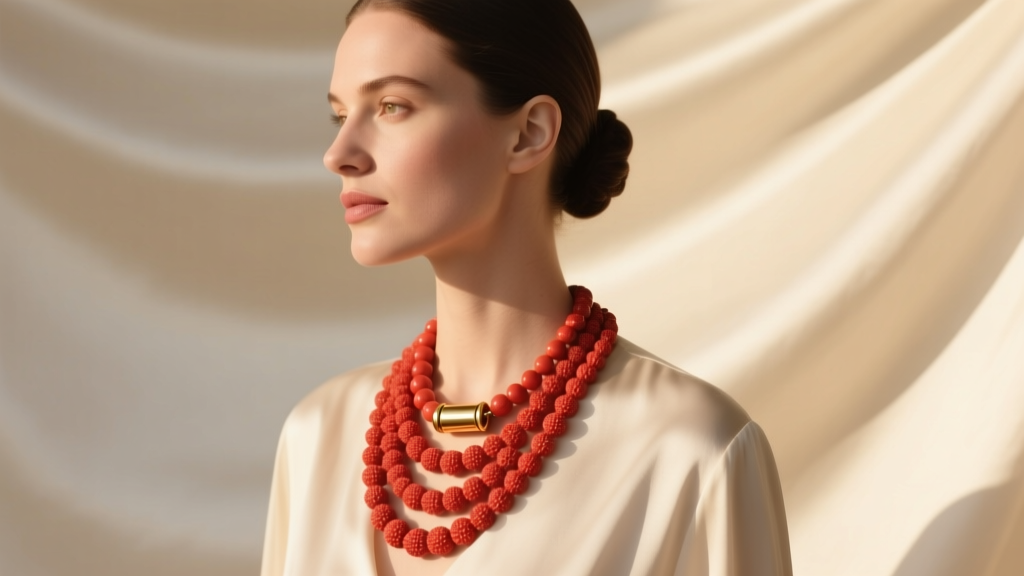
In the 2026 landscape of quiet luxury and heritage investment pieces, organic gems have reclaimed their spot at the pinnacle of fine jewelry. Among these, the multi strand red coral necklace stands out as a masterclass in texture, color, and historical significance. Unlike crystalline gemstones, coral is an organic creation composed primarily of calcium carbonate and conchiolin, meaning it requires a radically different approach to styling, authentication, and maintenance. Whether you have inherited a vintage 5-strand piece or recently invested in a modern Mediterranean Corallium rubrum design, this comprehensive step-by-step guide will ensure your necklace remains vibrant, structurally sound, and impeccably styled.
The Anatomy of a Multi Strand Red Coral Necklace
Before diving into styling and care, it is crucial to understand the structural engineering of your piece. A high-quality multi strand necklace is not merely beads strung together; it is a precision-crafted garment accessory. The most common configurations are 3-strand, 5-strand, and 7-strand designs.
- Bead Sizing and Weight: A 3-strand necklace typically features 6mm to 8mm beads. A 5-strand design usually scales down to 4mm to 6mm beads to prevent the piece from becoming excessively heavy. A 7-strand piece often utilizes 3mm to 5mm seed coral or small rondelles. A heavy 7-strand necklace with 8mm beads can exceed 150 grams, causing severe neck strain and accelerating the degradation of the silk threading.
- Threading and Knotting: Authentic multi-strand coral should be knotted on high-grade silk thread (typically Size E or F, depending on the drill hole diameter). Knotting between every single bead prevents catastrophic loss if the strand snaps and protects the delicate calcium carbonate surface from bead-on-bead friction.
- Hardware and Clasps: Look for 14k or 18k gold barrel clasps or custom-milled fold-over clasps. Magnetic clasps, while convenient, are generally discouraged for heavy multi-strand pieces as they can pinch the skin and attract microscopic metal particles that degrade the silk over time.
Step 1: Authenticating Your Red Coral
The market is saturated with dyed bamboo coral, howlite, and glass imitations masquerading as premium red coral. True gem-quality red coral comes primarily from two species: the Mediterranean Corallium rubrum and the highly prized Japanese Corallium japonicum (often referred to as 'ox blood' coral). According to the Gemological Institute of America (GIA), natural red coral exhibits specific structural markers that imitations cannot replicate.
The Visual and Chemical Authentication Matrix
| Feature | Natural Red Coral (Corallium) | Dyed Bamboo Coral / Imitation |
|---|---|---|
| Magnification (10x) | Shows subtle radial growth rings and organic wood-grain-like striations. | Shows a network of dark dye concentrated in surface-reaching fractures or uniform, featureless color. |
| Acetone Test | No color transfer when wiped with an acetone-dampened cotton swab. | Red dye transfers to the swab, indicating surface or fracture dyeing. |
| UV Fluorescence | Often shows a faint, natural chalky or pale red fluorescence. | May show unnatural, blotchy fluorescence from synthetic dyes. |
| Thermal Reaction | Warm to the touch; does not melt. | Plastic/resin imitations feel artificially warm and may melt under a hot point (destructive). |
Note: Always perform the acetone test in an inconspicuous area, such as near the clasp, and never use harsh chemicals on strung pieces, as acetone can dissolve the silk thread's sizing.
Step 2: Choosing the Right Neckline and Occasion
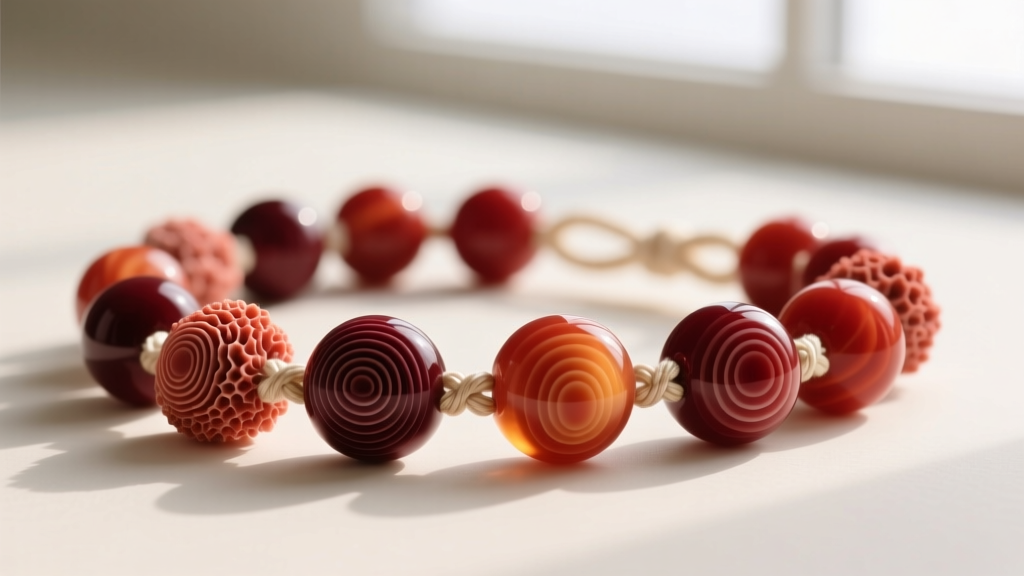
A multi strand red coral necklace is a high-impact, voluminous piece of jewelry. The key to styling it in 2026 is balancing its visual weight with the architecture of your clothing. The deep, saturated crimson hue acts as a neutral anchor in modern wardrobes, pairing exceptionally well with both monochromatic palettes and bold structural tailoring.
V-Neck and Plunging Necklines
The V-neck is the most forgiving and flattering canvas for a multi-strand piece. The cascading strands naturally follow the geometry of the V-neckline, elongating the torso. For a 5-strand necklace with a 16-inch inner length, ensure the outermost strand rests at least two inches above the apex of the V-neck to prevent the jewelry from competing with the garment's seam lines. This pairing is ideal for evening galas, paired with a minimalist silk slip dress or a sharply tailored tuxedo blazer.
Boat Neck and Off-the-Shoulder
Horizontal necklines create a striking contrast with the rounded, enveloping shape of a multi-strand coral collar. An off-the-shoulder cashmere sweater in ivory, charcoal, or navy provides a muted, textured background that allows the organic red tones to pop. However, avoid boat necks with heavy, stiff fabrics that might cause friction against the coral beads, as repeated abrasion against rough textiles can dull the coral's natural polish over time.
Step 3: Mastering the Layering Technique
While a multi strand red coral necklace is inherently layered, incorporating it into a broader necklace stack requires strict discipline to avoid a cluttered aesthetic. The golden rule of layering with multi-strand organic gems is to mix textures and metals, not competing gemstones.
- The Anchor Principle: Let the coral necklace sit closest to the neck (e.g., at 15 or 16 inches).
- The Extension Piece: Add a single, delicate 22-inch or 24-inch chain in 18k yellow gold featuring a solitary, understated pendant (such as a plain gold disc or a single, small diamond solitaire). This draws the eye downward and breaks up the density of the coral.
- Avoid Competing Organics: Do not layer red coral with pearls, turquoise, or lapis lazuli. The visual noise of multiple organic textures will overwhelm the outfit and increase the risk of the softer stones scratching one another.
Step 4: Daily Care and Maintenance (The 'Last On, First Off' Rule)
Red coral ranks a mere 3.5 on the Mohs hardness scale, making it highly susceptible to scratching, chemical etching, and dehydration. Furthermore, international trade of many coral species is strictly regulated under CITES to protect marine ecosystems, making the preservation of existing pieces an environmental imperative as well as a financial one.
Chemical Vulnerabilities
Because coral is calcium carbonate, it will literally dissolve when exposed to acids. This includes everyday substances like citrus juice, vinegar, and even the natural lactic acid in human sweat. Perfumes, hairsprays, and cosmetics contain alcohols and solvents that will strip the coral's natural luster, leaving it chalky and brittle. Always apply your jewelry after your perfume has dried and your cosmetics have set.
The Cleaning Protocol
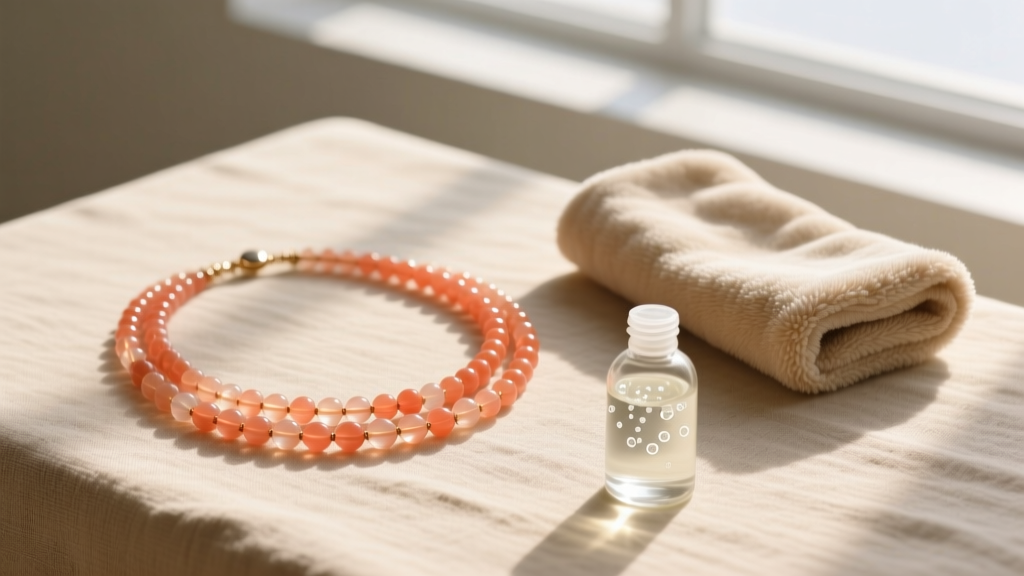
- Post-Wear Wipe: After every wear, gently wipe the beads with a clean, slightly damp microfiber cloth to remove acidic skin oils and environmental dust.
- Deep Cleaning (Monthly): If the coral loses its luster, use a drop of pH-neutral, non-detergent soap (like pure Castile soap) on a damp cloth. Wipe each strand individually.
- Drying: Lay the necklace flat on a dry towel in a cool, shaded area. Never hang a wet multi-strand necklace, as the weight of the water will stretch the silk thread and distort the knotting.
- Hydration: Once a year, apply a microscopic amount of mineral oil to a soft cloth and gently buff the beads to prevent the organic matrix from drying out and cracking in low-humidity environments.
Troubleshooting Common Multi-Strand Issues
Even with meticulous care, the mechanical components of a multi strand red coral necklace will experience wear. Recognizing these failure modes early can save you from losing your investment.
Sagging and Uneven Strands
If the outer strands begin to droop significantly lower than the inner strands, creating an asymmetrical drape, the silk thread has stretched. This is a common failure mode caused by the weight of the beads combined with ambient humidity. The Fix: Take the piece to a master stringer. They will need to cut and re-knot the affected strands, often using French wire (gimp) at the clasp connection to protect the silk from fraying against the metal hardware.
Clasp Misalignment and Fraying
Barrel clasps require the two halves to be perfectly aligned before screwing together. Forcing a cross-threaded barrel clasp can jerk the necklace, snapping the silk loop at the terminal knot. Additionally, inspect the metal jump rings connecting the silk to the clasp. If the jump ring is not soldered shut, the silk can easily slip through the microscopic gap over time. Have a jeweler solder all jump rings on multi-strand pieces to eliminate this risk entirely.
Chalky or White Spots
If you notice white, chalky spots developing on the surface of your red beads, this is not dirt; it is chemical etching from acid exposure. Unfortunately, this damage penetrates the surface layer. A skilled lapidary may be able to lightly re-polish the beads to remove the etching, but this will slightly reduce the bead diameter and require the entire necklace to be re-strung to maintain uniform tension.
By treating your multi strand red coral necklace not just as an accessory, but as a delicate organic artifact, you ensure its vibrant crimson hues and structural integrity will endure for generations. Proper authentication, strategic styling, and rigorous, chemistry-aware maintenance are the pillars of preserving this timeless symbol of maritime luxury.


