How to Choose the Perfect Mother of Pearl Butterfly Necklace
Discover how to choose a genuine mother of pearl butterfly necklace. Learn about nacre quality, metal pairings, and pricing in our expert buying guide.

The Mineralogy of Nacre: What You Are Actually Buying
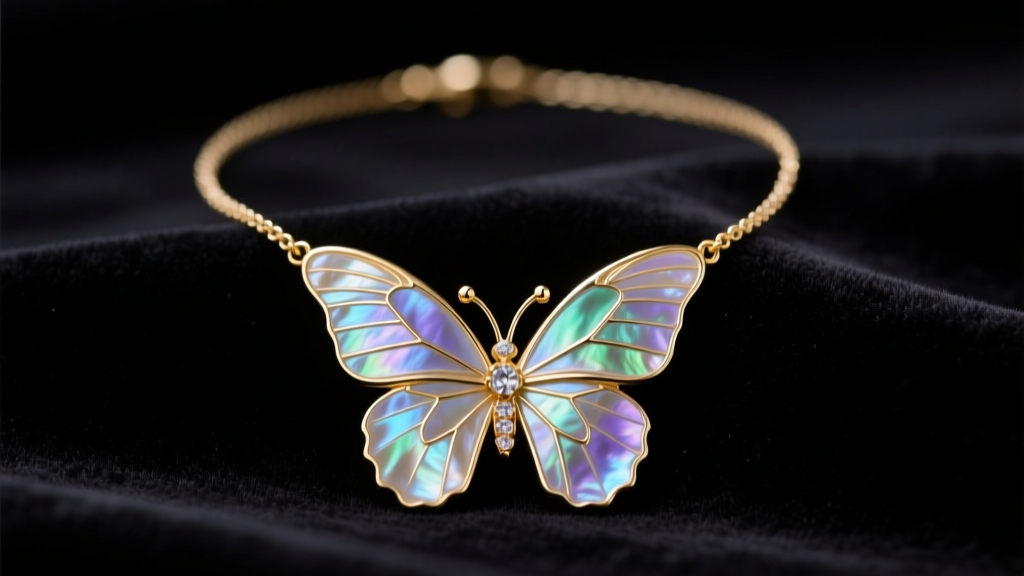
When shopping for a mother of pearl butterfly necklace, you are not just buying a shape; you are investing in a specific biomineral. Mother of pearl, or nacre, is the iridescent inner layer of mollusk shells, composed of microscopic hexagonal platelets of aragonite (a form of calcium carbonate) bound together by an organic protein called conchiolin. This unique structure is what creates the material's signature play-of-color. According to the educational archives at Lang Antiques, natural nacre has a Mohs hardness of just 2.5 to 3.0, making it significantly softer than quartz or sapphire. Because of this relative softness, the thickness and cut of the nacre are critical. Avoid pendants that use ultra-thin veneers (under 0.5mm) glued over resin or glass bases, as these will inevitably delaminate or crack under the pressure of daily wear. Look for solid, hand-carved nacre pieces with a minimum thickness of 1.5mm to 2.0mm to ensure structural integrity and deep, luminous iridescence.
Evaluating the Butterfly Motif: Carving and Setting Techniques
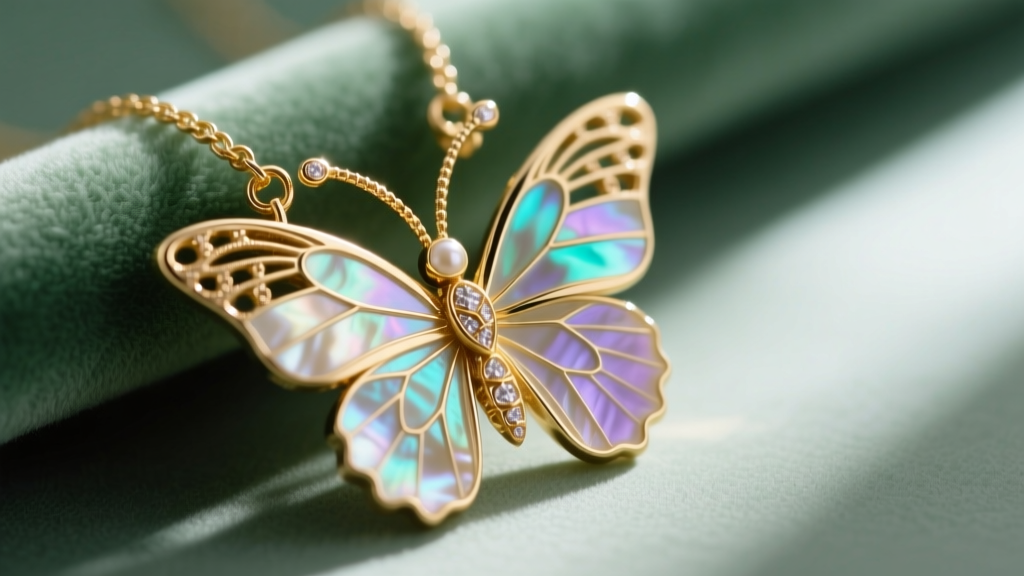
The butterfly motif requires intricate detailing, which exposes the structural vulnerabilities of the nacre. Pay close attention to how the wings and antennae are finished. Laser-cutting is common in mass-produced jewelry and yields sharp, uniform edges, but it can leave microscopic thermal fractures along the cut lines if not properly polished afterward. Hand-carved nacre, while slightly more asymmetrical, preserves the natural crystalline structure and typically features a softer, more organic polish. Equally important is the setting. Because the edges of carved nacre are highly prone to chipping upon impact, a bezel setting or a semi-bezel wrap is vastly superior to prong settings. A well-crafted gold or platinum bezel will protect the fragile wingtips while framing the iridescent surface without obstructing the light necessary for the aragonite to reflect its full spectrum of color.
Metal Pairings and Galvanic Considerations
The metal you choose to cradle your mother of pearl butterfly necklace affects both the aesthetic contrast and the long-term preservation of the nacre. Nacre is porous and can absorb chemicals, oils, and oxidation from reactive metals. Below is a breakdown of the most common metal pairings and their practical implications for your pendant.
| Metal Type | Aesthetic Impact | Durability & Nacre Interaction | Price Tier |
|---|---|---|---|
| Sterling Silver (925) | Cool, modern contrast; enhances blue/green nacre hues. | High risk of tarnish transferring to porous nacre. Must be rhodium-plated. | Budget |
| 14k Yellow Gold | Warm, vintage appeal; amplifies golden/peach nacre overtones. | Highly durable, non-reactive, and will not degrade the nacre over time. | Mid-Range |
| 18k Yellow Gold | Rich, deep yellow; offers a luxurious, high-end heirloom look. | Softer than 14k, meaning bezels may scratch, but entirely safe for nacre. | Premium |
| Platinum | Stark, brilliant white; provides maximum contrast for dark nacre. | Extremely durable and hypoallergenic, though significantly heavier. | Luxury |
If you prefer the look of silver, ensure the piece is heavily rhodium-plated. Unplated sterling silver will oxidize when exposed to air and skin acidity, and this sulfur-based tarnish can seep into the porous edges of the mother of pearl, causing permanent grayish staining that cannot be polished out.
Chain Mechanics: Gauge, Length, and Clasp Hardware
A delicate butterfly pendant requires a chain that balances visual lightness with tensile strength. A chain that is too heavy will overwhelm the nacre, while one that is too thin will snap under the pendulum motion of daily wear. For a standard 15mm to 25mm mother of pearl butterfly pendant, opt for a cable or rolo chain with a gauge between 0.9mm and 1.2mm. This thickness provides a breaking strength of roughly 15 to 25 pounds, more than enough to secure a pendant that typically weighs under 4 grams. Avoid box chains or snake chains, as their rigid links can kink and trap the delicate bail of the pendant. Furthermore, inspect the jump ring connecting the pendant to the chain. It should be soldered closed. An unsoldered, open jump ring will slowly twist apart over months of wear, leading to the loss of the pendant. Finally, insist on a lobster clasp rather than a spring-ring clasp; lobster clasps feature a more robust internal spring mechanism and are far less likely to fail or snag on clothing.
Pricing Tiers and Market Value
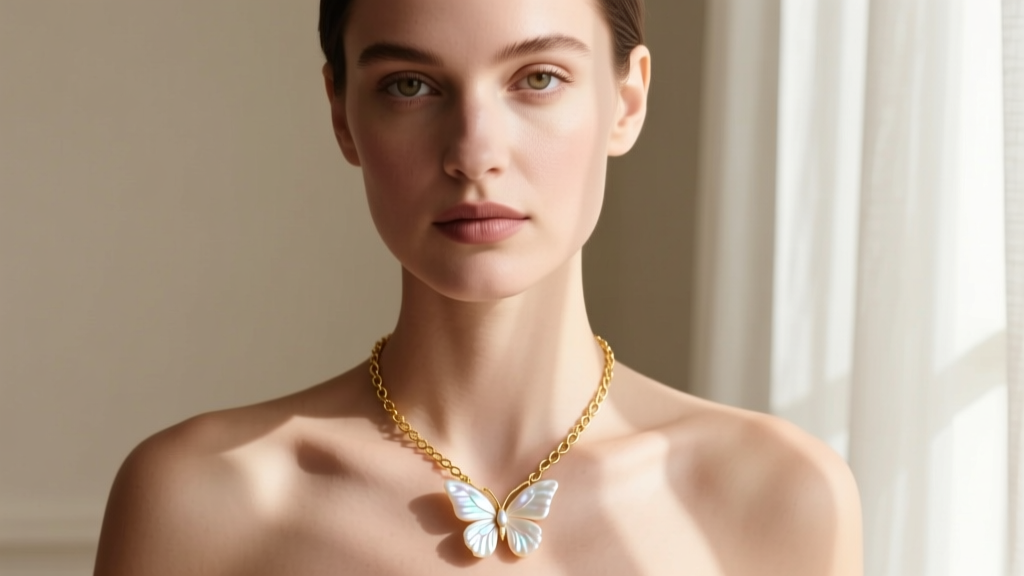
Understanding the pricing landscape will help you identify genuine quality versus overpriced costume jewelry. In the current market, a genuine mother of pearl butterfly necklace generally falls into one of three distinct pricing tiers:
- Entry-Level ($35 - $85): Typically features sterling silver (often unplated), thin nacre veneers glued to brass or resin backings, and mass-produced laser-cut shapes. The chains are usually 0.5mm or thinner and prone to tangling.
- Mid-Range ($120 - $350): The sweet spot for quality. Expect solid, 1.5mm+ hand-carved nacre, set in 14k gold or rhodium-plated sterling silver with protective bezels. Chains will be 0.9mm to 1.2mm with soldered jump rings and lobster clasps.
- Designer/Luxury ($500 - $1,500+): Features premium South Sea or high-grade Australian nacre, set in 18k gold or platinum. These pieces often incorporate accent diamonds or intricate hand-engraved gold filigree on the reverse side of the pendant.
Care, Maintenance, and Preventing Nacre Degradation
The organic conchiolin in mother of pearl makes it highly susceptible to chemical degradation. The Gemological Institute of America (GIA) explicitly warns against using ultrasonic or steam cleaners on any nacreous material. The high-frequency vibrations of an ultrasonic cleaner will literally shatter the aragonite platelets, causing the surface to craze and lose its iridescence permanently. Similarly, exposure to acidic environments—including heavy perspiration, perfumes, hairsprays, and even citrus juices—will slowly dissolve the calcium carbonate, leaving the surface dull and chalky. To maintain your necklace, always put it on after applying cosmetics and fragrances. After wearing, gently wipe the nacre with a slightly damp, lint-free microfiber cloth to remove skin oils and acidic sweat. Store the necklace flat in a soft pouch, separate from harder gemstones like diamonds or sapphires, which will easily scratch the 2.5 Mohs surface of the butterfly wings if they come into contact in a jewelry box.


