How to Style a Three Strand Necklace: Step-by-Step Guide
Master the art of wearing a three strand necklace. Learn step-by-step layering, neckline pairings, and clasp management for a flawless look.

The Anatomy of a Perfect Three Strand Necklace
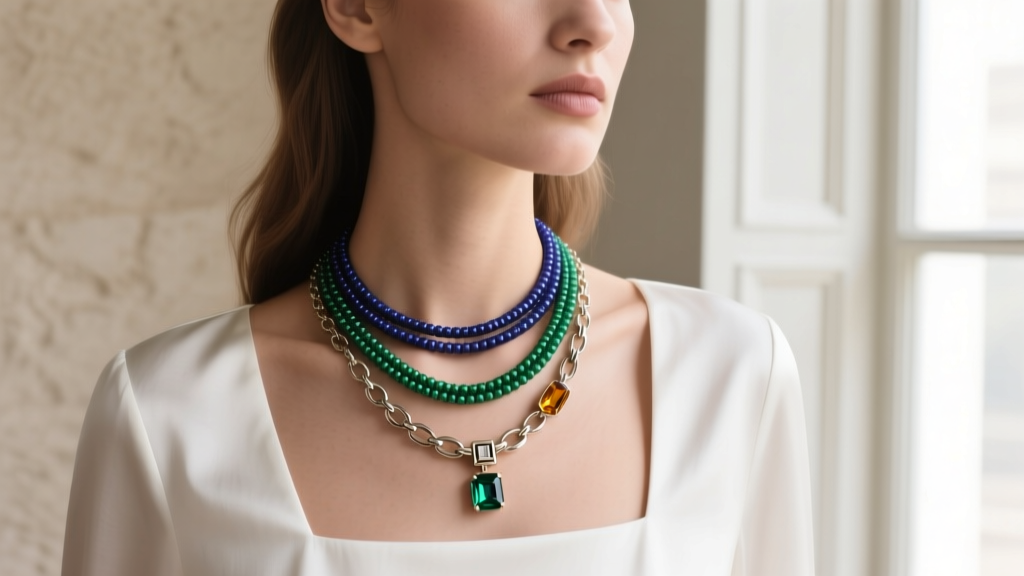
A three strand necklace is a masterclass in built-in layering. Unlike stacking three separate necklaces—which often leads to tangled chains and uneven spacing—a true multi-strand piece is engineered from a single clasp to cascade perfectly across the décolletage. To style it correctly, you must first understand its architectural proportions. Typically, these pieces feature a graduated length structure: a 14-to-16-inch choker strand, an 18-inch princess strand, and a 20-to-24-inch matinee strand. Understanding these anchor points is the first step in mastering how to style a three strand necklace for any occasion.
Step 1: Select Your Metal Grade and Chain Gauge
Before draping the piece, evaluate the hardware. The visual weight of a multi-strand necklace is dictated by the chain gauge (thickness) and the metal purity. For everyday wear in 2026, 14k solid gold or platinum remains the standard for durability, as the multiple strands increase the overall tensile stress on the clasp.
- Delicate (0.8mm - 1.2mm gauge): Best for lightweight pendants and silk blouses. Requires a secure lobster clasp.
- Medium (1.5mm - 2.5mm gauge): The most versatile. Provides enough visual weight to stand alone over a crewneck tee.
- Heavy (3.0mm+ gauge): Acts as a statement piece. Often utilizes a reinforced multi-loop barrel clasp or magnetic neodymium clasp to support the 40+ grams of metal weight.
According to the Gemological Institute of America (GIA), when buying multi-strand gold jewelry, always check the hallmark on the primary clasp ring to ensure the alloy mix is stamped (e.g., 585 for 14k or 750 for 18k), as the cumulative metal weight makes authenticity crucial.

Step 2: Match the Cascade to Your Neckline
The most common mistake when wearing a multi-strand piece is pairing it with a conflicting neckline. Because the necklace inherently creates a 'V' or 'U' shape, your clothing should frame, not fight, that geometry.
| Neckline Type | Styling Verdict | Adjustment Technique |
|---|---|---|
| V-Neck | Excellent Match | Ensure the longest strand sits exactly 1 inch above the fabric's V-point. |
| Scoop Neck | Great Match | Let the shortest strand rest on the collarbone, filling the negative space. |
| Crew Neck | Proceed with Caution | Only works if the shortest strand is 18+ inches to rest entirely below the collar. |
| Turtleneck | Avoid | The thickest strand will catch and tangle on the ribbed fabric. |
Step 3: Manage the Clasp and Prevent Tangling
The bane of any multi-strand necklace is the twist. When the strands cross over each other, the necklace loses its graduated elegance. Here is a step-by-step troubleshooting guide to keep the strands aligned:
- The Gravity Drop: Before putting the necklace on, hold it by the clasp and let the strands hang freely. Give a gentle shake to allow gravity to separate the chains.
- Clasp Orientation: When fastening, ensure the clasp sits dead-center at the nape of your neck. If it slides to the side, the front strands will pull diagonally and cross.
- The Spacer Check: If your piece has internal metal spacer bars (usually located 2 inches from the clasp), ensure they lay flat against the skin. If they flip upside down, the chains will instantly tangle.
For vintage pieces lacking modern spacer bars, jewelers can solder small, discreet jump-rings to keep the strands separated at the back of the neck, a technique highly recommended by restoration experts at Lang Antique Galleries.

Step 4: Balance Your Overall Jewelry Ecosystem
A three strand necklace is visually complex; it occupies the collarbone, the upper chest, and the sternum simultaneously. To maintain a sophisticated aesthetic, you must subtract from other areas. If you are wearing a three-strand piece, follow the 'Rule of Subtraction':
When the neck is heavily adorned, the ears and wrists should remain minimalist. Opt for small huggie hoops or diamond studs, and skip the stacked bracelets entirely.
By treating the necklace as the undisputed focal point of your outfit, you allow the craftsmanship of the cascading chains to shine without creating visual clutter. Whether you are wearing a delicate 14k gold rope chain trio or a bold, oxidized silver statement piece, these steps guarantee a polished, tangle-free presentation every time you step out.