How to Choose and Style a Yellow Colour Necklace for Your Undertone
Learn how to choose, layer, and care for a yellow colour necklace. Our step-by-step guide covers skin undertones, gold karats, and gemstone hardness.


The Art of the Yellow Colour Necklace
When curating a jewelry collection in 2026, the yellow colour necklace remains a cornerstone of both vintage revival and modern minimalist styling. Whether you are drawn to the buttery warmth of 18-karat gold, the fiery depths of a natural citrine, or the organic translucence of Baltic amber, yellow-toned jewelry draws the eye and illuminates the complexion. However, not all yellow hues are created equal. The difference between a washed-out look and a radiant glow comes down to color theory, material grading, and precise styling techniques. This step-by-step guide will walk you through the exact process of selecting, layering, and maintaining the perfect yellow-toned piece for your unique biology and wardrobe.
Step 1: Identify Your Skin Undertone
Before purchasing any yellow colour necklace, you must determine your skin's undertone. The surface tone of your skin may change with sun exposure, but your undertone remains constant. Yellow jewelry interacts directly with these underlying pigments.
The Diagnostic Tests
- The Vein Test: Examine the veins on the underside of your wrist in natural daylight. If they appear green or olive, you have warm undertones. If they appear blue or purple, you have cool undertones. A mix of both indicates a neutral undertone.
- The Foil Test: Stand in front of a mirror holding a piece of silver foil on one side of your face and gold foil on the other. If the gold foil makes your skin look vibrant and reduces the appearance of shadows, you lean warm. If the silver foil brightens your complexion, you lean cool.
Expert Insight: Warm undertones harmonize beautifully with deep, rich yellows like 22k gold and honey-colored amber. Cool undertones are better complemented by pale, crisp yellows, such as lemon citrine or light yellow sapphires set in white gold with yellow accents.
Step 2: Decode the Gold Karat Spectrum
If your yellow colour necklace is crafted from gold, understanding the alloy composition is critical. Pure gold (24k) is naturally a rich, slightly orange-yellow, but it is too soft for daily wear jewelry. Jewelers mix it with copper, silver, and zinc to alter both the durability and the exact hue of the yellow.
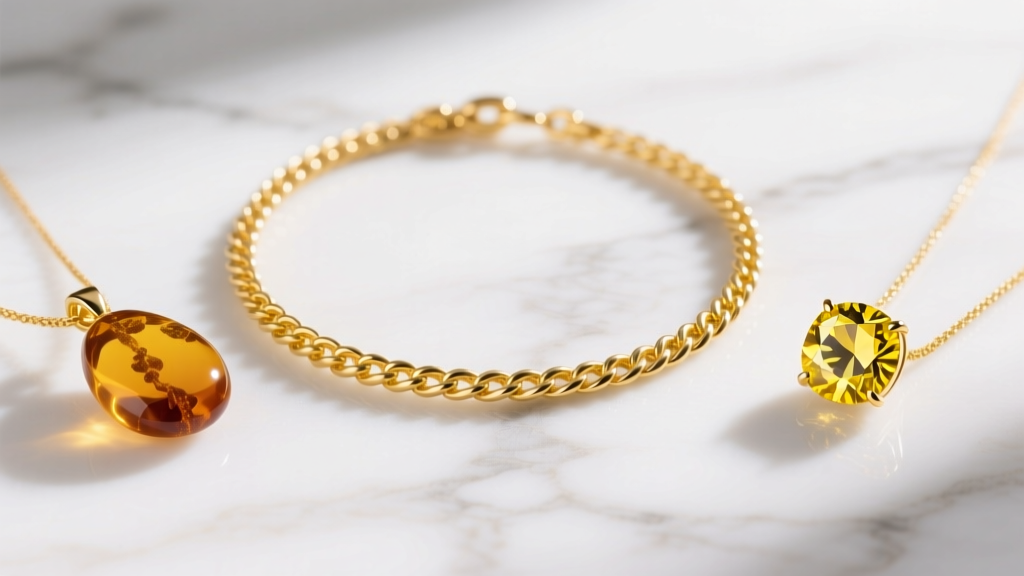
Karat Breakdown and Visual Weight
- 14k Yellow Gold (58.5% Gold): Contains higher amounts of zinc and silver. This results in a paler, slightly muted yellow. It is highly durable, making it ideal for intricate chain weaves like the rope or box chain that endure high friction.
- 18k Yellow Gold (75% Gold): The industry standard for luxury jewelry. The higher copper content gives it a rich, buttery, and deeply saturated yellow hue. It is softer than 14k but offers superior visual warmth.
- 22k Yellow Gold (91.6% Gold): Features a distinct, almost orange-yellow tint. Due to its softness, it is rarely used for gemstone settings or delicate chains, but it excels in solid, hammered pendants and rigid chokers.
Step 3: Select the Right Yellow Gemstone
If you prefer a gemstone-centric yellow colour necklace, you must evaluate the stone's hardness (Mohs scale), origin, and treatments. This dictates whether the necklace can be worn daily or requires careful, occasional wear.
| Material | Mohs Hardness | Color Profile | Treatments & Origins | Best Use Case |
|---|---|---|---|---|
| Yellow Sapphire | 9.0 | Canary to goldenrod | Often heat or beryllium treated | Daily wear pendants |
| Citrine | 7.0 | Pale lemon to Madeira | 90% are heat-treated amethyst | Statement cocktail pieces |
| Baltic Amber | 2.0 - 2.5 | Honey, cherry, cognac | Organic, untreated resin | Occasional wear, vintage |
Gemological Warning: According to the Gemological Institute of America (GIA), natural citrine is quite rare and usually exhibits a pale, smoky yellow. The vast majority of commercial citrine is actually amethyst heated to approximately 900°F. While this treatment is stable and permanent, it means your stone requires standard quartz care rather than exotic gemstone protocols.
Step 4: Master the Layering Technique
Layering a yellow colour necklace with other chains requires strict adherence to spatial geometry to prevent tangling and visual clutter. The goal is to create a cascading effect that draws the eye downward, elongating the neck.
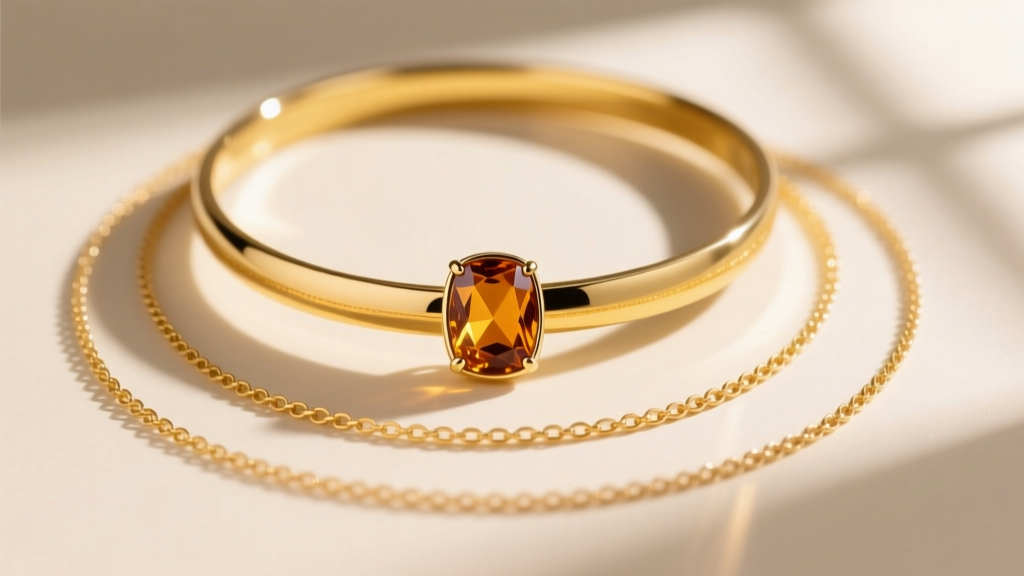
The 2-Inch Spacing Rule
Never layer chains that are within 1 inch of each other in length. The friction will cause the links to bind, and the clasps will migrate to the front of your neck. Follow this exact blueprint:
- Base Layer (14-16 inches): Use a lightweight, simple chain like a 1.2mm cable or snake chain. Sit this at the collarbone. Pro-tip: Avoid heavy lobster clasps here; use a 4mm spring ring to prevent the chain from flipping.
- Focal Layer (18 inches): This is where your primary yellow colour necklace sits. A 5mm to 8mm citrine or yellow sapphire pendant on a slightly thicker chain (like a 2.0mm paperclip chain) provides the necessary visual anchor.
- Anchor Layer (20-22 inches): Finish with a textured chain, such as a 3.0mm Figaro or rope chain, without a pendant. This frames the central yellow piece and adds depth to the stack.
Step 5: Proper Care and Maintenance
The maintenance required for your necklace depends entirely on the materials identified in Steps 2 and 3. A common mistake that ruins yellow-toned jewelry is the improper use of ultrasonic cleaners.
What to Avoid
Never place amber, fracture-filled citrine, or hollow 14k gold chains in an ultrasonic cleaner. The high-frequency vibrations can shatter organic amber and cause the oil fillers in treated citrine to leak, leaving the stone cloudy and white. The GIA Amber Care Guide explicitly warns against harsh chemicals and steam, as amber is highly porous and will absorb detergents, permanently altering its honey-yellow hue.
The Safe Cleaning Protocol
For a mixed-material yellow colour necklace (e.g., an 18k gold chain with a yellow sapphire pendant), use this exact cleaning solution:
- Mix 3 drops of mild, phosphate-free dish soap into 8 ounces of lukewarm distilled water.
- Submerge the necklace for exactly 5 minutes. Do not exceed this, as prolonged water exposure can weaken the silk or nylon threading often used in bead-set yellow sapphire necklaces.
- Gently agitate with a baby-soft toothbrush, focusing on the back of the pendant where skin oils accumulate.
- Rinse under a slow stream of lukewarm water and pat dry with a lint-free microfiber cloth. Air drying can leave hard water spots on high-polish gold.
Final Thoughts on Yellow Jewelry Styling
Selecting the right yellow colour necklace is an exercise in balancing color theory with material science. By accurately diagnosing your undertone, understanding the metallurgical differences between gold karats, and respecting the physical limitations of yellow gemstones, you can curate a piece that not only elevates your wardrobe but stands the test of time. Whether you opt for the organic warmth of amber or the crystalline brilliance of a beryllium-treated yellow sapphire, precision in selection and care ensures your jewelry remains as vibrant as the day you acquired it. For more advanced material guides, consult the GIA Sapphire Care Guide to ensure your specific gemstone variant receives the exact maintenance it requires.


