Stainless Necklace Guide: 316L vs 304 Steel & Titanium
Discover the metallurgical differences between 316L and 304 stainless necklace grades, plus titanium comparisons, pricing, and allergy safety tips.

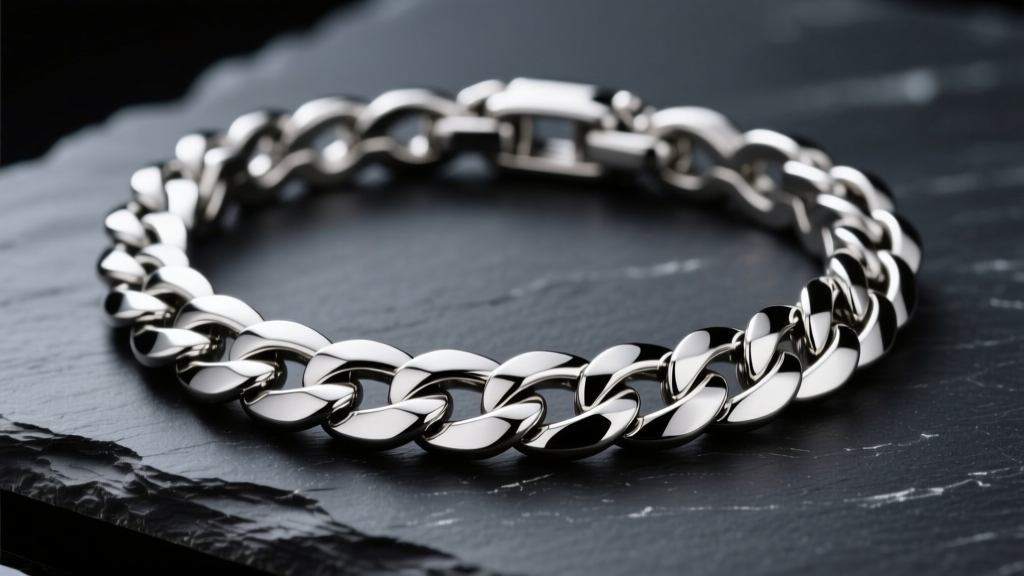
The Metallurgy of a Stainless Necklace: Decoding the Alloys
When shopping for durable, everyday jewelry, a stainless necklace is often touted as the ultimate low-maintenance option. However, the term 'stainless steel' is not a single material; it is a broad family of iron-based alloys containing a minimum of 10.5% chromium. This chromium reacts with oxygen to form a passive, self-healing chromium oxide layer that prevents rust. Yet, not all stainless steel is created equal, especially when it rests directly against the delicate skin of your neck and chest.
Understanding the exact metallurgical grade of your jewelry is critical for longevity, skin safety, and value. The two most common grades found in the jewelry market are 304 and 316L. While they look identical to the untrained eye, their chemical compositions dictate vastly different performance metrics in real-world environments, from saltwater exposure to daily sweat.
316L vs. 304 Stainless Steel: The Core Differences
To make an informed purchase, you must look past the marketing jargon and examine the elemental breakdown of these alloys. The presence of specific trace elements dramatically alters how a stainless necklace reacts to moisture, friction, and human biochemistry.
316L Surgical Steel: The Jewelry Standard
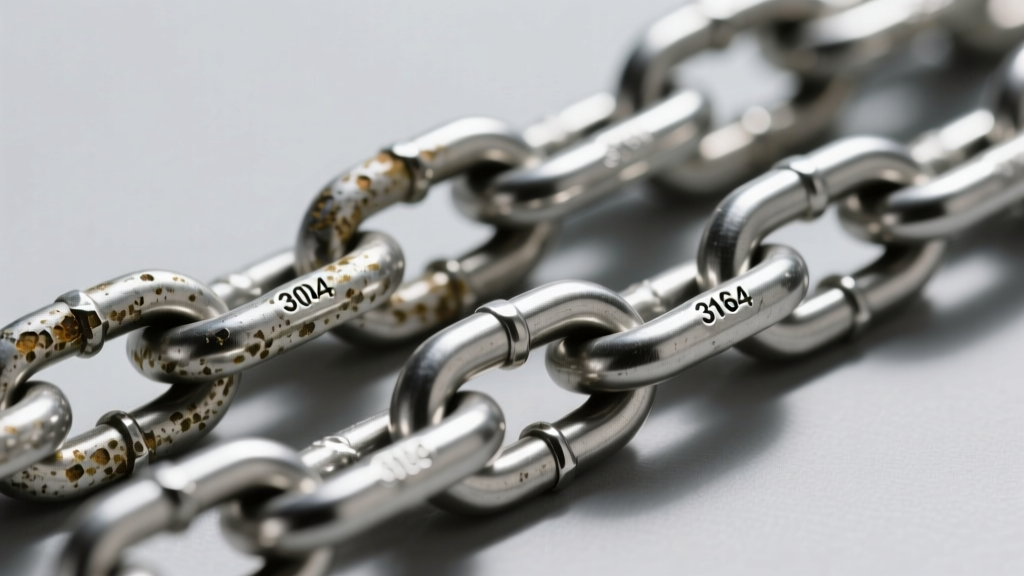
Grade 316L is widely considered the benchmark for high-quality body jewelry and premium necklaces. The 'L' stands for 'Low Carbon' (capped at 0.03%), which prevents carbide precipitation during the welding process. This is crucial for chain necklaces, as welded links in standard-carbon steel can weaken and corrode at the joints.
More importantly, 316L contains 2% to 3% molybdenum. Molybdenum acts as a powerful shield against localized corrosion, specifically pitting and crevice corrosion caused by chlorides. If you plan to wear your necklace in the ocean or a chlorinated pool, molybdenum is the elemental hero that keeps the metal intact.
304 Commercial Grade: The Budget Alternative
Grade 304 (often labeled as 18/8 steel, meaning 18% chromium and 8% nickel) is the most common stainless steel used in kitchen appliances and hardware. It lacks molybdenum entirely. While a 304 stainless necklace is perfectly fine for dry, indoor environments, it is highly susceptible to pitting when exposed to saltwater or heavy perspiration over time. Furthermore, 304 is generally cheaper to produce, making it a staple in fast-fashion jewelry, though it lacks the long-term resilience of 316L.
Material Comparison Matrix: Stainless, Titanium, and Silver
How does a stainless necklace stack up against other popular metals? The table below breaks down the exact specifications, hardness, and market pricing for 2026.
| Material Grade | Composition Highlights | Mohs Hardness | Nickel Content | Avg. Price Range |
|---|---|---|---|---|
| 304 Stainless Steel | 18% Cr, 8% Ni, 0% Mo | 5.5 - 6.0 | 8% - 10% | $12 - $25 |
| 316L Surgical Steel | 16% Cr, 10% Ni, 2% Mo | 5.5 - 6.0 | 10% - 12% | $25 - $65 |
| ASTM F136 Titanium | Ti, 6% Al, 4% V, 0% Ni | 5.5 - 6.0 | 0% (Nickel-Free) | $45 - $120 |
| 925 Sterling Silver | 92.5% Ag, 7.5% Cu | 2.5 - 3.0 | 0% (Usually) | $30 - $90 |
The Nickel Allergy Dilemma: Is a Stainless Necklace Truly Hypoallergenic?
The most persistent myth in jewelry marketing is that surgical steel is completely hypoallergenic. According to DermNet NZ, nickel allergy affects up to 20% of the global population, making it the most common cause of allergic contact dermatitis. Both 304 and 316L stainless steels contain significant amounts of nickel (up to 12%).
Expert Insight: The safety of a stainless necklace relies on the stability of its crystalline structure. In high-quality 316L, the nickel is tightly bound within the alloy matrix. However, under the European standard EN 1811, a metal is only considered 'safe' for prolonged skin contact if its nickel release rate is less than 0.5 µg/cm²/week. While 316L generally passes this synthetic sweat test, cheaper 304 alloys or poorly polished 316L pieces can leach nickel, triggering reactions in highly sensitive individuals.
If you have a known, severe nickel allergy, a stainless necklace is a risk. Instead, you should opt for ASTM F136 implant-grade titanium, which contains absolutely zero nickel and is the gold standard for biocompatibility, as outlined by ASTM International.
Real-World Failure Modes and Maintenance
Even the most robust metals have physical limits. Understanding how a stainless necklace fails will help you maximize its lifespan. Here are the primary failure modes and how to mitigate them:
- Crevice Corrosion: This occurs in tight, oxygen-deprived spaces, such as the interior of a lobster clasp or tightly woven chain links (like a rope chain). Salt and dead skin cells accumulate here, breaking down the passive chromium oxide layer. Solution: Rinse your necklace with fresh water and gently scrub the clasp with a soft toothbrush and mild dish soap monthly.
- Galvanic Corrosion: If you layer a stainless steel chain with a sterling silver or solid gold pendant in a conductive environment (like a sweaty gym session or a hot tub), the dissimilar metals create a micro-battery. The less noble metal will corrode rapidly. Solution: Avoid mixing metal types during heavy physical activity or swimming.
- Cold-Working Magnetism: A common myth is that you can test the authenticity of a stainless necklace with a magnet. While austenitic steels (304 and 316L) are theoretically non-magnetic, the physical bending and drawing processes used to manufacture chain links can alter the crystalline structure, making the metal slightly magnetic. Do not use a magnet test to verify grade.
- Micro-Scratching: With a Mohs hardness of around 5.5, stainless steel is highly scratch-resistant compared to silver (2.5) or gold (2.5-3.0). However, it will still scratch if it comes into contact with quartz (7.0) or diamond (10.0). Store your necklaces individually in microfiber pouches.
Verdict: Which Grade Should You Buy?
When investing in a stainless necklace, the material grade dictates the jewelry's longevity and skin compatibility. If you are purchasing a simple, lightweight chain for occasional, indoor wear, a 304 stainless steel piece offers excellent value at under $25. However, for everyday wear, heavy chains, pendants that rest directly on the sternum, or jewelry exposed to moisture and sweat, 316L surgical steel is the undisputed champion. The addition of molybdenum and lower carbon content ensures the chain links remain structurally sound and visually pristine for decades. For those with severe metal sensitivities, bypass steel entirely and invest in implant-grade titanium.


