Silver Beads Necklace Styling: 2026 Trend Analysis
Discover 2026 silver beads necklace trends. Expert analysis on sizing, layering frameworks, and sterling silver grades for modern neckline styling.

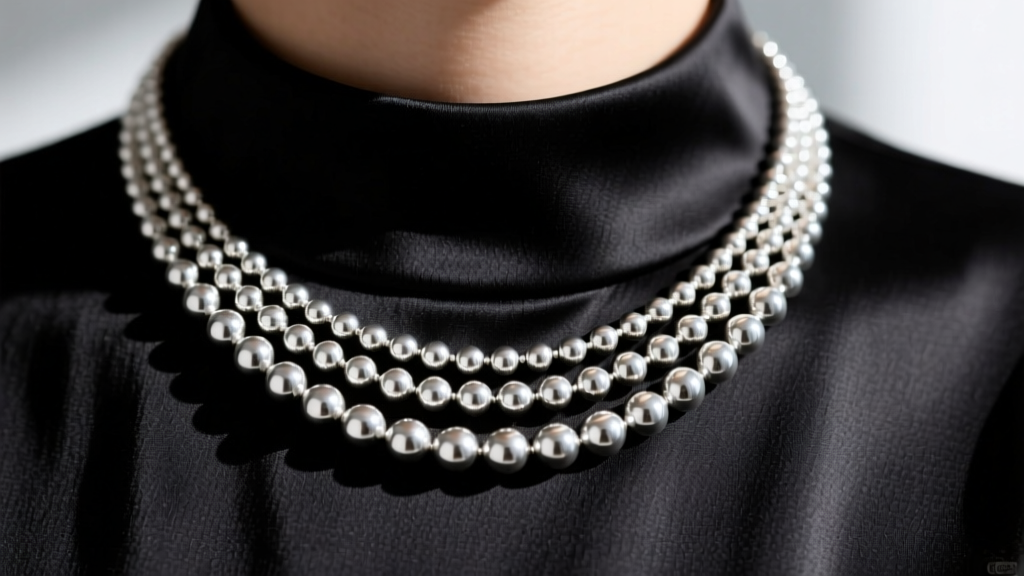
The 2026 Shift: Why the Silver Beads Necklace Dominates
In the ever-evolving landscape of fine and demi-fine jewelry, 2026 has marked a definitive pivot away from the ultra-minimalist, flat-chain aesthetics of the early 2020s. The modern silver beads necklace has emerged as the cornerstone of contemporary neckline styling. This resurgence is not merely nostalgic; it is driven by a consumer demand for high-light-reflection textures that interact dynamically with both natural sunlight and the harsh, directional lighting of modern LED environments. Unlike flat cable or box chains, spherical silver beads offer a 360-degree reflective surface, creating a "liquid metal" effect that flatters diverse skin undertones.
According to trend forecasts highlighted by Vogue, the tactile nature of beaded jewelry satisfies a post-digital craving for physical weight and sensory feedback. However, not all beaded silver is created equal. To navigate this trend, one must understand the metallurgical realities, sizing frameworks, and structural engineering that separate a high-end wardrobe staple from a fast-fashion liability.
Decoding Silver Alloys: Metallurgy Meets Aesthetics
When investing in a silver beads necklace, the alloy composition dictates the longevity, drape, and maintenance requirements of the piece. Pure silver is too malleable for small, high-friction beads, meaning alloying metals are essential. As detailed by the Gemological Institute of America (GIA), understanding these grades is critical for 2026 buyers. Furthermore, hallmarking standards outlined by Assay Office London ensure that the alloy you purchase meets strict purity requirements.
| Alloy Grade | Composition | Vickers Hardness | Tarnish Profile | Best Application |
|---|---|---|---|---|
| .925 Sterling | 92.5% Ag, 7.5% Cu | ~60 HV | High (Copper oxidation) | Standard 3mm-5mm beads |
| .999 Fine Silver | 99.9% Ag | ~25 HV | Very Low | Large 10mm+ statement beads |
| Argentium Silver | 93.5% Ag, Germanium | ~70 HV | Extreme Resistance | Micro 1.5mm-2mm liquid beads |
For the ubiquitous 2mm to 4mm beads, Argentium silver is the 2026 gold standard. The addition of germanium eliminates firescale during manufacturing and drastically slows the formation of silver sulfide (tarnish). Because smaller beads have a higher surface-area-to-volume ratio, they are more susceptible to visible tarnishing; thus, Argentium's low-maintenance profile makes it superior for delicate, layered bead strands.
The Physics of Drape: Bead Sizing Frameworks
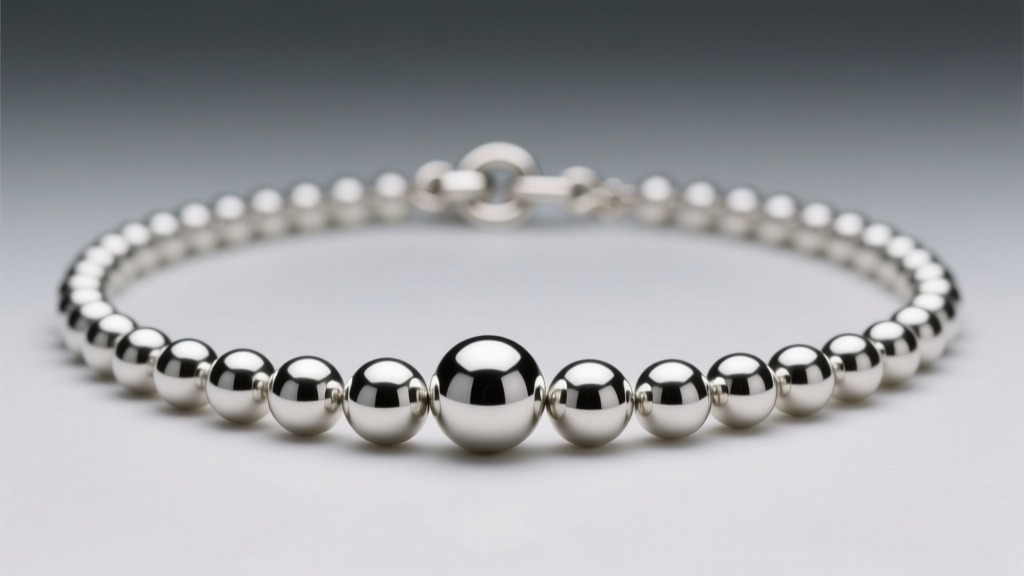
The millimeter diameter of the beads completely alters the kinetic movement and drape of the necklace. In 2026, jewelry designers are moving away from uniform sizing and embracing graduated and mixed-scale frameworks.
1.5mm to 2.5mm: The Liquid Drape
Beads in this micro-range behave almost like a fluid. They lack the structural rigidity to hold a shape, meaning they will pool into the hollow of the collarbone. This size is strictly for layering or wearing as a 14-inch to 16-inch choker. Pair this with deep V-necklines or unbuttoned silk blouses to allow the silver to catch the light against bare skin.
3mm to 5mm: The Structured Princess
This is the workhorse dimension. A 4mm silver beads necklace strung at 18 inches possesses enough weight to hang in a perfect, uninterrupted parabola. It does not tangle easily and provides a substantial, satisfying weight. This size bridges the gap between casual and formal, looking equally appropriate over a heavyweight cotton t-shirt or a cashmere turtleneck.
6mm to 10mm: The Graduated Statement
Uniform 8mm beads can look overly rigid, resembling a traditional pearl strand but with a harsher, industrial edge. The 2026 solution is the graduated strand—starting at 4mm near the clasp and swelling to 9mm or 10mm at the center focal point. This mimics the natural geometry of the neck and shoulders, creating an ergonomic, flattering silhouette that draws the eye downward.
Structural Engineering: Stringing and Clasp Innovations
A common failure point in mass-market beaded jewelry is the stringing material. Historically, silk thread was used for pearls, but it is entirely unsuited for metal beads. The interior edges of drilled silver beads act like microscopic saws, fraying nylon and silk over time. For a durable silver beads necklace, experts insist on multi-strand stainless steel micro-cable, specifically 49-strand .019-inch diameter wire coated in nylon. This provides the flexibility needed for a fluid drape while remaining impervious to the abrasive interior of the silver beads.
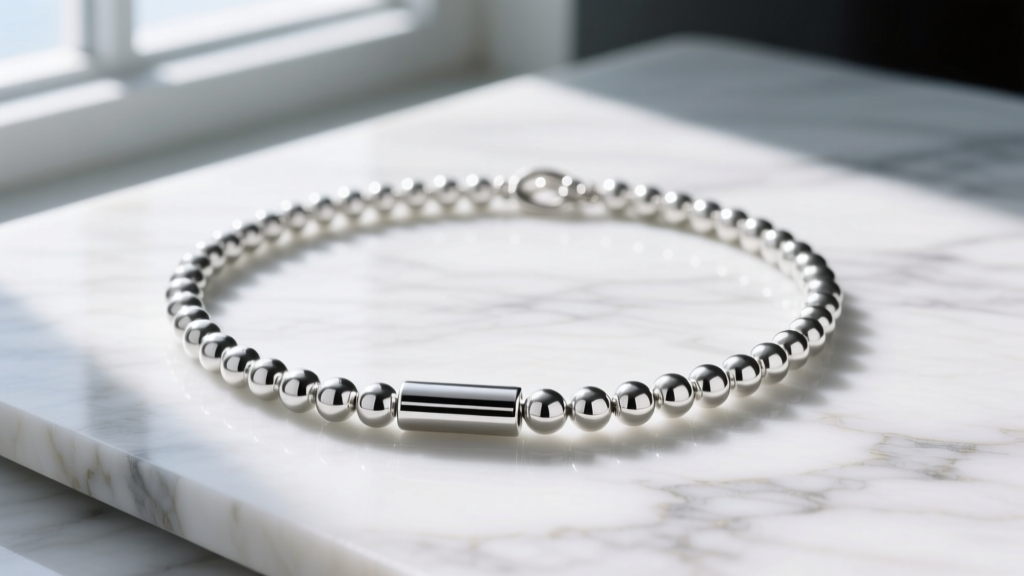
Furthermore, the clasp must be reimagined. A standard lobster clasp is lightweight and tends to migrate to the front of the neck, ruining the aesthetic of a continuous bead strand. The 2026 trend favors magnetic barrel clasps or decorative toggle clasps that are integrated into the design. A heavy, silver-toned magnetic tube clasp utilizing N52-grade neodymium magnets ensures the necklace stays anchored securely at the nape of the neck, while also providing an accessible, seamless mechanism for the wearer.
The 2026 Layering Matrix
Layering a silver beads necklace requires strict adherence to proportional spacing to avoid a tangled, chaotic look. We recommend the "Rule of Thirds" spacing matrix for 2026, which also incorporates the modern mixed-metal aesthetic:
- Layer 1 (The Anchor): 15-inch length, 2mm silver beads. Sits tightly on the collarbone, providing a high-frequency sparkle.
- Layer 2 (The Bridge): 18-inch length, 4mm silver beads. Provides the primary visual weight and structural anchor.
- Layer 3 (The Elongator): 22-inch length, 14k yellow gold paperclip chain featuring a single 12mm hammered silver pendant. This mixed-metal approach breaks up the monotony and adds depth.
This configuration ensures that the beads never rub against one another, preserving the polish and preventing the transfer of tarnish between strands while keeping the visual weight balanced across the sternum.
"The beauty of the silver bead lies in its geometry. It is a mirror curved in every direction, capturing the environment and turning the wearer's movement into a kinetic light show." — Elena Rostova, Contemporary Metalsmith
Maintenance: Preserving the Mirror Finish
Because a silver beads necklace relies entirely on the high-polish reflectivity of its spheres, even micro-tarnishing is immediately visible. Do not use liquid silver dips, which can strip the rhodium plating often applied to high-end sterling beads and leave a dull, matte residue. Furthermore, the harsh chemicals in liquid dips can degrade the nylon coating on the interior stringing wire, leading to catastrophic strand failure.
Instead, store the necklace in an airtight polyethylene bag with a 3M anti-tarnish strip to absorb ambient sulfur. When cleaning, use a high-quality impregnated microfiber cloth (such as a Sunshine cloth) designed specifically for precious metals. Gently pinch each bead to wipe away sebum and environmental compounds. Avoid abrasive polishing pastes, as they leave microscopic scratches in the silver that will actually trap sulfur and accelerate future tarnishing.
Final Verdict
The silver beads necklace in 2026 is a triumph of material science and timeless geometry. By prioritizing Argentium alloys, multi-strand micro-cable stringing, and graduated sizing frameworks, you can secure a piece that transcends seasonal fads. Whether styled as a liquid choker or a structured princess strand, the spherical silver bead remains an indispensable, highly engineered tool in the modern jewelry wardrobe.


