The Ultimate Three Heart Necklace Cleaning & Care Guide
Learn how to safely clean, polish, and store your three heart necklace. Expert tips for sterling silver, gold vermeil, and gemstone pendants.


The Anatomy of a Three Heart Necklace: Why It Needs Special Care
A three heart necklace is a deeply sentimental piece of jewelry, often symbolizing the bond between a mother and her children, the connection between three lifelong friends, or the continuum of the past, present, and future. However, from a jeweler's perspective, the overlapping design of a three heart pendant creates unique maintenance challenges. The intricate crevices where the hearts intersect, combined with the tiny jump rings (typically 20-gauge or 22-gauge wire) that articulate the pieces, act as microscopic traps for sebum, dead skin cells, lotions, and environmental dust.
Furthermore, the bail—the loop that connects the pendant to the chain—experiences high friction against the necklace chain, leading to localized wear and grime buildup. Whether your piece features delicate micro-pavé cubic zirconia, vitreous enamel accents, or plain polished metal, understanding the specific anatomy of your necklace is the first step toward preserving its brilliance and structural integrity for decades.
Material-Specific Cleaning Protocols
Not all metals and finishes react the same way to cleaning agents. Using the wrong method can permanently strip plating or cloud gemstones. Here is how to approach the most common materials used in three heart necklaces.
Sterling Silver & Rhodium Plating
Sterling silver (92.5% pure silver, 7.5% copper) is highly susceptible to tarnishing when exposed to sulfur compounds in the air, forming silver sulfide. If your silver necklace is rhodium-plated to prevent tarnish, you must avoid abrasive polishing cloths, which will wear through the microscopic rhodium layer. For bare sterling silver, the Silver Institute recommends gentle washing with warm water and a phosphate-free detergent. Avoid silver dips on oxidized or antiqued three heart designs, as the harsh chemicals will strip the intentional dark patina from the crevices.
Gold Vermeil vs. Solid Gold
Gold vermeil is strictly regulated; it must consist of a sterling silver base coated with at least 2.5 microns of 10k or higher gold. Because the gold layer is relatively thin, never use ultrasonic cleaners or chemical polishing solutions on vermeil. The high-frequency vibrations and harsh acids can cause the gold layer to flake or peel. Solid 14k or 18k gold, conversely, is highly durable and can withstand gentle ultrasonic cleaning, provided the piece does not contain fracture-filled stones or soft pearls.
Enamel and Gemstone Inlays
Many modern three heart necklaces feature cold enamel (epoxy resin) or vitreous enamel (fused glass) for colorful accents. Cold enamel is highly sensitive to alcohol-based cleaners and hot water, which can cause it to yellow, crack, or lift from the metal base. If your hearts are set with cubic zirconia (CZ) or diamonds, be aware that CZ is porous and can absorb oils, making it look cloudy over time. The Gemological Institute of America (GIA) advises using only a soft, lint-free cloth and mild soapy water for routine gemstone maintenance to protect the delicate micro-prongs holding the stones.
Step-by-Step Deep Cleaning Method
For a thorough, safe clean that removes trapped oils without damaging delicate jump rings or gemstone settings, follow this professional protocol.
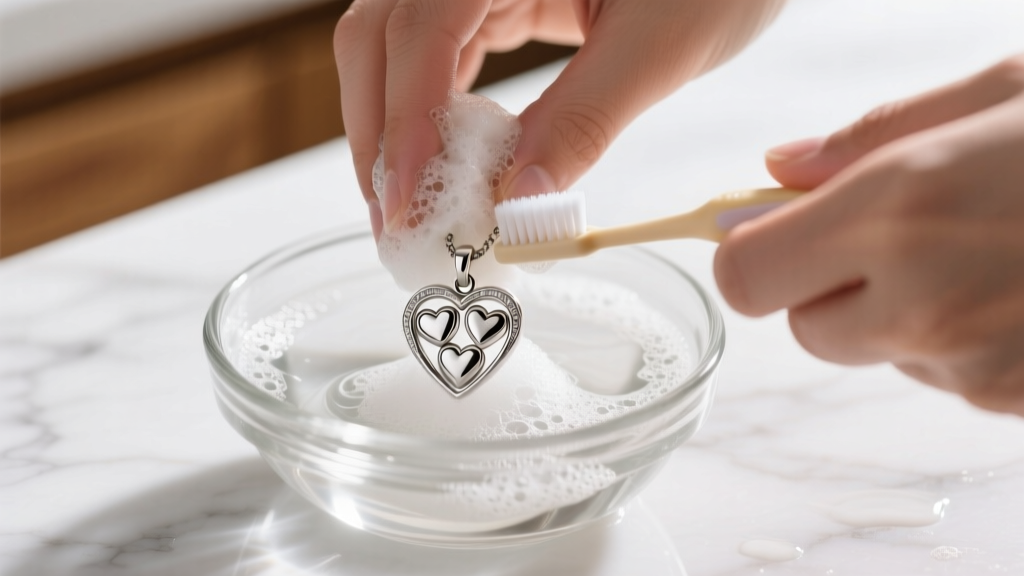
- Prepare the Solution: Fill a small glass bowl with lukewarm distilled water. Add two drops of pH-neutral dish soap (like Dawn). Avoid tap water, as the chlorine and hard minerals can leave microscopic water spots on high-polish metals.
- The Soak: Submerge the three heart necklace for exactly 3 to 5 minutes. This softens hardened lotions and sebum trapped between the overlapping hearts. Do not exceed 5 minutes, especially for vermeil or enamel pieces.
- Targeted Agitation: Using an extra-soft baby toothbrush, gently brush the crevices where the hearts overlap. Brush in a circular motion around the jump rings and the bail. Never use a standard firm-bristled toothbrush, as it will leave micro-scratches on polished gold and silver.
- The Rinse: Rinse the pendant under a gentle stream of lukewarm distilled water. Ensure the drain is securely plugged or use a mesh strainer to prevent accidental loss.
- Drying: Pat the necklace dry with a clean, lint-free microfiber cloth. Use a wooden toothpick or a blast of compressed air to remove trapped water droplets from the microscopic gaps between the gemstone prongs.
Troubleshooting Common Necklace Issues
Even with meticulous care, three heart necklaces can develop specific issues due to their articulated design. Use this troubleshooting matrix to address common problems safely.
| Issue | Root Cause | Expert Solution |
|---|---|---|
| Severe Silver Tarnish (Blackening) | Advanced silver sulfide buildup from sulfur exposure. | Use an electrochemical bath: line a bowl with aluminum foil, add boiling water, 1 tbsp baking soda, and 1 tbsp salt. Soak for 2 minutes. The ion exchange transfers sulfur to the foil. |
| Cloudy Cubic Zirconia Stones | Absorption of skin oils and soap residue into the porous CZ. | Soak in a 50/50 mix of distilled water and ammonia-free glass cleaner for 3 minutes, then gently brush the underside of the stones where grime accumulates. |
| Stiff or Squeaky Jump Rings | Friction and microscopic debris inside the articulated joints. | Apply a microscopic drop of synthetic watch oil to the jump ring joint using a sewing needle. Wipe away all excess immediately to prevent dust attraction. |
| Faded Cold Enamel Accents | UV exposure and degradation from alcohol-based perfumes. | Cold enamel cannot be chemically restored. Prevent future fading by applying perfume before putting on the necklace and storing it away from direct sunlight. |
Proper Storage to Prevent Tarnish and Tangling
The way you store your three heart necklace is just as critical as how you clean it. Because the pendant consists of multiple moving parts and the chain is usually a delicate cable or box chain, improper storage leads to severe tangling and accelerated tarnishing.
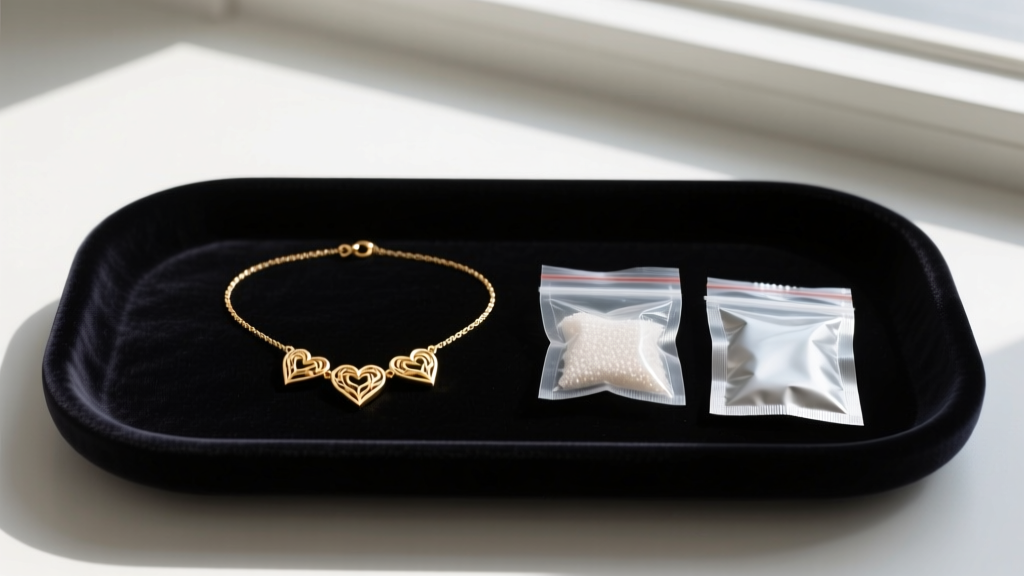
- The Clasp-Through Method: To prevent the chain from knotting, always thread one end of the chain through the bail of the pendant and clasp it. This creates a closed loop that physically cannot tangle upon itself.
- Anti-Tarnish Environments: Store the necklace in an airtight polyethylene ziplock bag. Squeeze out all excess air before sealing. Include a 3M anti-tarnish strip or a small silica gel packet to control humidity and absorb airborne sulfur compounds.
- Pacific Cloth Wrapping: If storing in a jewelry box, wrap the pendant in a treated Pacific cloth or jeweler's rouge cloth. This provides a physical barrier against humidity and gently polishes the metal every time it is removed.
- Avoid Cardboard and Paper: Never store silver or vermeil necklaces in cardboard boxes or paper envelopes. The wood pulp and adhesives used in paper products emit acidic gases that rapidly accelerate metal oxidation.
When to Seek Professional Jeweler Maintenance
While home care is excellent for routine maintenance, certain structural and cosmetic issues require professional intervention. If you notice any of the following, take your three heart necklace to a certified bench jeweler:
- Loose Micro-Prongs: If you hear a faint rattling sound when you gently tap the pendant, a gemstone is loose. Stop wearing it immediately to prevent stone loss.
- Worn Jump Rings: If the jump rings connecting the three hearts appear oval-shaped or show visible thinning at the friction points, a jeweler needs to solder them or replace them with heavier-gauge rings.
- Vermeil Re-plating: If the gold vermeil has worn through to the silver base on the high-friction areas (like the edges of the hearts), a professional can polish the piece and apply a fresh 2.5-micron layer of gold via electroplating.
By adhering to these specialized care protocols, your three heart necklace will remain a brilliant, untangled, and structurally sound symbol of your most cherished connections for a lifetime.


