Your Necklace Snapped: Repair vs Replace Value Assessment Guide
Discover what to do when your necklace snapped. Compare repair costs, evaluate metal value, and learn how to prevent future chain breaks.

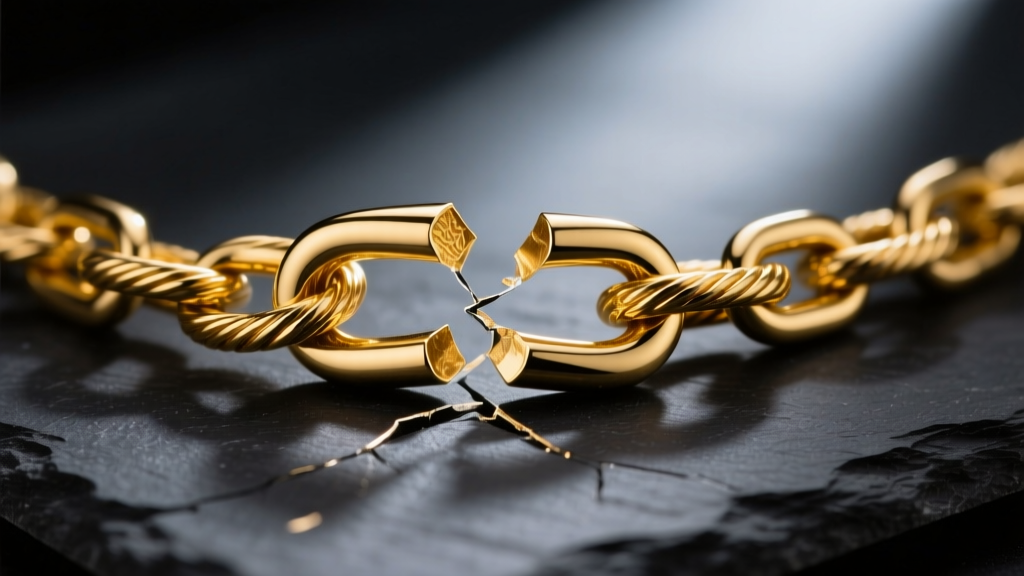
There are few moments in jewelry ownership more frustrating than reaching for your neck and realizing your favorite necklace snapped. Whether it caught on a sweater or simply gave way under the weight of a heavy pendant, a broken chain forces an immediate financial and practical decision: is it worth repairing, or should you replace it entirely?
As we navigate the 2026 jewelry market, repair costs have fluctuated alongside precious metal prices. Making a sound budget and value assessment requires understanding the exact failure point, the metallurgy of your chain, and the true cost of professional restoration. This guide breaks down the economics of a broken necklace, helping you decide when to solder, when to upgrade, and when to scrap.
The Anatomy of a Break: Why Your Necklace Snapped
Before assessing value, you must diagnose the failure. Necklaces rarely snap at random; they fail at structural weak points dictated by gauge thickness and link geometry.
Gauge Thickness and Weight Ratios
The most common cause of a broken chain is an improper weight-to-gauge ratio. A standard 0.8mm to 1.0mm cable chain has a tensile limit of roughly 3 to 5 pounds. If you hang a solid 14k gold pendant weighing 12 grams on a 0.9mm chain, the constant micro-tension will eventually cause metal fatigue. According to the Gemological Institute of America (GIA), alloyed gold work-hardens over time. Repeated stress on a thin gauge causes the crystalline structure to become brittle, leading to a clean snap rather than a stretch.
Link Geometry Weaknesses
- Box Chains: Prone to crushing. Once the geometric folds are dented, the structural integrity drops by up to 40%, leading to sudden snaps.
- Rope Chains: Highly durable against pulling, but if a single twisted link unravels, the entire section loses tension and breaks.
- Cable Chains: The most reliable for soldering, but the uniform oval links will stretch and thin out at the apex of the curve before snapping.
Clasp Failures: Spring Ring vs. Lobster
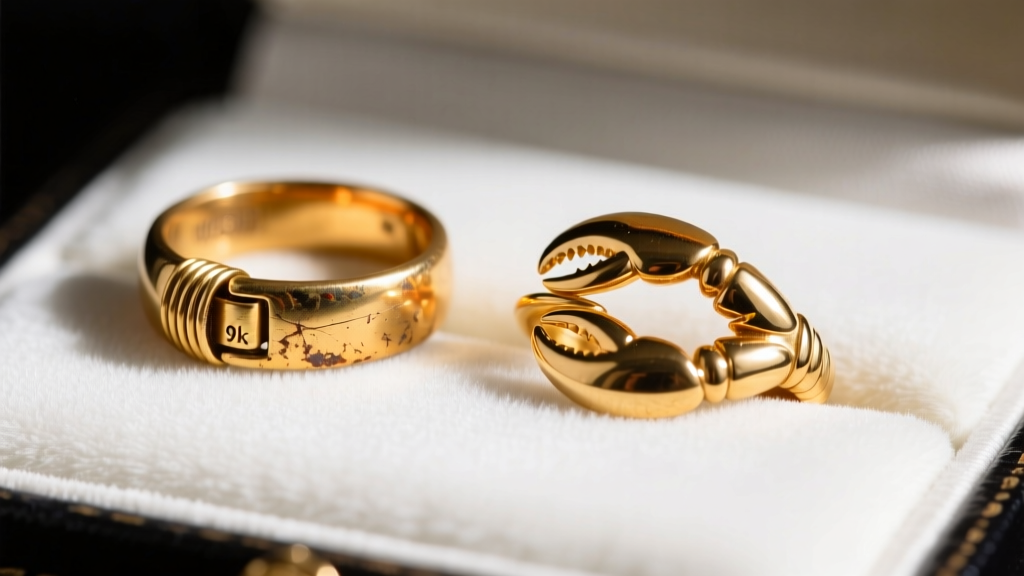
The clasp is the most common failure point, accounting for nearly 60% of all dropped necklace incidents. Spring ring clasps, commonly found on chains under 1.2mm, rely on a microscopic internal steel or copper spring. When this spring degrades from sweat, lotions, or simple metal fatigue, the clasp pops open, and the necklace falls and snaps upon hitting the floor or catching on clothing. Lobster clasps offer a more robust, solid-cast exterior, but cheaper hollow-cast lobsters can crush under lateral pressure. Always inspect the tiny lever on your clasp; if it feels mushy or fails to snap back with an audible click, the chain is a liability waiting to drop your pendant.

Budget Assessment: Repair Costs vs. Replacement Value
When your necklace snapped, your first instinct might be to take it to a local bench jeweler. However, repair viability depends heavily on the chain style and the required technique. Traditional torch soldering leaves a visible, brittle seam on complex chains, whereas laser welding offers precision but at a premium.
| Repair Type | Average Cost (2026) | Best For | Value Assessment |
|---|---|---|---|
| Traditional Torch Soldering | $35 - $60 | Simple cable or curb chains (1.2mm+) | High value for basic gold-filled or 10k/14k chains. |
| Laser Welding | $65 - $120 | Delicate chains, platinum, or hollow links | Justified only if the chain replacement cost exceeds $250. |
| Clasp Replacement | $45 - $150+ | Failed spring rings or broken lobster triggers | Excellent value; prevents future breaks and improves security. |
| Hollow Chain Repair | $80 - $150 | Hollow rope or tube chains | Poor value; hollow chains often re-break near the weld. |
Expert Insight: Never attempt to solder a hollow gold chain with a traditional torch. The trapped air inside the links will expand and blow out the gold, destroying the chain. Laser welding is the only viable option, but the structural integrity will always be compromised.
Material Grades and Long-Term Value Retention
The metal alloy of your necklace dictates both its repairability and its intrinsic scrap value if you choose to replace it.
Sterling Silver (925)
Sterling silver is highly malleable and easy to solder. However, silver oxidizes and weakens when exposed to sulfur and chlorine. If your silver necklace snapped near the clasp, it is likely due to chemical degradation rather than physical force. Repair is cheap ($25-$40), but the long-term value retention of silver chains is low. Replacing a 1.5mm sterling silver chain costs roughly $40-$80, making replacement often more economical than a $45 repair.
14k vs. 18k Gold
14k gold (58.5% pure gold) contains more copper and zinc, giving it higher tensile strength and making it ideal for everyday pendant chains. 18k gold (75% pure gold) is softer and more prone to stretching and snapping under sudden shock loads. According to Jewelers of America, 18k gold chains require more frequent prong and link inspections. If an 18k chain snaps, laser welding is highly recommended to avoid melting the surrounding high-karat links.
The 3-Step Value Decision Framework
To objectively decide whether to repair or replace your broken jewelry, apply this three-step financial framework:
- Calculate Intrinsic Melt Value: Weigh the broken chain. Multiply the gram weight by the current spot price of the metal, adjusted for purity (e.g., multiply by 0.585 for 14k gold). If the scrap value is less than the quoted repair cost, the repair is a net financial loss.
- Assess Sentimental and Brand Premium: Is it a vintage piece, a designer chain, or an irreplaceable heirloom? Designer chains can cost $800+ to replace; a $100 laser weld is a massive value retention play.
- Evaluate the Re-Break Risk: If the chain snapped due to severe thinning (loss of more than 20% of its original gauge thickness), repairing the single broken link is a temporary fix. The adjacent links are equally fatigued and will likely snap within months.
Preventative Upgrades for High-Risk Pendants
If you decide to replace the chain, or if you are upgrading the clasp during a repair, use the opportunity to engineer out the failure points.
- Upgrade to a Wheat Chain: For pendants weighing over 10 grams, abandon cable and box chains. A 1.5mm to 2.0mm solid wheat chain features interlocking, multi-directional links that distribute weight evenly, virtually eliminating single-point snap failures.
- Install a Locking Lobster Clasp: Standard spring rings fail when the internal tension spring corrodes or slips. Upgrading to a 12mm or 14mm solid cast lobster clasp (costing $30-$60 in 14k gold) provides a mechanical lock that will outlast the chain itself.
- Add a Safety Catch: For high-value diamond or gemstone pendants, have a jeweler solder a secondary 0.5mm safety chain between the clasp and the first link. If the primary chain snaps, the pendant remains secured to your neck.
Ultimately, a snapped necklace is an opportunity to reassess your jewelry wardrobe's structural integrity. By understanding the metallurgy and economics of chain repair, you can make budget-savvy decisions that protect both your financial investment and your most cherished pendants.