Alligator Tooth Necklace Materials: Real vs Faux Guide
Compare real, ethical, and faux materials for an alligator tooth necklace. Learn about durability, preservation, and styling in this expert guide.

The Appeal and Complexity of Organic Jewelry
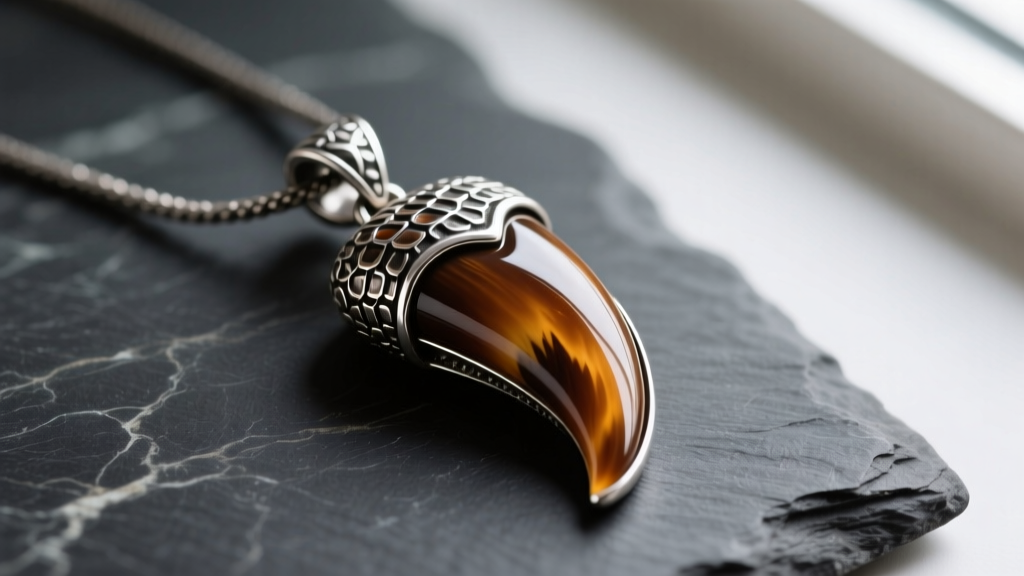
The alligator tooth necklace has transcended its roots as a mere souvenir or talisman, evolving into a striking staple of avant-garde, organic, and edgy jewelry design. However, as the demand for primal, nature-inspired aesthetics grows, so does the market saturation of synthetic imitations and ethically questionable specimens. For the discerning collector or the everyday wearer, understanding the material properties, preservation science, and sourcing ethics behind these pendants is critical. This guide deconstructs the physical and chemical realities of authentic alligator teeth, high-quality metal casts, and modern synthetic alternatives, providing a definitive framework for your next purchase.
The Biological Composition of Authentic Teeth
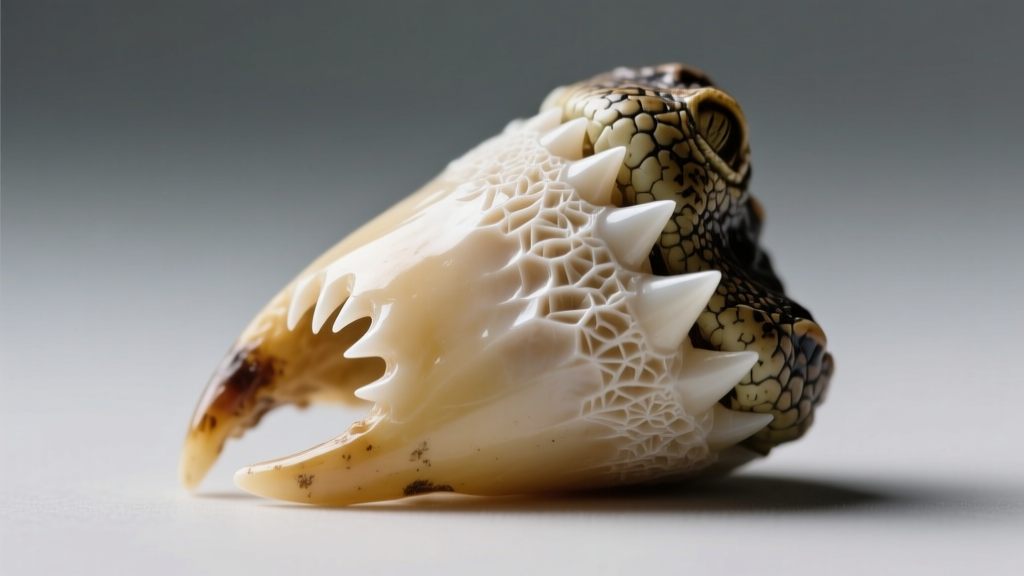
To appreciate an authentic alligator tooth necklace, one must first understand its biological makeup. Unlike mammalian teeth, which are firmly rooted in the jawbone, alligator teeth are polyphyodont, meaning they are continuously replaced throughout the animal's life. A genuine specimen is composed primarily of hydroxyapatite (a crystalline calcium phosphate), dentin, and a hard enamel outer layer.
There are two primary types of authentic teeth used in jewelry: shed teeth and harvested teeth. Shed teeth, which the animal naturally loses and replaces, often exhibit root resorption, resulting in a hollow, smooth base. Harvested teeth, sourced from the animal after it has been processed for meat and leather, retain their full, conical root structure. Because the internal pulp cavity of a harvested tooth is porous and organic, it requires immediate and meticulous stabilization to prevent bacterial decay and structural collapse.
Material Comparison Matrix: Sourcing and Properties
When shopping for an alligator tooth necklace, you will encounter a spectrum of materials. The table below breaks down the core properties, ethical considerations, and price brackets for each category.
| Material Type | Source & Ethics | Durability & Mohs Hardness | Maintenance Level | Average Price Range |
|---|---|---|---|---|
| Authentic (Stabilized) | Byproduct of regulated US farming (meat/leather industry) | Moderate (Enamel is ~5 Mohs, but brittle) | High (Requires humidity control, oiling) | $80 - $250 |
| Vintage / Antique | Pre-1973 sourcing, estate sales, antique markets | Low to Moderate (Prone to micro-fractures) | Very High (Fragile, museum-level care) | $150 - $400+ |
| Lost-Wax Metal Cast | Ethical (Uses a single mold to cast infinite replicas) | High (Sterling Silver 2.5-3, Bronze 4-5 Mohs) | Low (Standard metal polishing) | $120 - $350 |
| Polyurethane Resin | Synthetic, cruelty-free, mass-produced | Low (Scratches easily, Mohs ~2) | Very Low (Wipe clean) | $20 - $60 |
| 3D Printed Photopolymer | Synthetic, customizable, cruelty-free | Moderate (High tensile strength, UV sensitive) | Low (Avoid prolonged UV exposure) | $40 - $90 |
The Science of Organic Preservation
Working with organic materials requires specialized conservation techniques. An unstabilized alligator tooth is highly susceptible to environmental fluctuations. Rapid changes in humidity can cause the dentin to expand or contract, leading to catastrophic longitudinal cracking. Furthermore, natural sebum from human skin, combined with UV radiation, can degrade the collagen matrix within the tooth over time.
Consolidation and Stabilization
Master jewelers and taxidermists rely on museum-grade consolidants to preserve organic pendants. The industry standard is Paraloid B-72, an ethyl methacrylate copolymer. By dissolving Paraloid B-72 in an acetone or ethanol solvent, artisans create a low-viscosity solution. The tooth is submerged, allowing the consolidant to penetrate the microscopic dentinal tubules via capillary action. Once the solvent evaporates, the acrylic resin cures internally, binding the organic structure together without altering the natural matte or semi-gloss finish of the enamel. This process increases the tooth's structural integrity by up to 40%, making it viable for daily wear on a chain necklace.
The Dangers of Cyanoacrylate
Beware of cheap, mass-market organic necklaces that have been coated in cyanoacrylate (super glue). While it provides a quick, high-gloss seal, cyanoacrylate degrades rapidly when exposed to the alkaline environment of human sweat, eventually turning yellow, brittle, and flaking off the enamel surface.
Metallurgical Replicas: The Lost-Wax Process
For those who desire the exact morphology of an alligator tooth but require the durability of fine jewelry, lost-wax casting is the premier solution. This process begins with an authentic, ethically sourced tooth that is encased in a silicone mold. Wax is injected into the mold to create a perfect replica, which is then attached to a wax 'tree' and encased in investment plaster.
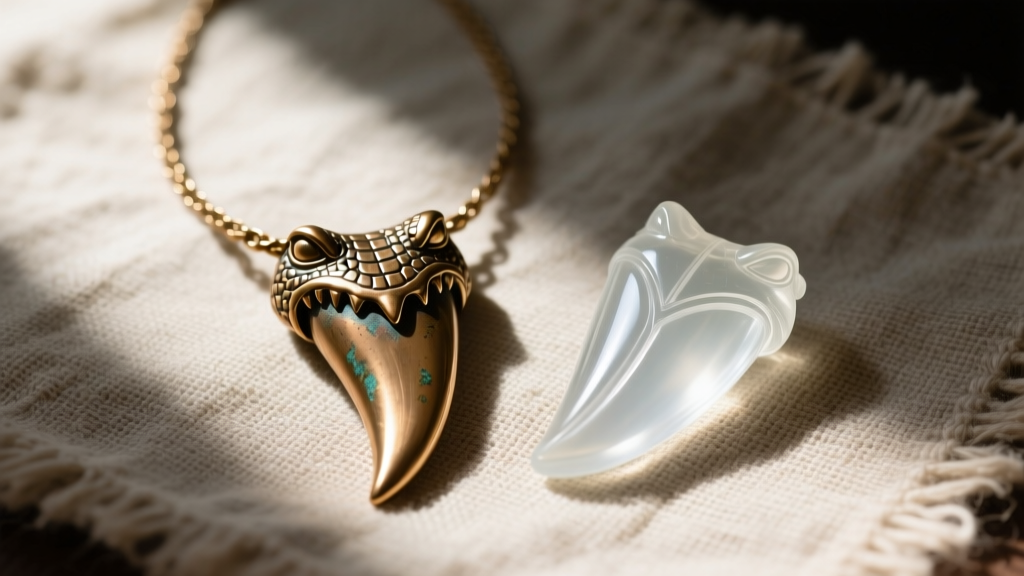
The plaster is placed in a kiln and heated to approximately 1,350°F (732°C). The wax melts and burns out, leaving a precise, tooth-shaped void. Molten metal—typically 925 sterling silver, silicon bronze, or 14k yellow gold—is then centrifugally forced into the cavity. The result is a heavy, indestructible alligator tooth pendant that captures every serrated edge and enamel ridge of the original specimen. Silicon bronze is particularly favored for this style, as its warm, earthy tones and natural patina mimic the aesthetic of aged bone and organic matter, while offering superior tensile strength compared to pure silver.
Synthetic and Faux Alternatives
The rise of advanced 3D printing and resin casting has democratized the alligator tooth necklace, making it accessible to vegans and those on a strict budget. High-density polyurethane resins can be tinted with mica powders to replicate the translucent, ivory-to-cream gradient of real enamel. However, resin lacks the thermal conductivity of real bone or metal; it will feel unnaturally light and warm to the touch.
More recently, jewelry designers have begun utilizing stereolithography (SLA) 3D printing with dental-grade photopolymers. These resins are incredibly dense, capable of capturing sub-millimeter details from digital scans of real specimens. While highly durable against impact, SLA resins are vulnerable to prolonged UV exposure, which can cause the pendant to become brittle and warp over years of outdoor wear.
Sourcing, Legality, and CITES Regulations
When purchasing an authentic organic necklace, provenance is not just an ethical concern; it is a legal one. The American Alligator (Alligator mississippiensis) is heavily regulated. According to the U.S. Fish and Wildlife Service, while the species has recovered and is no longer endangered, interstate commerce of alligator parts requires strict adherence to state tagging and documentation laws.
Internationally, the trade of crocodilian species is governed by the Convention on International Trade in Endangered Species (CITES). Authentic teeth must be sourced as a byproduct of regulated, sustainable farming operations—primarily located in Louisiana and Florida—where the animals are raised for meat and leather. Purchasing teeth from unverified online marketplaces carries the risk of inadvertently funding illegal poaching or purchasing misidentified species that fall under stricter CITES Appendix I protections. Always request a certificate of origin or a CITES export permit if buying internationally.
How to Choose the Right Material for Your Lifestyle
Selecting the ideal alligator tooth necklace depends entirely on your wearing habits and ethical boundaries. Use this quick decision framework:
- For the Archival Collector: Choose a stabilized, authentic tooth with a documented US farm origin. Store it in a humidity-controlled environment (45-55% RH) when not wearing it.
- For the Everyday Minimalist: Opt for a 925 sterling silver or silicon bronze lost-wax cast. It requires zero biological maintenance, survives showers and ocean swims, and develops a beautiful, rugged patina over time.
- For the Ethical/Vegan Wearer: Seek out SLA 3D-printed photopolymer replicas or hand-carved tagua nut alternatives that mimic the conical shape without utilizing animal products.
- For the Budget-Conscious Trendsetter: Polyurethane resin pendants offer the visual aesthetic at a fraction of the cost, though they should be removed before swimming or applying cosmetics to prevent chemical degradation.
Ultimately, whether you choose the irreplaceable organic history of a genuine, stabilized specimen or the indestructible artistry of a bronze cast, understanding the material science behind your jewelry ensures your alligator tooth necklace remains a powerful, enduring statement piece for years to come.


