The Perfect Necklace Guitar Players Will Actually Wear: Value Guide
Discover the ultimate budget and value assessment for music jewelry. Learn which materials, string gauges, and chains survive gigging and daily wear.

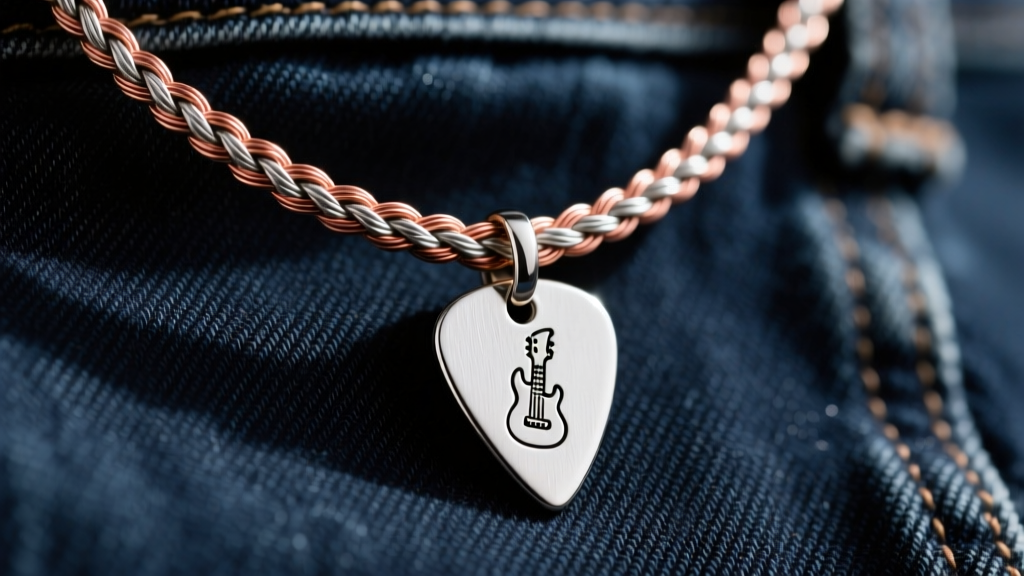
The Musician's Dilemma: Sweat, Friction, and Tarnish
Finding the perfect music-themed jewelry is rarely as simple as clicking on the first search result. When evaluating a necklace guitar players and music enthusiasts will actually wear, you must account for the harsh realities of a musician's lifestyle. Gigging artists and frequent players expose their accessories to high acidity sweat, constant friction against clothing and instruments, and rapid temperature changes. Most mass-produced music pendants fail within weeks because they prioritize aesthetic novelty over metallurgical integrity.
In 2026, the artisan jewelry market has seen a massive influx of music-inspired pieces, ranging from $12 dropshipped zinc-alloy picks to $300+ bespoke solid gold fretboard inlays. But how do you separate genuine value from overpriced merchandise? This budget and value assessment breaks down the exact material grades, chain gauges, and structural red flags you need to know before investing in your next piece of music jewelry.
Material Breakdown for Gigging and Casual Wear
The core value of any pendant lies in its base metal. According to metalworking standards outlined by Rio Grande jewelry supply, the alloy composition dictates not just the price, but the biocompatibility and tarnish resistance of the piece. Below is a value matrix comparing the most common materials used in guitar pick and instrument pendants.
| Material Grade | Sweat Resistance | Gig Durability | Average Price Range |
|---|---|---|---|
| 316L Surgical Steel | Excellent | High (Scratch resistant) | $18 - $35 |
| 925 Sterling Silver | Moderate (Requires sealing) | Moderate (Prone to scratching) | $45 - $120 |
| Solid Brass/Bronze | Poor (Oxidizes rapidly) | Low (Reacts with skin acids) | $15 - $40 |
| Zinc Alloy (Tibetan Silver) | Very Poor | Very Low (Brittle, toxic risks) | $5 - $15 |
| Solid 14k Gold | Excellent | High (Maintains integrity) | $250 - $600+ |
For gigging musicians, 316L Surgical Steel offers the highest budget-to-value ratio. It is hypoallergenic, impervious to sweat, and will not turn your chest green. If you prefer the prestige and acoustic aesthetic of 925 Sterling Silver, ensure the artisan has applied a clear nano-ceramic coating or rhodium plating to prevent sulfur-induced tarnishing during live performances.
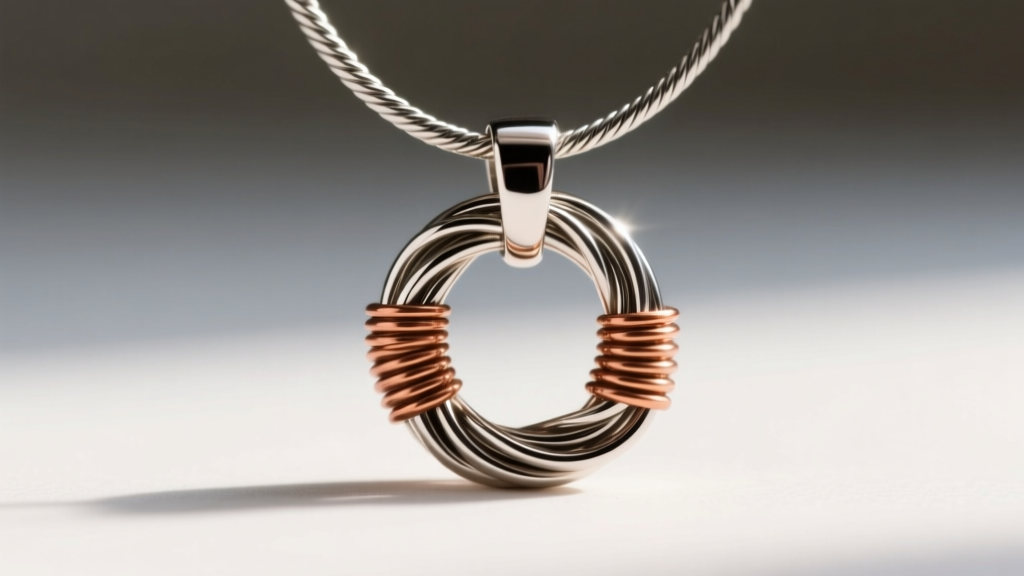
Authentic Strings vs. Jewelry Wire: A Metallurgical Look
One of the most popular trends in music jewelry is the incorporation of actual guitar strings into necklace designs. However, authentic strings present a massive structural challenge. As detailed in Fender's official string guide, standard electric guitar strings are typically made from nickel-plated steel or pure nickel wrapped around a high-carbon steel hex core. When exposed to human sweat and ambient humidity, the steel core will oxidize and rust within days, leading to skin irritation and structural failure.
When assessing the value of a string-based necklace, you must determine how the artisan has treated the metal. High-value string jewelry utilizes a two-part jewelry-grade epoxy resin or a PVD (Physical Vapor Deposition) clear coat to encapsulate the string, preserving the metallic luster while blocking moisture.
Gauge Selection Matters: Artisans typically use heavier wound strings for structural braiding and wrapping. A .046 gauge (Low E) or .052 gauge provides the necessary rigidity to hold a braided coil shape around a pendant bail. Conversely, delicate wire-wrapping techniques require a .010 or .012 gauge (High E) plain steel string. If a vendor is selling a "braided string necklace" that feels unusually flimsy, they are likely using cheap aluminum craft wire rather than authentic high-carbon steel strings.
Chain Pairings and Clasp Mechanics
A heavy guitar pick or a dense braided string pendant will quickly snap a poorly matched chain. The value of a necklace guitar players can rely on is heavily dependent on the chain's gauge and clasp mechanism.
- Chain Gauge: Avoid chains thinner than 1.2mm. For standard 351-shaped pick pendants (which weigh between 4 to 8 grams), a 1.5mm to 2.0mm cable or curb chain provides the ideal visual weight and tensile strength.
- Chain Style: Curb chains lay flat against the collarbone and resist kinking when caught on a guitar strap or microphone cable. Box chains, while attractive, are notorious for snagging on clothing and crushing under pressure.
- Clasp Mechanics: Discard any necklace featuring a spring-ring clasp. The tiny internal springs fail rapidly under tension. Always look for a properly stamped lobster clasp or a magnetic neodymium clasp for quick on-and-off functionality backstage.
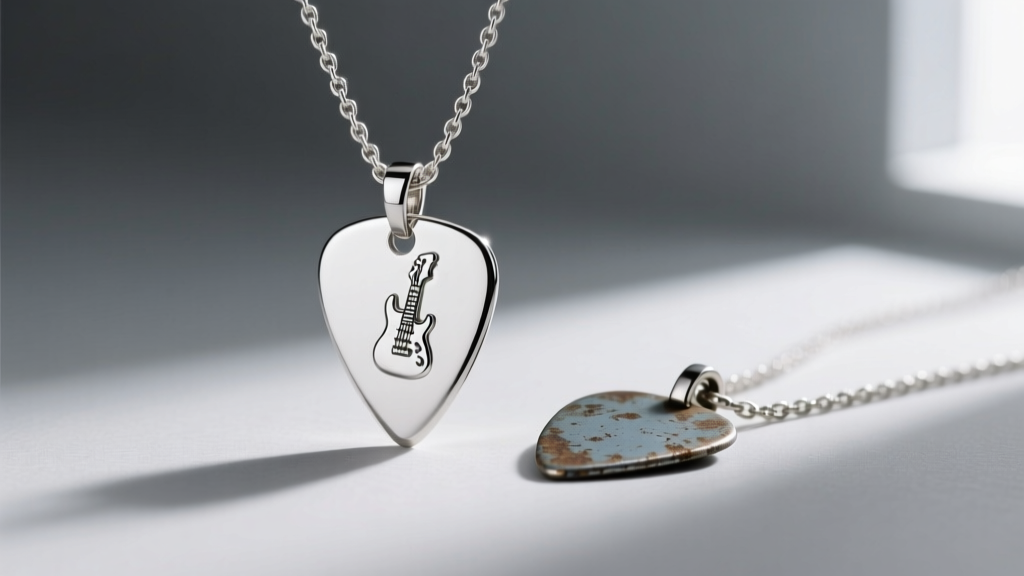
Budget Red Flags in Music-Themed Jewelry
The market is saturated with low-effort merchandise disguised as artisan jewelry. Protect your budget by watching for these critical red flags:
1. The Glued Bail
The bail is the loop that connects the pendant to the chain. In premium jewelry, the bail is soldered directly to the metal pick or integrated into the casting. In cheap mass-produced items, the bail is attached using cyanoacrylate (super glue). The heat and friction from daily wear will melt this adhesive, resulting in a lost pendant. Always inspect the connection point for a seamless solder joint.
2. Enamel Paint Bleed
Many budget guitar pick necklaces feature painted logos or fretboard inlays using cold enamel. If the enamel bleeds over the edges of the engraved grooves or feels raised and sticky to the touch, it is a sign of poor quality control. High-value pieces use kiln-fired vitreous enamel or precision laser-etching, which will never chip or fade.
3. 'Tibetan Silver' or 'Alpaca' Misnomers
These terms are marketing tricks used to sell zinc, copper, and nickel alloys that contain zero actual silver. Not only do these metals tarnish to a dull, muddy gray within a week, but the high nickel content frequently triggers contact dermatitis. Always demand a "925" stamp or a certified material assay from the seller.
Final Verdict: Where to Invest Your Budget
When shopping for a necklace guitar enthusiasts will cherish, value is not defined by the lowest price tag, but by the cost-per-wear and structural longevity. If your budget is under $30, bypass the faux-silver picks and invest in a solid 316L stainless steel pendant on a 1.8mm curb chain. It will survive sweat, humidity, and mosh pits without degrading.
For budgets between $50 and $150, seek out independent artisans who specialize in encapsulating authentic, heavy-gauge guitar strings in UV-resistant resins, paired with rhodium-plated sterling silver hardware. By prioritizing metallurgical integrity and mechanical fasteners over flashy but fragile designs, you ensure your music jewelry remains as enduring as the art that inspired it.


