How to Choose and Style a Floral Necklace Gold Pendant
Learn how to choose, style, and care for your floral necklace gold pendant. Expert tips on gold purity, chain lengths, and layering techniques.

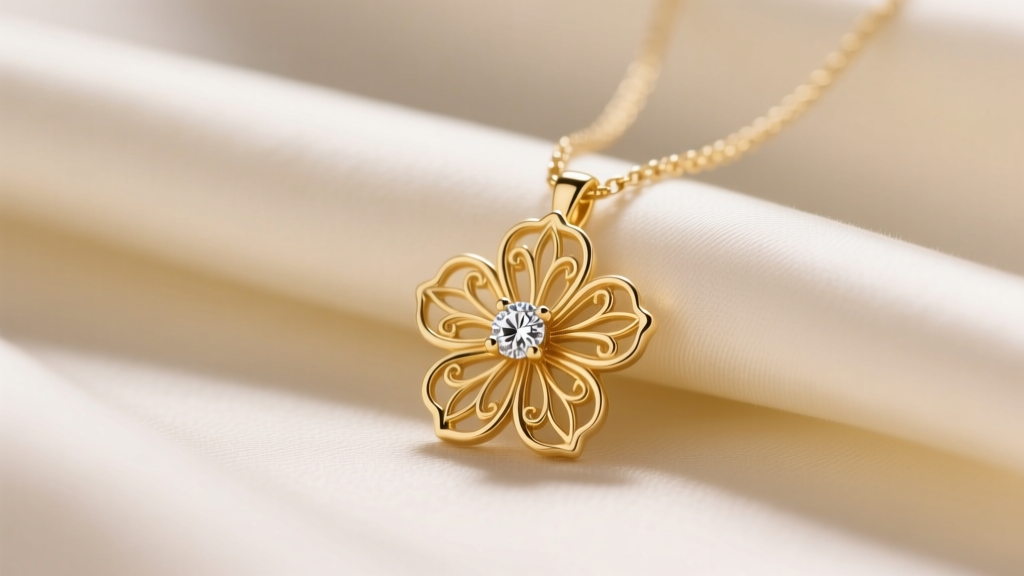
Floral motifs have remained a cornerstone of fine jewelry for centuries, evolving from the intricate, nature-obsessed designs of the Art Nouveau era to the sleek, minimalist line-art botanicals trending in 2026. However, styling a floral necklace gold piece requires more than just slipping it over your head. The interplay between the pendant's visual weight, the chain's tensile strength, and your wardrobe's neckline dictates whether the piece looks like a cohesive statement or an afterthought.
This comprehensive, step-by-step guide will walk you through selecting the right gold alloy, matching chain lengths to specific necklines, mastering advanced layering techniques, and properly maintaining the delicate crevices of botanical jewelry.
Step 1: Select the Right Gold Purity and Finish
When investing in a floral pendant, the karat weight of the gold fundamentally impacts both the piece's durability and its aesthetic. According to the Gemological Institute of America (GIA), gold purity dictates the metal's hardness, which is crucial for intricate designs.
14k vs. 18k Gold for Floral Motifs
- 14k Gold (58.5% Pure): This is the superior choice for high-relief, 3D floral pendants or designs featuring delicate stems, vines, and prong-set gemstone centers. The higher alloy content (usually copper and zinc) provides the tensile strength needed to prevent thin gold petals from bending or snapping during daily wear.
- 18k Gold (75% Pure): Opt for 18k if your floral necklace is a flat, cast medallion or features cold enamel petals. The richer, deeper yellow hue of 18k gold beautifully mimics the warmth of natural flora, but it is too soft for ultra-fine filigree work that might catch on clothing.
Choosing the Finish
While high-polish finishes reflect light brilliantly, a brushed or matte finish is often preferred for floral jewelry. A matte texture highlights the organic, asymmetrical veining of the petals, giving the piece a more natural, botanical feel rather than a manufactured look.
Step 2: Match the Chain Length to Your Neckline
A floral pendant can easily get lost in a busy outfit if the chain length clashes with your neckline. The goal is to create parallel lines or complementary geometric shapes. Below is a structural framework for pairing your gold floral necklace with common necklines.
| Neckline Type | Ideal Chain Length | Recommended Chain Style | Styling Rationale |
|---|---|---|---|
| Sweetheart | 16 inches (Choker/Collarbone) | Cable or Wheat | Mirrors the curved dip of the sweetheart neckline without crossing the fabric line. |
| V-Neck | 18 to 20 inches | Rope or Snake | The V-shape of the neckline naturally frames a longer, dropping floral pendant, elongating the torso. |
| Crew Neck | 22 to 24 inches | Box or Figaro | Sits below the collarbone, breaking up the solid block of fabric and drawing the eye downward. |
| Halter / High Neck | 14 inches or Skip | Delicate Chain | Long chains tangle with halter ties. A tight 14-inch floral choker sits cleanly above the fabric. |
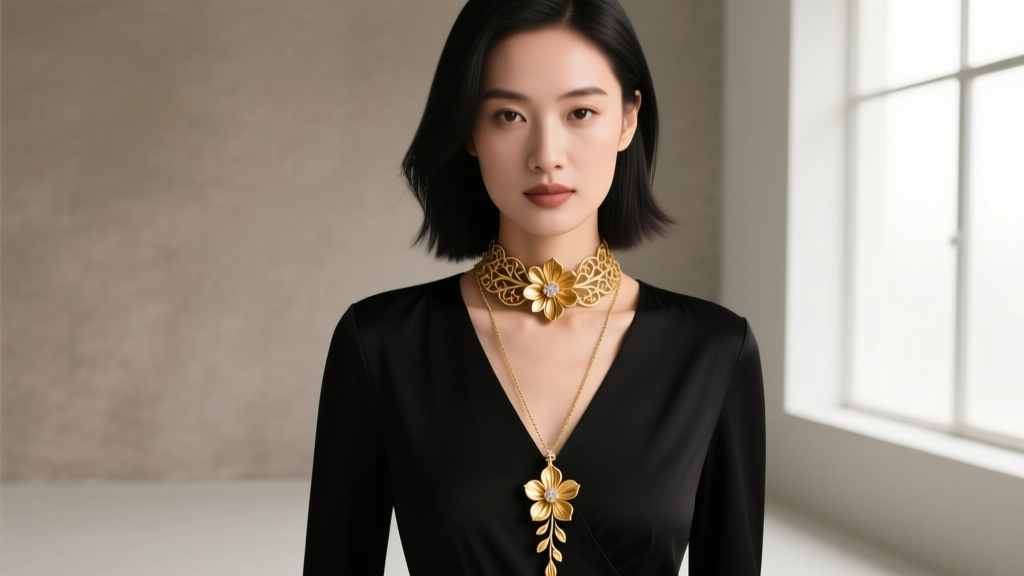
Step 3: Advanced Layering Techniques for Botanicals
Layering is a dominant trend in 2026, but floral pendants present a unique challenge: their asymmetrical petals and protruding prongs easily tangle with adjacent chains. To achieve a curated, effortless look without the frustration of constant untangling, follow the 'Rule of Three' and utilize mechanical aids.
The Rule of Three
- The Anchor (14-16 inches): Start with a simple, non-floral gold chain, such as a 14-inch herringbone or choker. This provides a solid base.
- The Focal Point (18-20 inches): This is where your primary floral necklace gold pendant sits. Ensure the pendant is at least 15mm in diameter to hold its own against the other layers.
- The Elongator (24-28 inches): Finish with a long, lightweight chain featuring a small, abstract geometric charm (like a simple gold disc or bar) to contrast the organic floral shape.
Expert Tip: To prevent the floral prongs from catching on the links of your other necklaces, invest in a 14k gold necklace spacer clasp. These small, rectangular bars feature three distinct loops that lock your chains in place, maintaining perfect spacing and completely eliminating friction-based tangling.
Step 4: Caring for Intricate Gold Florals
The very details that make floral necklaces beautiful—deep crevices, overlapping petals, and textured stems—make them magnets for lotion, dead skin cells, and environmental dust. Improper cleaning can dull the gold or damage secondary materials.
Step-by-Step Cleaning Protocol
The GIA's jewelry care guidelines emphasize gentle, non-abrasive cleaning for intricate gold pieces. Avoid commercial jewelry dips, which can strip the alloyed metals and leave your 14k or 18k gold looking brassy.
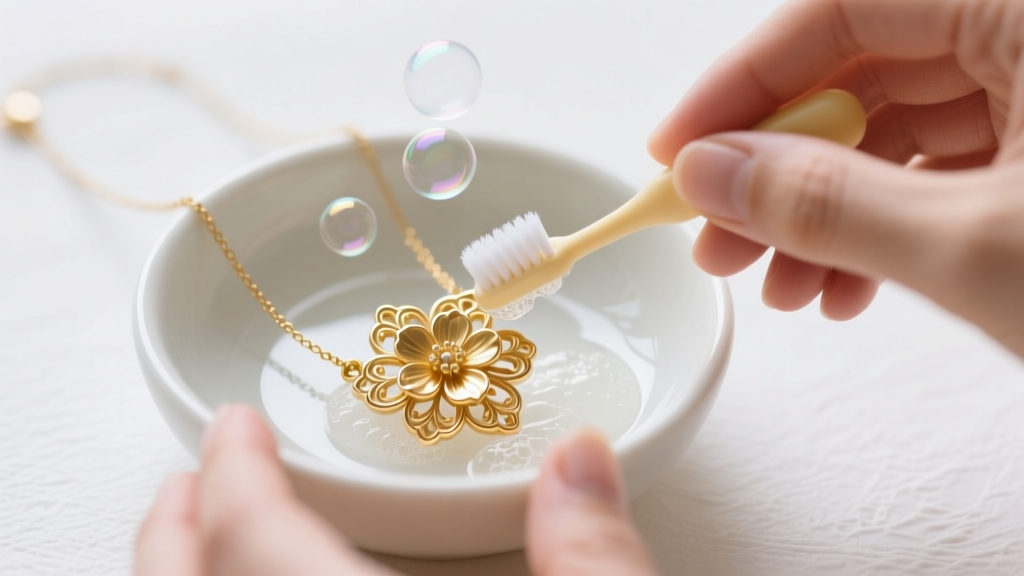
- Prepare the Solution: Mix lukewarm water with two drops of mild, phosphate-free dish soap (like Dawn) in a small ceramic bowl. Avoid hot water, which can expand the metal and loosen gemstone settings.
- Soak: Submerge the floral necklace for exactly 15 minutes. This softens the sebum and cosmetics trapped in the petal crevices.
- Agitate Gently: Use an extra-soft baby toothbrush. Brush in circular motions, paying special attention to the back of the pendant (the gallery) where skin contact is highest.
- Rinse and Dry: Rinse under a gentle stream of lukewarm water. Pat dry with a lint-free microfiber cloth. Never use tissue paper, as the wood fibers can leave microscopic scratches on high-polish gold edges.
When to Avoid Ultrasonic Cleaners
While ultrasonic cleaners are excellent for plain gold chains, they are highly destructive to certain floral designs. If your floral necklace features cold enamel (often used for colorful petals), fracture-filled diamonds, or opal centers, the high-frequency vibrations will shatter the enamel or fracture the stones. Stick to manual cleaning for these pieces.
Expert Troubleshooting: Common Floral Necklace Issues
Even high-quality botanical jewelry comes with functional quirks. Here is how to solve the most common issues associated with floral pendants.
Issue 1: The Pendant Snags on Knitwear
The Cause: Floral designs often utilize prong settings for center stones or feature sharply cast leaf tips that act like microscopic hooks.
The Fix: If you frequently wear cashmere or silk, opt for floral pendants with bezel settings or smooth, cast-metal petals without protruding prongs. If you already own a prong-heavy piece, a jeweler can perform a 'prong re-tipping and rounding' service to file down sharp edges for under $30.
Issue 2: The Clasp Constantly Slips to the Front
The Cause: Floral pendants are often front-heavy, especially if they feature a solid gold 3D rose or lily. The weight of the pendant pulls the lightweight chain forward, dragging the clasp around your neck.
The Fix: Counterbalance the pendant. You can either swap the chain for a heavier, denser style (like a solid gold Cuban or rope chain) which anchors the back of the neck, or add a discreet silicone 'necklace stay' bead near the clasp to create friction against the skin, preventing it from sliding forward.
By understanding the metallurgy, structural mechanics, and styling geometry of your jewelry, you can ensure your floral pieces remain a captivating and functional part of your wardrobe for decades to come.


