Troubleshooting & Restringing a Broken Dentalium Necklace
Learn how to safely clean, repair, and restring a broken dentalium necklace. Expert troubleshooting for cracked shells, frayed cords, and clasp failures.

The Anatomy of a Dentalium Necklace Failure
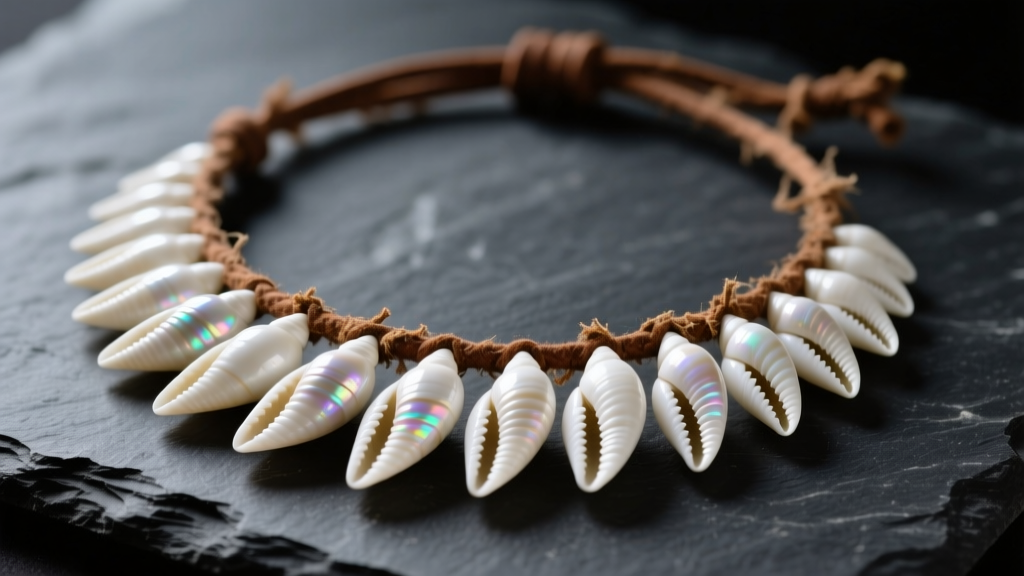
Dentalium shells, prized for their elegant, curved tubular morphology, have been a cornerstone of indigenous and artisan jewelry for centuries. However, from a materials science perspective, a dentalium necklace presents unique structural vulnerabilities. These shells are composed primarily of calcium carbonate, scoring a mere 3 on the Mohs hardness scale. Their elongated shape and natural curvature create inherent stress points, particularly at the drill holes. When a dentalium necklace breaks, it is rarely a random accident; it is almost always the result of mechanical friction, improper stringing materials, or chemical degradation. Troubleshooting these failures requires an understanding of both organic gemology and advanced stringing mechanics.
Diagnosing the Root Cause of Breakage
Before attempting to restring or repair your necklace, you must identify why the original construction failed. Applying the same flawed technique will only result in a repeat failure.
The Beading Wire "Saw" Effect
The most common cause of catastrophic shell failure in modern restringing is the use of nylon-coated stainless steel beading wire (often referred to generically as Tiger Tail). While excellent for heavy glass or stone beads, steel wire is rigid. As the wearer moves, the rigid wire creates lateral tension against the inner ridge of the curved dentalium shell. Over time, the steel acts like a microscopic saw, grinding through the calcium carbonate from the inside out until the shell splits longitudinally. If your broken necklace was strung on stiff wire, you must discard the wire and switch to a flexible alternative.
Edge-Grinding and Micro-Fractures
Dentalium shells are often strung tightly together to create a continuous, solid-looking tube of white. However, the edges of these shells are rarely perfectly flat. When strung without spacers, the sharp, uneven edges of adjacent shells grind against one another. This edge-grinding creates micro-fractures that eventually cause the ends of the shells to crumble or chip away, leaving the drill hole unsupported and prone to snapping.
The Master Restringing Protocol
Restringing a dentalium necklace requires materials that offer high tensile strength but remain entirely flexible. Below is a comparison of acceptable stringing materials for organic tubular shells.
| Stringing Material | Recommended Diameter | Tensile Strength | Best Use Case |
|---|---|---|---|
| Braided Nylon (e.g., C-Lon) | 0.8mm - 1.0mm | High | Heavy, vintage shells; excellent knot retention. |
| Microfiber Cord (e.g., WildFire) | 0.6mm - 0.8mm | Very High | Smaller drill holes; resists fraying and stretching. |
| Griffin Natural Silk | 1.0mm (Size #6) | Moderate | Traditional heirloom pieces; requires frequent restringing. |
| Leather Suede Lace | 1.5mm - 2.0mm | Low | Rustic styles; high risk of stretching and snapping. |
The Floating Spacer Technique
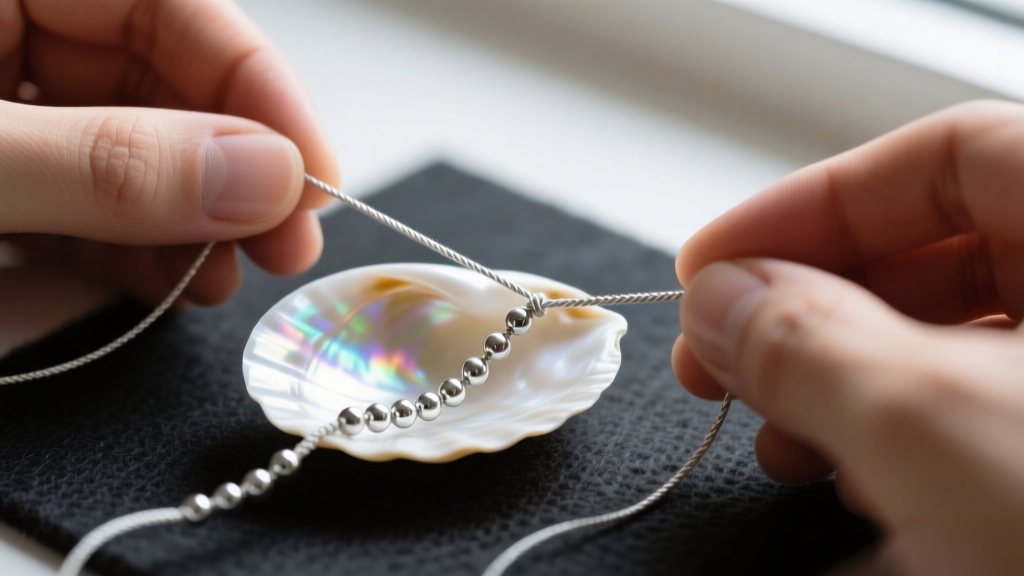
To prevent edge-grinding, you must incorporate micro-spacers between every single dentalium shell. Use 2mm sterling silver, copper, or smooth glass seed beads. These spacers act as mechanical shock absorbers, taking the brunt of the lateral friction and protecting the brittle shell edges. When stringing, do not pull the cord taut; leave a microscopic amount of "drape" or slack between each shell and spacer. This floating technique ensures that when the necklace is bent around the neck, the shells pivot on the soft cord rather than leveraging against each other and cracking.
Calcium Carbonate Cleaning and Preservation
Cleaning a soiled or yellowed dentalium necklace is a high-risk endeavor. Because calcium carbonate is highly reactive to acids, common jewelry cleaning hacks will destroy the nacre and structural integrity of the shell. According to conservation guidelines for organic gems outlined by the Gemological Institute of America (GIA), organic materials must never be exposed to ultrasonic cleaners, steam, or acidic solutions.
- Never use ultrasonic cleaners: The high-frequency vibrations will shatter the internal crystalline structure of the tubular shells.
- Avoid all acids: Vinegar, lemon juice, and even mildly acidic commercial silver dips will dissolve the surface of the shell, leaving it chalky and permanently weakened.
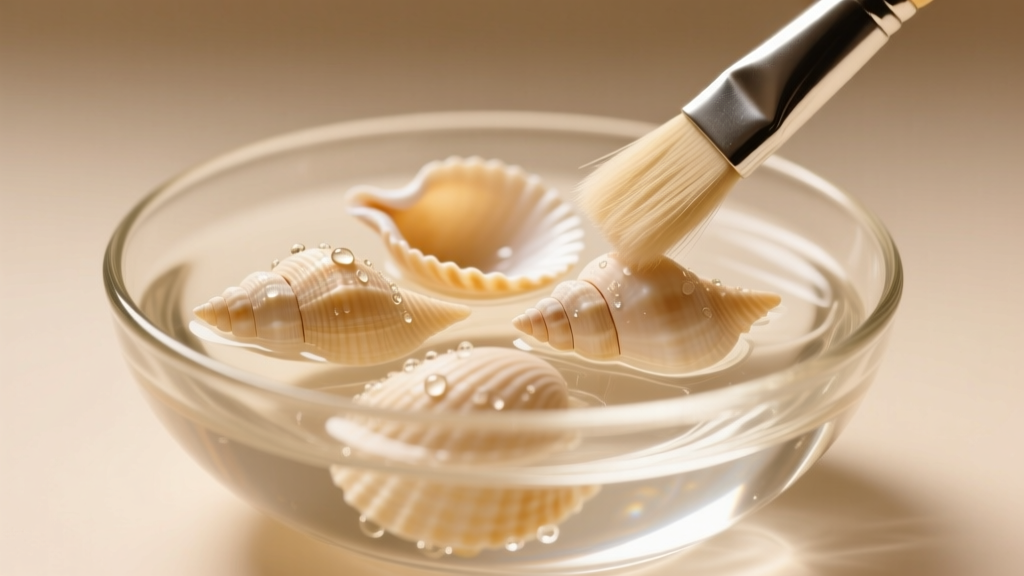
- The Safe Cleaning Method: Mix a few drops of pH-neutral baby shampoo in distilled water. Use a soft-bristled makeup brush to gently agitate the surface of the shells, immediately wiping them dry with a microfiber cloth. Do not let the shells soak, as water can weaken the internal cord and expand existing micro-fractures.
For deep conservation insights, the American Institute for Conservation (AIC) Wiki on Shell emphasizes that prolonged exposure to dry environments can cause desiccation cracking in older, antique shells. Store your dentalium necklace in a soft cotton pouch away from direct sunlight and extreme heat sources, avoiding airtight plastic bags which can trap acidic off-gassing from synthetic materials.
Solving Clasp and Weight Distribution Issues
A fully loaded dentalium necklace is surprisingly heavy. The tubular shells, combined with metal spacers, can easily exceed 150 grams. A standard lobster clasp attached directly to a soft nylon cord via a simple crimp bead is a recipe for disaster; the heavy weight will cause the soft cord to slice through the crimp or pull out of the knot.
The Fix: French Wire and Toggle Clasps
To secure the ends of your restringing cord, use a technique borrowed from pearl knotting. Thread the cord through a piece of French wire (also known as bullion or gimp)—a tiny, coiled spring of fine sterling silver. The French wire creates a protective, smooth metal loop that prevents the jump ring from sawing into the nylon cord. Finally, upgrade the clasp. A heavy-duty sterling silver toggle clasp is vastly superior to a lobster clasp for heavy shell necklaces, as the weight of the necklace naturally pulls the T-bar securely into the ring, distributing the tension evenly across the cord loop rather than concentrating it on a tiny spring mechanism.
Preventative Maintenance Framework
To ensure your repaired dentalium necklace survives for decades, implement this bi-annual maintenance checklist:
- The Drape Test: Hold the necklace by the clasp and let it hang. Look for gaps between the shells. If the cord has stretched and the shells are sagging, it is time to restring before the cord thins and snaps.
- Inspect the Drill Holes: Use a jeweler's loupe (10x magnification) to inspect the edges of the drill holes. If you see concentric chipping, the cord tension is too tight, or the spacers are insufficient.
- Chemical Isolation: Always put your dentalium necklace on after applying perfumes, hairsprays, and lotions. The alcohols and synthetic oils in cosmetics can degrade the cord and dull the natural luster of the shell over time.
By respecting the material limitations of calcium carbonate and utilizing flexible, shock-absorbing stringing techniques, you can successfully rescue and preserve even the most fragile vintage dentalium shell jewelry.


