Beyond the Gold Necklace PNG: Real Alloy Properties & Color Guide
Translating digital gold necklace PNG mockups to reality? Compare 10k-22k alloy properties, Vickers hardness, and tensile strength for chains.

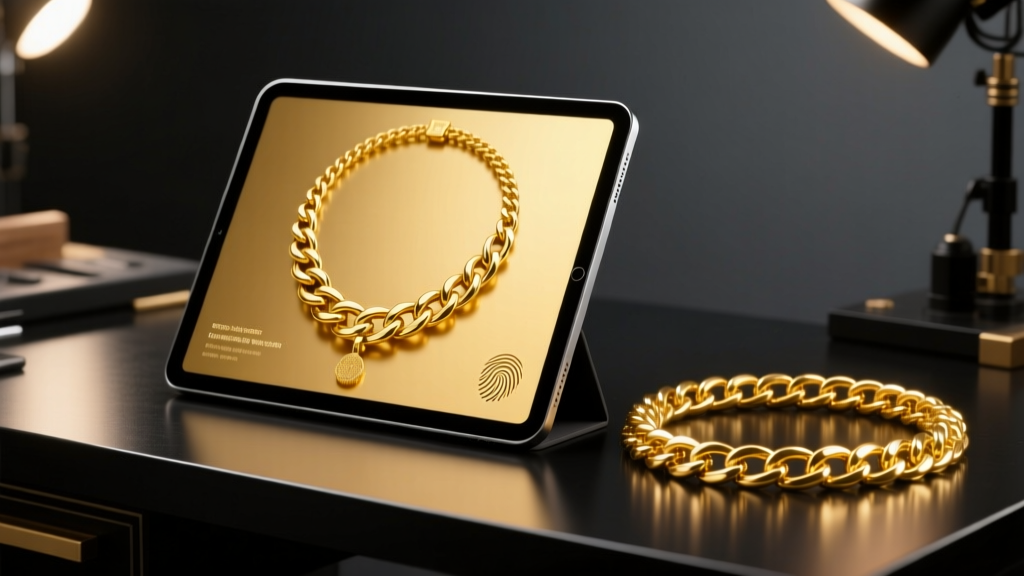
In the modern jewelry design and e-commerce landscape, the search for a high-quality gold necklace png is often the starting point for CAD modeling, digital portfolio building, and dropshipping mockups. Designers rely on transparent PNG assets to visualize pendants, layer chains, and present concepts to clients. However, a digital render—no matter how high the resolution—fails to capture the complex metallurgical realities of physical gold alloys. A hex code cannot convey Vickers hardness, tensile strength, or the precise spectrophotometric color shifts that occur when gold is alloyed with copper, silver, or palladium.
As we move through 2026, the gap between digital visualization and physical material science remains a critical blind spot for emerging jewelers and custom buyers. This guide bridges that divide, translating the flat aesthetics of digital mockups into the hard data of real-world gold necklace properties, ensuring your final physical piece matches the promise of your digital render.
The Digital vs. Physical Gold Disconnect
When a designer downloads a gold necklace PNG with a standard hex code of #FFD700, they are looking at an idealized, pure yellow representation. In reality, pure 24k gold is entirely too soft for functional chainmail or pendant bails. According to the Gemological Institute of America (GIA), pure gold has a Vickers hardness (HV) of roughly 25, meaning it can be scratched by a fingernail and will deform under the minimal stress of a heavy pendant.
To create durable necklaces, gold must be alloyed. This introduces a massive variable that digital files cannot account for: color temperature shift based on metallurgical composition. A 14k yellow gold chain will possess a distinctly different visual warmth compared to an 18k yellow gold chain due to the varying ratios of silver and copper. Understanding these physical properties is essential for selecting the right chain gauge, clasp type, and pendant weight.
Metallurgical Breakdown: Karats, Hardness, and Chain Durability
The structural integrity of a gold necklace is dictated by its karatage and the specific alloy mix. Tensile strength—measured in Megapascals (MPa)—determines how much pulling force a chain link can withstand before snapping. This is especially critical for delicate chains like herringbones or snake chains, which are prone to kinking and snapping if the alloy is too soft.
| Karat | Gold % | Typical Alloy Mix | Vickers Hardness (HV) | Tensile Strength (MPa) | Ideal Chain Style |
|---|---|---|---|---|---|
| 10k | 41.7% | High Copper/Silver/Zinc | 135 HV | ~450 MPa | Thin Cable, Box, Mariner |
| 14k | 58.3% | Balanced Cu/Ag/Zinc | 115 HV | ~380 MPa | Curb, Figaro, Rope |
| 18k | 75.0% | Higher Silver, Lower Cu | 90 HV | ~300 MPa | Herringbone, Snake, Wheat |
| 22k | 91.6% | Trace Copper/Silver | 60 HV | ~210 MPa | Solid Bangles, Beaded |
As noted by the World Gold Council, 14k and 18k gold remain the global standards for fine jewelry chains. 14k offers the optimal balance of rich color and high tensile strength, making it the superior choice for heavy pendants and everyday wear. Conversely, 18k gold, while boasting a deeper, more saturated yellow hue, requires thicker gauges (e.g., 3mm+) to maintain structural integrity in active chain styles like the Cuban link.
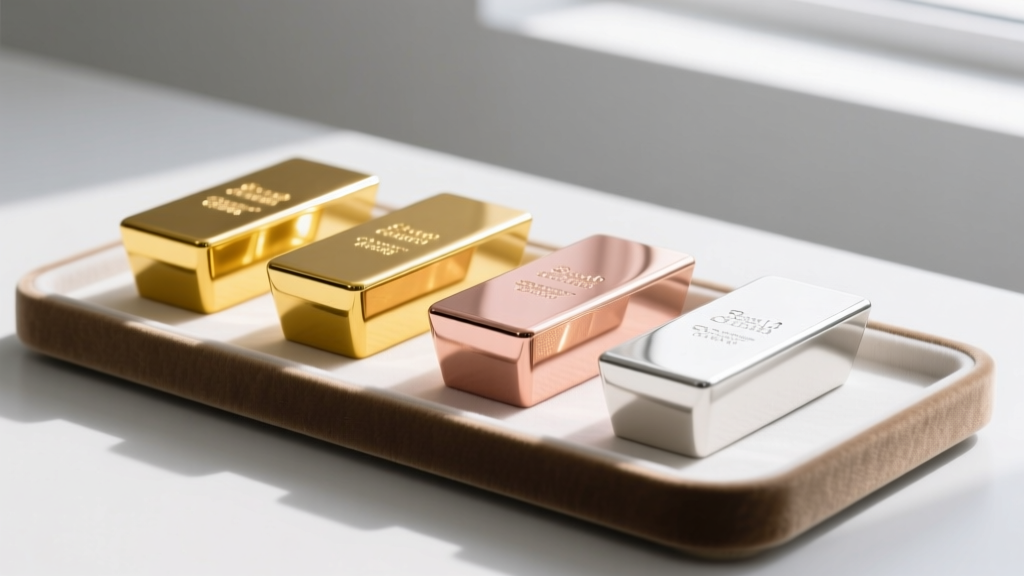
The Science of Color: Rose, White, and Yellow Gold Alloys
The color of a gold necklace is not a surface treatment; it is a chemical reality forged in the crucible. When transitioning from a digital mockup to physical manufacturing, you must specify the exact alloy composition to achieve the desired hue.
Yellow Gold: The Classic Balance
Standard 18k yellow gold is typically composed of 75% gold, 12.5% copper, and 12.5% silver. The copper provides a subtle reddish undertone, while the silver cools it back to a rich, buttery yellow. If a manufacturer alters this ratio—using more zinc, for instance—the gold will take on a pale, almost greenish-yellow cast that deviates sharply from standard digital renders.
Rose Gold: The Copper Factor
Rose gold achieves its romantic pinkish hue through a high copper content. A true 18k rose gold alloy contains 75% gold, 22.25% copper, and 2.75% silver. The high copper content not only changes the color but also slightly increases the alloy's hardness and tensile strength compared to its yellow counterpart. However, copper is highly reactive; rose gold necklaces require careful storage to prevent surface oxidation, which can dull the polished finish over time.
White Gold: The Palladium Shift of 2026
Historically, white gold was alloyed with nickel to achieve a silvery color. However, nickel is a known contact allergen, affecting up to 15% of the global population. In 2026, the industry standard for premium white gold necklaces has decisively shifted toward palladium. An 18k palladium-white gold alloy (75% Au, 10-15% Pd, plus silver and zinc) offers a naturally cool, grayish-white tone that requires less frequent rhodium plating than nickel-based alternatives. It is also hypoallergenic and possesses a higher melting point, making laser-welding chain links more precise.
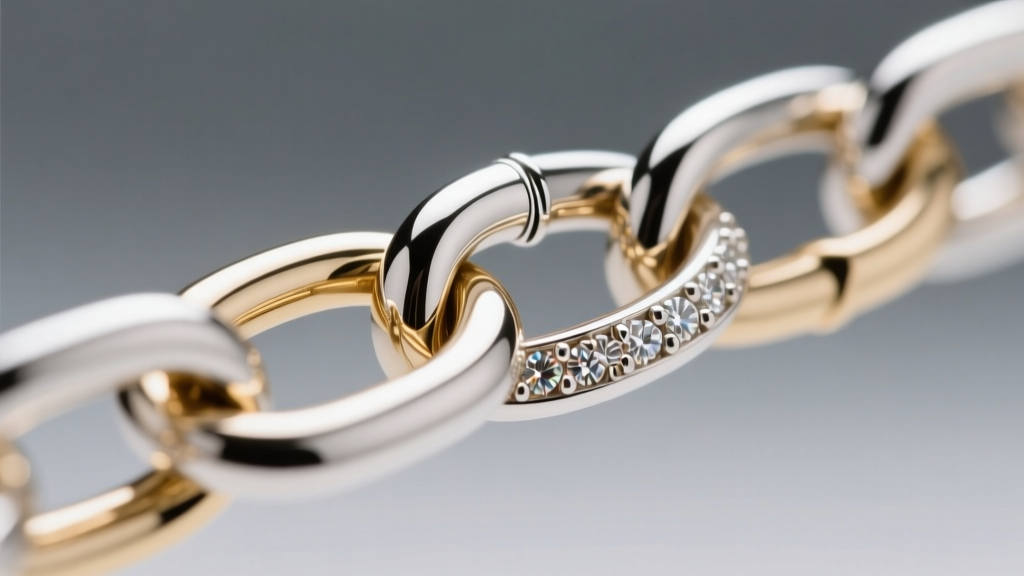
Stress Points and Clasp Mechanics
A digital gold necklace PNG will simply show a clasp as a static geometric shape. In physical reality, the clasp is the most common point of mechanical failure on any necklace. The material properties of the chosen gold alloy directly dictate which clasp mechanisms are viable.
- Spring Ring Clasps: These rely on an internal steel spring. Because 18k and 22k gold are too soft to hold spring tension and would permanently deform, the internal mechanism must be stainless steel. The outer gold shell is essentially a sleeve.
- Lobster Clasps: Superior for heavier chains (like 5mm+ Figaros or Cubans). High-quality lobster clasps are cast in 14k gold for structural rigidity, featuring a thicker internal spring and a wider trigger lever to distribute thumb pressure.
- Box Clasps with Safety Latches: Essential for multi-strand necklaces or heavy diamond tennis necklaces. These are typically engineered in 14k white gold or platinum due to the need for precise, rigid tolerances in the locking tongue mechanism.
Expert Insight: Never pair a heavy 18k gold pendant with a delicate 18k cable chain secured by a standard spring ring clasp. The kinetic energy of the pendant swinging will eventually fatigue the soft 18k gold jump ring, leading to catastrophic failure. Always upgrade the jump ring to platinum or use a thicker 14k gauge.
Verifying Authenticity Beyond the Render
When sourcing physical inventory based on digital catalogs, visual inspection is insufficient. The rise of sophisticated gold-plated tungsten and brass counterfeits means that material verification must be scientific. Reputable jewelers and wholesalers now rely on XRF (X-ray Fluorescence) testing. XRF scanners can penetrate the surface rhodium plating of a white gold necklace to measure the exact elemental percentages of the underlying alloy, ensuring it meets the 58.3% or 75% threshold for 14k or 18k gold.
Always look for laser-stamped hallmarks on the clasp tongue or the primary jump ring. In the US, a '14K' or '585' stamp is standard, while European pieces will feature '750' for 18k gold, often accompanied by a maker's mark. Remember that a pristine digital image offers no guarantees; true luxury and durability lie in the precise metallurgical engineering of the physical chain.


