Bismuth Necklace Styling: 2026 Trends for Iridescent Hopper Crystals
Discover 2026 bismuth necklace trends, from sealing techniques to styling iridescent hopper crystals with cyber-natural and avant-garde fashion.

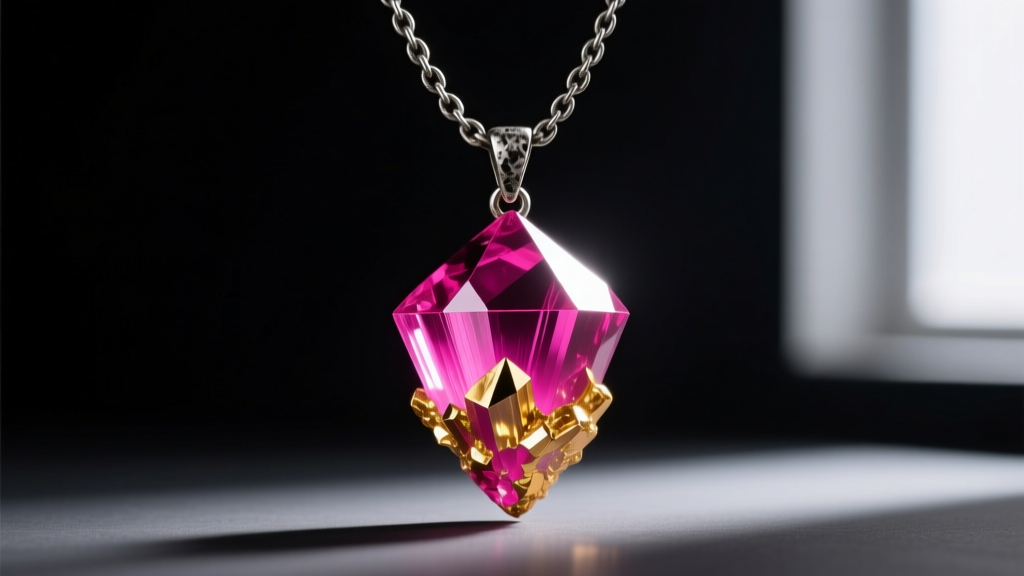
In the landscape of 2026 alternative jewelry, the bismuth necklace has graduated from a niche lapidary curiosity to a cornerstone of the "cyber-naturalism" aesthetic. Characterized by their mesmerizing, stair-step geometric formations and hypnotic iridescence, bismuth hopper crystals offer a visual complexity that traditional gemstones simply cannot replicate. However, styling and maintaining a bismuth pendant requires a deep understanding of its unique metallurgical properties. Unlike gold or platinum, bismuth is a brittle, poor metal that demands specific handling, sealing, and styling techniques to survive daily wear.
The Science of the Shimmer: Thin-Film Interference
To style bismuth effectively, one must first understand the source of its otherworldly color palette. The vivid magentas, cyans, and golds seen on a bismuth crystal are not caused by pigments or dyes. Instead, they are the result of thin-film interference. When molten bismuth cools and oxidizes, it forms a microscopically thin layer of bismuth(III) oxide on its surface. As light hits this oxide layer, it refracts and interferes with itself, producing structural color. According to mineralogical data from Mindat.org, the specific thickness of this oxide layer dictates the exact wavelength of color reflected, meaning no two bismuth crystals will ever share the exact same iridescent fingerprint.
This structural coloration means that a bismuth necklace acts as a dynamic, light-reactive accessory. In the 2026 fashion cycle, where avant-garde and sci-fi-inspired streetwear dominate, the shifting colors of bismuth provide a kinetic element to static outfits, catching and fracturing ambient light in ways that mirror the era's fascination with digital iridescence.
Structural Vulnerabilities and Sealing Protocols
The primary failure mode of any bismuth jewelry piece is its extreme physical fragility. On the Mohs hardness scale, bismuth ranks at a mere 2.25, making it softer than a copper penny and highly susceptible to scratching, chipping, and catastrophic snapping if dropped. Furthermore, prolonged exposure to the oils, sweat, and friction of human skin will gradually wear away the delicate oxide layer, dulling the crystal's iridescence into a flat, metallic gray.
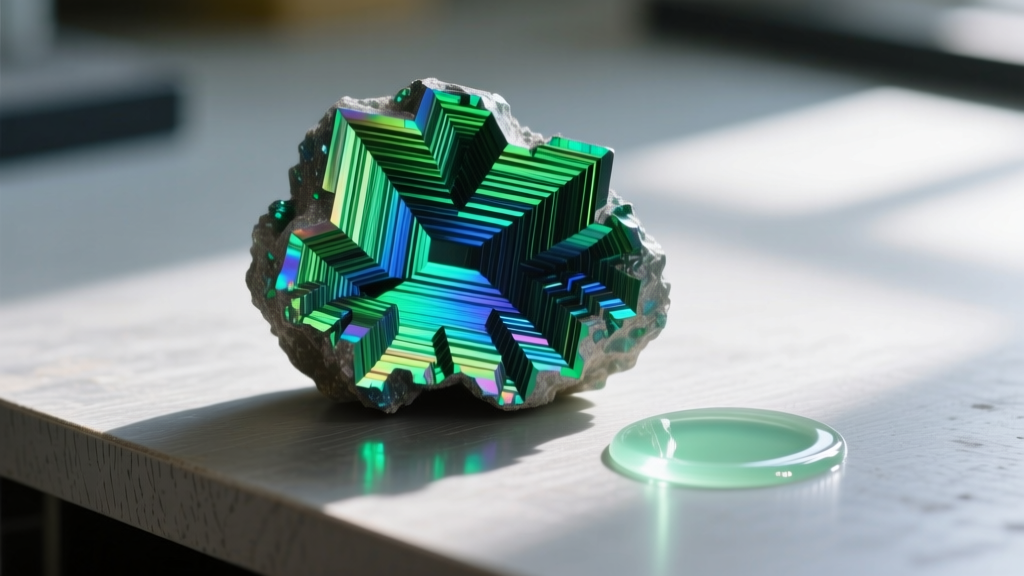
To counteract these vulnerabilities, artisan jewelers in 2026 employ rigorous sealing protocols. If you are commissioning or evaluating a bismuth necklace, look for the following sealing methods:
- Two-Part Epoxy Resin: The gold standard for bismuth. A high-quality, non-yellowing epoxy (such as ArtResin) penetrates the microscopic crevices of the hopper crystal, providing a thick, impact-resistant shell. Curing time typically requires 24 to 72 hours at room temperature.
- UV-Curing Polyurethane: A faster alternative often used for smaller pendants. Cured under 365nm UV light in 3 to 5 minutes, it offers excellent scratch resistance but can sometimes pool in the deep, stair-step valleys of the crystal, slightly softening the sharp geometric edges.
- Automotive Clear Coat: Occasionally used by budget artisans. While it provides a temporary barrier against skin oils, it is highly prone to micro-cracking and peeling within 6 to 12 months of daily wear, and is generally not recommended for heirloom-quality pieces.
"The intersection of raw geological formation and synthetic preservation is what defines the 2026 cyber-naturalist movement. A properly sealed bismuth pendant is essentially a fragile piece of earth encased in a modern polymer armor." — Journal of Contemporary Adornment, Spring 2026 Issue
Hardware and Chain Pairings: A Metallurgical Approach
Pairing a bismuth pendant with the wrong chain can result in both aesthetic dissonance and physical damage. Bismuth possesses a unique physical trait: it is the most naturally diamagnetic metal on Earth. This means it actively repels magnetic fields. While this won't affect the wearer, it makes bismuth an interesting companion to magnetic clasps, as the pendant itself will never interfere with the clasp's mechanism.
However, because bismuth is relatively heavy (density of 9.78 g/cm³) and brittle, the chain must provide robust support without introducing abrasive friction. The Gemological Institute of America (GIA) frequently notes that soft metals can be easily abraded by harder chain links. Therefore, the chain material must be carefully selected.
| Chain Material | Aesthetic Synergy | Durability & Friction Risk | Verdict for Bismuth |
|---|---|---|---|
| Oxidized Sterling Silver | High. The dark, matte gray of oxidized silver perfectly frames the bright iridescence without competing for attention. | Moderate. Silver is harder than bismuth (Mohs 2.5-3). Ensure the bail is smooth to prevent sawing into the crystal. | Excellent choice for gothic and cyber-punk aesthetics. |
| Black Niobium | Very High. Offers a sleek, modern, and completely dark backdrop that makes the hopper crystal appear to float. | High durability. Niobium is lightweight, strong, and hypoallergenic, reducing neck strain from heavy pendants. | Top recommendation for daily wear and minimalist tech-wear. |
| Polished Stainless Steel | Low. The high shine and cool tone of steel clash with the warm, organic iridescence of bismuth. | Very High. Steel is much harder and will easily scratch or chip the bismuth if they collide. | Avoid. The visual and physical friction is too high. |
| Waxed Cotton Cord | Medium. Leans heavily into the "raw earth" and bohemian aesthetic rather than cyber-naturalism. | Zero friction risk. Extremely gentle on the bismuth bail and crystal edges. | Great for casual, low-impact wear, but lacks structural elegance. |
Styling Matrix: Necklines and Color Theory
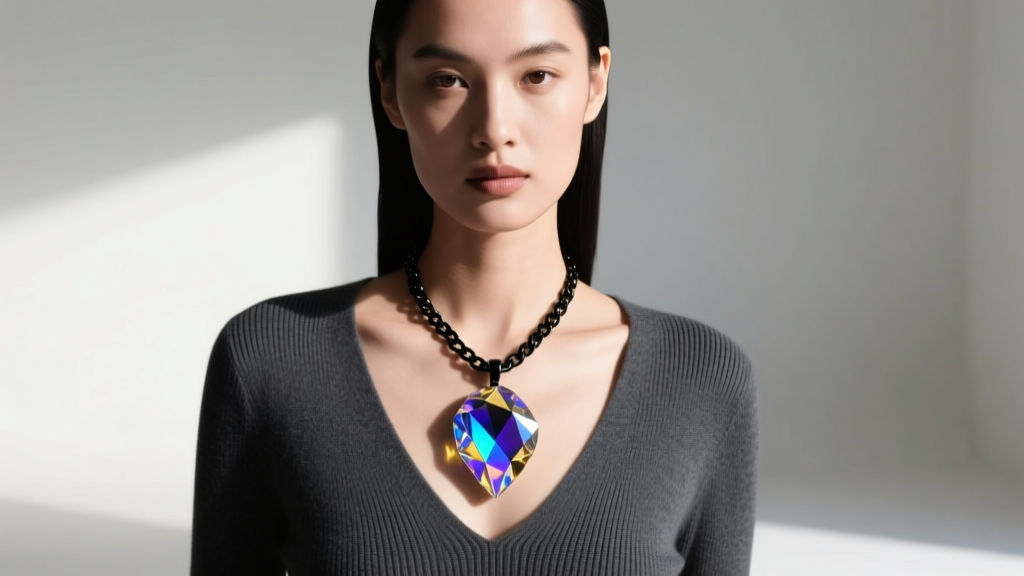
Styling a bismuth necklace requires an understanding of color theory and garment architecture. Because the pendant itself is a complex, multi-colored focal point, the surrounding clothing must act as a negative space canvas.
The Color Canvas
Bismuth crystals typically exhibit a dominant hue—often magenta, cyan, or gold—despite their rainbow shifts. To make the pendant pop, utilize chromatic isolation:
- For Magenta-Dominant Crystals: Pair with deep charcoal, slate gray, or forest green garments. Avoid bright reds or pinks, which will wash out the crystal's delicate pinkish hues.
- For Cyan/Blue-Dominant Crystals: Pair with rich espresso browns, rust oranges, or stark matte black. The complementary contrast of warm earth tones against cool structural blues creates a striking visual tension.
- For Gold/Brass-Dominant Crystals: Pair with navy blue, plum, or olive drab. This mimics the natural oxidation colors of the metal and grounds the piece in a utilitarian aesthetic.
Neckline Architecture
The geometric, square-spiral nature of hopper crystals demands specific necklines to maintain visual harmony. According to trend analyses featured in Smithsonian's National Museum of Natural History exhibitions on modern mineralogy in art, the context of a mineral's display alters its perceived geometry.
- Deep V-Necks and Scoops: Ideal for large, statement bismuth pendants (2 inches or larger). The V-shape mirrors the inverted, stair-step geometry of the crystal, drawing the eye directly to the focal point.
- High Mock Necks and Turtlenecks: Best suited for smaller, delicate bismuth chips or geometric slices worn on a 24-to-30-inch rope chain. The pendant should rest over the sternum, creating a stark contrast against the solid block of fabric.
- Asymmetrical and Cut-Out Necklines: A hallmark of 2026 avant-garde fashion. Pairing an asymmetrical top with a perfectly symmetrical, square bismuth hopper crystal creates a deliberate, high-fashion dissonance that is highly sought after in editorial styling.
Market Pricing and Artisan Sourcing in 2026
Because bismuth is relatively abundant and inexpensive as a raw material (costing roughly $20 to $40 per kilogram in bulk), the value of a bismuth necklace lies entirely in the artisan labor of crystal growing, selection, and sealing. Growing high-quality, large-scale hopper crystals requires precise temperature control, cooling the molten metal at a rate of just a few degrees per minute to allow the characteristic stair-step formations to develop without collapsing into chaotic masses.
When shopping for a bismuth necklace, expect the following pricing tiers:
- $25 - $45 (Entry Level): Small, tumbled, or irregular bismuth chips, often unsealed or poorly sealed, wrapped in basic copper wire. Suitable for occasional wear but prone to rapid degradation.
- $60 - $120 (Artisan Standard): The sweet spot for quality. Features distinct, well-formed hopper crystals (1 to 2 inches), professionally sealed in two-part epoxy, and suspended on high-quality oxidized silver or niobium chains.
- $150 - $300+ (Master Lapidary/Designer): Museum-grade, massive hopper crystals with flawless geometry and deep, uniform iridescence. These pieces often feature custom-fabricated bezels or integrated mixed-media elements (like lab-grown diamonds or titanium hardware) and are sealed with aerospace-grade polymers.
Ultimately, the bismuth necklace in 2026 is more than just an accessory; it is a wearable piece of applied chemistry and geometric art. By respecting its fragility, selecting the correct chain hardware, and styling it against complementary negative space, you can harness the full, iridescent potential of this extraordinary metal.


