How to Clean, Restore, and Style a Juicy Couture Charm Necklace
Learn how to clean, repair, and style a vintage Juicy Couture charm necklace. Expert tips on rhinestone care, brass polishing, and Y2K layering.

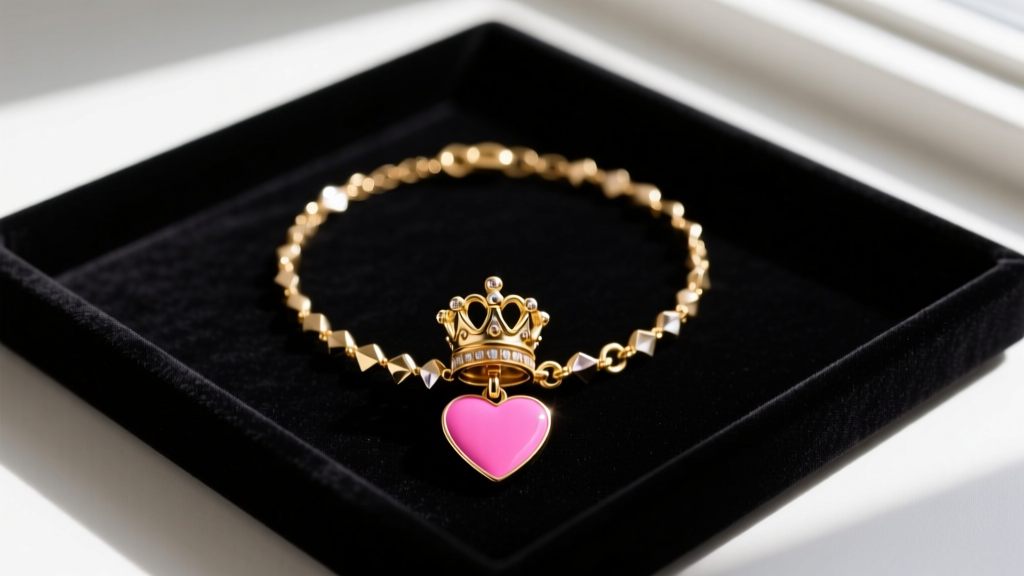
The Y2K fashion revival has firmly cemented early-2000s accessories as highly coveted collector's items, and few pieces capture that era's unapologetic glamour quite like a vintage Juicy Couture charm necklace. Whether you have unearthed a piece from your own archives or scored a tarnished lot on a resale platform, restoring these iconic necklaces requires a delicate touch. The materials used in 2000s fashion jewelry are notoriously fragile, and improper cleaning can strip plating or destroy rhinestone foil-backing in seconds.
In this comprehensive guide, we will break down the exact metallurgy of these pieces, provide a step-by-step restoration protocol, and explore how to integrate a Juicy Couture charm necklace into a modern 2026 wardrobe without looking like you are wearing a costume.
The Anatomy of a Y2K Juicy Couture Charm Necklace
Before applying any cleaning solution, you must understand what you are working with. Authentic Juicy Couture necklaces from the brand's golden era (roughly 2002 to 2009) were primarily constructed using a few specific materials:
- Base Metals: The chains and charm backings were typically cast from brass or a zinc-alloy pot metal. Brass provides a smooth surface for plating, while zinc alloy was used for chunkier, three-dimensional charms like the iconic crowns, dice, and high heels.
- Plating: Most pieces feature a 'flash' gold or silver plating. This is an incredibly thin micron-layer of gold applied over the base metal. It is highly susceptible to friction wear and chemical stripping.
- Rhinestones and Enamel: The brand frequently used glass rhinestones with delicate metallic foil-backing to create sparkle, alongside acrylic stones for larger, colored elements. Cold enamel (a type of hardened resin) was used for the signature pink, black, and red color fills.
According to the Victoria and Albert Museum's conservation guidelines, the greatest threat to vintage costume jewelry is moisture trapped beneath stone settings, which causes the base metal to oxidize and push the stones out of their prongs.
Step-by-Step Restoration and Cleaning Guide
Never use ultrasonic cleaners, commercial silver dips, or baking soda paste on a Juicy Couture charm necklace. These methods will instantly cloud glass rhinestones and strip the gold plating. Follow this safe, conservation-grade cleaning method instead.
Step 1: The Dry Brush Method
Use a clean, ultra-soft baby toothbrush or a dedicated cosmetic brush to gently sweep away dry particulate matter, lotion buildup, and dust from the crevices of the charms and chain links. Do not apply pressure to the prongs holding the rhinestones.
Step 2: Targeted Spot Cleaning
Mix a single drop of pH-neutral dish soap (like Dawn) into a bowl of distilled water. Distilled water is crucial, as tap water contains minerals that can leave hard water spots on the plating. Dip a cotton swab into the solution, squeeze out the excess moisture until it is merely damp, and gently roll it over the enamel and metal surfaces. Avoid touching the rhinestones entirely.
Step 3: Drying and Polishing
Immediately dry the necklace with a lint-free microfiber cloth. To restore shine to the gold plating without abrasion, use a clean, dry jeweler's polishing cloth that is untreated with any chemical compounds.
Material-Specific Cleaning Matrix
Use the table below as a quick-reference safety guide when dealing with different components of your vintage fashion jewelry.
| Material | Safe Cleaners | Cleaners to Avoid | Drying Method |
|---|---|---|---|
| Gold-Plated Brass | Damp microfiber, mild soap | Jewelry dips, baking soda, alcohol | Air dry, then buff |
| Foil-Back Rhinestone | Dry soft brush only | Water, ultrasonic, steam | N/A (Keep completely dry) |
| Acrylic / Resin | Damp cloth, mild soap | Acetone, alcohol, ammonia | Pat dry with microfiber |
| Cold Enamel | Damp cotton swab | Abrasive pastes, hard brushes | Pat dry immediately |
Repairing Loose Stones and Hardware
It is incredibly common for the rhinestones on a vintage Juicy Couture charm necklace to become loose or fall out entirely due to the degradation of the original factory adhesive. If you have loose stones, do not use super glue (cyanoacrylate), as it emits fumes that will permanently fog the glass and leave a white, crusty residue on the gold plating.
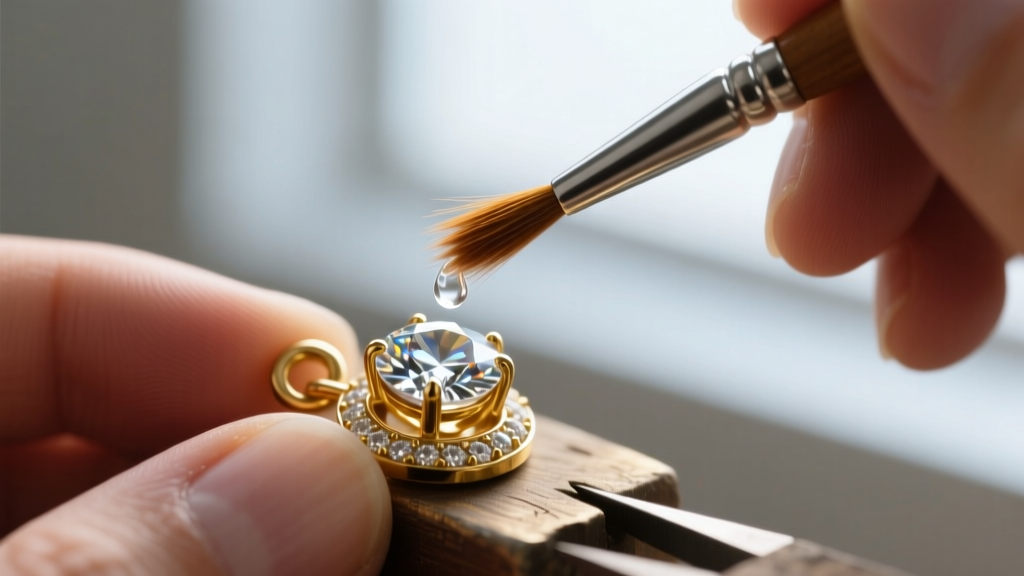
Instead, jewelry conservators and professional bench jewelers rely on specialized flexible adhesives. The Fire Mountain Gems adhesive guide recommends using GS Hypo Cement or Aleene's Jewel-It for setting rhinestones in costume jewelry. These adhesives dry clear, remain slightly flexible to absorb impact, and feature precision needle-tip applicators that allow you to place a micro-drop of glue directly into the bezel without overflowing onto the metal. Simply use a pair of silicone-tipped tweezers to press the stone into the bezel, and let it cure flat for 24 hours.
How to Style Your Juicy Couture Charm Necklace Today
Styling Y2K maximalist pieces in 2026 requires a strategic approach to avoid looking dated. The modern method relies on high-contrast layering and mixing metallurgical grades.
The High-Low Layering Technique
To elevate your Juicy Couture charm necklace, pair it with modern, solid fine jewelry. If your vintage piece is a 16-inch gold-plated choker featuring a crown and heart charm, layer it beneath a 20-inch solid 14k yellow gold paperclip chain or a heavy sterling silver rope chain. The juxtaposition of the playful, nostalgic charm against a severe, modern chain creates a sophisticated tension that anchors the piece in contemporary fashion.

Occasion and Neckline Pairing
Because these necklaces are visually heavy and highly reflective, they demand the right canvas. Avoid wearing them over busy patterns or heavy knitwear, which can snag the delicate jump rings. Instead, style the necklace over a sleek, solid-colored silk slip dress, a structured blazer with a deep V-neck, or a simple ribbed tank top. The smooth fabric allows the charms to lay flat and catch the light without competition.
Sourcing Replacement Parts and Hardware Upgrades
The weakest point of any early-2000s fashion necklace is the clasp. Juicy Couture frequently used small, base-metal spring-ring clasps that are prone to snapping or losing their tension over time. Upgrading the hardware is a simple way to make the necklace secure and wearable for daily use.
Visit a jewelry supply store or an online retailer like Rio Grande to purchase a high-quality 9mm or 11mm stainless steel or solid gold-filled lobster clasp. To attach it, you will need to cut off the old clasp using flush cutters and attach the new one using a 5mm, 20-gauge jump ring. Always use two pairs of flat-nose pliers to open the jump ring by twisting it laterally (side-to-side) rather than pulling it apart, which will warp the ring and weaken the metal. For a seamless look, ensure the jump ring gauge matches the thickness of the chain links, typically around 1.5mm to 2mm for standard cable chains.
Preserving Fashion History
A well-maintained Juicy Couture charm necklace is more than just an accessory; it is a tangible artifact of early-2000s pop culture and fashion history. By understanding the specific vulnerabilities of gold-plated brass and foil-backed rhinestones, and by utilizing conservation-safe cleaning methods, you can ensure that your vintage pieces remain vibrant, secure, and ready to be styled for decades to come. For further reading on the preservation of mixed-media accessories, consult the GIA Gem Care guidelines for best practices on handling delicate gemstone simulants and plated metals.


