The Beginner's Guide to Choosing a Coconut Shell Necklace
Discover how to choose, style, and care for a coconut shell necklace. Learn about material grades, hardware, and artisan crafting techniques.

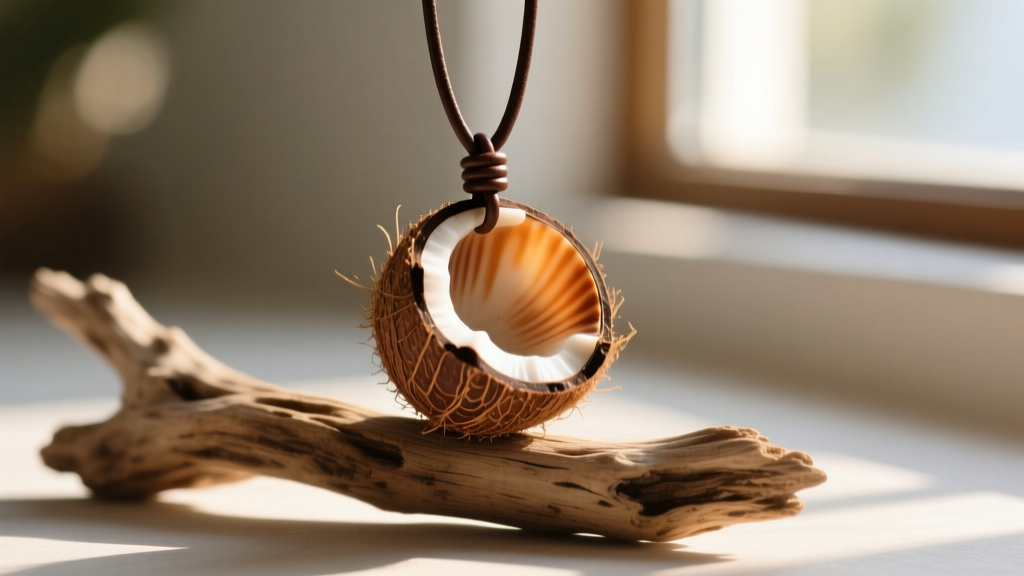
Organic and botanical jewelry has experienced a massive resurgence, driven by a desire for sustainable, earth-friendly accessories that tell a story. Among the most versatile and enduring of these materials is the coconut shell. However, not every coconut shell necklace is created equal. The market is flooded with mass-produced, poorly cured tourist trinkets that crack, fade, or tarnish within weeks. For the conscious consumer or the jewelry enthusiast looking to integrate natural textures into their wardrobe, understanding the material science, craftsmanship, and styling nuances of coconut shell jewelry is essential.
This beginner-friendly explainer will walk you through the exact metrics of quality, how to identify superior hardware, and the specific care protocols required to keep your organic pendant looking pristine for years to come.
The Botanical Anatomy: Shell vs. Wood
The first mistake many beginners make is confusing coconut wood with coconut shell. In botanical jewelry, the endocarp (the hard, inner shell of the coconut) is the premier material. According to the Gemological Institute of America (GIA), organic materials used in jewelry must possess sufficient hardness and durability to withstand daily wear. The coconut endocarp boasts a Mohs hardness of roughly 2.5 to 3.0, making it comparable to soft amber or coral. It is incredibly dense, naturally water-resistant, and features a rich, dark brown to ebony color palette with striking, marbled grain patterns.
Coconut wood, harvested from the trunk of the Cocos nucifera palm, is highly porous, fibrous, and much lighter in color. While beautiful in home decor, it lacks the structural integrity for fine pendants and is prone to splintering and moisture absorption. When shopping, always look for the deep, glassy luster and high density characteristic of the endocarp shell.
The Curing and Finishing Process
A high-quality coconut shell necklace begins long before the carving phase. Raw coconut shells contain natural sugars, fats, and residual moisture. If a manufacturer skips the curing process to save time, the resulting pendant will eventually attract insects, develop internal mold, or warp and crack as it acclimates to ambient humidity.
Proper Curing Protocols
- Boiling: The raw shells are boiled for several hours to extract sugars and natural oils, sterilizing the material.
- Kiln Drying: The shells are slowly kiln-dried to achieve an internal moisture content of exactly 8% to 10%. This specific range prevents the cellular structure from becoming brittle while eliminating the risk of fungal growth.
- Resting: Artisans allow the dried shells to rest in climate-controlled environments for up to three months before carving, ensuring the material has fully stabilized.
The Art of the Polish
Once carved, the shell must be sanded progressively through multiple grits, often finishing at 2000 or 3000 grit, to achieve a glass-like surface. The final finish is where mass-market and artisan pieces diverge sharply. Cheap pendants are sprayed with polyurethane or synthetic lacquers, giving them a thick, plastic-like shine that eventually peels. Artisan jewelers use natural carnauba wax or beeswax, buffed at high speeds. This creates a breathable, deeply luminous finish that enhances the natural grain and can be easily reapplied at home.
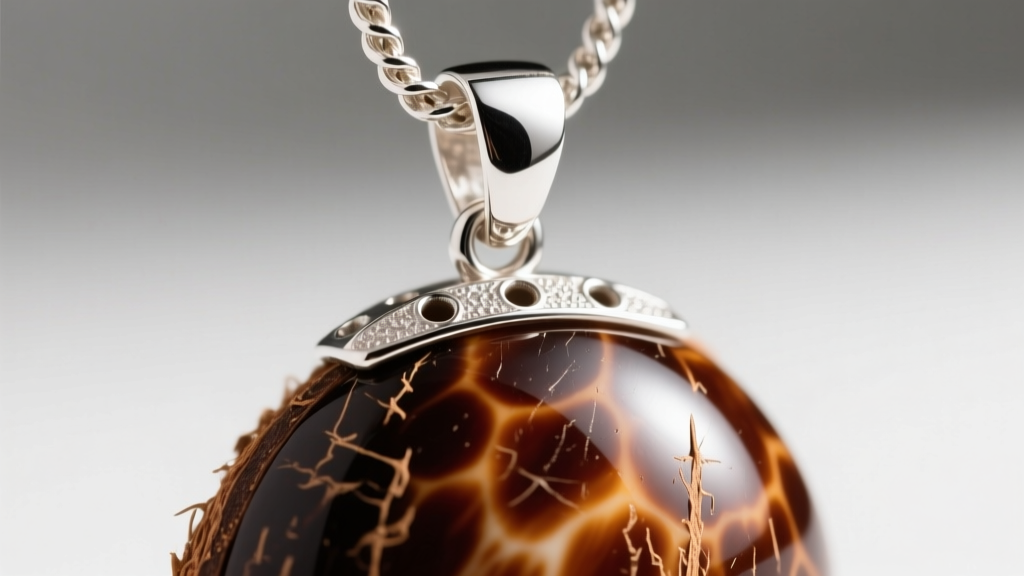
Hardware and Findings: The Weak Link
The most common failure point in any botanical necklace is not the organic material itself, but the metal hardware used to attach it to the chain or cord. Coconut shells contain trace organic acids that, when combined with human sweat, can rapidly corrode base metals like brass, copper, or nickel alloys. This corrosion not only ruins the hardware but can stain the porous edges of the shell and cause severe skin discoloration.
What to look for:
- Bail Material: Insist on 925 sterling silver, 14k gold-filled, or solid gold bails. These metals resist corrosion and complement the warm, earthy tones of the shell.
- Attachment Method: Avoid glue-on bails. The natural oils in the shell can degrade cyanoacrylate (super glue) over time. Look for mechanical tension bails or pendants that feature a cleanly drilled, reinforced hole for a jump ring.
- Cord vs. Chain: If the pendant comes on a cord, ensure it is waxed cotton, braided hemp, or high-grade leather. Unwaxed cotton will absorb sweat and rot, while cheap synthetic cords can fray and snap under the weight of a dense shell pendant.
Pricing Tiers: Identifying True Value
Understanding the pricing landscape will help you avoid overpaying for factory-stamped items while recognizing the fair value of handcrafted pieces. Ethical sourcing is also a major factor; organizations like the Fair Trade Federation emphasize that agricultural byproducts like coconut shells should be harvested and crafted under fair labor conditions, which inherently raises the baseline cost of artisan goods.
| Tier | Price Range | Characteristics | Hardware | Best For |
|---|---|---|---|---|
| Mass-Market | $5 - $15 | Machine-stamped, polyurethane coat, rough edges, uncured | Base metal, alloy | Beach vacations, fast fashion |
| Artisan Crafted | $35 - $85 | Hand-carved, 2000-grit sanded, carnauba wax finish, fully cured | 925 Silver, Brass | Everyday wear, conscious gifting |
| Fine Integration | $120 - $250+ | Shell inlay in metal, gold accents, precision lapidary work | 14k Gold-filled, Solid Gold | Elevated casual, office wear |
Styling Framework: Integrating Organic Textures
A coconut shell necklace introduces a matte or satin organic texture that contrasts beautifully with traditional metals and gemstones. The key to styling botanical jewelry is balancing its rustic origins with modern, tailored silhouettes.
Neckline Pairings
- The V-Neck: A medium-sized, teardrop-shaped coconut shell pendant on a 20-inch sterling silver chain perfectly mirrors the geometry of a V-neck, drawing the eye downward and elongating the neck.
- The Scoop Neck: Opt for a wider, horizontally carved shell pendant or a layered choker setup. The horizontal lines balance the curve of the scoop neckline.
- The Button-Down: For a smart-casual office look, wear a fine-integration pendant (where the shell is inlaid into a gold or silver bezel) over a crisp, unbuttoned collar. This elevates the shell from 'beachwear' to 'bespoke'.
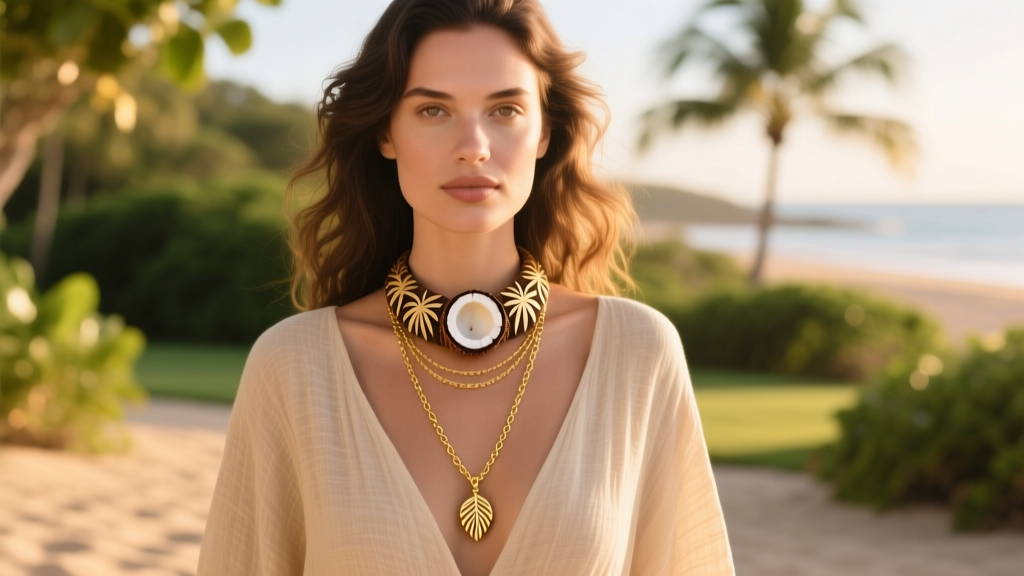
The Art of Layering
Layering a coconut shell necklace requires careful consideration of weight and texture. Because the shell is visually heavy and dark, pair it with lighter, more delicate metallic chains. A popular 2026 layering technique involves a 16-inch waxed cotton cord with a small, minimalist shell bead choker, layered beneath a 22-inch 14k gold-filled chain featuring a single, small freshwater pearl. The contrast between the dark, earthy shell, the warm gold, and the luminous pearl creates a sophisticated, multi-dimensional look.
Crucial Care and Maintenance
While the coconut endocarp is naturally durable, it is still an organic material that reacts to its environment. Improper care is the leading cause of premature failure in botanical jewelry.
Environmental Hazards
- Humidity Extremes: Prolonged exposure to very dry environments (below 30% relative humidity, such as in airplane cabins or during winter with indoor heating) can cause the shell to lose its residual moisture and micro-crack. Conversely, leaving it in a damp, unventilated bathroom can encourage surface mold.
- UV Degradation: While the shell is dark, prolonged, direct UV exposure over several years can break down the natural lignins, causing the shell to turn a hazy gray and become brittle.
- Chemical Exposure: Never wear your coconut shell necklace in chlorinated pools or hot tubs. Chlorine will strip the carnauba wax finish and bleach the organic material.
The Cleaning and Re-waxing Protocol
Never use ultrasonic cleaners, steamers, or commercial jewelry dips on organic materials. To clean your pendant, simply wipe it with a dry, soft microfiber cloth to remove skin oils and dust. If the pendant looks dull or feels dry to the touch, it is time to re-wax it.
Pro-Tip: Apply a microscopic drop of food-grade mineral oil or a specialized botanical jewelry wax to a soft cloth. Rub it into the shell in circular motions, let it sit for 10 minutes to penetrate the micro-pores, and then buff it vigorously with a clean cloth. This restores the deep, rich color and provides a protective moisture barrier.
By understanding the material science, demanding quality hardware, and following a strict care regimen, your coconut shell necklace will transcend fleeting trends, serving as a timeless, sustainable staple in your jewelry collection for decades.


