Complete Aquamarine Tennis Necklace Buying Guide 2026
Discover what to look for in an aquamarine tennis necklace. Our expert buying guide covers gemstone grading, metal settings, and pricing tiers.


The aquamarine tennis necklace has solidified its position as a cornerstone of fine jewelry wardrobes, offering a striking alternative to the traditional diamond tennis necklace. As we navigate the 2026 fine jewelry market, buyers are increasingly drawn to the serene, oceanic hues of beryl. However, purchasing a continuous line of gemstones requires a meticulous understanding of gemology, structural engineering, and market valuation. Unlike a simple pendant, a tennis necklace is a complex mechanical assembly where the failure of a single link or prong can result in catastrophic loss.
This comprehensive buying guide cuts through the marketing fluff to provide actionable, expert-level insights into selecting a high-quality aquamarine tennis necklace. From deciphering beryl color grading to evaluating the micro-mechanics of luxury clasps, here is exactly what you need to know before making an investment.
Decoding Aquamarine Quality: Color, Clarity, and Cut
Aquamarine belongs to the beryl family (the same family as emerald) and ranks 7.5 to 8 on the Mohs hardness scale. When evaluating the stones in a tennis necklace, you must look beyond the basic "blue" descriptor and understand the nuances of beryl grading.
Color Grading: The Santa Maria Standard
Color is the primary value driver for aquamarine. The most prized hue is a moderately strong, highly saturated medium-dark blue. In the trade, the finest color is often referred to as "Santa Maria" (named after the original Brazilian mine) or "Santa Maria Africana" (from Mozambique). Standard commercial aquamarine often leans pale or exhibits a greenish-yellow secondary hue. When buying a tennis necklace, ensure the color saturation is consistent across all 40 to 60 stones. A necklace with mismatched color zoning will look disjointed and significantly reduce the piece's overall value.
Clarity: The Type I Expectation
According to the Gemological Institute of America (GIA), aquamarine is classified as a Type I clarity gemstone. This means that high-quality stones should be completely "eye-clean." If you can easily spot black carbon inclusions, heavy silk, or liquid feathers running through the stones in a tennis necklace, you are likely looking at lower-grade material, or worse, a simulant like blue topaz. Reject any piece where the inclusions compromise the structural integrity of the gemstone, as the pressure from prong setting can cause heavily included beryl to fracture.
Cut and Articulation: The Secret to the Drape
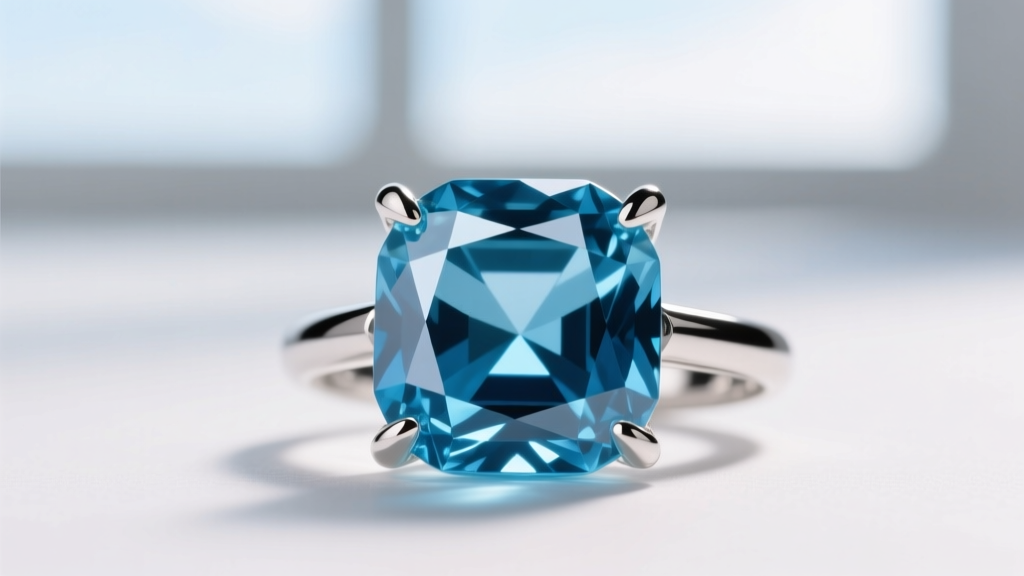
The cut of the individual stones dictates how the necklace drapes against the clavicle. While round brilliant cuts offer maximum scintillation, emerald and oval cuts are currently dominating the 2026 market for their elegant, elongated geometry. More importantly, pay attention to the articulation of the settings. A high-end aquamarine tennis necklace features micro-hinged links or flexible bezel connections that allow the piece to move like liquid. Cheaply manufactured necklaces use rigid soldered links, which causes the necklace to kink, torque, and eventually snap under its own weight.
Metal Settings and Clasp Security Mechanics
The metal framework of a tennis necklace is just as critical as the gemstones it holds. You are essentially buying a heavy, wearable chain that must support significant carat weight without warping.
- 18k White Gold: The most popular choice for enhancing the cool blue tones of aquamarine. However, white gold requires rhodium plating. Over time, the friction against the neck will wear this plating away, revealing the faintly yellow alloy beneath. Plan for a re-rhodium service every 2 to 3 years.
- Platinum: Denser, heavier, and naturally white. Platinum is the superior choice for high-carat tennis necklaces because its prongs are less likely to suffer from metal fatigue and snapping compared to gold alloys. It requires no replating, though it will develop a patina over time.
- 14k/18k Yellow Gold: Creates a striking, warm contrast against the cool blue stones. This is a highly sought-after vintage and contemporary aesthetic that requires zero plating maintenance.
The Clasp: Your First Line of Defense
Never purchase a high-value tennis necklace secured by a standard lobster clasp or spring ring. The mechanical failure rate for these clasps under the continuous tension of a 20-carat necklace is unacceptably high. You must demand a tongue box clasp with double figure-8 safety catches. The tongue mechanism locks securely into the box, while the dual figure-8 wire catches act as a redundant safety system. If the primary tongue mechanism fails or is accidentally depressed, the safety catches will prevent the necklace from sliding off your neck.
Pricing Tiers & Market Value Matrix
Pricing an aquamarine tennis necklace depends heavily on Total Carat Weight (TCW), color saturation, and the precious metal used. Below is a realistic market matrix for 2026, assuming eye-clean clarity and excellent cut proportions.
| Total Carat Weight (TCW) | Color Grade | Metal Setting | Estimated Price Range (USD) |
|---|---|---|---|
| 10 - 15 Carats | Light / Pastel Blue | 14k White Gold | $2,500 - $4,500 |
| 18 - 25 Carats | Medium / Espirito Santo | 18k White Gold | $6,000 - $11,000 |
| 25 - 35 Carats | Santa Maria (Deep Blue) | 18k White Gold | $12,000 - $18,000 |
| 35 - 50+ Carats | Santa Maria Africana | Platinum | $22,000 - $45,000+ |
"When evaluating high-carat tennis necklaces, buyers must factor in the premium placed on 'matched suites.' Sourcing 50 identical, deeply saturated Santa Maria aquamarines is exponentially more difficult than sourcing a single 10-carat center stone, which is why the price-per-carat jumps significantly past the 25-carat TCW mark."
Sizing, Drape, and Neckline Pairing
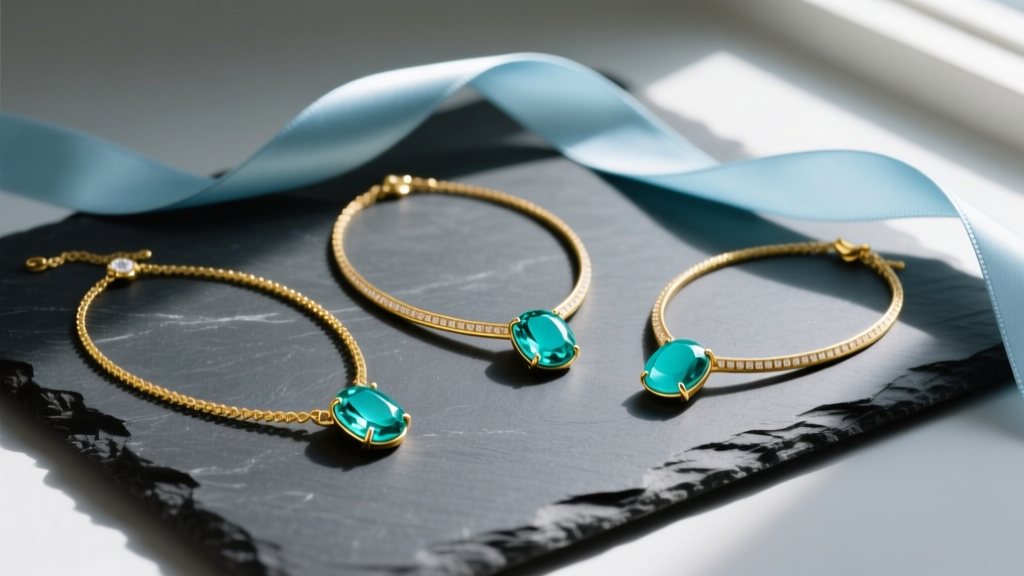
The length of the necklace drastically alters its visual weight and the occasions for which it is appropriate. Tennis necklaces are generally measured by the inch, but the total carat weight must scale proportionally with the length to maintain visual density.
16 to 16.5 Inches (Choker/Collar): Sits tightly against the base of the neck. This length requires smaller individual stones (e.g., 3mm to 4mm) to prevent the necklace from buckling or standing away from the skin. Ideal for strapless gowns and deep V-necks.
17 to 18 Inches (Princess): The most versatile and popular length, resting perfectly on the collarbone. This length accommodates larger stones (5mm to 7mm) and provides a luxurious drape that pairs beautifully with scoop necklines, blazers, and evening wear.
20+ Inches (Matinee): A dramatic, high-fashion statement piece. Because of the increased circumference, a 20-inch necklace requires a massive TCW to avoid looking sparse. This length is best reserved for red-carpet events and should be paired with minimalist clothing to let the beryl command attention.
Care, Maintenance, and Critical Failure Modes
Aquamarine is relatively durable, but a tennis necklace introduces complex maintenance variables. The American Gem Trade Association (AGTA) notes that while heat treatment for aquamarine is stable and permanent, the physical structure of the stone still requires careful handling.
The Ultrasonic Cleaner Danger
Never put an aquamarine tennis necklace in an ultrasonic cleaner. While the beryl itself might survive, ultrasonic vibrations can loosen the tension in the prongs over time. Furthermore, if any of the stones possess undetected liquid inclusions or internal stress fractures, the high-frequency vibrations will cause the gemstone to shatter inside its setting.
Prong Snagging and Metal Fatigue
Tennis necklaces are prone to snagging on knitwear, lace, and even hair. When a prong catches on a fabric thread, it pulls upward, lifting the metal away from the gemstone's girdle. Over time, this repetitive micro-lifting leads to metal fatigue and eventual stone loss. Inspect your prongs every six months using a 10x jeweler's loupe. If you notice any prongs that are flattened, lifted, or thinning, take the piece to a master jeweler for re-tipping immediately.
Clean your necklace at home using only a soft-bristled baby toothbrush, warm water, and a drop of mild, ammonia-free dish soap. Rinse thoroughly over a plugged sink, and dry with a lint-free microfiber cloth. By adhering to these strict buying and maintenance parameters, your aquamarine tennis necklace will remain a secure, breathtaking heirloom for decades to come.


