Fix a Flipping Necklace With Circle Pendant: Expert Troubleshooting
Is your necklace with circle pendant constantly flipping or tangling? Discover expert troubleshooting tips on bail sizing, chain weight, and clasp fixes.

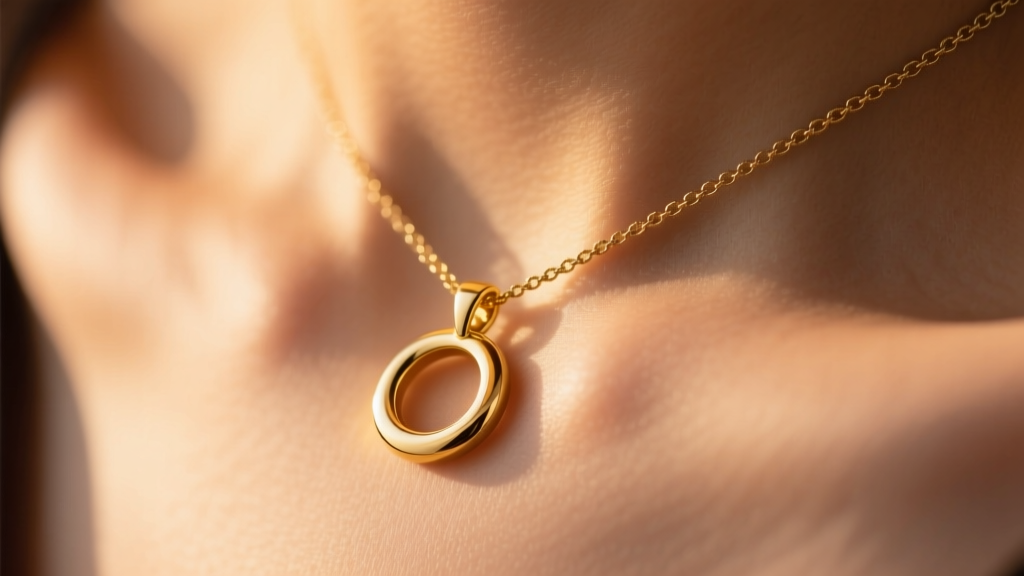
There are few things more frustrating in daily jewelry wear than reaching down to adjust your necklace with circle pendant, only to find the back of it staring awkwardly at you. The 'flipping pendant' phenomenon is a universal annoyance, but it is not a curse—it is a matter of physics, weight distribution, and hardware sizing. When a perfectly round pendant refuses to lay flat against the sternum, it is almost always due to a mismatch between the chain's drape, the bail's inner diameter, and the pendant's center of gravity.
In this comprehensive troubleshooting guide, we will diagnose exactly why your circle pendant misbehaves and provide precise, actionable fixes involving chain gauges, bail measurements, and metal alloys to ensure your jewelry drapes flawlessly every time.
The Physics of the Flip: Why Circle Pendants Misbehave
Unlike teardrop, cross, or asymmetrical pendants, a circle pendant has a completely uniform mass distribution. Its center of gravity sits exactly in the middle of the geometric shape. While this makes for a beautifully balanced design, it also means the pendant lacks a natural 'weighted bottom' to pull it upright when disturbed.
When you wear a necklace, the chain naturally forms a V-shape or U-shape around your neck, creating a 'valley' at the base of your throat. If the hardware connecting the pendant to the chain (the bail or jump ring) is too tight, the pendant becomes wedged in this valley. As you move, the chain shifts across your skin, but the pendant remains stuck. Eventually, the tension forces the pendant to rotate 180 degrees to release the friction, resulting in the dreaded flip.
Troubleshooting Table: Diagnosing Your Pendant's Specific Issue
To fix the problem, you must first identify the exact mechanical failure. Use the diagnostic table below to pinpoint the root cause of your flipping necklace with circle pendant.
| Symptom | Root Cause | The Fix | Est. Jeweler Cost |
|---|---|---|---|
| Pendant flips immediately upon putting it on | Bail Inner Diameter (ID) is too small for the chain width | Replace bail or switch to a thinner chain (e.g., 0.8mm) | $15 - $35 |
| Pendant flips only when walking or moving | Chain is too heavy/stiff, preventing fluid drape | Downsize chain gauge; aim for 1/4th the pendant's weight | $30 - $60 |
| Pendant spins but won't stay centered | Chain is too long or necklace lacks a centering bead | Shorten chain to 16-18 inches or add a silicone necklace spacer | $10 - $25 |
| Pendant flips and tangles in the chain | Jump ring is split and catching on chain links | Solder the jump ring shut or replace with a seamless ring | $20 - $40 |
Chain-to-Pendant Weight Ratios (The Golden Rule)
The most common reason a necklace with circle pendant fails to lay flat is an improper weight ratio. According to jewelry design principles outlined by the Jewelers of America, a chain should ideally weigh between 20% and 33% of the total weight of the pendant it supports.
If you have a substantial 14k gold circle pendant weighing 6 grams, pairing it with a thick 5-gram rope chain will result in a stiff, unyielding drape. The heavy chain will pull the bail upward, forcing the circle pendant to pivot backward. Conversely, a 1.5-gram cable chain will allow the 6-gram pendant to act as an anchor, pulling the chain into a smooth, fluid curve that naturally keeps the front of the pendant facing outward.
Matching Chain Types to Circle Pendants
Beyond weight, the physical texture of the chain impacts friction. Here is how standard chain types interact with circle pendants:
- Box Chains (0.8mm - 1.2mm): Excellent for modern, geometric circle pendants. The flat surfaces of the links provide a smooth track for the bail to glide over, minimizing flipping.
- Cable Chains (0.9mm - 1.5mm): The classic choice. The uniform oval links offer high fluidity, allowing the pendant to self-correct if it begins to tilt.
- Rope Chains (1.5mm+): Generally discouraged for lightweight circle pendants. The twisted, textured surface creates high micro-friction, which can grab the bail and cause the pendant to stick and flip.
Bail and Jump Ring Sizing: The Hidden Culprits
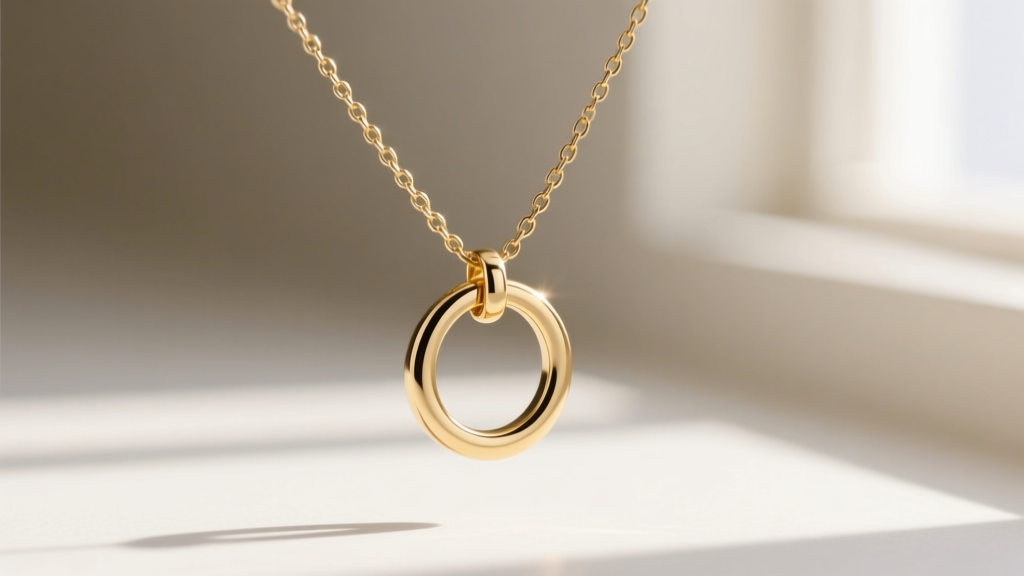
If your weight ratios are correct but the flipping persists, the issue lies in the bail—the loop at the top of the pendant. For a pendant to self-correct and stay facing forward, the bail must have enough 'play' to slide freely along the chain's curve.
The Gemological Institute of America (GIA) notes that metal-on-metal friction is a primary cause of jewelry wear and tear. If your chain is 1.2mm thick, the inner diameter (ID) of your pendant's bail must be at least 3.0mm to 3.5mm. If the ID is only 1.5mm, the chain will wedge tightly inside the bail. When the chain moves, it acts as a lever, forcefully twisting the pendant backward.
The Jump Ring Gauge Factor
Many circle pendants do not have integrated bails; instead, they hang from a simple jump ring. The gauge (thickness) of this jump ring matters immensely. An 18-gauge (1.0mm) jump ring is sturdy but may be too thick to slide smoothly over delicate chains, causing the same lever-effect mentioned above. Upgrading to a 20-gauge (0.8mm) seamless jump ring reduces the contact surface area, allowing the pendant to swing freely and settle face-forward.
Tarnish and Wear Troubleshooting for Circle Pendants
Because circle pendants lay perfectly flat against the sternum, they experience maximum skin contact and friction. This leads to specific wear patterns that can alter the pendant's weight and balance over time, indirectly contributing to flipping issues.
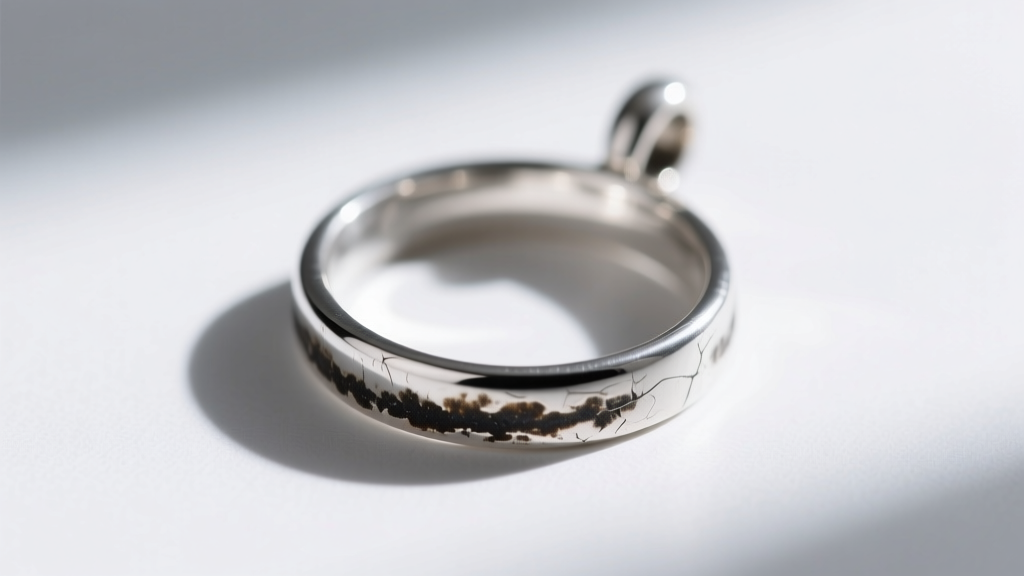
- Sterling Silver (.925) Oxidation: The natural oils and acids from your skin, combined with friction, accelerate tarnish on the back of silver circle pendants. This buildup creates a microscopically rough surface that grips the skin and clothing, anchoring the pendant in place while the chain shifts, causing a flip. Regular polishing with a microfiber cloth restores the smooth glide.
- Gold Vermeil Wear: If your circle pendant is gold vermeil (a thick layer of gold over sterling silver), the high-friction bottom edge of the circle will wear down to the silver core faster than the top. This not only ruins the aesthetic but can slightly alter the mass distribution. For daily-wear circle pendants that rest on the chest, solid 14k gold or rhodium-plated metals are highly recommended for longevity.
'When a client brings in a flipping pendant, I never just bend the bail. I measure the chain's caliper width and the bail's inner diameter. If the clearance is less than 1.5 millimeters, I replace the bail. A pendant needs room to breathe and move to find its true center of gravity.' — Master Bench Jeweler
Final Checklist for a Perfectly Draping Circle Pendant
Before purchasing or repairing your necklace with circle pendant, run it through this expert checklist to guarantee a flawless, face-forward drape:
- Verify the Weight Ratio: Ensure the chain weighs no more than 30% of the pendant's total mass.
- Check the Clearance: The bail or jump ring inner diameter must be at least 2.5 times wider than the chain's thickness.
- Assess the Chain Length: A 16-inch choker length forces a tighter V-shape, increasing the valley trap. An 18-inch princess length offers a gentler curve, allowing the circle pendant to rest naturally without wedging.
- Inspect the Hardware: Ensure all jump rings are soldered shut or perfectly flush to prevent micro-snags that throw off the pendant's balance.
By addressing the mechanical geometry of your jewelry, you can permanently solve the flipping issue and enjoy the clean, elegant lines that only a perfectly draped circle pendant can provide.


