How to Choose the Right Necklace for Halter Top Necklines
Learn how to choose and style the perfect necklace for halter top outfits. Discover ideal lengths, materials, and layering techniques for every occasion.

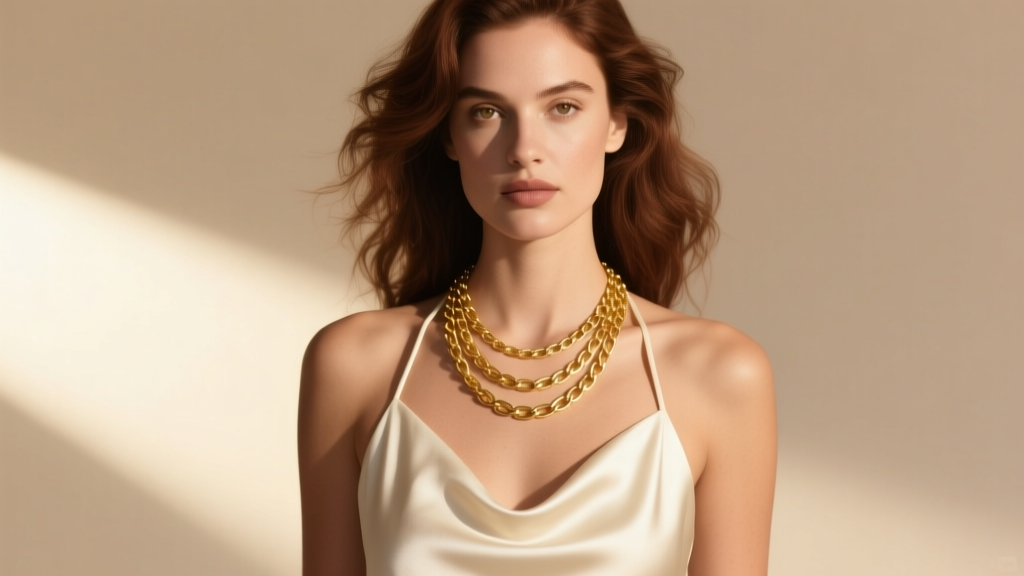
The Geometry of Halter Necklines: Why Standard Rules Fail
Halter tops are inherently architectural. By drawing the eye upward and framing the shoulders, the neckline itself acts as a bold statement piece. When searching for the ideal necklace for halter top ensembles, the standard jewelry rules often fall flat. A traditional 16-inch choker, for example, will compete directly with the halter strap, creating visual clutter and physical discomfort. Conversely, a necklace that is too long can get lost in the drape of a plunging halter or swing awkwardly against the torso. To master this styling challenge, we must treat the halter strap as the primary focal point and use jewelry to complement, rather than compete with, its geometric lines.
The secret lies in understanding the negative space created by the garment. Whether you are wearing a high-neck crochet halter or a backless silk evening top, the necklace must navigate the exposed skin without disrupting the garment's structural integrity. This guide breaks down the exact measurements, material grades, and clasp mechanics required to elevate your halter outfits in 2026 and beyond.
Step-by-Step: Selecting the Ideal Length and Drop
The most critical factor in styling necklaces with halters is the drop length. According to Blue Nile's comprehensive necklace length guide, the placement of a pendant or chain relative to the collarbone dictates the entire silhouette. For halters, you generally want to avoid the 14-inch collar and 16-inch choker lengths entirely, as these will sit directly on top of or immediately below the halter strap, causing friction and tangling.
The Sweet Spot: 18 to 24 Inches
The 18-inch (Princess) to 24-inch (Matinee) range is your safest and most elegant zone. An 18-inch lariat or Y-necklace beautifully mirrors the V-shape of a plunging halter, drawing the eye vertically and elongating the neck. For high-neck halters, a 22-inch or 24-inch matinee chain that rests on the sternum provides a sophisticated, elongating effect without crowding the collarbone.
| Halter Top Style | Recommended Length | Ideal Chain Type | Pendant Weight / Size |
|---|---|---|---|
| Plunging V-Neck Halter | 18" - 20" (Lariat or Y-Chain) | 1.0mm Box Chain | Under 3 grams, teardrop shape |
| High-Neck / Mock Halter | 22" - 24" (Matinee) | 1.5mm Snake Chain | 5-8 grams, geometric or bar |
| Backless / Tie-Back Halter | 16" - 18" (with front clasp) | 2.0mm Cable Chain | Minimalist, under 2 grams |
| Cropped / Bandeau Halter | 20" - 22" (Layered) | Mixed Rope and Box | Layered coins or charms |
Material Science: Chain Weaves and Skin Friction
Because halter tops often leave the shoulders and upper chest bare, the physical interaction between the metal chain and your skin is paramount. Certain chain weaves are notorious for catching on delicate fabrics like silk or chiffon, while others can pull chest hair or irritate sensitive skin when exposed to summer sweat.
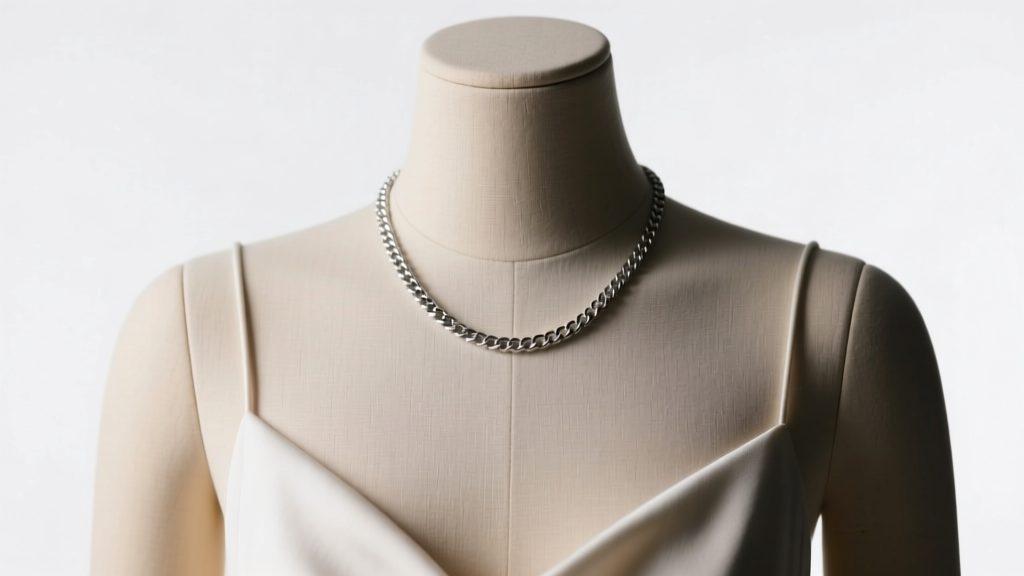
- Box Chains & Snake Chains: These feature smooth, flush surfaces. A 1.2mm 14k gold box chain will glide over the skin and will not snag the delicate threads of a knit halter top. They are the superior choice for high-friction areas.
- Rope & Herringbone Chains: While visually striking, the twisted grooves of a rope chain or the flat, overlapping scales of a herringbone chain act like microscopic hooks. Avoid these when wearing delicate crochet or loosely woven cotton halters.
- Metal Purity & Tarnish: The décolletage is a high-sweat zone. Avoid brass or copper-based alloys with thin gold plating, as the acidic nature of sweat will strip the plating and cause green discoloration on the chest. Opt for solid 14k gold, platinum, or at minimum, 316L surgical stainless steel, which boasts high corrosion resistance and a negligible nickel-release rate, as noted by the Gemological Institute of America (GIA) regarding skin-safe metals.
Clasp Mechanics for Backless and High-Neck Halters
One of the most overlooked aspects of styling a necklace for halter top outfits is the clasp. If you are wearing a backless halter that ties behind the neck, reaching around to fasten a tiny 5mm spring-ring clasp is a frustrating, often impossible task. Furthermore, the halter strap itself will constantly brush against the clasp, potentially popping it open.
The Solution: Invest in necklaces equipped with 12mm neodymium magnetic clasps or front-closure toggle clasps. Magnetic clasps snap together effortlessly behind the neck and possess a sheer-force holding strength that easily withstands the friction of a halter strap. Front-closure toggles not only solve the accessibility issue but also serve as an intentional, decorative focal point on the chest.
Advanced Layering Techniques for Halter Tops
Layering necklaces over a halter top requires strict adherence to spatial mathematics to avoid a tangled, chaotic look. The goal is to create a cascading effect that respects the boundaries of the garment's straps.
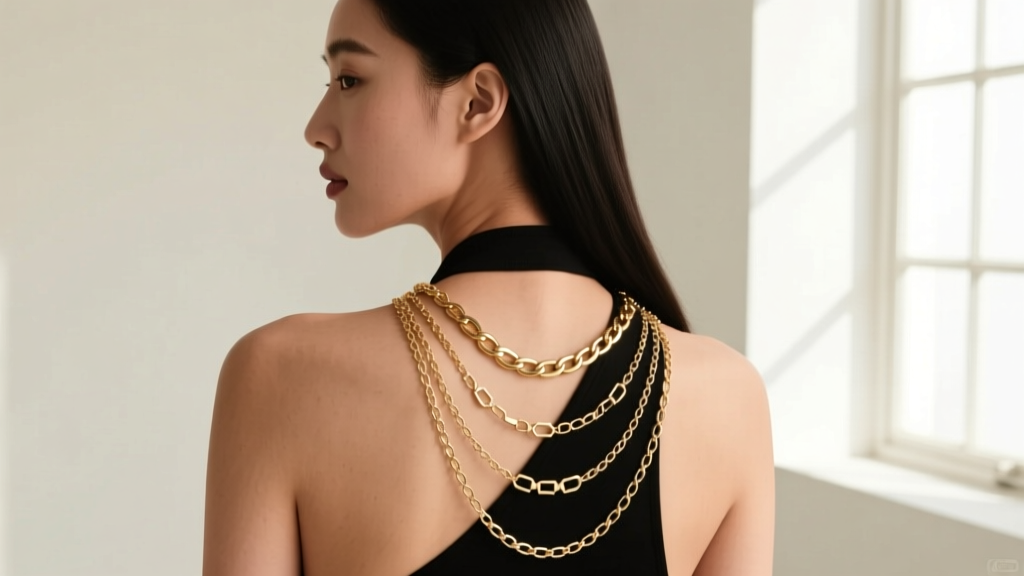
The 3-Inch Drop Rule
When layering two or more chains over a halter, maintain a strict minimum 3-inch difference in length between each piece. For example, pair an 18-inch delicate cable chain with a 21-inch or 24-inch heavier pendant chain. This 3-inch gap ensures that the pendants do not collide and the chains do not twist around one another, which is especially important when the halter top restricts the natural movement of the fabric around the neck.
Additionally, vary the chain widths. A successful 2026 layering formula involves a 0.9mm micro-cable chain sitting closest to the collarbone, paired with a 2.5mm hollow-paperclip chain resting lower on the sternum. The contrast in texture and weight creates depth without overwhelming the halter's neckline.
Common Styling Mistakes to Avoid
Even with the right measurements, certain stylistic choices will clash with the structural intent of a halter top. Avoid these common pitfalls:
- The Chunky Bib Necklace: Wide, rigid bib necklaces or collar-style statement pieces will visually sever the neck and compete aggressively with the halter strap. The chest will look armored rather than adorned.
- Ignoring the Back: If your halter is backless, remember that the back of your neck is entirely exposed. Avoid necklaces with heavy, ornate, or sharp clasps that will dig into the nape of your neck or look messy from behind.
- Over-Accessorizing the Ears: Because the halter strap draws the eye upward toward the face and neck, pairing a complex layered necklace with massive chandelier earrings creates too many competing focal points. If your necklace game is strong, opt for minimalist studs or sleek huggie hoops.
Final Thoughts on Halter Styling
Mastering the art of pairing jewelry with complex necklines is about understanding negative space and material behavior. By selecting the correct drop length, prioritizing smooth chain weaves, and upgrading to functional magnetic or toggle clasps, you transform a simple halter top into a cohesive, high-fashion look. Keep your metals pure, your lengths staggered, and let the architecture of the garment guide your styling choices.


