Why The Purple Beaded Necklace Dominates 2026 Trends
Discover why the purple beaded necklace is the defining jewelry trend of the year. Explore styling tips, bead materials, and layering techniques.

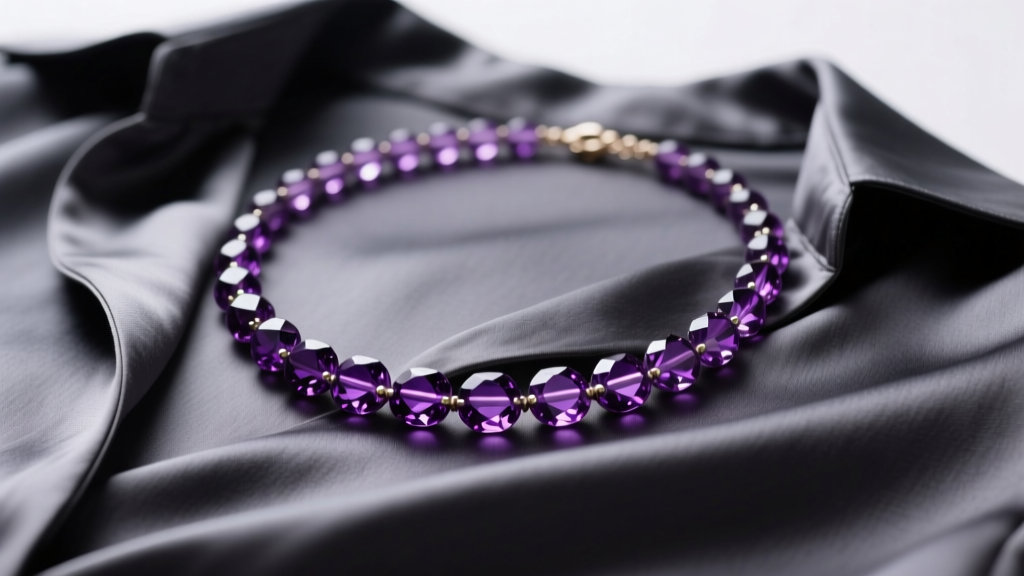
The jewelry landscape of 2026 has decisively pivoted away from the ultra-minimalist, micro-pave aesthetics of the early 2020s, embracing instead a return to tactile, expressive, and color-rich adornments. At the absolute center of this shift is the purple beaded necklace. No longer relegated to bohemian festivals or vintage costume boxes, high-grade purple beaded strands have been reclaimed by luxury houses and independent lapidaries alike. This resurgence is driven by a cultural craving for grounding, psychological depth, and the inherent versatility of violet and plum hues in modern wardrobes.
As a definitive style and trend analysis, this guide dissects the anatomy, material science, and styling frameworks of the modern purple beaded necklace. Whether you are investing in rare gem-grade sugilite or exploring high-end polymer alternatives, understanding the nuances of bead sizing, stringing mechanics, and color theory is essential for mastering this 2026 staple.
The Color Psychology and Resurgence of Purple Beads
Color trends in jewelry do not exist in a vacuum; they mirror broader societal moods. According to insights from the Pantone Color Institute, the mid-2020s are defined by a desire for 'restorative luxury.' Purple, sitting at the intersection of calming blue and energetic red, perfectly encapsulates this duality. The purple beaded necklace offers a wearable manifestation of this trend, providing a pop of regality without the aggressive flash of yellow gold or the starkness of platinum.
In 2026, we are seeing two distinct purple palettes dominating the market:
- Digital Lavender & Lilac: Lighter, translucent beads (often rose-cut amethyst or dyed quartz) that catch the light and pair seamlessly with spring and summer pastels.
- Deep Plum & Royal Violet: Opaque, heavily saturated stones like sugilite and high-grade lepidolite that serve as anchor pieces for autumn and winter tailoring.
The tactile nature of a beaded strand also plays a crucial role. Unlike a rigid metal chain, a beaded necklace conforms to the clavicle, creating a fluid, organic silhouette that contrasts beautifully with the sharp, structured shoulder lines prevalent in 2026 ready-to-wear fashion.
Material Breakdown: From Amethyst to High-Grade Polymer
The term 'purple bead' encompasses a vast spectrum of materials, each with distinct gemological properties, price points, and structural vulnerabilities. When evaluating a purple beaded necklace, the GIA Gem Encyclopedia recommends looking beyond mere color to assess the Mohs hardness and cleavage planes of the stone, which dictate how the necklace will wear over time.
| Material | Mohs Hardness | Price Range (USD) | Best Stringing Method | UV / Chemical Sensitivity |
|---|---|---|---|---|
| Amethyst (Faceted) | 7.0 | $40 - $250 | Soft Flex Wire (0.019") | High (Prolonged sun fades color) |
| Sugilite (Cabochon) | 6.0 - 6.5 | $200 - $800+ | Size F Silk Cord or 0.024" Wire | Medium (Oils can darken matrix) |
| Lepidolite (Polished) | 2.5 - 3.0 | $50 - $150 | Beadalon with bead bumpers | High (Prone to scratching/cleavage) |
| Polymer Clay (Artisan) | N/A | $25 - $85 | Elastic Cord (0.8mm) or Memory Wire | Low (Highly durable, no fading) |
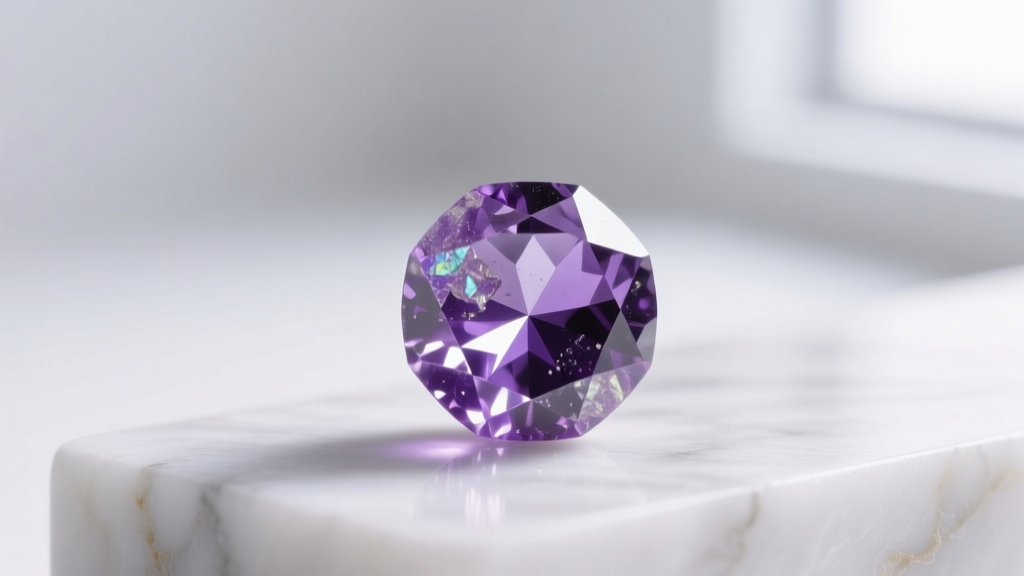
For collectors, Sugilite remains the holy grail of purple beaded jewelry. Originating primarily from South Africa, gem-grade sugilite features a deep, jelly-like translucence with minimal black matrix inclusions. However, its relative softness means it must be strung with protective bead bumpers or knotted on silk to prevent the beads from grinding against one another and dulling their polish.
The Anatomy of a High-End Beaded Strand
A common failure mode in mid-tier beaded necklaces is the degradation of the stringing material, leading to catastrophic breakage. In 2026, luxury beaded necklaces have abandoned simple elastic threads in favor of engineered stringing solutions.
Wire vs. Cord: Choosing the Right Foundation
For heavy stone beads (8mm and above), a 49-strand stainless steel wire coated in nylon, such as those produced by Beadalon, is the industry standard. The 49-strand construction ensures the necklace drapes like fabric rather than holding a rigid, kinked shape. Conversely, for lighter, porous stones like lepidolite, traditional knotting on Size F or G silk cord is preferred. Knotting between each bead not only prevents them from scratching but ensures that if the strand breaks, only one bead is lost.
Finishing Hardware: Crimps and Clasps
The hallmark of a premium purple beaded necklace lies in its finishing. Cheap necklaces use flattened crimp beads that look like crushed metal tubes. High-end 2026 designs utilize sterling silver or 14k gold-filled crimp covers, which are folded over the crushed crimp to mimic the appearance of a seamless metal bead. Furthermore, the integration of a wire guardian (a horseshoe-shaped metal finding) at the clasp loop prevents the stringing wire from fraying against the metal jump ring, extending the necklace's lifespan by years.
Bead Sizing and the Art of the Drape
The diameter of the beads fundamentally alters the visual weight and styling potential of the necklace. Understanding these millimeter distinctions is critical for building a cohesive jewelry wardrobe.
- 3mm to 4mm (The Liquid Strand): These micro-beads drape with the fluidity of a metal chain. A 4mm amethyst strand is perfect for delicate layering over a silk camisole or pairing with a heavier gold pendant chain. They sit flush against the skin and offer a subtle, sophisticated shimmer.
- 6mm to 8mm (The Statement Standard): This is the sweet spot for a standalone purple beaded necklace. An 8mm sugilite strand provides substantial visual weight, making it ideal for wearing over crewneck sweaters or tailored blazers. The larger surface area of the bead allows the internal inclusions and color zoning of the stone to be fully appreciated.
- 10mm and Above (The Bold Sculptural): Rarely used for full strands due to excessive weight, beads of this size are typically reserved for graduated necklaces (where the largest bead sits at the center of the clavicle) or as accent beads interspersed with gold spacers.
Styling Framework: Necklines and Color Theory
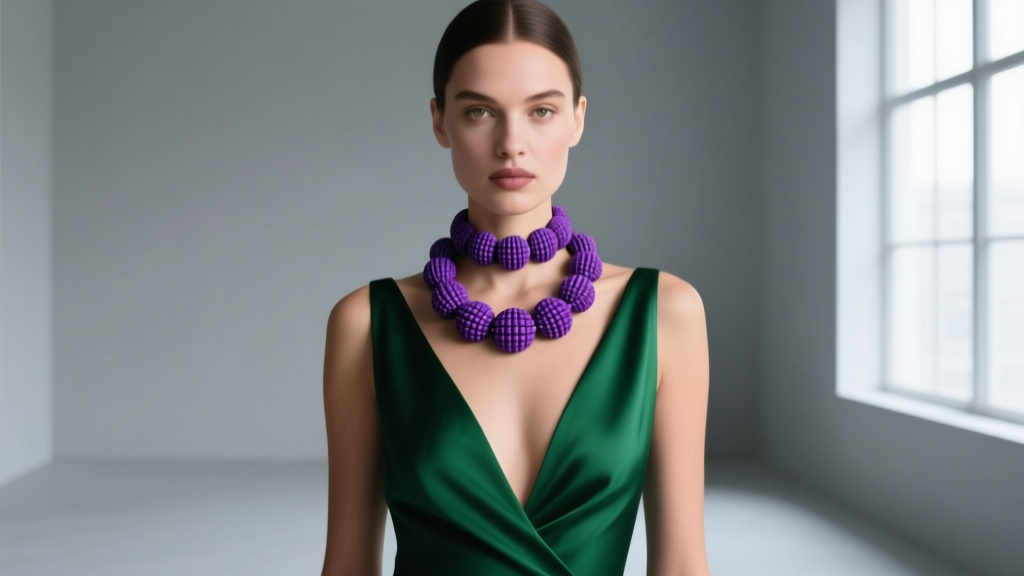
Styling a purple beaded necklace in 2026 requires a departure from safe, monochromatic pairings. The modern approach leverages high-contrast color theory and deliberate neckline framing.
Color Pairings That Elevate Purple
Purple is a secondary color, meaning it possesses a unique ability to harmonize with both warm and cool palettes. However, to make the beads truly pop, consider these advanced pairings:
- The Complementary Clash: Pair deep plum beads with mustard yellow or marigold silk. The contrast creates a vibrant, editorial look that draws the eye directly to the neckline.
- The Analogous Blend: Layer a lavender beaded strand with sapphire blue and rose-pink enameled pendants. This creates a rich, jewel-toned gradient that feels luxurious and intentional.
- The Metallic Anchor: Purple beads demand the warmth of yellow gold. Interleaving 14k gold vermeil spacer beads (specifically hammered or brushed finishes, rather than high-polish) between amethyst beads elevates the strand from casual to fine jewelry.
Neckline Matching
The length of your purple beaded necklace must complement the architecture of your garment. For V-necklines, opt for an 18-inch princess length that mirrors the angle of the fabric, terminating just above the cleavage. For boatnecks or high crewnecks, a shorter 16-inch choker length sits elegantly above the fabric line, preventing the beads from tangling with the garment's seams. Avoid wearing beaded strands with heavily ruffled or sequined collars, as the friction will degrade the stone polish and the visual competition will render both elements ineffective.
Care, Maintenance, and Troubleshooting
Purple gemstones require specific care protocols to maintain their luster and structural integrity. The most common mistake owners make is utilizing ultrasonic cleaners. While safe for diamonds, ultrasonic waves can cause microscopic fractures in heavily included stones like lepidolite and can strip the polish from softer cabochons like sugilite.
Instead, clean your purple beaded necklace using a lukewarm solution of distilled water and a single drop of pH-neutral dish soap. Use a microfiber cloth to gently wipe each bead individually. For sugilite and porous dyed stones, avoid all chemical exposure, including perfumes and lotions, which can seep into the stone's matrix and cause permanent discoloration. Always store beaded strands flat or hung on a padded velvet bust; hanging them on thin wire hooks for extended periods can cause the stringing wire to permanently stretch and deform, leading to a sagging, uneven drape.
Final Verdict on the 2026 Purple Bead Movement
The purple beaded necklace has successfully transcended its historical associations to become a cornerstone of contemporary jewelry styling. By prioritizing high-grade materials, precision stringing mechanics, and bold color theory, modern wearers are transforming this classic silhouette into a powerful tool for personal expression. Whether you choose the regal depth of sugilite or the playful versatility of artisan polymer, mastering the nuances of the beaded strand ensures your jewelry collection remains at the absolute vanguard of 2026 style.


