How to Keep Two Necklaces From Tangling When Wearing: Expert Fixes
Discover expert troubleshooting on how to keep two necklaces from tangling when wearing. Learn chain pairings, weight hacks, and detangler tools.


The Physics of Necklace Tangling: Why Layers Fail
Understanding how to keep two necklaces from tangling when wearing them requires a basic grasp of jewelry physics. Tangling is rarely a matter of bad luck; it is the result of torsional stress, friction coefficients, and a phenomenon jewelers call 'micro-interlocking.' When you walk, your body creates a subtle pendulum effect. If two chains share similar lengths, weights, and link geometries, they will naturally swing into the same kinetic path.
The primary culprit is link aperture. A standard 1.5mm cable chain features tiny gaps at the solder points (or unsoldered intersections). If you pair it with a 0.9mm box chain, the smaller chain will inevitably slip inside the gaps of the larger chain, locking them together. Furthermore, the clasp hardware itself causes 'clasp migration.' Because the clasp is often the heaviest or most asymmetrical part of a delicate chain, gravity pulls it down the nape of your neck, twisting the chains around one another. To solve this, we must manipulate chain geometry, weight distribution, and hardware friction.
Chain Pairing Matrix: What Works and What Fails
Not all chains are created equal. The surface texture and link structure dictate how chains interact. According to the Gemological Institute of America (GIA), understanding metal friction and structural integrity is key to jewelry maintenance. Below is a troubleshooting matrix for pairing chains without triggering micro-interlocking.
| Chain Type | Link Structure | Tangle Risk (1-10) | Best Paired With |
|---|---|---|---|
| Cable (Standard) | Open oval links, high gap | 8/10 | Thicker Box or Solid Snake chains |
| Box | Closed square links, smooth | 3/10 | Delicate Rope or Cable chains |
| Rope | Twisted links, high friction | 6/10 | Smooth Herringbone or Snake |
| Snake | Tightly joined, tubular | 2/10 | Almost any chain (acts as a base) |
| Herringbone | Flat, fluid, zero gap | 1/10 | Chunky Cable or Figaro |
| Figaro | Alternating long/short links | 7/10 | Thick Box chains only |
Expert Rule: Never pair two chains with 'open' link structures (like two cable chains or a cable and a rope). Always anchor an open-link chain with a closed, smooth-surface chain like a box or snake weave.
The Geometry of Layering: Length Gaps and Weight Ratios
The advice to simply 'wear different lengths' is incomplete. The human neck slopes outward toward the shoulders, meaning a 2-inch gap at the nape of the neck might shrink to a 0.5-inch gap at the collarbone, forcing the pendants to collide. According to the Tiffany & Co. Necklace Guide, precise length mapping is essential for layered silhouettes.
The 3-Inch Drop Rule
For a standard 16-inch choker or collar, your second necklace must be at least 19 inches. However, if the lower necklace features a pendant, you need a 20-inch or 22-inch chain. This ensures the pendant rests below the clavicle, creating a distinct 'V' shape that physically prevents the upper chain from sliding down into it.
Pendant Weight Distribution
Weight anchors the chain. If your top chain is a 2-gram 18k gold cable chain, and your bottom chain is a 3-gram box chain with a 1-gram pendant, the bottom chain is too light. It will float and twist. The Fix: The bottom pendant must weigh at least 3x the total weight of the top chain. A heavy pendant (e.g., 8+ grams) creates downward tension, pulling the lower chain taut into a rigid arc that the top chain cannot penetrate.
Hardware Solutions: Detanglers, Spacers, and Clasps
When geometry and weight aren't enough, you must intervene with hardware. Clasp migration is the number one cause of mid-day tangles. As you move, the heavier lobster clasp slides down your neck, wrapping the chains together.
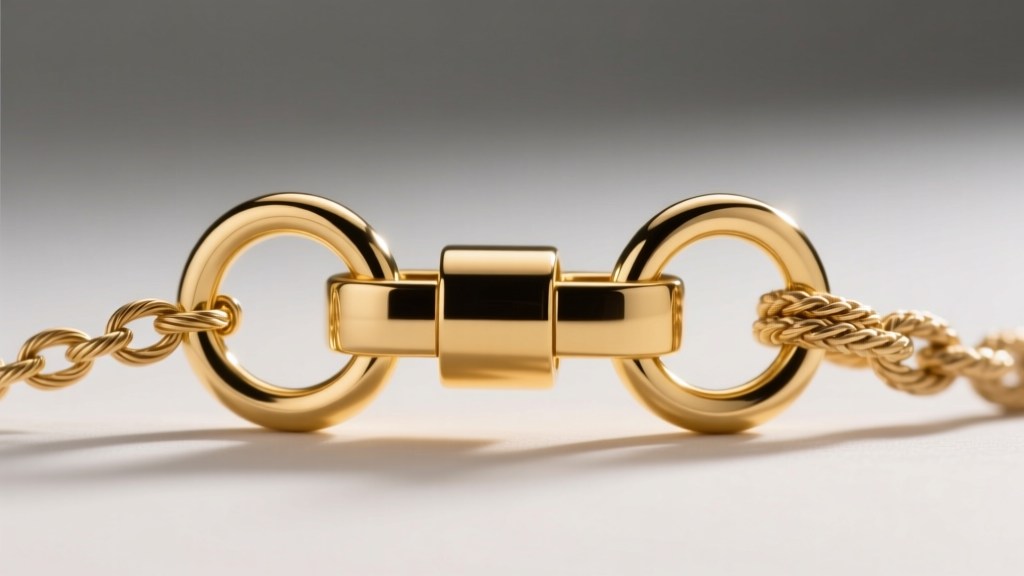
1. Silicone Detangler Tubes
A silicone or leather detangler tube is a small sleeve that threads both chains through it near the clasp. This increases the coefficient of friction against your skin or clothing, locking the clasps at the nape of your neck and preventing rotational torque. For fine jewelry, opt for medical-grade silicone tubes (often sold for under $15) rather than cheap PVC, which can off-gas and tarnish sterling silver or low-karat gold over time.
2. The Silicone O-Ring Hack
If you don't want a visible tube, buy a pack of 2mm clear silicone O-rings from a hardware store. Slide one O-ring onto each chain, positioning it exactly one inch below the clasp. This adds a microscopic amount of localized weight and friction, acting as a physical stopper that prevents the clasp from sliding forward and twisting the chains.
3. Upgrade to Magnetic or Fixed-Bar Clasps
Standard lobster and spring-ring clasps feature a swiveling jump ring, which introduces a pivot point that encourages twisting. Swapping your clasps for neodymium magnetic clasps or fixed-bar toggle clasps eliminates this pivot point. The Brilliant Earth guides often note that magnetic clasps allow the chain to lay flatter against the skin, reducing kinetic swing.
Maintenance and Storage to Prevent Pre-Wear Knots
Tangling often begins before you even put the jewelry on. Storing layered necklaces improperly introduces 'memory knots' into the metal, making them prone to immediate tangling when worn.
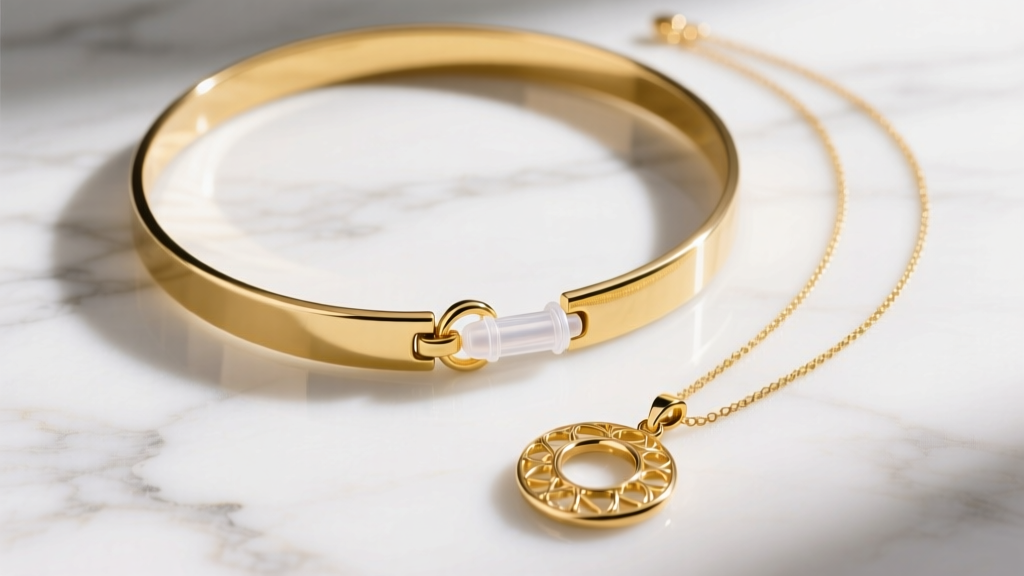
Proper Storage Protocols
- Never stack in a box: Tossing two necklaces into a velvet pouch guarantees micro-interlocking. The agitation of walking with the bag in your purse acts as a mechanical tumbler, knotting the chains tightly.
- Use a Multi-Strand Roll: Invest in a jewelry roll with individual snap-down felt straps. Keep the chains parallel and separated by at least an inch of fabric.
- The Hanging Method: If you use a jewelry tree, hang the chains on separate branches. Ensure the bottom pendant of the lower chain does not physically touch the links of the upper chain while hanging.
- Clasp Closure: Always store necklaces with the clasps securely fastened. An open lobster clasp acts like a tiny grappling hook in a jewelry box, catching on any open-link chain it encounters.
By respecting the physics of chain weaves, enforcing strict length and weight ratios, and utilizing friction-modifying hardware, you can permanently solve the problem of tangled layers. Mastering how to keep two necklaces from tangling when wearing them elevates your style from messy to meticulously curated.