A Beginner's Guide to Choosing and Styling a Pirate Necklace
Discover how to choose, style, and wear a pirate necklace for everyday fashion. Learn about metals, chain lengths, and historical nautical motifs.


What Defines a True Pirate Necklace?
When most people hear the term "pirate necklace," their minds immediately jump to cheap plastic beads, oversized skull pendants, and Halloween costumes. However, in the realm of modern menswear and rugged womenswear, nautical and pirate-inspired jewelry has evolved into a sophisticated staple of the "coastal gothic" and "dark academia" aesthetics. As we navigate the fashion landscape of 2026, the pirate necklace is no longer about dressing up as a swashbuckler; it is about embracing maritime heritage, rugged textures, and historical talismans.
Historically, privateers and sailors during the Golden Age of Piracy (roughly 1650 to 1730) did not wear custom-cast kraken pendants. Instead, their jewelry was a form of portable wealth and superstition. They wore hammered coins, religious medallions for protection against storms, and practical navigational tools. Today, a true pirate necklace bridges the gap between historical authenticity and modern edge. It relies on heavy, textured metals, organic leather cords, and motifs that speak to navigation, the deep sea, and maritime trade routes.
Decoding the Metals: Brass, Bronze, and Oxidized Silver
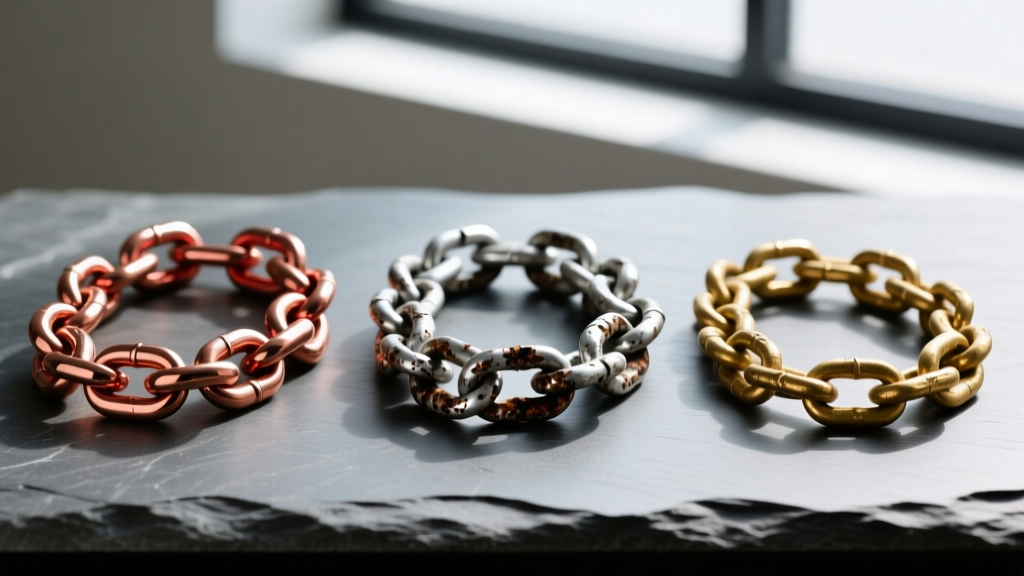
The foundation of any authentic-looking nautical necklace is the metal. Shiny, highly polished gold or platinum will immediately ruin the rugged aesthetic. Instead, you want metals that look like they have survived a transatlantic voyage. Here is a deep dive into the three best materials for this style:
1. Naval Brass (C46400)
Standard brass is an alloy of copper and zinc, but it tarnishes quickly and can turn your skin green due to copper oxidation reacting with sweat. For a premium pirate necklace, look for C46400 Naval Brass. This specific alloy includes a small amount of tin, which drastically increases its resistance to saltwater corrosion. It develops a rich, dark brown patina over time rather than a bright green crust, and it typically costs between $40 and $90 for a solid cast pendant.
2. Phosphor Bronze
Bronze is an alloy of copper and tin. Phosphor bronze adds a trace of phosphorus, which increases stiffness and wear resistance. It has a warmer, reddish-brown hue compared to the yellowish tint of brass. It is the ideal metal for "Piece of Eight" coin replicas and heavy ship-wheel pendants.
3. Oxidized Sterling Silver (925)
According to the Gemological Institute of America (GIA), sterling silver is naturally bright and reflective. To achieve a pirate aesthetic, jewelers treat the silver with liver of sulfur, a chemical compound that forces rapid oxidation, turning the crevices of the metal black while leaving the raised edges polished. This creates a high-contrast, antique look. Expect to pay $120 to $350 for high-quality oxidized silver nautical pendants.
| Metal Type | Color Profile | Patina Speed | Avg. Price Range | Skin Reaction Risk |
|---|---|---|---|---|
| Naval Brass | Muted Yellow-Gold | Fast (Weeks) | $40 - $90 | Moderate (Copper) |
| Phosphor Bronze | Reddish-Brown | Medium (Months) | $50 - $110 | Low to Moderate |
| Oxidized 925 Silver | Gunmetal / Antique Grey | Pre-treated / Slow | $120 - $350 | None (Hypoallergenic) |
The Leather Cord Alternative
Not every pirate necklace requires a metal chain. A thick leather cord is a historically accurate and highly durable alternative. For a rugged look, opt for a 3mm braided cowhide leather cord that has been heavily waxed. The wax not only provides water resistance but also gives the leather a weathered, slightly glossy finish that mimics the rigging of an 18th-century galleon. Avoid thin 1mm cords, as they look delicate and are prone to snapping when supporting heavy bronze or silver pendants.
Motif Meanings: Choosing Your Nautical Talisman
The pendant you choose should carry personal significance. According to maritime historians at The Mariners' Museum, sailors relied heavily on symbology to ward off the perils of the sea. Here are the most authentic motifs to look for:
- The Compass Rose: A symbol of guidance, safe travel, and finding your way home. Look for pendants where the cardinal directions (N, S, E, W) are deeply engraved rather than painted.
- The Astrolabe: An ancient inclinometer used by navigators to predict the positions of the stars. Astrolabe pendants are intricate, multi-layered, and often feature moving parts.
- The Kraken or Octopus: Representing the mysteries and terrors of the deep ocean. This motif leans heavily into the "coastal gothic" trend and pairs beautifully with oxidized silver.
- The Spanish Milled Dollar (Piece of Eight): The quintessential pirate coin. Authentic replicas are usually struck in .999 fine silver or cast in bronze, featuring the Pillars of Hercules on the reverse side.
Sizing and Layering: The 20-to-24 Inch Rule
One of the most common mistakes beginners make is choosing the wrong chain length. A pirate necklace should never sit tightly against the throat like a choker. It needs to rest on the chest, mimicking the way a sailor would wear a talisman over a linen tunic.
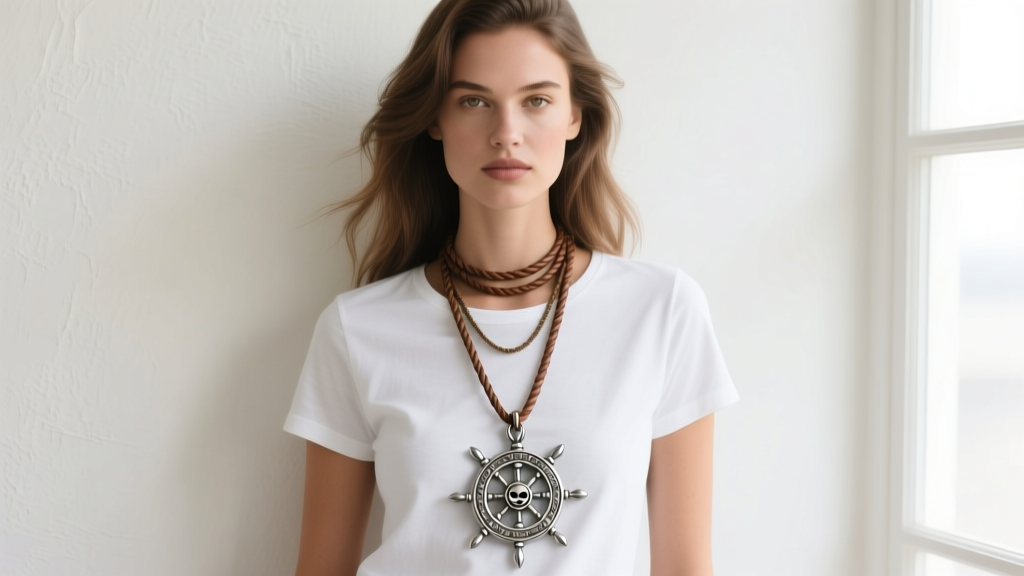
For a single, bold pendant (like a large compass or ship's wheel), a 22-inch or 24-inch chain is ideal. This length allows the pendant to rest on the sternum or mid-chest, making it visible even when wearing an unbuttoned collar or a V-neck sweater. When it comes to chain thickness, aim for a 3mm to 5mm gauge. A 4mm oxidized silver rope chain or a heavy Cuban link provides the necessary visual weight to balance a solid bronze pendant.
If you prefer layering, use the "staggered length" technique. Pair a 20-inch waxed leather cord holding a small, simple coin pendant with a 24-inch heavy brass chain holding a larger compass rose. The 4-inch difference prevents the chains from tangling and creates a cascading visual effect that looks intentional rather than cluttered.
Common Beginner Mistakes to Avoid
Transitioning nautical jewelry into a daily wardrobe requires restraint. Here is what you must avoid to keep your look grounded in modern fashion rather than costume territory:
"The moment you add a feathered tricorn hat or a ruffled poet shirt to a brass skull necklace, you have crossed the line from rugged maritime fashion into theme park territory. Let the jewelry be the subtle nod to the sea, not the entire outfit."
— Elias Thorne, Menswear Stylist and Vintage Nautical Collector
- The "Jack Sparrow" Trap: Avoid wearing multiple chunky beaded necklaces alongside heavy metal chains. Stick to one or two high-quality metal or leather pieces.
- Ignoring Skin Acidity: If you have highly acidic sweat, raw brass and bronze will leave green marks on your chest. To prevent this, coat the back of the pendant with a thin layer of clear nail polish or jeweler's epoxy, or simply upgrade to oxidized sterling silver.
- Mismatching Metals: While mixing metals is a trend in some fashion circles, in nautical styling, it is best to stick to one metal family (e.g., all brass/bronze warm tones, or all oxidized silver cool tones) to maintain a cohesive, vintage look.
Care and Maintenance of Nautical Metals
A pirate necklace is meant to look weathered, but there is a difference between a beautiful antique patina and neglected grime. Never use standard silver polishing cloths on oxidized sterling silver. The abrasive compounds in the cloth will strip away the intentional black oxidation in the crevices, leaving you with a flat, shiny pendant that loses its antique character. Instead, use a soft cotton swab (Q-tip) to gently clean only the raised, polished edges.
For naval brass and bronze, the patina will develop naturally from the oils in your skin. If the metal becomes too dark or develops an uneven, muddy crust, you can reset it by creating a paste of lemon juice and baking soda. Gently rub the paste onto the metal with a soft toothbrush, rinse with warm water, and dry immediately. This will restore the warm, golden-bronze undertones, allowing you to start the aging process all over again.
By understanding the history, materials, and proper styling techniques, you can confidently integrate a pirate necklace into your everyday wardrobe. It becomes more than just an accessory; it is a wearable piece of maritime history that adds depth, texture, and a touch of rugged mystery to your personal style.