The Ultimate Guide to Styling a Cross With Rose Necklace
Discover how to choose, style, and care for a cross with rose necklace. Learn about metals, chain lengths, and neckline pairings in this beginner guide.

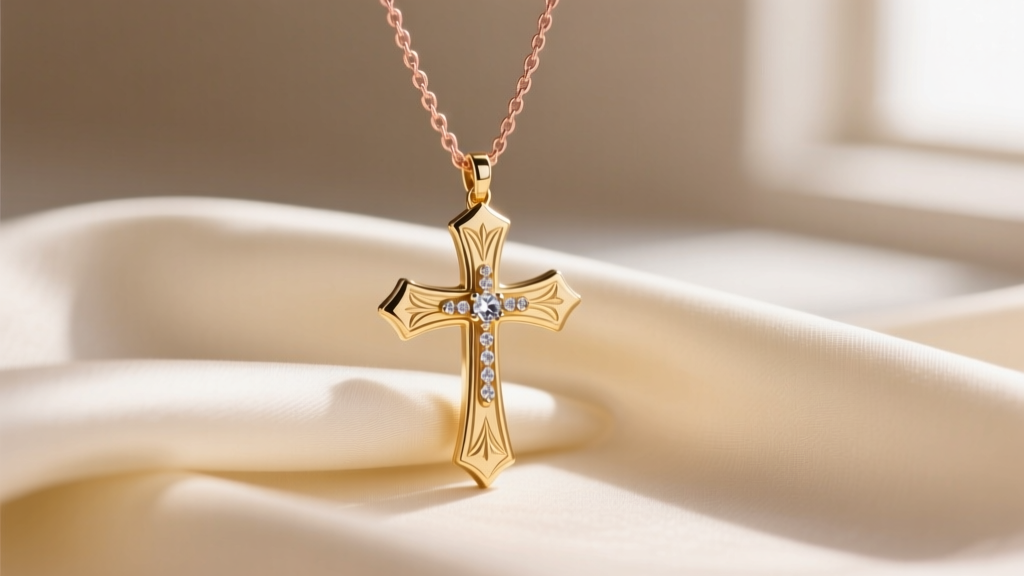
The Intersection of Faith and Romance
When it comes to meaningful jewelry, few pieces carry the layered symbolism of a cross with rose necklace. The cross has served as a universal emblem of faith, grounding, and spiritual devotion for centuries. The rose, conversely, is deeply rooted in themes of romance, passion, and the delicate beauty of nature. When combined into a single pendant, these two motifs create a stunning juxtaposition that speaks to both spiritual dedication and earthly love.
As we navigate the jewelry landscape in 2026, the trend of blending traditional religious iconography with organic, nature-inspired elements continues to gain momentum among both minimalist and maximalist dressers. However, for beginners, navigating the market for these specific pendants can be overwhelming. Between deciphering metal purity stamps, selecting the correct chain gauge to support a 3D floral casting, and figuring out how to layer the piece without tangling the intricate petal details, there is a lot to consider. This comprehensive guide will walk you through everything you need to know before purchasing and styling your first cross and rose pendant.
Decoding Metals: What to Look For
The longevity and skin-compatibility of your necklace depend entirely on the base metal and the finishing techniques used. Because a rose motif requires deep crevices and intricate casting, the metal must be able to hold fine detail without becoming brittle. Here is a breakdown of the most common materials you will encounter.
925 Sterling Silver
Sterling silver is an alloy consisting of 92.5% pure silver and 7.5% copper or other strengthening metals. According to The Silver Institute, this specific ratio is the global standard for jewelry because pure silver is too soft to hold the intricate detailing of rose petals. Sterling silver is an excellent, hypoallergenic choice for beginners, typically ranging from $45 to $120. The only drawback is tarnish, which requires occasional polishing.
Gold Vermeil vs. Gold Plated
Beginners often confuse gold vermeil with standard gold plating. Standard plating uses a brass or copper base with a microscopic flash of gold that wears off in months. Gold vermeil, however, must have a 925 sterling silver base and a gold layer of at least 2.5 microns thick. The Gemological Institute of America (GIA) notes that proper alloying and micron thickness are critical for gold durability. Vermeil cross with rose necklaces generally cost between $85 and $200, offering a luxurious look with a much longer lifespan than basic plated jewelry.
Solid 14k Gold
For a lifetime heirloom piece, solid 14k gold is the benchmark. It will never tarnish, is highly resistant to scratching, and can be worn in the shower or ocean without degrading. Expect to pay anywhere from $350 to over $800 for a solid 14k cast pendant with a detailed rose motif.
| Metal Type | Base Material | Price Range | Durability & Care |
|---|---|---|---|
| 925 Sterling Silver | Silver/Copper Alloy | $45 - $120 | High; requires anti-tarnish polishing |
| Gold Vermeil | 925 Silver + 2.5μm Gold | $85 - $200 | Medium; avoid water and perfumes |
| Solid 14k Gold | 58.5% Pure Gold Alloy | $350 - $800+ | Lifetime; waterproof and hypoallergenic |
| Brass (Plated) | Copper/Zinc Alloy | $15 - $40 | Low; high risk of skin discoloration |
Chain Mechanics: Gauge Sizes and Styles
One of the most common mistakes beginners make is pairing a heavy, intricately cast pendant with a chain that is too delicate. A standard flat-stamped cross might weigh a mere 1.5 grams. However, a 3D cross with rose necklace features depth, texture, and extra metal volume, often pushing the pendant weight to between 4 and 7 grams.
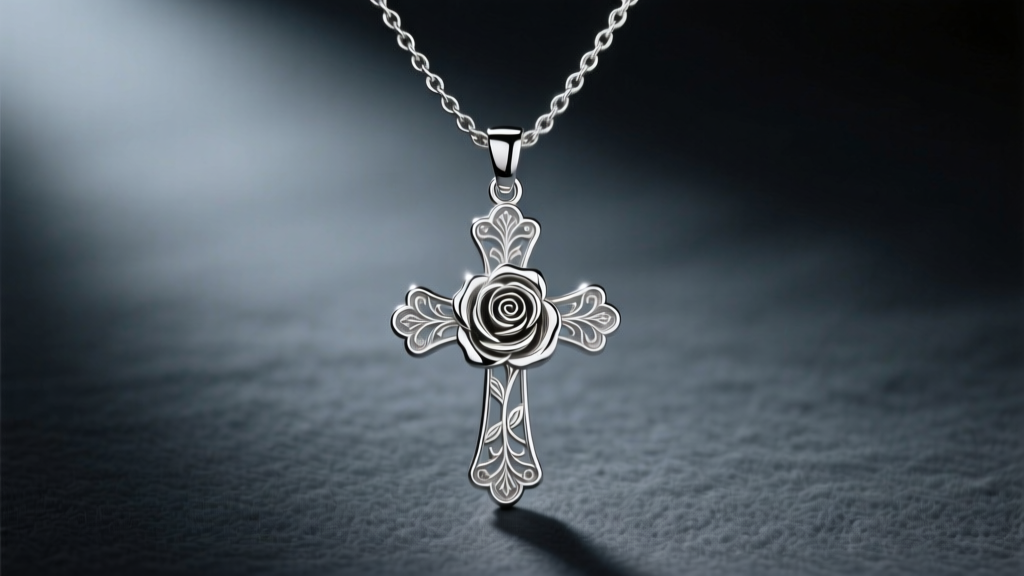
Selecting the Right Gauge
To support a 4-7 gram pendant without risking chain stretch or breakage, you need to look at the chain's gauge (thickness). Avoid anything thinner than 1.0mm (18-gauge). For optimal security and visual balance, choose a chain between 1.2mm and 1.5mm (16-gauge to 14-gauge).
Chain Styles That Complement Floral Details
- Box Chains: Featuring square, interlocking links, box chains offer a smooth, continuous surface that won't catch on the delicate tips of the rose petals.
- Rolo Chains: Composed of uniform round links, rolo chains provide a vintage, robust look that pairs beautifully with the romantic aesthetic of a rose and cross.
- Avoid Herringbone or Snake Chains: While sleek, these chains are notorious for kinking and can easily trap the tiny prongs or petal edges of your pendant, causing damage to both the chain and the jewelry.
Styling Your Necklace: Necklines and Layering
A cross with rose necklace is inherently ornate. Because the pendant acts as a focal point, your styling should frame it rather than compete with it. Here is how to match your chain length to your wardrobe.
Neckline Pairings
The V-Neck (18 to 20-inch chain): A V-neck blouse or dress naturally draws the eye downward, mimicking the shape of a necklace. An 18-inch or 20-inch chain allows the cross and rose pendant to rest perfectly in the negative space of the V-neck without touching the fabric hem.
The Scoop Neck (16 to 18-inch chain): For wider, rounded necklines, a shorter chain ensures the pendant sits above the fabric line, resting directly on the skin. This creates a clean, uncluttered look that highlights the metallic contrast against your collarbone.
The High Crew or Turtleneck (22 to 24-inch chain): Wearing a pendant over a high neckline requires a longer chain so the piece doesn't look choked. A 24-inch chain allows the cross to rest on the chest, acting as a striking statement piece against solid-colored knitwear.
The Art of Layering
Layering is a dominant trend, but mixing a detailed floral cross with other chains requires a strategic approach to prevent tangling. The golden rule of layering is the two-inch gap. If your cross with rose necklace is 18 inches, your secondary chain should be 16 inches (a simple choker or pearl strand) or 20 inches (a simple coin pendant).

Pro Tip: When layering, always place the cross with rose necklace as the longest or middle layer. Its intricate design demands visual breathing room, so avoid pairing it with other heavily textured or gemstone-encrusted pendants that will clutter the neckline.
Care and Maintenance for Intricate Castings
The very details that make a cross with rose necklace beautiful—the overlapping petals, the thorny stems, the textured woodgrain of the cross—are also magnets for skin oils, lotions, and environmental dust. Proper maintenance is crucial to keep the piece looking sharp.
The Baby Toothbrush Method
Standard jewelry polishing cloths are great for flat surfaces, but they cannot reach the deep crevices of a cast rose. Once a month, mix a few drops of mild, phosphate-free dish soap into a bowl of warm water. Soak your necklace for five minutes, then gently agitate the pendant using a soft-bristled baby toothbrush. Rinse with distilled water and pat dry with a microfiber cloth.
A Warning Against Ultrasonic Cleaners
While ultrasonic cleaners are fantastic for plain metal bands, they are highly risky for a cross with rose necklace. If your piece features any micro-pave gemstones set into the petals, or if it utilizes cold enamel to color the rose, the high-frequency vibrations of an ultrasonic machine can shatter the enamel or shake the gemstones loose from their adhesive settings. Stick to manual, gentle cleaning methods to preserve the structural integrity of the floral detailing.
Final Thoughts
Investing in a cross with rose necklace is about more than just acquiring a beautiful accessory; it is about wearing a piece of art that tells a deeply personal story. By prioritizing high-quality materials like 925 sterling silver or solid 14k gold, selecting a chain gauge that properly supports the pendant's weight, and practicing mindful layering, you can ensure this meaningful piece remains a staple in your jewelry box for decades to come.


