White Gold Butterfly Necklace Trends: 2026 Style Guide
Discover 2026 styling trends for the white gold butterfly necklace. Expert tips on 14k vs 18k alloys, layering, and pairing with modern necklines.

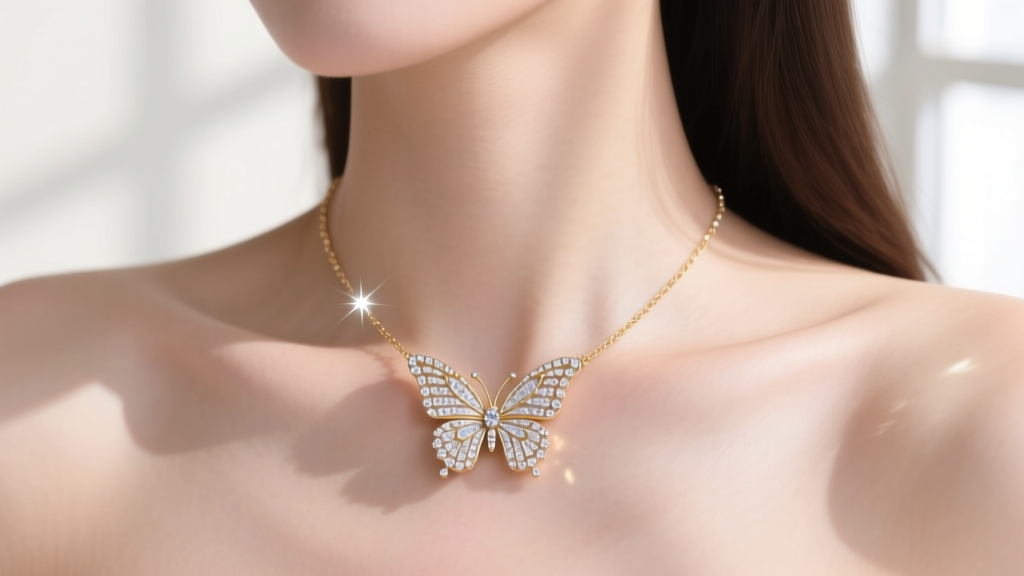
The Metamorphosis of the Butterfly Motif in 2026
The butterfly motif has long been a staple in jewelry design, symbolizing transformation, freedom, and delicate beauty. However, the interpretation of this classic symbol has undergone a radical metamorphosis as we navigate the fashion landscape of 2026. Moving away from the chunky, hyper-embellished Y2K revival pieces that dominated the early 2020s, today's white gold butterfly necklace embraces the ethos of 'quiet luxury' and refined minimalism. According to recent trend analyses by Vogue, the modern consumer favors asymmetric wing designs, negative space cutouts, and subtle micro-pavé accents over heavy, solid-cast silhouettes.
This shift means that the white gold butterfly pendant is no longer relegated to juvenile or overly whimsical styling. Instead, it has been elevated into a sophisticated staple that pairs seamlessly with tailored blazers, silk slip dresses, and modern minimalist necklines. The cool, reflective properties of white gold provide a crisp, contemporary canvas that enhances the intricate geometry of modern butterfly designs, making it a premier choice for both everyday wear and high-end evening styling.
Metallurgy & Material Grades: 14k vs. 18k White Gold
To truly appreciate a white gold butterfly necklace, one must understand the metallurgy beneath the surface. Pure gold (24k) is naturally yellow and too soft for fine jewelry. White gold is an alloy, and its underlying composition drastically affects its durability, color, and long-term maintenance. As detailed by the Gemological Institute of America (GIA), white gold is typically alloyed with either nickel or palladium to achieve its silvery hue.
In 2026, palladium-alloyed white gold is highly sought after for luxury butterfly pendants due to its hypoallergenic properties and naturally whiter base color. However, nickel-alloyed 14k white gold remains the industry standard for accessible fine jewelry due to its superior hardness and lower price point. Regardless of the alloy, all white gold jewelry is plated with rhodium—a rare, incredibly hard platinum group metal—to achieve the brilliant, mirror-like finish consumers expect.
| Attribute | 14k White Gold (58.5% Gold) | 18k White Gold (75% Gold) |
|---|---|---|
| Base Color (Pre-Plating) | Slightly warm/brassy | Paler, closer to true silver |
| Durability & Scratch Resistance | High (ideal for daily wear) | Moderate (more prone to micro-scratches) |
| Allergenic Potential | Higher (if nickel-alloyed) | Lower (often palladium-alloyed) |
| Average Price Premium | Baseline | +30% to 45% over 14k |
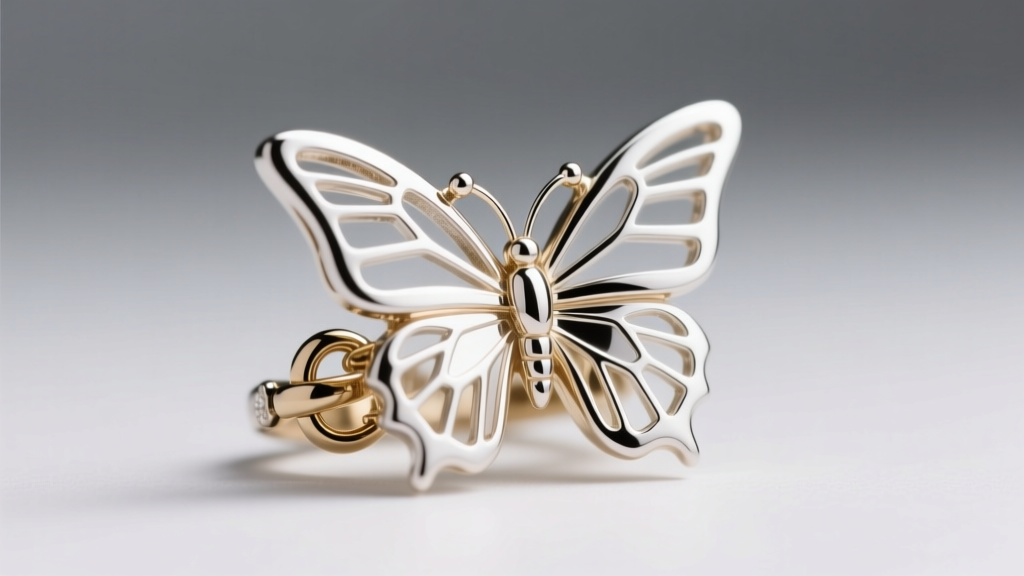
Design Variations & Pricing Tiers
When shopping for a white gold butterfly necklace in 2026, the market is distinctly segmented by craftsmanship and stone quality. Understanding these tiers will help you allocate your budget effectively and avoid overpaying for mass-market pieces disguised as fine jewelry.
1. Micro-Pavé Diamond Butterflies
The most popular luxury iteration features wings entirely encrusted with micro-pavé diamonds. For a high-quality piece, look for diamonds in the VS1-VS2 clarity range and G-H color grades. Because the stones are typically small (0.01 to 0.03 carats each), precise melee cutting is crucial to ensure maximum light return. Expect to pay between $1,200 and $3,500 for a solid 14k or 18k white gold pendant with 0.25 to 0.50 total carat weight.
2. Guilloché & Enamel Accents
For a touch of artisanal color, designers are integrating translucent guilloché enamel into the wings. This technique involves engraving a geometric pattern into the white gold base and fusing layers of translucent enamel over it, creating a captivating depth. These pieces are rare and typically range from $800 to $2,000, depending on the complexity of the hand-engraving.
3. Polished Solid Silhouettes
Minimalist, high-polish white gold butterflies without gemstones offer a sleek, modern aesthetic. These rely entirely on the precision of the metal casting and the quality of the rhodium plating. Prices for these entry-level fine jewelry pieces generally fall between $250 and $600.
Chain Pairing: The Unsung Hero of the Pendant
A common failure mode in jewelry styling is pairing an exquisite pendant with an inadequate chain. The chain dictates the drape, security, and overall visual weight of the necklace. For a standard 15mm to 22mm white gold butterfly pendant, the chain gauge should ideally sit between 0.8mm and 1.2mm.
- Box Chains (1.0mm): The top recommendation for 2026. The geometric links of a box chain complement the angular symmetry of butterfly wings, and the flat surface reflects light beautifully without competing with the pendant.
- Cable Chains (0.9mm): A classic choice that offers a more traditional, delicate look. Ensure the links are soldered to prevent pulling and breakage.
- Paperclip Chains (1.2mm): Best reserved for larger, heavier statement butterflies. The elongated links provide a modern, industrial contrast to the organic motif of the butterfly.
Always opt for a secure lobster claw clasp rather than a spring ring, which is notoriously difficult to operate and more prone to mechanical failure over time.
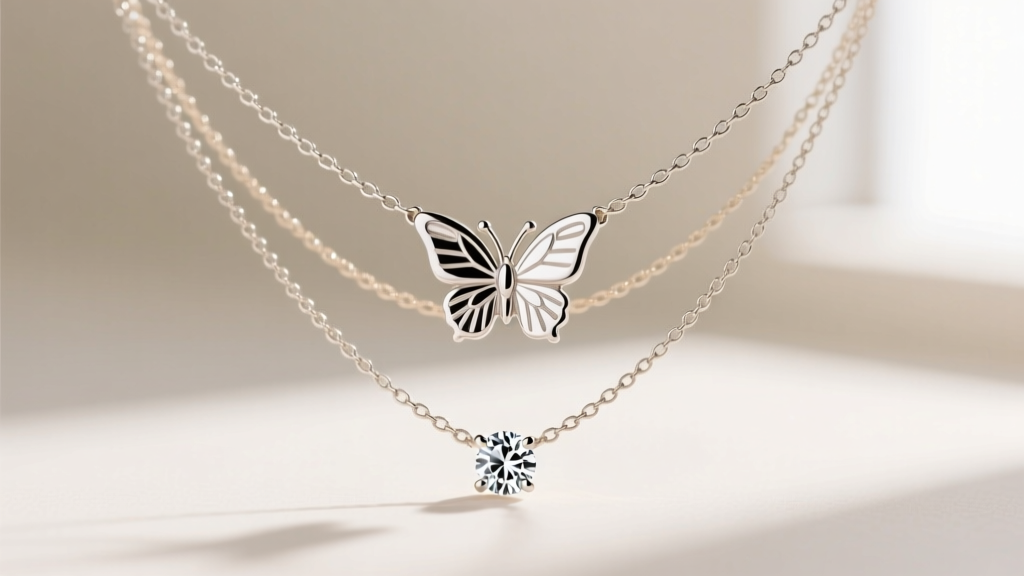
Layering Frameworks for the Butterfly Pendant
Layering remains a dominant styling technique, but the haphazard 'more is more' approach has been replaced by calculated, structured stacking. To properly layer a white gold butterfly necklace, adhere to the following spatial framework:
- The Anchor (14 to 15 inches): Start with a simple white gold choker or a delicate chain featuring a single bezel-set diamond solitaire. This draws the eye to the base of the neck.
- The Focal Point (17 to 18 inches): This is where your white gold butterfly pendant lives. An 18-inch length ensures the butterfly rests perfectly on the sternum, avoiding awkward placement over the collarbone.
- The Elongator (20 to 22 inches): Finish with a longer, heavier chain, such as a 1.5mm white gold rope chain or a lariat-style drop. This creates a V-shape that elongates the neck and frames the butterfly pendant without overcrowding it.
Pro Tip: When mixing metals, keep the white gold butterfly as the centerpiece and introduce platinum or high-karat yellow gold only in the supporting chains to maintain visual hierarchy.
Care, Maintenance, and Rhodium Replating Realities
The most critical aspect of owning a white gold butterfly necklace is understanding the lifecycle of its rhodium plating. Rhodium is applied via electroplating, typically at a thickness of 0.75 to 1.0 microns. With daily wear, friction from clothing and natural skin oils will gradually wear this plating away, usually within 12 to 24 months.
When the plating thins, the underlying alloy will begin to show. If your piece is 14k nickel-alloyed white gold, it will take on a slightly yellowish, brassy tint. If it is 18k palladium-alloyed, it will simply look slightly duller and grayer. This is not a defect; it is the natural wear cycle of white gold.
"To maintain the crisp, icy white finish of your butterfly pendant, budget for professional ultrasonic cleaning and rhodium replating every 18 to 24 months. The process typically costs between $35 and $75 and completely restores the piece to its original factory brilliance." — Master Jeweler Bench Notes, 2025.
Between professional services, clean your necklace at home using a few drops of mild, phosphate-free dish soap in warm water and a soft-bristled baby toothbrush. Avoid harsh chemical dips or ultrasonic cleaners if your butterfly pendant features fracture-filled diamonds or delicate enamel accents, as these can cause catastrophic damage to the stones or strip the enamel entirely.


