Sun and Moon Couple Necklace: 2026 Value & Buying Guide
Assess the true value of a sun and moon couple necklace in 2026. We break down materials, pricing tiers, and durability to help you buy smart.

The Symbolic Appeal and Market Reality
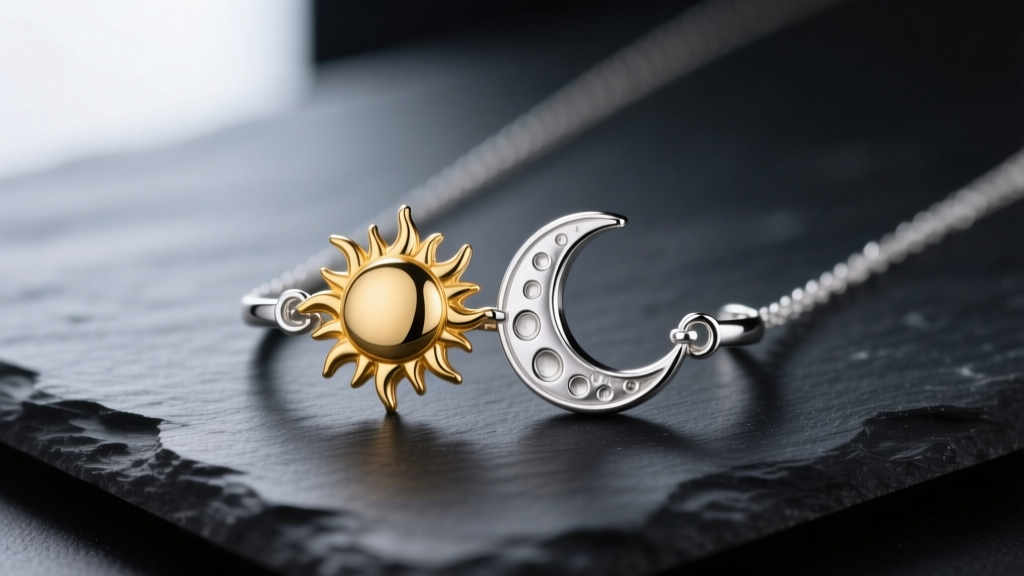
The sun and moon couple necklace has cemented its place as one of the most enduring symbolic jewelry gifts of the decade. Representing duality, balance, and the idea that two distinct entities complete a single cosmic cycle, these matching pendants are a staple for anniversaries, Valentine’s Day, and promise gifts. However, as we navigate the jewelry market in 2026, the sheer volume of options—ranging from $12 fast-fashion dropshipped sets to $1,200 solid gold fine jewelry pieces—makes assessing true value incredibly difficult for the average consumer.
When you are purchasing a set meant for two people, you are effectively doubling the wear and tear. Two different body chemistries, two different daily routines, and two different maintenance habits mean that structural integrity and material grade are not just luxury preferences; they are absolute necessities. This comprehensive value assessment breaks down exactly what you are paying for, where the hidden costs lie, and how to identify a sun and moon couple necklace that will actually survive the test of time.
Material Grades: What Are You Actually Paying For?
The core of any necklace's value lies in its metallurgical composition. The market is currently saturated with misleading terminology like 'gold tone' or 'silver filled.' To make a sound budget assessment, you must look past the marketing copy and demand specific material stamps and manufacturing standards.
Base Metals and Flash Plating (The Budget Trap)
Most necklaces in the $15 to $40 range are crafted from brass, copper, or zinc alloys. These base metals are cheap to cast but highly reactive to human sweat and environmental humidity. To make them look appealing, manufacturers use 'flash plating'—a microscopic layer of gold or rhodium that is typically less than 0.1 microns thick. According to the Federal Trade Commission's Jewelry Guides, there is no strict minimum thickness for standard electroplating, meaning a necklace can legally be called 'gold plated' even if the gold layer will wear off in three weeks of daily use. For a couple's necklace meant to symbolize enduring love, flash-plated brass is a poor long-term investment.
925 Sterling Silver (The Mid-Tier Sweet Spot)
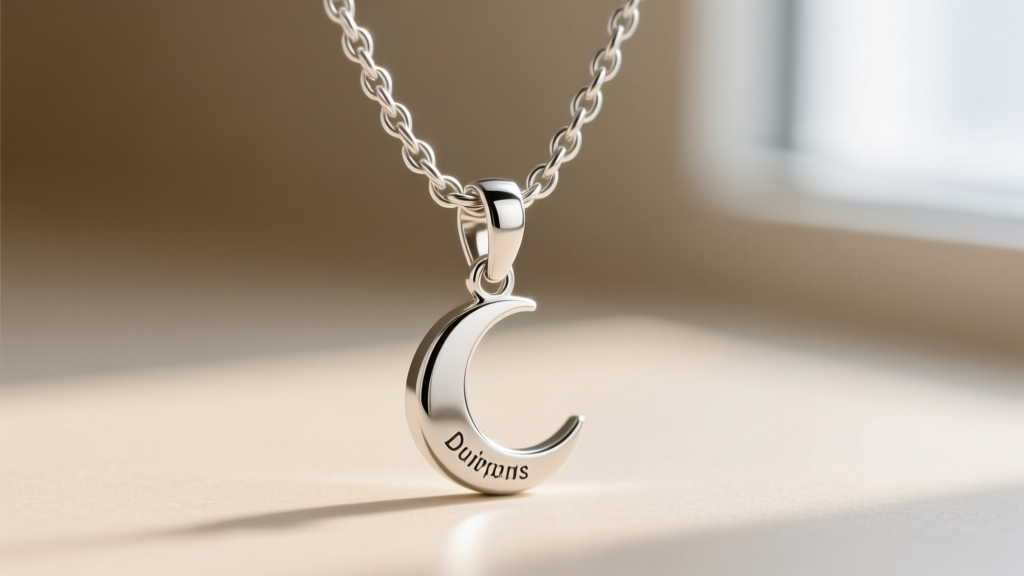
Sterling silver (stamped 925) is an alloy containing 92.5% pure silver and 7.5% copper or other strengthening metals. The Gemological Institute of America (GIA) notes that sterling silver offers an excellent balance of workability, durability, and intrinsic precious metal value. A high-quality sun and moon couple necklace set in solid 925 sterling silver will typically cost between $70 and $150. While silver will naturally oxidize and tarnish over time due to the copper content, it can be easily polished back to its original luster. It will not flake, peel, or turn the wearer's skin green, making it the most rational choice for budget-conscious buyers who still demand genuine precious metals.
Solid Gold and Heavy Vermeil (The Premium Tier)
If your budget allows for $400 to $900+, solid 14k or 18k gold is the ultimate choice for a lifetime piece. The GIA's gold overview explains that 14k gold (58.5% pure gold) provides superior scratch resistance compared to 18k, making it ideal for daily-wear pendants that might bump against desks, steering wheels, or zippers. If solid gold is out of reach, look for 'Gold Vermeil' (pronounced ver-may). True vermeil requires a base of 925 sterling silver plated with at least 2.5 microns of 10k, 14k, or 18k gold. This is exponentially more durable than standard gold-plated brass and offers a luxury appearance at a fraction of the solid gold cost.
Chain Gauge and Clasp Mechanics: The Hidden Failure Points
A common mistake buyers make when evaluating a sun and moon couple necklace is obsessing over the pendant's design while completely ignoring the chain. The chain is the structural lifeline of the necklace. If it fails, the pendant is lost.
- Chain Thickness (Gauge): For pendants weighing between 3 and 8 grams, you need a chain thickness of at least 1.0mm to 1.2mm. Anything under 0.8mm (often sold as 'dainty' chains) is highly prone to micro-fractures and snapping when caught on clothing.
- Chain Style: Cable chains and rolo chains are the most durable because their links are uniformly welded. Avoid box chains or snake chains for daily-wear couple sets, as their interlocking structures can easily kink, trap hair, and eventually snap under tension.
- Clasp Hardware: Spring ring clasps are cheap, difficult to operate with one hand, and feature internal springs that frequently fail. Always look for sets that utilize lobster claw clasps, which offer a secure, mechanical lock and are much easier to fasten.
2026 Pricing Tiers and Value Matrix
To help you benchmark the market, we have compiled a value assessment matrix based on current 2026 retail pricing for a complete set (two chains, two pendants).
| Tier | Material Composition | Price Range (Set) | Expected Lifespan | Maintenance Required |
|---|---|---|---|---|
| Budget | Brass/Copper + Flash Plating | $15 - $45 | 3 - 9 Months | High (frequent tarnish, skin discoloration) |
| Mid-Tier | Solid 925 Sterling Silver | $70 - $160 | 10+ Years | Medium (occasional polishing cloth) |
| Premium | 925 Silver + 2.5μ Gold Vermeil | $140 - $280 | 3 - 5 Years | Low (avoid harsh chemicals) |
| Fine Jewelry | Solid 14k or 18k Gold | $450 - $1,200+ | Lifetime / Heirloom | Very Low (annual professional clean) |
Common Failure Modes in Sun and Moon Designs
The specific geometry of sun and moon pendants introduces unique structural vulnerabilities that generic pendants do not face. Understanding these failure modes is critical for your budget assessment, as cheaper manufacturers will cut corners exactly where the design is weakest.
The Sun Ray Snag and Bend
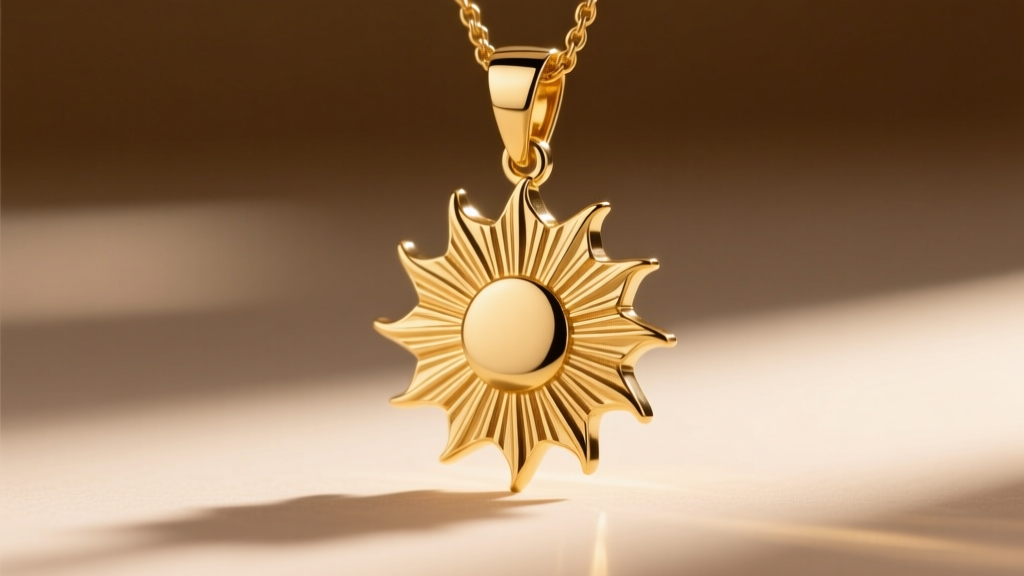
Sun pendants feature radiating points or 'rays.' In budget castings, these rays are often left with microscopic burrs or sharp edges that will catch on knit sweaters and silk pillowcases. Worse, if the metal gauge is too thin, a simple snag will bend the ray out of alignment. High-value manufacturers will tumble-polish the pendants to ensure smooth, rounded ray tips and use a slightly thicker 18-gauge (1.0mm) base metal to prevent bending.
The Moon Crescent Tip Fracture
The crescent moon shape relies on two tapered points. If the manufacturer uses a cheap 3D wax printing and casting method without proper support structures, the tips of the moon will be brittle. Over time, the repetitive stress of the pendant sliding up and down the chain's bail can cause micro-fractures at the base of the crescent tips, leading to a clean break. Always inspect the moon tips in high-resolution macro photos before purchasing; they should look solid and slightly rounded, not razor-thin.
Red Flags in Product Descriptions
When shopping online, sellers will use linguistic tricks to obscure poor material quality. Protect your budget by walking away from any sun and moon couple necklace listing that features the following red flags:
- 'Tibetan Silver' or 'Silver Tone': These are not precious metals. They are typically zinc alloys coated in a silvery chemical wash that will oxidize to a dull grey within weeks.
- 'Stainless Steel' (Without Grade Specification): While 316L surgical stainless steel is highly durable and hypoallergenic, it is not a precious metal and holds zero intrinsic resale value. If you are paying over $50 for stainless steel, you are overpaying for the brand name, not the material.
- Missing Weight Specifications: A reputable jeweler will list the gram weight of the pendants and the chain. If the listing only provides pendant dimensions (e.g., '1.5 inches wide') but no weight, it is likely hollow-cast or exceptionally thin sheet metal.
Final Verdict: Where Should You Invest Your Budget?
The sun and moon couple necklace is a beautiful testament to partnership, but its value is entirely dependent on the metallurgical reality of the piece. If you are buying a gift for a teenager or a casual vacation memento, a $30 stainless steel set will suffice. However, if this necklace is meant to commemorate a serious relationship milestone, an engagement, or an anniversary, bypass the budget tier entirely.
The true cost of a cheap necklace isn't just the initial purchase price; it's the disappointment of a broken chain or a tarnished pendant three months later. For the best intersection of affordability, longevity, and intrinsic value, a solid 925 sterling silver set in the $80 to $130 range remains the undisputed champion of the 2026 market.
By prioritizing 1.0mm cable chains, lobster clasps, and verified precious metal stamps, you ensure that the symbol of your connection is built on a foundation that will actually endure. Assess the materials, verify the hardware, and invest in a piece that honors the permanence of your bond.


