The Surfs Up Necklace: 2026 Coastal Jewelry Trend Guide
Discover the 2026 surfs up necklace trend. Explore premium wave motifs, water-resistant metals, and styling tips for the modern coastal aesthetic.

The Evolution of the Surfs Up Necklace
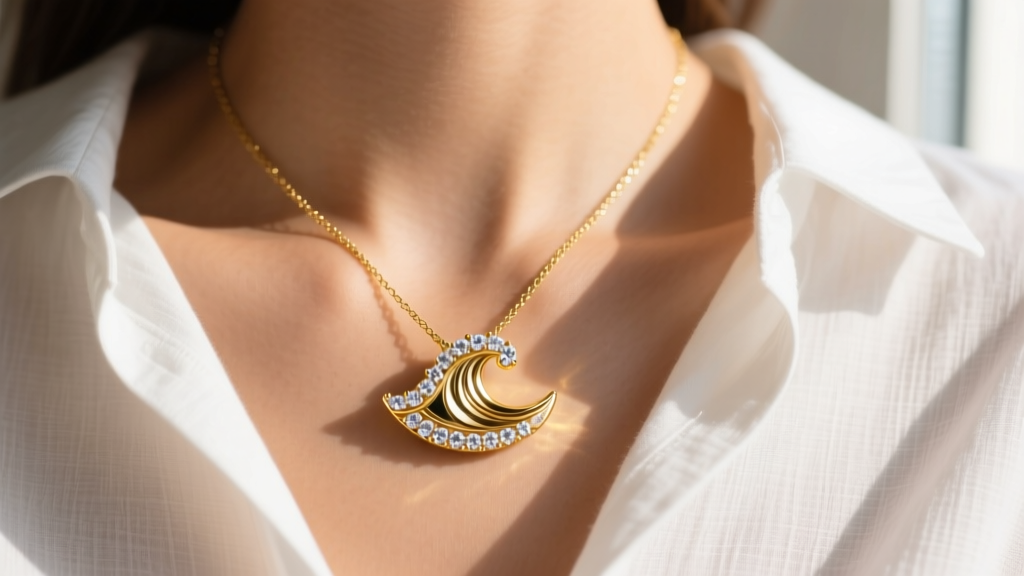
For decades, the phrase 'surfs up necklace' conjured images of cheap, mass-produced acrylic surfboards and tarnished alloy wave pendants sold in beachside tourist shops. However, as we navigate the jewelry landscape of 2026, this coastal staple has undergone a radical, high-end transformation. Driven by the maturation of the 'mermaidcore' and 'quiet coastal' aesthetics, the modern surfs up necklace is no longer a novelty item; it is a sophisticated study in fluid dynamics, artisanal metalwork, and durable material science. Today's wave motifs are abstract, architectural, and designed to withstand the harsh realities of saltwater, UV exposure, and active lifestyles. In this comprehensive trend analysis, we break down the metallurgy, styling frameworks, and market shifts defining the premium coastal jewelry movement this year.
Material Breakdown: What Makes a Premium Wave Pendant?
The biggest failure mode of vintage surf jewelry was material degradation. Saltwater is highly corrosive, and early 2000s pendants often utilized zinc alloys that oxidized and turned the skin green within weeks. In 2026, reputable jewelers are engineering surfs up necklaces using highly specific, water-resistant grades of metal. According to the Gemological Institute of America (GIA), the standard for premium silver jewelry requires precise alloying to prevent structural weakness. When shopping for a wave pendant, you must look beyond the 'waterproof' marketing buzzwords and examine the exact material grades.
| Material | Specific Grade / Composition | Water & Corrosion Resistance | 2026 Price Range | Best Use Case |
|---|---|---|---|---|
| Titanium | Grade 5 (Ti-6Al-4V Alloy) | 100% Impervious to saltwater | $120 - $350 | Active surfers, daily ocean wear |
| Sterling Silver | 925 Silver + 0.05μm Rhodium Plating | Moderate (Requires rinsing) | $45 - $180 | Everyday casual, office-to-beach |
| Vitreous Enamel | Kiln-fired glass on 18k Gold base | High (Resists chemical sunscreens) | $400 - $850 | High-end resort wear, color purists |
| Recycled Ocean Plastic | HDPE bound in marine-grade resin | High (UV stabilized) | $60 - $150 | Eco-conscious statement pieces |
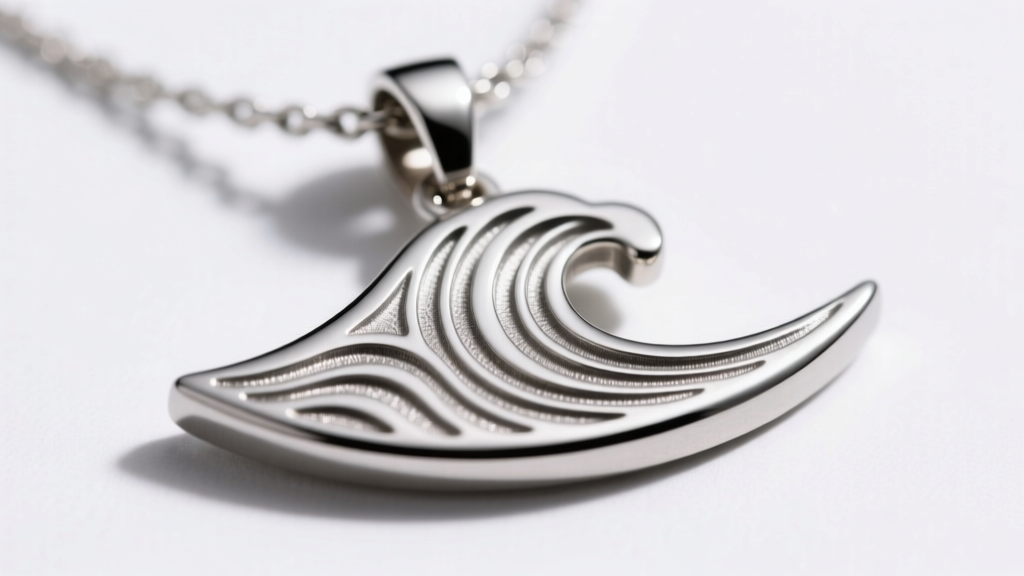
For those who actually surf or swim daily, Grade 5 Titanium is the undisputed champion. Unlike Grade 2 (commercially pure) titanium, which is softer and prone to scratching against surfboard wax or sand, the aluminum-vanadium alloy in Grade 5 offers a tensile strength that mirrors surgical implants. Furthermore, the chain gauge matters immensely. A premium wave pendant weighing over 8 grams requires at least a 14-gauge (1.6mm) rope or cable chain to prevent the clasp from failing under the hydrodynamic drag of ocean waves.
2026 Trend Forecast: Quiet Coastal vs. Y2K Surf Revival
The 2026 market is currently bifurcated into two distinct styling camps. Understanding these sub-trends is crucial for selecting a surfs up necklace that aligns with your personal aesthetic and wardrobe investments.
- Quiet Coastal (The Minimalist Wave): This trend favors abstract, fluid lines over literal interpretations of the ocean. Pendants are typically cast in 14k or 18k recycled gold, featuring high-polish, asymmetrical wave crests that mimic the golden ratio. These pieces are devoid of logos or overt surf imagery, relying instead on the organic drape of the metal. They are designed to be layered with delicate 18-inch princess chains and paired with unstructured linen tailoring.
- Y2K Surf Revival (The Maximalist Crest): A direct callback to late-90s and early-2000s skate and surf culture, this trend embraces chunky, oxidized sterling silver. The pendants feature deep, laser-engraved topographical maps of famous reef breaks (like Pipeline or Teahupo'o) and are often suspended on heavy, 20-inch 10-gauge (2.4mm) Cuban link chains. This style is heavily favored in streetwear circles and pairs best with vintage graphic tees and oversized denim.
How to Style and Layer for Different Necklines
A surfs up necklace is incredibly versatile, but its impact relies heavily on chain length and neckline synergy. The most common styling mistake is wearing a wave pendant at the wrong drop length, causing it to compete with the garment's hem or collar. Here is a precise framework for layering coastal jewelry in 2026:
The V-Neck and Plunge: Opt for an 18-inch chain with a vertically oriented wave pendant (mimicking a barrel or tube). The vertical drop elongates the neck and follows the natural geometry of the V-neckline. Avoid choker lengths here, as they truncate the visual line.
The Crew Neck and Heavy Knits: When wearing thicker fabrics, a delicate chain will disappear. You need a 20-inch or 22-inch matinee length featuring a heavier, wider wave motif. The pendant should rest roughly two inches below the collarbone to ensure it sits flat against the fabric without flipping upside down—a common annoyance with lightweight pendants on heavy chains.
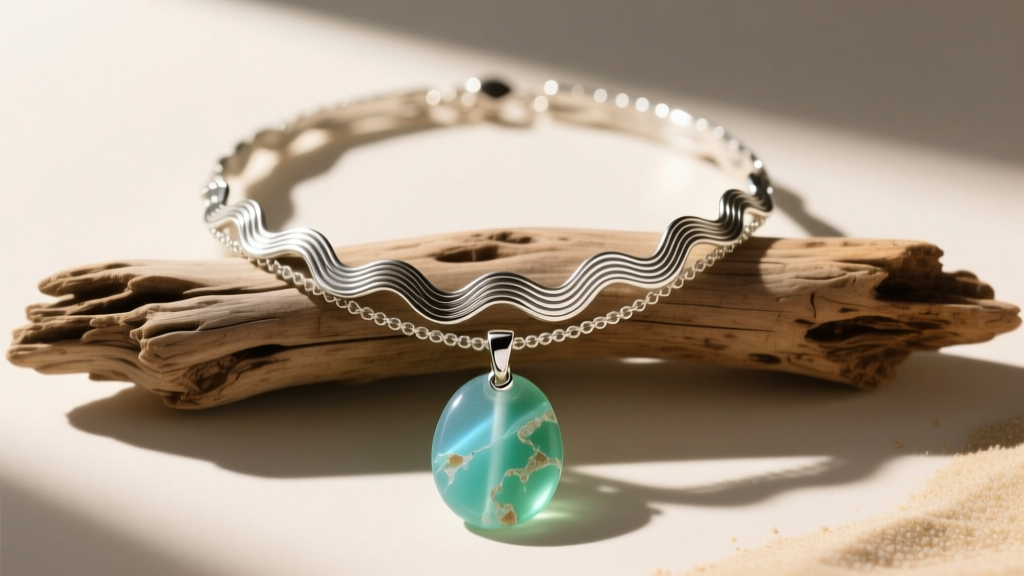
The Off-Shoulder and Boat Neck: This is where the 16-inch choker length shines. A rigid, wire-wrapped silver wave choker or a tightly layered set of three 16-inch cable chains with micro-wave charms creates a stunning, collarbone-grazing effect that frames the exposed décolletage perfectly without tangling in loose hair.
Care Guide: Saltwater, Sunscreen, and Chlorine Resistance
Even the most premium surfs up necklace will suffer from environmental wear if improperly maintained. The coastal environment presents a triad of jewelry hazards: sodium chloride (salt), UV radiation, and chemical sunscreens. Zinc oxide-based mineral sunscreens are notorious for leaving a stubborn, chalky film in the crevices of laser-engraved wave pendants, dulling the metal's reflectivity. Conversely, chemical sunscreens containing avobenzone can cause localized discoloration in lower-karat gold alloys and porous gemstones like turquoise or unsealed sea glass.
Chlorine from hotel pools is even more destructive than saltwater. It attacks the copper alloyed within 14k gold and sterling silver, leading to a phenomenon known as stress corrosion cracking, which can cause the delicate jump rings holding your wave pendant to snap without warning. As noted in Vogue's comprehensive jewelry care guide, immediate remediation is key after aquatic exposure.
Expert Maintenance Protocol: After swimming in the ocean or a chlorinated pool, immediately rinse your necklace under lukewarm, low-pressure tap water. Use a drop of pH-neutral dish soap and a baby-soft toothbrush to gently clear sunscreen from the pendant's grooves. Dry thoroughly with a microfiber cloth before storing. Never use ultrasonic cleaners on pendants featuring vitreous enamel or fracture-filled sea glass, as the high-frequency vibrations will shatter the inclusions.
The Expert Buyer's Checklist
Before investing in a premium surfs up necklace this season, run the piece through this rigorous quality-assurance checklist to ensure you are getting a garment that will survive both the runway and the reef:
- Clasp Mechanics: Avoid standard spring-ring clasps for any pendant over 5 grams; the internal tension spring will inevitably fail when subjected to the pull of ocean currents. Demand a lobster clasp with a reinforced soldered jump ring, or a magnetic neodymium clasp for heavy titanium chains.
- Solder Points: Inspect the bail (the loop connecting the pendant to the chain). It must be laser-welded or fully soldered. An open, unsoldered bail will bend and snap under the hydrodynamic stress of a breaking wave.
- Edge Finishing: Run your thumb along the crest of the metal wave. High-end artisanal pieces will feature 'comfort-fit' or 'soft-edge' polishing, ensuring the metal crest does not scratch your collarbone or catch on delicate silk garments.
- Hallmark Verification: Ensure the piece is stamped with its exact material grade (e.g., '925', '750' for 18k gold, or 'Ti-64' for Grade 5 titanium) rather than vague terms like 'metal' or 'silver-tone'.
The 2026 surfs up necklace is a testament to how far coastal jewelry has evolved. By prioritizing advanced metallurgy, precise chain gauges, and intentional styling frameworks, you can elevate this nostalgic motif into a permanent, water-resistant fixture of your fine jewelry collection.


