How to Choose the Perfect Tanzanite Cross Necklace: A Beginner Guide
Discover how to choose, verify, and style a tanzanite cross necklace. Learn about gemstone grades, durable settings, and chain pairings in our guide.

The Allure of Tanzanite: What Beginners Must Know
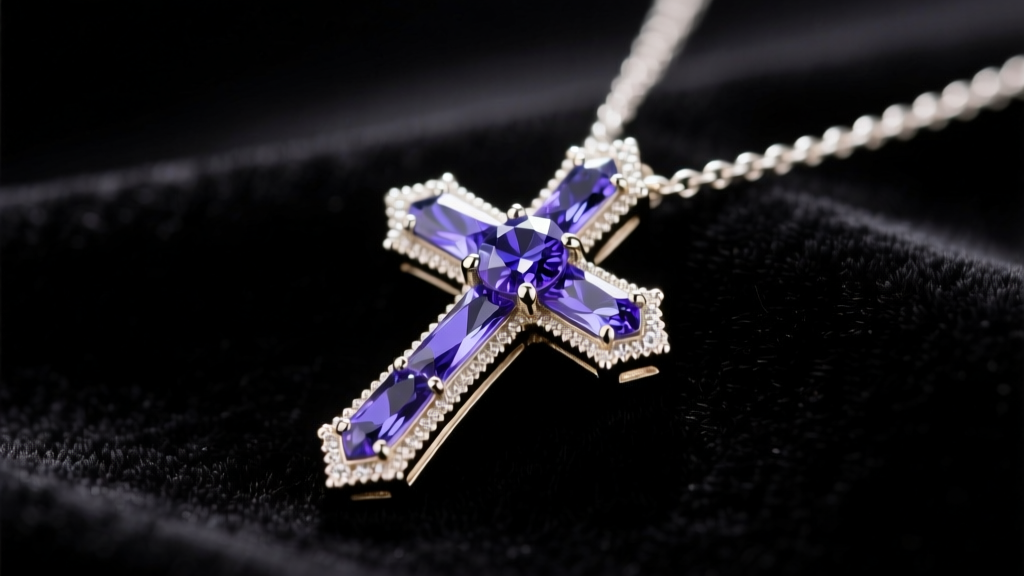
When selecting a meaningful piece of jewelry, a tanzanite cross necklace offers a breathtaking alternative to traditional diamonds or sapphires. Found in only one place on Earth—the Merelani Hills of Tanzania—this gemstone is prized for its intense, velvety blue-violet hues. For beginners, navigating the world of colored gemstones can feel overwhelming, but understanding the unique properties of tanzanite is the first step toward making a confident purchase.
Unlike diamonds, which are valued for their brilliance and hardness, tanzanite is celebrated for its pleochroism. This optical phenomenon means the stone displays different colors when viewed from different angles. A high-quality tanzanite cross pendant will be expertly cut to face up with a rich, saturated violet-blue, masking the less desirable burgundy or brownish axes of the rough crystal. According to the Gemological Institute of America (GIA), virtually all tanzanite on the market is gently heated to permanently enhance this blue-violet color, a standard and universally accepted practice in the gem trade.
Decoding Quality: Grading Tanzanite in Cross Pendants
Because cross necklaces rely heavily on symmetry, jewelers typically use calibrated gemstones—stones cut to exact millimeter dimensions (such as 3mm rounds or 4x2mm baguettes)—to ensure the arms of the cross are perfectly balanced. When evaluating the quality of these stones, focus on color and clarity.
Color Grading: AAA vs. AA
The most critical factor in your tanzanite cross necklace is color saturation. The industry generally uses a grading scale where AAA represents the top 1% of stones, featuring deep, vivid violet-blue tones with no visible color zoning. AA grade stones are slightly lighter and more common in commercial jewelry. If you are investing in a piece for daily wear or a milestone gift, insist on AAA-grade tanzanite. Expect to pay a premium; a 1-carat AAA tanzanite can range from $400 to $600, meaning a well-crafted cross pendant with 0.75 carats total weight (ctw) in 14k gold will typically retail between $800 and $1,200.
Clarity and Cut
Tanzanite is a Type I clarity gemstone, meaning high-quality stones should be "eye-clean" (free of visible inclusions to the naked eye). Because the cross shape requires multiple smaller stones, jewelers often use round brilliant or marquise cuts to maximize light return. Avoid stones that look milky or have dark, opaque spots, as these indicate poor rough material or improper cutting angles that fail to hide the stone's natural inclusions.
Durability and Settings: Protecting Your Gemstones
One of the most common beginner mistakes is ignoring gemstone hardness. Tanzanite ranks between 6.5 and 7 on the Mohs scale of mineral hardness. While this is suitable for jewelry, it is significantly softer than a diamond (10) or sapphire (9). Furthermore, tanzanite has perfect cleavage in one direction, meaning a sharp impact can cause it to split or chip.
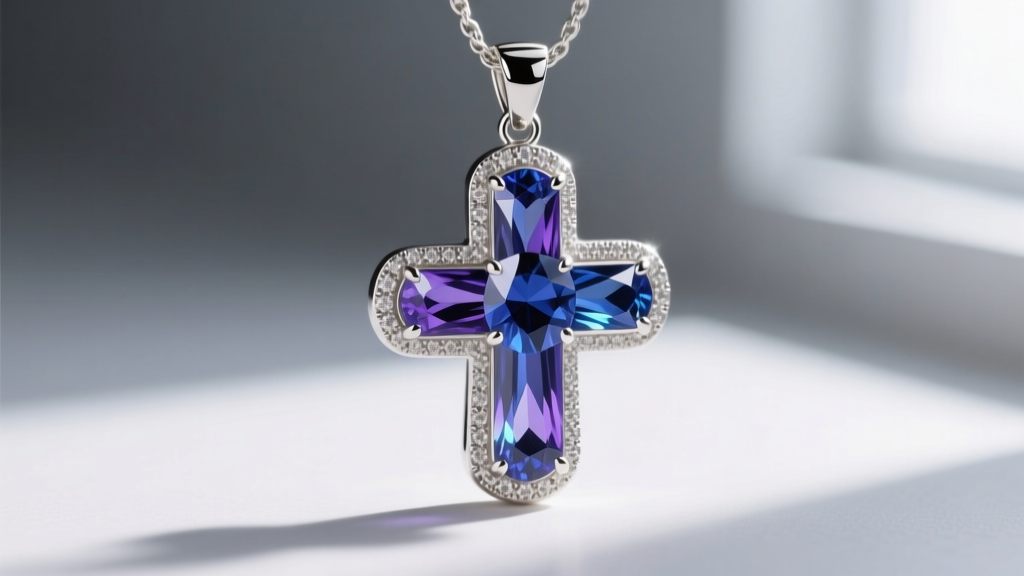
Therefore, the setting of your tanzanite cross pendant is not just an aesthetic choice; it is a structural necessity. Below is a comparison of common setting styles for cross pendants:
| Setting Type | Pros | Cons | Best For |
|---|---|---|---|
| Prong | Maximizes light entry and brilliance | Leaves gemstone edges exposed to chipping | Occasional or evening wear |
| Bezel | Encircles the stone in metal for ultimate protection | Slightly reduces the visible surface area of the gem | Daily wear and active lifestyles |
| Halo | Diamond halo protects center stones and adds sparkle | Increases overall price and requires more maintenance | Statement pieces and gifts |
Chain Pairings: Metals, Gauges, and Lengths
A beautiful pendant requires the right chain to complement it without overpowering the design. The metal color you choose will drastically alter the visual impact of the tanzanite.
Metal Color Theory
- White Gold or Platinum: The most popular choice. The cool, silvery tones of white gold or platinum seamlessly blend with the blue-violet hues of the tanzanite, creating a cohesive, icy, and elegant look.
- Yellow Gold: Creates a striking, high-contrast vintage aesthetic. The warmth of 14k or 18k yellow gold makes the violet notes in the tanzanite pop dramatically.
- Rose Gold: Enhances the subtle pinkish-purple undertones of the stone, offering a romantic and modern alternative.
Chain Gauge and Clasp Mechanics
For a standard tanzanite cross pendant (weighing between 2 to 5 grams), a chain gauge between 1.0mm and 1.5mm is ideal. Thicker chains will look clunky and distract from the gemstones, while chains thinner than 0.8mm are prone to snapping under the pendant's weight. A rolo or cable chain is highly recommended for their durability and classic link structure. Always ensure the chain features a sturdy lobster clasp rather than a spring-ring clasp, which is notoriously fragile and difficult to operate.
Styling Your Tanzanite Cross for Different Necklines

The versatility of a tanzanite cross necklace lies in its ability to transition from casual to formal wear, provided you match the chain length to your neckline.
- The 16-Inch Choker Length: Best paired with V-necks or scoop necks. This length keeps the cross resting just above the collarbone, drawing the eye upward and framing the face.
- The 18-Inch Princess Length: The most universal length. It sits perfectly on the chest and works beautifully over crew necks, turtlenecks, or button-down shirts. This is the safest bet for a beginner buying a gift.
- The 20-to-24-Inch Matinee Length: Ideal for layering over longer garments, such as maxi dresses or deep V-neck blouses. If your cross pendant is large or features a diamond halo, a longer chain allows it to act as a bold statement piece.
Critical Care Rules: Avoiding Common Failure Modes
Tanzanite requires specific care to maintain its structural integrity and polish. The most common failure mode for tanzanite jewelry is thermal shock. Because of its internal crystalline structure, sudden temperature changes can cause the stone to fracture internally.
Expert Warning: Never place your tanzanite cross necklace in an ultrasonic cleaner or expose it to a steam cleaner. The high-frequency vibrations and intense heat will almost certainly cause the calibrated stones to crack or shatter.
Instead, follow the GIA's recommended care guidelines for colored gemstones. Simply mix a few drops of mild, phosphate-free dish soap in lukewarm water. Use a soft-bristled baby toothbrush to gently clean behind the cross pendant where skin oils and lotions accumulate. Rinse under lukewarm running water and pat dry with a lint-free microfiber cloth. Store the necklace in a soft pouch separate from harder gemstones like diamonds or sapphires to prevent surface scratching.
By understanding the unique grading metrics, prioritizing protective settings, and adhering to strict care protocols, you can ensure your tanzanite cross necklace remains a vibrant, cherished heirloom for decades to come.


