Taylor Swift Gold Necklace Materials: 14k vs 18k vs Plated
Compare 14k, 18k, vermeil, and plated materials for the perfect Taylor Swift gold necklace. Learn durability, pricing, and layering physics.

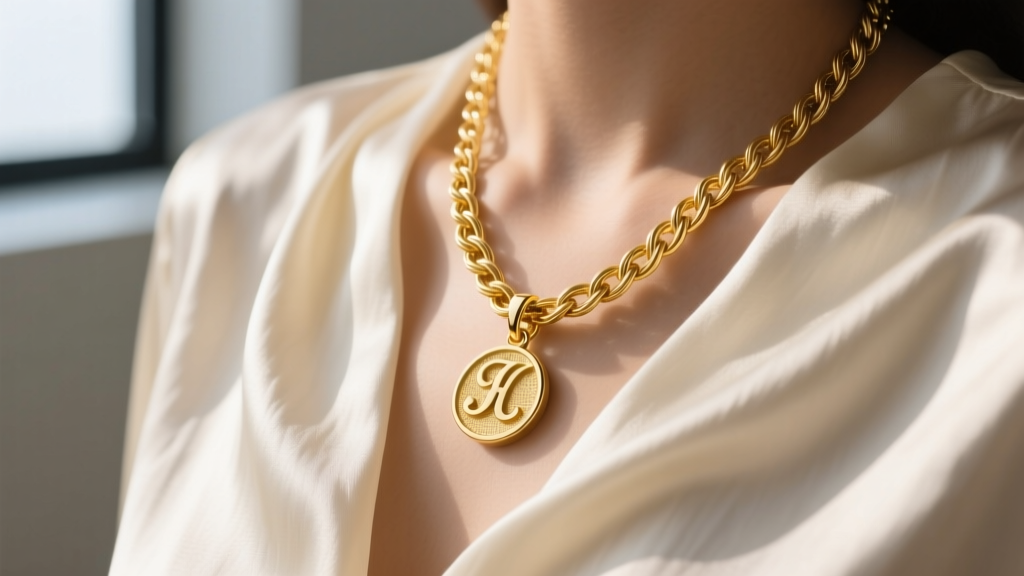
The Anatomy of a Taylor Swift Gold Necklace
When fans search for the ultimate taylor swift gold necklace, they are usually trying to replicate a very specific, curated aesthetic. Taylor’s signature neckwear relies on delicate layering, custom initial pendants (often her lucky number '13' or a serif 'T'), and ultra-fine cable chains. However, achieving this look is not just about the design; it is fundamentally about the metallurgy and material properties of the gold used. A necklace that looks perfect on the red carpet can quickly turn into a tangled, tarnished mess in everyday life if the wrong material grade is chosen.
Layering multiple chains creates friction. When you stack a 16-inch choker, an 18-inch princess chain, and a 20-inch matinee chain, the materials must withstand constant micro-abrasion. In this guide, we break down the exact material properties of 14k solid gold, 18k solid gold, gold vermeil, and standard gold plating to help you choose the right foundation for your own layered stack.
Solid Gold vs. Vermeil vs. Plated: A Material Breakdown
To understand why some chains snap or tarnish while others last a lifetime, we have to look at the elemental composition and manufacturing standards of modern jewelry.
14k and 18k Solid Gold Alloys
Pure 24k gold is far too soft for delicate jewelry; it would stretch and warp under the weight of a pendant. Therefore, jewelers alloy it with metals like copper, silver, and zinc. According to the Gemological Institute of America (GIA), 18k gold is 75% pure gold, while 14k gold is 58.5% pure gold.
- 18k Gold (75% Au): Offers a richer, deeper yellow hue but has a lower Vickers hardness (approx. 115 HV). This makes 18k chains more susceptible to micro-scratches and stretching over time, especially in delicate 1.2mm gauges.
- 14k Gold (58.5% Au): The industry standard for durable, everyday chains. With a Vickers hardness of roughly 135 HV, 14k gold resists deformation and holds the tension of spring-ring clasps much better than 18k. It is the optimal choice for the heavy layering seen in Taylor's street style.
Gold Vermeil vs. Standard Plating
If solid gold is out of your budget, you will likely encounter vermeil and plated options. The difference in longevity is staggering.
As of 2026, the Federal Trade Commission (FTC) mandates that for a piece to be legally marketed as 'Gold Vermeil' in the US, it must have a base of sterling silver and be plated with a minimum of 2.5 microns of 10k or higher gold.
Standard gold-plated jewelry, on the other hand, typically uses a brass or copper base with a 'flash' plating of less than 0.5 microns. When layered, the friction between standard plated chains will wear through that microscopic gold layer in a matter of weeks, exposing the brass underneath, which rapidly oxidizes and turns the skin green.
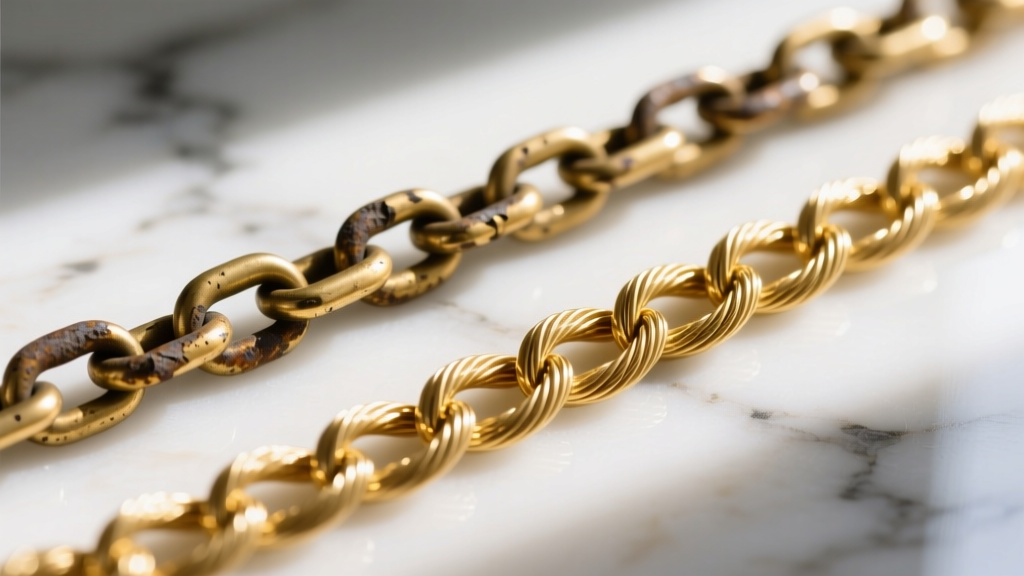
Material Comparison Chart for Swiftie Layering
Use this matrix to determine which material fits your budget and wearing habits when building your stack.
| Material Grade | Base Metal | Gold Thickness | Avg. Price (18' Chain) | Tarnish Risk | Best For |
|---|---|---|---|---|---|
| 14k Solid Gold | Gold Alloy (58.5%) | Solid Throughout | $150 - $280 | None | Daily wear, heavy layering, showering |
| 18k Solid Gold | Gold Alloy (75%) | Solid Throughout | $220 - $400 | None | Special occasions, single statement pieces |
| Heavy Vermeil | Sterling Silver | 2.5 - 3.0 microns | $65 - $120 | Low (Eventually) | Occasional layering, sensitive skin |
| Gold Plated | Brass / Copper | < 0.5 microns | $15 - $45 | High (Rapid) | Single-use events, fast fashion trends |
The Physics of Layering: Weight, Gauge, and Tangling
One of the most common complaints when replicating a taylor swift gold necklace stack is severe tangling. This is rarely a flaw in the design; it is a physics issue related to material weight and chain gauge.
Taylor often pairs delicate 1.2mm to 1.5mm cable chains with solid gold initial pendants. A standard 18-inch 1.2mm 14k gold cable chain weighs approximately 1.8 grams. If you attach a solid gold block letter pendant that weighs 4.5 grams, you have created a severe center-of-gravity imbalance. The heavy pendant pulls the lightweight chain downward, causing the chain to twist and the clasp to migrate from the back of the neck to the front. Once the clasp migrates, it catches on the adjacent chain in your stack, resulting in a knot.
The Solution: When buying your chains and pendants, match the gram weight. If your pendant is 4 grams, upgrade to a slightly thicker 1.8mm or 2.0mm chain (approx. 3.5 to 4 grams). The added structural rigidity prevents the chain from folding in on itself, drastically reducing tangles.
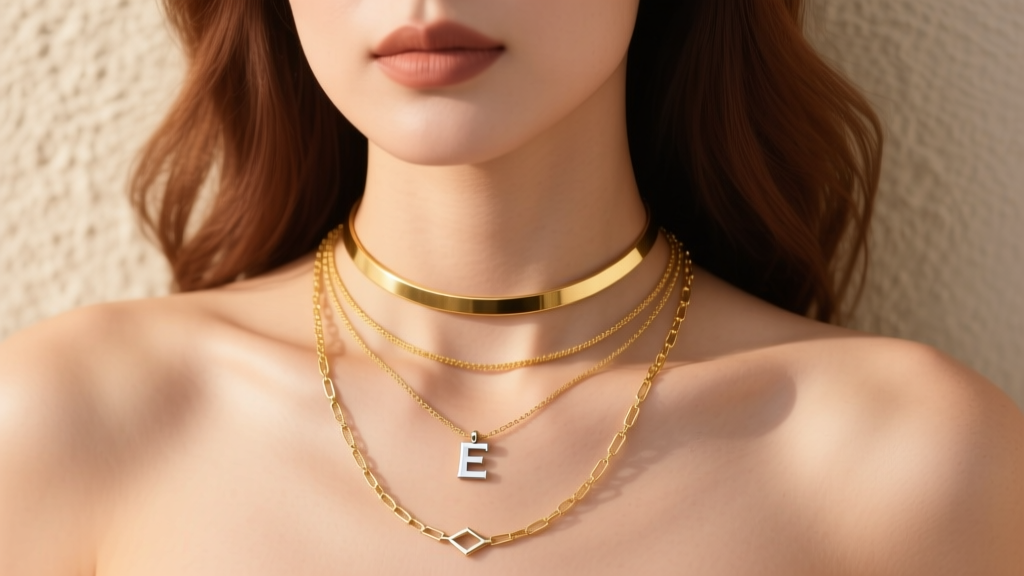
Clasp Mechanics and Chain Gauges
The clasp is the most frequent point of failure on any delicate necklace. The material properties of the gold directly impact clasp longevity.
- Spring Ring Clasps: These rely on a tiny internal steel spring housed inside a gold shell. While functional, the gold shell on an 18k chain can warp under pressure because 18k gold is softer. 14k gold holds the circular shape much better, ensuring the internal spring remains aligned.
- Lobster Claw Clasps: Superior for layering. They feature a stronger, thicker tension spring and a wider opening, making it easier to hook multiple chains together if you are intentionally using a single 'layering clasp' to keep your stack organized and prevent the chains from rubbing against each other.
Sourcing the Look: Authentic Designers vs. Accessible Alternatives
Taylor Swift’s jewelry box features high-end, custom, and designer pieces. She has been spotted wearing custom initial pendants and delicate chains from luxury jewelers like Loree Rodkin and Jennifer Meyer, where pieces are cast in solid 14k or 18k gold and often feature pavé diamond accents.
For accessible alternatives that mimic this exact aesthetic without the five-figure price tag, brands like Mejuri and Gorjana offer excellent middle-ground options. Mejuri typically uses 14k solid gold for their fine chains, ensuring longevity, while Gorjana often utilizes 18k gold plating over brass. If you opt for the latter, be sure to remove the necklaces before swimming or showering to preserve the microscopic gold layer.
Care and Maintenance for Delicate Gold Chains
Even solid 14k gold requires maintenance, particularly when exposed to the layered friction of a multi-chain stack.
- Ultrasonic Cleaners: Safe for solid 14k and 18k gold chains without gemstones. The high-frequency waves easily dislodge sebum and lotion trapped in the tiny links of a cable chain.
- Vermeil and Plated Care: Never use ultrasonic cleaners or harsh chemical dips on vermeil or plated jewelry. The vibrations and chemicals will strip the gold micron layer off the silver or brass base. Instead, use a few drops of mild dish soap in warm water and gently agitate with a baby-soft toothbrush.
- Storage: Never throw layered necklaces into a communal jewelry box. The friction will cause micro-scratches on softer 18k gold and accelerate the wear on plated pieces. Store each chain individually in a soft microfiber pouch or hang them from a multi-hook velvet stand to maintain their structural integrity.
By understanding the metallurgical differences between 14k, 18k, vermeil, and plated gold, you can build a layered necklace stack that not only captures the iconic Taylor Swift aesthetic but also stands the test of time without tangling, snapping, or tarnishing.


