The Taylor Swift Necklace Opalite Trend: A Gemological Deep Dive
Explore the technical reality behind the Taylor Swift necklace opalite trend. We analyze synthetic glass vs. natural opal, durability, and styling.

The Pop-Culture Collision: Celebrity Aesthetics and Mineralogy
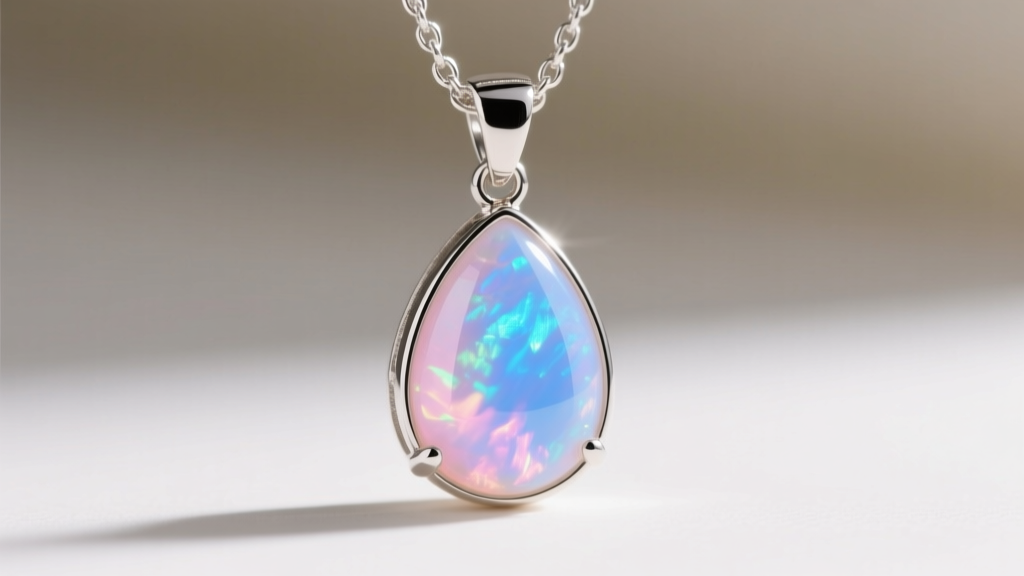
The search volume surrounding the Taylor Swift necklace opalite trend has exploded as fans seek to replicate the ethereal, iridescent aesthetics associated with her recent musical eras and stage wardrobes. Whether inspired by the moody, iridescent visuals of the Midnights era or the delicate, folklore-inspired accessories she has been spotted wearing, opalite has become a highly sought-after material in fan-made merchandise and high-end custom jewelry alike. However, the commercial jewelry market's loose use of the term "opalite" has created massive confusion among consumers.
As a gemological deep dive, this guide strips away the pop-culture marketing to examine the exact material science, structural vulnerabilities, and hardware engineering required to make an opalite necklace that actually survives daily wear. If you are investing in a piece to capture this specific celebrity-inspired aesthetic, you must understand whether you are buying a man-made glass composite or a natural mineral.
Defining Opalite: Synthetic Glass vs. Natural Common Opal
The term "opalite" is not a recognized mineralogical name by the International Mineralogical Association (IMA). Instead, it is a commercial trade name applied to two entirely different materials. Understanding this distinction is the most critical step in evaluating any Taylor Swift-inspired opalite pendant.
1. Synthetic Opalite (Man-Made Glass)
In 90% of the fast-fashion and tour-merchandise market, "opalite" refers to a man-made, opalescent glass. This material is manufactured by melting quartz sand, dolomite, and metallic oxides (often cobalt or copper) at high temperatures. The resulting glass features a milky, translucent base with a synthetic play-of-color that shifts between pale blue and pink depending on the light angle. While it beautifully mimics the visual vibe fans associate with celebrity styling, it possesses zero crystalline structure and is fundamentally a piece of colored glass.
2. Natural "Opalite" (Pink/Purple Common Opal)
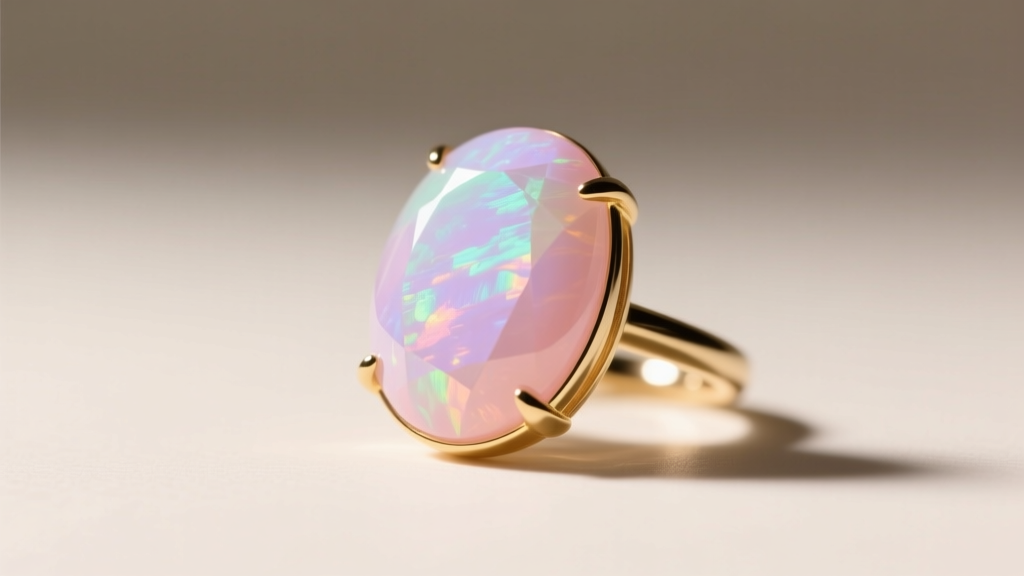
In the lapidary and fine jewelry world, some gem cutters use the trade name "opalite" to describe a natural, opaque variety of common opal (often sourced from Peru or Madagascar) that exhibits a soft pink or purple pastel hue. According to the Gemological Institute of America (GIA), common opal lacks the silica sphere structure required to produce the "play-of-color" seen in precious opal, but it offers a genuine, earth-mined alternative for those seeking natural stones.
Technical Specifications and Durability Metrics
When engineering a necklace meant for daily wear, the physical properties of the pendant material dictate the required hardware. Below is a comparative breakdown of the two materials frequently sold under the "opalite" moniker.
| Property | Synthetic Glass "Opalite" | Natural Pink Common Opal |
|---|---|---|
| Mohs Hardness | 5.5 - 6.5 | 5.5 - 6.5 |
| Specific Gravity | 2.40 - 2.60 (Heavier) | 1.98 - 2.20 (Lighter) |
| Fracture Type | Conchoidal (Shell-like) | Conchoidal |
| Cleavage | None (Amorphous) | None (Amorphous) |
| Refractive Index | 1.50 - 1.52 | 1.40 - 1.46 |
| Thermal Shock Resistance | Very Low (Prone to shattering) | Low (Prone to crazing) |
As noted by mineralogical databases like Mindat, both amorphous silica-based materials share a conchoidal fracture pattern. This means they do not break along clean, predictable planes like diamonds or topaz; instead, they shatter unpredictably, much like a dropped windshield. This physical reality fundamentally dictates how the stone must be set.
Hardware Engineering: Settings and Chain Tensile Strength
The biggest failure mode in celebrity-inspired jewelry is the mismatch between the pendant's weight and the chain's tensile strength, or the use of improper stone settings.
The Conchoidal Fracture Risk: Prong vs. Bezel
Never purchase a synthetic glass opalite pendant in a prong setting. Prongs exert localized, high-pressure point loads on the girdle (the edge) of the stone. Because glass opalite lacks a crystalline lattice to absorb and distribute kinetic energy, a simple drop onto a hardwood floor will cause the prong to act as a wedge, splitting the stone cleanly in half. A full or half-bezel setting is mandatory. A bezel wraps the metal rim entirely around the stone's perimeter, distributing impact forces evenly and protecting the vulnerable edges from chipping.
Chain Tensile Strength and Weight Ratios
Synthetic glass opalite is roughly 15-20% denser than natural opal. A 20mm glass opalite teardrop cabochon can easily weigh between 8 and 12 grams. Many fast-fashion replicas pair these heavy pendants with delicate 0.8mm sterling silver cable chains. While a 0.8mm chain can support 12 grams of static weight, the dynamic stress of the pendant swinging and catching on clothing will snap the chain's soldered jump rings.
- For pendants under 5g: A 1.0mm sterling silver cable or box chain is sufficient.
- For pendants 5g - 15g: Upgrade to a 1.5mm wheat chain or a 1.2mm rolo chain with laser-welded jump rings to prevent dynamic snapping.
- Clasp Hardware: Avoid lightweight spring-ring clasps. Opt for a lobster clasp with a minimum gate thickness of 1.5mm to ensure the clasp mechanism does not fail under the pendant's pendulum-like momentum.
Authentication Protocol: Identifying Your Material
If you are buying a vintage or custom piece billed as a "natural" Taylor Swift opalite necklace, you must verify the material. Here is the professional protocol for distinguishing man-made glass from natural common opal:
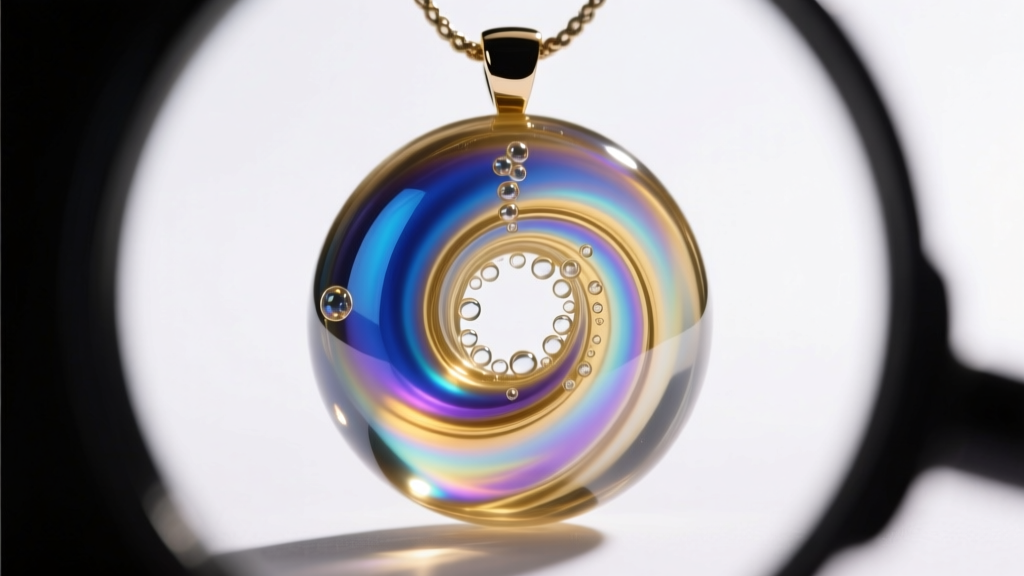
- The Magnification Test: Using a 10x jeweler's loupe, inspect the interior of the stone. Synthetic glass will almost always reveal tiny, perfectly spherical gas bubbles or curved, swirl-like striations caused by the melting process. Natural opal will appear completely solid, sometimes with natural inclusions or a waxy luster, but never with spherical bubbles.
- The Thermal Conductivity Test: Glass is a thermal insulator but feels distinctly colder to the touch than natural opal when first picked up. If you press the stone to your cheek or the inside of your wrist, glass will draw heat away from your skin much faster than natural, porous common opal.
- The UV Fluorescence Test: Under a standard 365nm UV flashlight, natural pink common opal often exhibits a mild to strong chalky blue or green fluorescence due to trace organic compounds. Synthetic glass opalite typically shows zero fluorescence or a dull, uniform synthetic glow.
Care, Maintenance, and Catastrophic Failure Modes
Opalite, whether glass or natural, is highly susceptible to thermal shock. The most common way consumers destroy these necklaces is by wearing them into the shower or using ultrasonic jewelry cleaners. The rapid temperature change causes the outer layer of the amorphous silica to expand or contract at a different rate than the core, leading to internal "crazing" (a network of microscopic fractures) or outright shattering.
To maintain the iridescent finish of a synthetic glass opalite pendant, clean it only with a damp microfiber cloth and a drop of mild, non-abrasive dish soap. Never use chemical silver dips or ultrasonic vibrations. Store the necklace flat in a lined jewelry box to prevent the glass from scratching against harder gemstones like quartz or sapphire, as opalite's 5.5 Mohs hardness makes it highly vulnerable to surface abrasion.
Conclusion
The Taylor Swift necklace opalite trend represents a fascinating intersection of pop-culture aesthetics and material science. Whether you are opting for the budget-friendly, highly iridescent synthetic glass or investing in a genuine natural pink common opal, success lies in the hardware. By demanding bezel settings, verifying chain tensile strength, and understanding the thermal vulnerabilities of amorphous silica, you can secure a piece that captures the exact aesthetic you want without succumbing to premature structural failure.