Coors Necklace Buying Guide: Vintage Authenticity & Styling
Discover how to authenticate, price, and style vintage and artisan Coors necklace pendants. Your complete buying guide for Americana jewelry.

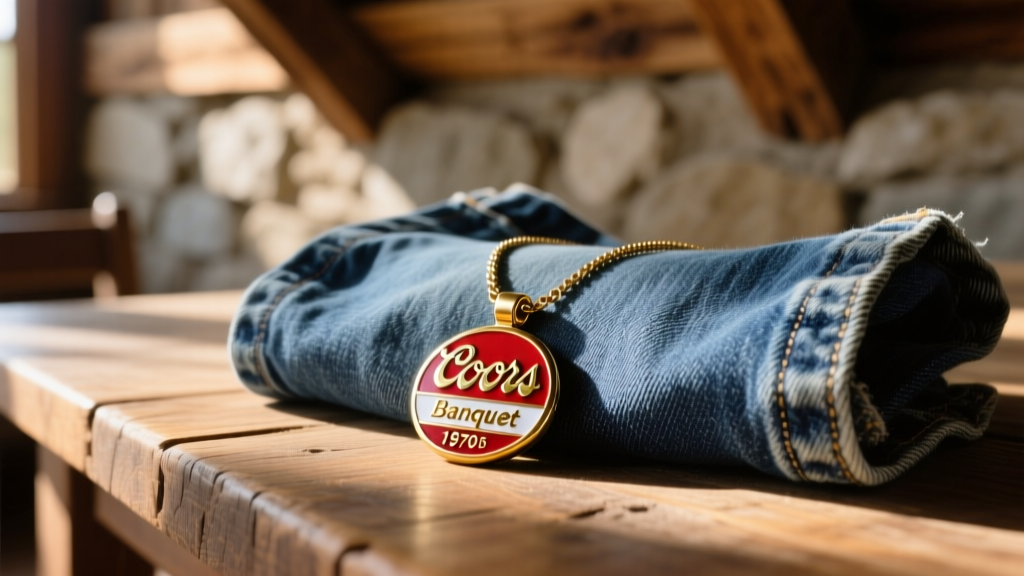
The intersection of Americana workwear and jewelry has seen a massive resurgence in 2026, with novelty and vintage promotional pieces taking center stage. Among the most highly sought-after items in this niche is the Coors necklace. Whether you are hunting for a rare 1970s Coors Banquet promotional pendant, an upcycled artisan piece crafted from vintage can tabs, or a custom fine jewelry interpretation, navigating this market requires a keen eye for metallurgy, historical accuracy, and structural integrity.
This comprehensive buying guide will walk you through the exact specifications, authentication markers, and styling frameworks you need to confidently purchase and wear a Coors necklace. According to the Vintage Fashion Guild, promotional jewelry from the 1970s and 1980s represents a unique snapshot of American marketing history, making accurate authentication crucial for collectors and style enthusiasts alike.
Decoding the Types of Coors Necklaces
When shopping for a Coors necklace, you will generally encounter three distinct categories. Understanding the origin of each type will dictate what you should pay and how you should care for the piece.
1. Vintage Promotional Pendants (1970s–1990s)
During the height of the 'Silver Bullet' marketing era and the ubiquitous presence of Coors Banquet in American pop culture, the brewery commissioned massive runs of promotional jewelry. These were often manufactured by collegiate ring giants like Jostens or Balfour. They typically feature heavy cast pot metal or brass bases, adorned with cold enamel or painted resin detailing the iconic Coors script, the Banquet bottle, or the Rocky Mountain landscape. These pieces are heavy, historically significant, and highly collectible.
2. Upcycled & Artisan Can-Tab Jewelry
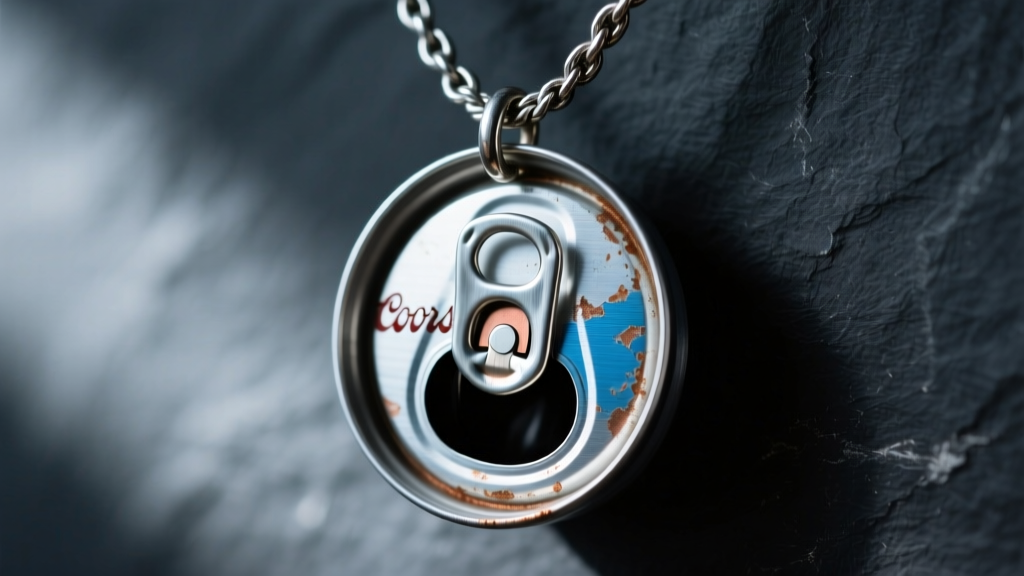
The modern sustainable jewelry movement has embraced the iconic Coors aluminum can. Artisans on platforms like Etsy frequently craft pendants from actual vintage Coors Light or Banquet pull-tabs. These are lightweight, eco-friendly, and often sealed with jewelry-grade polyurethane to prevent the aluminum from oxidizing or leaving gray marks on the skin.
3. Custom Fine Jewelry Interpretations
For those who want the Americana aesthetic without the novelty feel, independent jewelers have begun casting the Coors script and mountain motifs in solid 925 sterling silver or 14k gold. These pieces bridge the gap between beer memorabilia and high-end streetwear accessories.
Material Analysis & Durability Check
The longevity of your Coors necklace depends entirely on its base material. Vintage promotional jewelry was not designed to be heirloom fine jewelry, so understanding its metallurgical limitations is vital. Below is a breakdown of the materials you will encounter in the wild.
| Material Type | Era / Origin | Durability & Weight | Maintenance Requirements |
|---|---|---|---|
| Cast Pot Metal (Zinc Alloy) | 1970s-1980s Promo | Heavy (18-25g); prone to pitting if exposed to moisture. | Keep dry; store with silica packets; never use liquid silver polish. |
| Enameled Brass | 1980s-1990s Promo | Medium weight (10-15g); highly durable base, but enamel can chip. | Wipe with a dry microfiber cloth; avoid hard impacts. |
| Upcycled Aluminum | Modern Artisan | Ultra-lightweight (2-4g); soft metal, bends easily under pressure. | Ensure a clear-coat sealant is applied; avoid prolonged sweat exposure. |
| 925 Sterling Silver | Modern Custom Fine | Medium-Heavy (8-20g); excellent structural integrity. | Standard silver polishing cloth; safe for daily wear and water exposure. |
How to Authenticate Vintage Coors Jewelry
The market is currently flooded with modern resin replicas masquerading as 1970s vintage. To ensure you are buying an authentic piece of Americana, you must inspect the hardware and finishing techniques. Experts on platforms like Ruby Lane consistently emphasize the importance of examining the bail and the enamel application when dating promotional jewelry.
- The Bail Construction: Authentic 1970s Jostens or Balfour pieces typically feature a soldered, integrated brass loop or a heavy-duty pinch bail. If the loop looks like a cheap, thin jump ring that has been hastily glued or loosely twisted onto the pendant, it is likely a modern reproduction.
- Enamel vs. Resin: Vintage pieces utilized kiln-fired or high-grade cold enamel, which feels glassy and hard to the touch. Modern fakes often use painted epoxy resin, which will feel slightly tacky, show bubble imperfections, and yield slightly when pressed with a fingernail.
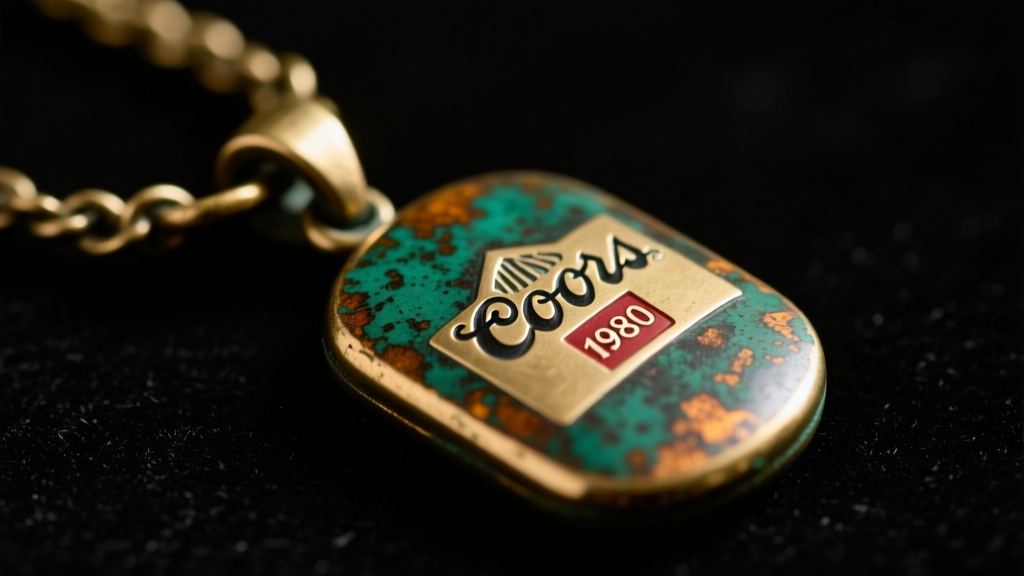
- The Patina Test: Genuine pot metal and brass pendants from the 1970s will exhibit natural oxidation, particularly in the crevices of the Coors script and around the bail. A piece that is entirely bright, shiny, and uniform in its 'antiquing' has likely been artificially aged or is a brand-new cast.
- Weight and Temperature: Real cast metal feels substantial and cold to the touch. Resin replicas are noticeably lighter and will warm up to room temperature almost instantly.
Pricing Guide & Market Value
As the Americana trend continues to dominate streetwear and vintage fashion in 2026, the pricing for Coors necklaces has stratified based on rarity, condition, and material. Use this framework to ensure you are paying fair market value.
Pro-Tip: Never pay premium vintage prices for a piece with severe 'pot metal rot' (deep, flaky pitting on the back of the pendant). This degradation is irreversible and will eventually stain your clothing and skin.
- Upcycled Can-Tab Pendants: $15 – $35. (Price varies based on the complexity of the wire-wrapping and the quality of the chain provided).
- Standard Vintage Promo (1980s-90s): $45 – $85. (Common Coors Light mountain motifs and standard script logos in good condition).
- Rare 1970s Coors Banquet Promo: $120 – $250+. (Highly sought after, especially pieces featuring the full Banquet bottle silhouette, intact original chains, or gold-filled plating).
- Custom Sterling Silver Artisan: $150 – $400. (Depends on the jeweler, the weight of the silver, and whether gemstones like turquoise are incorporated into the mountain design).
Chain Pairing & Styling Americana Jewelry
A common mistake buyers make is pairing a heavy, 2-inch vintage Coors pot metal pendant with a delicate, 1mm cable chain. The weight of the pendant (often exceeding 20 grams) will warp the links and eventually snap the chain. Furthermore, the aesthetic of novelty Americana jewelry requires a chain that complements its rugged, utilitarian roots.
Recommended Chain Gauges and Styles
For vintage promotional pendants, opt for a 3.5mm to 5.0mm Wheat or Rope chain in oxidized sterling silver or stainless steel. The twisted links of a wheat chain provide the tensile strength needed to support the heavy cast metal, while the oxidized finish harmonizes with the vintage enamel and brass tones. If you prefer a more rugged, workwear-inspired look, a 2mm braided leather cord with a sterling silver end-cap and lobster clasp is an excellent alternative that prevents the metal bail from wearing down over time.
When layering a Coors necklace, treat it as the anchor piece. Pair it with a shorter, 18-inch plain silver herringbone chain and a longer, 28-inch military-style ball chain to create a textured, staggered silhouette that fits perfectly within the modern workwear and heritage fashion aesthetic.


